Hudson River School
Moonlight - Piazza Vecchia (Томас Коул)
Томас Коул (1801–1848) створив Moonlight - Piazza Vecchia. Він належить до напряму Hudson River School. Виконано в Oil On Canvas.
- Oil On Canvas

 Переглянути в інтер'єрі

 Картина олією ручної роботи
 Надіслати як листівку
 Поділитися
 Інформаційна картка


 Завантажити
 Схожі екземпляри
 Рентгенівське дослідження
 Слайд-шоу
 Питання та відповіді

 Статистика
Moonlight - Piazza Vecchia коротко
- Назва
- Moonlight - Piazza Vecchia
- Художник
- Томас Коул (1801–1848)
- Рік народження митця
- Болтон, Сполучене Королівство
- Матеріал
- Oil On Canvas
- Період
- 19th Century
- Сюжет
- moonlight, bridge, buildings, clock, river, person
Що зображено на Moonlight - Piazza Vecchia?
Identification of Moonlight - Piazza Vecchia
Moonlight - Piazza Vecchia is an oil painting by Thomas Cole. The artist, born in 1801 in Bolton, United Kingdom, moved to the United States in 1818. He eventually settled in Catskill, New York, where he remained until his death on February 11, 1848.
The scene captures a cityscape under a moonlit atmosphere. A bridge overlooks a body of water, appearing as either a river or an ocean. In the foreground, two buildings flank the composition, with a clock hanging from a wall near the center. A solitary figure stands near the bridge, observing the nocturnal view. The moonlight casts a soft glow across the architecture and the water, establishing a serene mood.
The Composition and Visual Elements
The nocturnal cityscape is organized around a central bridge that spans a body of water, appearing as either a river or an ocean. In the foreground, the composition is framed by two buildings positioned on the left and right sides. Near the center of the image, a clock hangs from a wall, providing a focal point amidst the architectural details. A solitary figure stands near the bridge, appearing to observe the view or move through the urban space.
Atmospheric light defines the scene. Moonlight casts a soft glow across the environment, creating a serene and peaceful mood. This illumination interacts with the shadows of the buildings and the surface of the water to establish depth within the nocturnal setting. The interplay of light and shadow emphasizes the quietude of the city at night.
The Artistic Style of Thomas Cole
Working primarily with oil on canvas, Cole developed a technique characterized by a sophisticated use of light and shadow. He utilized this interplay to establish atmospheric depth and a sense of volume within his compositions. His approach frequently involved the placement of solitary structures or small figures against expansive, moody landscapes, a method that emphasizes the scale of the environment relative to human presence.
His brushwork demonstrates a keen ability to render the specific textures of the natural world. This attention to detail allows for a tactile quality in his depictions of wilderness and terrain. Through careful layering of pigments, he achieved a tonal richness that defines the visual weight of his subjects.
Related Works by Thomas Cole
Cole’s exploration of landscape and the passage of time is evident in several significant compositions. His 1836 work, The Oxbow, also known as The Connecticut River near Northampton, examines the tension between untamed nature and cultivated land. This same year saw the completion of The Course of Empire, a five-part series tracing the cyclical rise and fall of civilizations.
Other notable works include River in the Catskills, painted in 1843. These pieces reflect the artist's ongoing engagement with the American wilderness and the shifting relationship between the natural world and human presence.
Зображення високої роздільної здатності Moonlight - Piazza Vecchia
Суспільне надбання: художник помер у 1848 році.
Томас Коул, Moonlight - Piazza Vecchia. Суспільне надбання
Відповіді на запитання про Moonlight - Piazza Vecchia
Яка техніка була використана для створення «Moonlight - Piazza Vecchia» роботи Томас Коул?
«Moonlight - Piazza Vecchia» виконано в техніці Oil On Canvas.
Що зображено на творі "Moonlight - Piazza Vecchia"?
«Moonlight - Piazza Vecchia» роботи Томас Коул зображує: moonlight, bridge, buildings, clock, river, person, cityscape, night.
Чи є «Moonlight - Piazza Vecchia» роботи Томас Коул суспільним надбанням?
«Moonlight - Piazza Vecchia» роботи Томас Коул перебуває у є суспільним надбанням — термін дії авторського права закінчився. Цей статус визначає правила відтворення зображення твору.
Хто є автором твору "Moonlight - Piazza Vecchia"?
Автором твору «Moonlight - Piazza Vecchia» є Томас Коул. Робота внесена до каталогу під іменем Томас Коул.
До якого стилю належить "Moonlight - Piazza Vecchia"?
Мистецький напрям, до якого належить «Moonlight - Piazza Vecchia» роботи Томас Коул, — це Hudson River School. Така класифікація дозволяє розмістити цей твір у контексті суміжних митців та творів мистецтва.
Чи є твір «Moonlight - Piazza Vecchia» авторства Томас Коул суспільним надбанням, і чому?
Статус авторського права на твір "Moonlight - Piazza Vecchia" — є суспільним надбанням — термін дії авторського права закінчився — визначається датою смерті митця у 1848.
Яким чином твір "Moonlight - Piazza Vecchia" перегукується з іншими роботами Томас Коул?
«Moonlight - Piazza Vecchia» належить до Hudson River School творчості Томас Коул, чиї характерні теми включають european old masters, hudson river school, romantic landscape, spiritual resonance, nature vs. civilization.
Як сюжет твору "Moonlight - Piazza Vecchia" перегукується із звичними темами Томас Коул?
«Moonlight - Piazza Vecchia» змальовує moonlight, bridge, buildings, clock, river, person, cityscape, night, тоді як характерні теми Томас Коул — це european old masters, hudson river school, romantic landscape, spiritual resonance, nature vs. civilization. Порівняння цих двох аспектів демонструє, як цей твір перегукується зі звичними сюжетами митця.
Про художника Томас Коул

1801–1848, Сполучене Королівство
Томас Коул
Життя та мистецтво Томаса Кола Народившись 1 лютого 1801 року в Болтоні-ле-Мурз, графство Ланкашир, Англія, Томас Кол розпочав свій життєвий шлях далеко від тих ландшафтів, які згодом стануть його візитною карткою. У 1818 році його родина емігрувала до Сполучених Штатів, шукаючи нових можливостей на землях безкраїх, ще не вивчених територій. У ті ранні роки він пробував себе у різних ремеслах: працював гравюристом, а з 1822 року знайшов стабільний заробіток як портретист. Більшу частину свого навичок він здобув самостійно, розвиваючи художнє бачення через спостереження та вивчення книг, а не завдяки академічній освіті.
Також за участю Томас Коул
 Оксобоу
 Сон архітектора1840
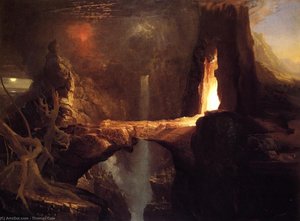 Вигнання. Місяць і світло місяця1828
 Вид Флоренції з Сан Мініато1837
Есе до твору Moonlight - Piazza Vecchia
 Masterpieces of the Wilderness: The Top 25 Thomas Cole ArtworksExplore the sublime Hudson River School through Thomas Cole's top 25 masterpieces. Discover the full collection online at OriginalUniqueArt…
 British artworks of the 1840s1840s British masterpieces by J. M. W. Turner and John Everett Millais. Shop museum-quality reproductions on OriginalUniqueArt.com.
 British artworks of the 1820sBritish Romanticism in the 1820s features the iconic works of J.M.W. Turner, John Constable, and William Blake. View the full collection at…