Надіслати
 Поділитися
 Деталі
 Посібник

 Завантажити
 Схожі предмети колекціонування
 Слайд-шоу
 Статистика переглядів
Copper handcuffs


 Читати далі
Гікле / Художній принт
Музейна якість друку جيкле або на полотні з оперативним виготовленням та різноманітними варіантами фінішної обробки. ( Купити картину ручної роботи Перейти до цифрових зображень)




































Обирайте з наших стандартних розмірів, що відповідають оригінальним пропорціям твору мистецтва.

Ви можете вказати власні розміри, щоб репродукція ідеально підійшла до конкретної рами або інтер'єру. Якщо обраний вами розмір не відповідає пропорціям оригіналу, ми або обріжемо полотно, або розширимо зображення за допомогою дзеркального відображення чи суцільної заливки країв. Перед початком виробництва вам буде надіслано цифровий макет для затвердження.
Будь ласка, зверніть увагу, що попередній перегляд на екрані не відображає фактичне обрізання або розширення. Тільки макет точно покаже фінальну композицію.
Хоча можливість замовлення індивідуальних розмірів доступна, ми рекомендуємо обирати формат із попередньо визначеного списку, щоб зберегти оригінальні пропорції.
Доставка по всьому світу () за 2 тижні замість стандартних 4/5 тижнів. (20 Вересень)

Безкоштовна експрес-доставка по всьому світу

Високоякісне лляне полотно

Повне страхове покриття доставки

Гарантія повернення митних зборів

Гарантія точного відтворення кольорів

Політика повернення протягом 100 днів (лише у разі виявлення дефектів)

Гарантія повернення 100% коштів

Знижка на оптові замовлення
 Скляний варіант доступний лише для розмірів до 110 см

Copper handcuffs
Гікле / Художній принт
Розмір репродукції
-


Загальна вартість
$ 80
A Surreal Collision of Antiquity and Constraint
In 1931, René Magritte captured a moment of profound visual tension in his evocative work, Copper Handcuffs. At first glance, the viewer is met with the familiar, dignified grace of classical antiquity—the upper torso and flowing drapery of the iconic Venus de Milo. Yet, this reverence for the past is abruptly interrupted by a jarring, modern intrusion: a pair of copper handcuffs tightly binding the bronze figure. This is not merely a depiction of sculpture, but a masterful manipulation of reality through the lens of Surrealism. Magritte utilizes a meticulous, almost photographic realism to render the textures of the aged bronze and the subtle play of light across the surface, making the illogical presence of the metal restraints feel disturbingly tangible. The composition is tightly focused, pulling the eye toward the center where beauty and bondage meet in an unsettling embrace.
The Poetics of the Unconscious
To understand Copper Handcuffs is to step into the dreamlike logic that defined the Surrealist movement. Emerging from the psychological shadows of the post-World War I era, Magritte sought to bypass rational thought and tap into the raw power of the unconscious mind. Here, the symbolism operates on a plane of deep ambiguity, inviting the observer to look beyond the surface. The Venus de Milo stands as an eternal emblem of beauty, freedom, and artistic perfection, while the handcuffs serve as a stark reminder of restriction, imprisonment, and the weight of societal control. By placing these two opposing forces in such close, intimate contact, Magritte creates a visual riddle that prompts contemplation on the struggle between the ideal and the real, and the invisible constraints placed upon even the most magnificent forms of existence.
An Evocative Presence for the Discerning Collector
For the art enthusiast or interior designer, a high-quality reproduction of this piece offers far more than mere decoration; it provides a profound intellectual anchor for any curated space. The work’s dramatic use of light and shadow—accentuating the rich patina of the bronze against a dark, undefined background—allows it to command attention in even the most minimalist contemporary settings. Whether integrated into a sophisticated gallery-style room or used as a focal point in a classic study, the piece acts as an enduring conversation starter. The interplay of organic human forms with the cold, industrial texture of copper creates a sensory experience that is both unsettling and deeply captivating, making it an essential acquisition for those seeking to infuse their environment with mystery, history, and a touch of the unexpected.
Біографія митця
Early Life and the Seeds of Surrealism
René Magritte, born René François Ghislain Magritte on November 21, 1898, in Lessines, Belgium, emerged into a world that would profoundly shape his enigmatic artistic vision. His early years were marked by an unsettling event – the suicide of his mother when he was just thirteen. The image of her body being recovered from the River Sambre, with her dress obscuring her face, became a haunting motif that would subtly permeate his later work, manifesting in veiled figures and a persistent exploration of hidden realities. This early trauma instilled within him a fascination with mystery, loss, and the unsettling power of what remains unseen. While details of his childhood remain somewhat elusive, it’s clear this formative experience laid the groundwork for his lifelong questioning of perception and representation. He began drawing lessons at age ten, revealing an innate inclination towards visual expression, but initially explored Impressionism before embarking on a path that would lead him to become one of the most significant figures in Surrealist art.Artistic Development and Influences
Magritte’s artistic journey was not immediate or straightforward. He studied at the Académie Royale des Beaux-Arts in Brussels, yet found its traditional methods stifling. His early work experimented with Futurism and Cubism, absorbing elements of these avant-garde movements but ultimately rejecting their purely formal concerns. It wasn't until encountering Giorgio de Chirico’s painting *The Song of Love* in 1922 that Magritte discovered a resonance that would irrevocably alter his artistic course. De Chirico’s dreamlike landscapes and unsettling juxtapositions unlocked within Magritte a new way of seeing – a world where the familiar could be rendered strange, and the ordinary imbued with profound mystery. This encounter sparked his commitment to Surrealism, though he often maintained a unique distance from its more overtly psychological or automatic approaches. He preferred a meticulous, almost clinical precision in his painting, using realistic techniques to depict illogical scenarios.The Heart of Surrealism: Challenging Reality
By 1926, Magritte had fully embraced the tenets of Surrealism, producing *Le Jockey Perdu (The Lost Jockey)*, widely considered his first truly surrealist work. However, his brand of Surrealism was distinct. He wasn’t interested in exploring the subconscious through free association or dream imagery in the manner of some of his contemporaries. Instead, Magritte sought to challenge viewers' perceptions of reality by presenting ordinary objects in unexpected contexts, forcing them to question their assumptions about the world around them. Iconic works like *The Treachery of Images (This is not a pipe)* (1929) brilliantly deconstructs the relationship between image and object, reminding us that a representation is never the thing itself. *Les Amants (The Lovers)* (1927-1928), with its shrouded figures, echoes the trauma of his mother’s death while simultaneously exploring themes of concealment and intimacy. *Time Transfixed* (1938) presents a locomotive bursting through a brick wall, disrupting our sense of space and time. And *The Human Condition* (1933), a canvas within a canvas, blurs the boundaries between representation and reality, prompting us to consider how we perceive and interpret the world.Later Life, Recognition, and Enduring Legacy
Despite initial struggles for recognition, Magritte’s work gradually gained prominence, particularly in the United States with exhibitions in 1936 and later retrospective shows at the Museum of Modern Art (1965) and the Metropolitan Museum of Art (1992). He remained politically engaged throughout his life, advocating for artistic autonomy. He continued to refine his signature style, exploring themes of repetition, illusion, and the power of language in paintings that are both intellectually stimulating and visually arresting. Magritte died on August 15, 1967, leaving behind a body of work that continues to captivate and challenge audiences worldwide. His influence extends far beyond the realm of painting, impacting pop art, minimalist art, conceptual art, and even advertising and film. Today, his paintings are held in major museum collections around the globe, including the Musées royaux des beaux-arts de Belgique in Brussels, which houses the Magritte Museum – dedicated entirely to his work and boasting the world’s largest collection of his creations.- Museum Collections: Musées royaux des beaux-arts de Belgique, Brussels; Magritte Museum.
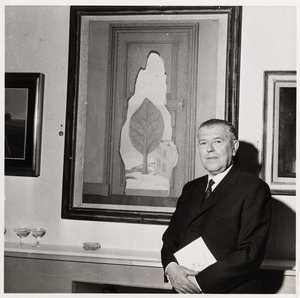
Рене Маґрітт
1898 - 1967 , Бельгія
Довідкова інформація
- Artistic Movement Or Style: Сюрреалізм
- Artists Or Movements Influenced By This Artist:
- Поп-арт
- Мінімалізм
- Концептуальне мистецтво
- Artists Who Influenced This Artist: ['Джорджо де Кіріко']
- Date Of Birth: 21 листопада 1898
- Date Of Death: 15 серпня 1967
- Full Name: René François Ghislain Magritte
- Nationality: Бельгійський
- Notable Artworks:
- Любовні
- Обман зображень
- Застиглий час
- Умова людини
- Place Of Birth: Лесене, Бельгія
Схожі статті

10 легендарних бронзових скульптур, що змінили мистецтво | OriginalUniqueArt
Відкрийте 10 легендарних бронзових скульптур, що змінили хід мистецтва! Дізнайтесь історії Мікеланджело, Родена та інших геніїв. Репродукції картин преміум-класу для вашого дому – на OriginalUniqueArt.com

10 Легендарних Бронзових Шедеврів, Які Змінили Мистецтво | OriginalUniqueArt
Відкрийте для себе 10 легендарних бронзових шедеврів, що змінили мистецтво! Історія створення, художні техніки та вплив скульпторів Ренесансу й Античності. Купуйте репродукції картин на OriginalUniqueArt.com – музейна якість для вашого дому.

The Enduring Legacy of Bronze: A Historical & Artistic Exploration for the Collector
Explore the rich history & enduring appeal of bronze sculpture with expert insights for collectors at OriginalUniqueArt. Learn about casting techniques, iconic artists, collecting tips & contemporary interpretations.
The Enduring Legacy of Bronze Sculpture: A Collector's Guide to Form & Cultural Significance
Explore the rich history & enduring appeal of bronze sculpture with expert insights for collectors at OriginalUniqueArt. Learn about casting techniques, iconic artists, and collecting tips to build a discerning art collection.
The Enduring Legacy of Bronze: History, Technique & Artistic Expression for the Collector
Explore the rich history & enduring appeal of bronze sculpture with expert insights for collectors at OriginalUniqueArt. Learn about casting techniques, iconic artists, and collecting tips.