A History Forged in Time: The Origins & Evolution of Bronze Sculpture
Bronze is the most popular metal for cast metal sculptures; a cast bronze sculpture is often called simply "a bronze". It can be used for statues, singly or in groups, reliefs, and small statuettes and figurines, as well as bronze elements to be fit...
The allure of bronze—its warm, enduring glow, its capacity for both monumental grandeur and intimate detail—has captivated civilizations for millennia. More than simply a material, bronze represents a confluence of human ingenuity, artistic vision, and cultural values. Its story begins not with aesthetics, but with practicality; the accidental discovery that combining copper with tin yielded an alloy far superior to either metal alone in terms of strength and workability. The earliest examples, dating back to around 3500 BC in Mesopotamia and the Indus Valley, were utilitarian objects – tools, weapons – yet even these nascent forms hint at a burgeoning appreciation for the material’s potential beyond mere function. The Dancing Girl from Mohenjo-daro stands as a testament to this early fascination, a delicate figure cast with remarkable skill, foreshadowing the artistic heights bronze would eventually achieve.
Ancient Greece witnessed an explosion of bronze sculpture, reaching its zenith in works like the Victorious Youth, remarkably preserved by the sea. These weren’t merely representations; they were idealized forms embodying athletic prowess and civic virtue. The Romans, inheriting Greek traditions, further refined casting techniques and embraced bronze for portraiture and narrative reliefs, often celebrating military triumphs and imperial power. However, with the fall of Rome came a decline in large-scale bronze work, as the metal was frequently recycled for more immediate needs – a pattern that would repeat throughout history. The medieval period saw a resurgence in smaller-scale bronzes, particularly in religious iconography, while the Renaissance rediscovered classical forms, prompting a renewed interest in monumental sculpture.
The Lost-Wax Process: Unveiling the Mastery Behind Bronze Casting
 Wikipedia: Lost-wax casting
Lost-wax casting – also called investment casting, precision casting, or cire perdue (French: [siʁ pɛʁdy]; borrowed from French) – is the process by which a duplicate sculpture (often a metal, such as silver, gold, brass, or bronze) is cast from an o...
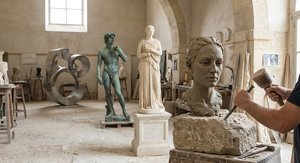
Central to bronze’s enduring legacy is the remarkable lost-wax casting technique – cire perdue in French. This intricate process, dating back over six millennia, allows for unparalleled detail and complexity. It begins with an original sculpture, typically modeled in wax. This wax form is then encased in a ceramic shell, meticulously built up layer by layer. Once the ceramic hardens, the wax is melted out – hence “lost-wax” – leaving a hollow cavity mirroring the original design. Molten bronze is poured into this void, and after cooling and solidifying, the ceramic shell is painstakingly removed, revealing the finished sculpture.
The skill involved extends far beyond simply pouring metal. The creation of the initial wax model demands exceptional artistry, as does the precise construction of the ceramic shell to prevent cracks or imperfections. Spruing – attaching wax rods to guide the molten bronze and allow air to escape – is a critical step, requiring careful planning to ensure even distribution of the metal. Artists like Edgar Degas, in his stunning ballerina sculptures such as ‘Fourth Position Front,’ demonstrate the technique’s capacity for capturing fleeting moments of movement and realism. The subtle textures and dynamic poses achievable through lost-wax casting are hallmarks of exceptional bronze work.
Symbolism Embodied: Decoding Meaning and Narrative in Bronze Art
 The Enduring Legacy of Bronze Sculpture: Technique, Symbolism & Cultural Impact
Explore the rich history & enduring appeal of bronze sculpture with expert insights for collectors. Learn about casting techniques, iconic artists, collecting tips & contemporary interpretations at OriginalUniqueArt.
Bronze, unlike other materials, lends itself beautifully to narrative expression and symbolic weight. Its inherent strength allows for complex compositions and dramatic gestures, while its rich patina – the surface coloration that develops over time – adds layers of depth and meaning. Throughout history, bronze has been employed to commemorate heroes, depict mythological scenes, and explore profound philosophical themes. Consider Paul Manship’s ‘Theseus & Ariadne,’ a poignant sculpture capturing grief and beauty in classical form. The intertwined figures speak volumes about loss, love, and the enduring power of myth.
The choice of bronze itself carries symbolic resonance. Its association with strength, durability, and permanence makes it ideal for representing authority, resilience, and timeless values. Gilding or applying other finishes further enhances its symbolic potential – gilt-bronze, known as ormolu, often signifies luxury and refinement. Even the texture of the surface can convey meaning; rough textures might suggest age or hardship, while polished surfaces evoke elegance and sophistication.
Iconic Artists & Their Bronze Masterpieces: A Collector's Focus
 Two Piece Sculpture 10; Interlocking
Henry Moore’s "Two Piece Sculpture 10; Interlocking" bronze sculpture explores connection & movement. Modern abstract form, lost-wax cast texture. Discover this iconic piece.
Certain artists have indelibly shaped our understanding of bronze sculpture. Henry Moore, a towering figure of 20th-century art, revolutionized the medium with his abstract forms exploring connection and movement. His ‘Two Piece Sculpture 10; Interlocking’ exemplifies this approach, inviting viewers to contemplate the relationship between form and space. Moore's mastery lies in his ability to imbue bronze with a sense of organic vitality, despite its inherent rigidity.
Beyond Moore, artists like Constantin Brancusi pushed the boundaries of abstraction, while Auguste Rodin infused bronze with raw emotion and psychological depth. Degas’ ballerinas offer a glimpse into the world of 19th-century Parisian dance, capturing fleeting moments of grace and precision. For collectors, these iconic works represent not only aesthetic beauty but also significant cultural milestones. Understanding an artist's unique approach to bronze – their techniques, influences, and thematic concerns – is crucial for informed acquisition.
Preservation, Patina & Provenance: Caring for Your Bronze Investment
The free online edition of this book is available at http://www.getty.edu/publications/artistryinbronze and includes zoomable figures and tables ...
Acquiring a bronze sculpture is not merely purchasing an artwork; it’s investing in a piece of history. Proper care and preservation are essential to maintaining its value and beauty. The patina – the surface coloration that develops over time due to oxidation – is often considered a desirable characteristic, adding depth and character. However, excessive corrosion can be detrimental. Regular cleaning with gentle soap and water, followed by waxing, helps protect the surface.
Provenance – the documented history of ownership – is also paramount. A well-documented provenance adds credibility and value to a sculpture, assuring its authenticity and tracing its journey through time. Collectors should seek sculptures with clear records of origin, previous owners, and any restoration work undertaken. Understanding the casting process used, identifying the foundry mark (if present), and consulting with art conservation professionals are all vital steps in ensuring the long-term preservation of your investment.
Contemporary Interpretations: The Future of Bronze Sculpture
Despite its ancient origins, bronze sculpture remains a vibrant and evolving medium. Contemporary artists continue to push boundaries, exploring new forms, techniques, and thematic concerns. From large-scale public installations to intimate studio works, bronze is being reimagined in innovative ways. Artists are experimenting with mixed media, incorporating other materials alongside bronze to create hybrid sculptures that challenge traditional definitions.
The enduring appeal of bronze lies in its versatility and timeless quality. Its ability to convey both strength and subtlety, permanence and fragility, makes it a powerful medium for expressing complex ideas and emotions. As collectors, we are not simply acquiring objects; we are preserving a legacy – a tradition of artistic innovation that stretches back millennia. At OriginalUniqueArt