Expressionism
Carnival (Лайонел Файнінґер)
Лайонел Файнінґер (1871–1956) створив Carnival. Він належить до напряму Expressionism. Виконано в Oil On Canvas.
- Oil On Canvas

 Переглянути в інтер'єрі

 Картина олією ручної роботи
 Надіслати як листівку
 Поділитися
 Інформаційна картка


 Завантажити
 Схожі екземпляри
 Рентгенівське дослідження
 Слайд-шоу
 Питання та відповіді

 Статистика
Carnival коротко
- Назва
- Carnival
- Художник
- Лайонел Файнінґер (1871–1956)
- Рік народження митця
- Нью-Йорк, Сполучені Штати Америки
- Матеріал
- Oil On Canvas
- Період
- Early Modern
- Сюжет
- people, figures, street scene, building, clock tower, umbrella
Що зображено на Carnival?
Identification of Carnival by Lyonel Feininger
The street comes alive in Carnival, a spirited oil on canvas work by Lyonel Feininger. Created in 1911, this piece captures a moment of public celebration. The scene unfolds with a sense of movement, as if the viewer has just stepped into the middle of a bustling procession. People move through the space, their presence adding a layer of human energy to the urban setting.
Lyonel Feininger brings this specific vision to life through his unique handling of the medium. The oil paint carries the weight of the figures and the architecture, grounding the festive atmosphere in a tangible reality. Every brushstroke contributes to the feeling of a city in motion, caught in the middle of a joyful, crowded event. It is a window into a specific time and place, preserved through the artist's hand.
Composition and Visual Elements
A lively street scene unfolds before the eyes, filled with the restless energy of a crowd in motion. At least nine individuals populate the thoroughfare, each caught in a private moment of transit. One figure carries an umbrella against the sky, while another relies on a cane to navigate the pavement. Some travelers shoulder handbags or backpacks, their bodies angled as they move through the urban space. The figures appear to drift past one another, creating a sense of constant, rhythmic movement through the heart of the city.
In the background, the architecture looms with a sense of permanence. A building with a prominent clock tower watches over the pedestrians, its structure anchoring the bustling activity below. The composition draws the eye through the layers of the street, where the interplay of people and buildings creates a complex, layered perspective. The arrangement of the crowd suggests a spontaneous gathering, a slice of daily life where every person contributes to the collective pulse of the scene.
Technique and Artistic Style
The oil on canvas pulses with a restless energy, capturing a moment of movement through a lens of Expressionism. Colors collide and dance across the surface, refusing to settle into quietude. There is a palpable sense of rhythm in the way the pigments are applied, mirroring the lively street scene unfolding before us. The brushwork feels alive, driven by a desire to translate the emotional heat of a public celebration into visible, tactile strokes.
A subtle tension exists between the emotional intensity of Expressionism and the structural discipline of Cubist influence. While the colors scream with life, the underlying forms suggest a more calculated, geometric arrangement. This intersection of styles creates a visual language where the chaos of a crowd meets the organized logic of modernism. The figures move through a space that feels both spontaneous and carefully constructed, as if the artist is balancing the raw feeling of the moment with a precise, architectural eye.
Where to See This Artwork Today
The lively energy of this scene remains preserved within the walls of the Art Institute of Chicago. Visitors traveling to Chicago, IL, US, find this piece held within the institution's permanent collection. It resides there as a part of the Joseph Winterbotham Collection, waiting for those who wander through the museum's galleries to encounter its movement.
The painting stays housed in the Art Institute of Chicago, Chicago. It exists in this specific space, allowing the colors and the figures to remain part of the city's cultural landscape. One can find it among the many works that populate the museum's halls, where the spirit of the carnival continues to exist in its physical form.
Зображення високої роздільної здатності Carnival

Суспільне надбання: художник помер у 1956 році.
Інші розміри, кадри та цитування →Лайонел Файнінґер, Carnival. Суспільне надбання
Відповіді на запитання про Carnival
Яка техніка використана у творі "Carnival"?
Техніка виконання «Carnival» роботи Лайонел Файнінґер — Oil On Canvas. Репродукції мають на меті відтворити вигляд цієї техніки.
Що зображено на творі «Carnival» роботи Лайонел Файнінґер?
«Carnival» роботи Лайонел Файнінґер зображує: people, figures, street scene, building, clock tower, umbrella, cane, handbags.
Чи не захищений твір "Carnival" авторським правом?
Щодо авторського права, «Carnival» є є суспільним надбанням — термін дії авторського права закінчився.
Якому художнику приписують роботу "Carnival"?
«Carnival» було створено Лайонел Файнінґер. Інформація на цій сторінці описує оригінальний твір Лайонел Файнінґер.
До якого художнього напряму належить «Carnival» роботи Лайонел Файнінґер?
«Carnival» — це твір у стилі Expressionism. Назва течії вказує на художню традицію, до якої належить цей твір.
Яке місце посідає «Carnival» у творчому шляху Лайонел Файнінґер?
«Carnival» належить до Early Period Лайонел Файнінґер.
Чому статус авторського права на "Carnival" саме такий?
«Carnival» роботи Лайонел Файнінґер перебуває у є суспільним надбанням — термін дії авторського права закінчився. Термін дії авторського права розраховується від року смерті митця, яка відбулася у 1956.
Яким чином твір "Carnival" перегукується з іншими роботами Лайонел Файнінґер?
У творчому спадку Лайонел Файнінґер твір "Carnival" витриманий у стилі Expressionism та перегукується з темами expressionism and cubism influence, urban life exploration, pivotal early career work, transition to fine art.
Як сюжет твору "Carnival" перегукується із звичними темами Лайонел Файнінґер?
Серед відомих тем Лайонел Файнінґер, як і в expressionism and cubism influence, urban life exploration, pivotal early career work, transition to fine art, у творі «Carnival» особливий акцент зроблено на people, figures, street scene, building, clock tower, umbrella, cane, handbags.
Про художника Лайонел Файнінґер

1871–1956, Сполучені Штати Америки
Лайонел Файнінґер
Ранні роки та кар'єра: від карикатуриста до витонченого художника Народження та родина: Льонель Чарльз Адріан Фейнінгер народився 17 липня 1871 року в Нью-Йорку. Його батько, Карл Фейнінгер, був німецько-американським скрипалем і композитором, а мати, Елізабет Фейнінгер, — американською співачкою. Таке мистецьке коріння суттєво вплинуло на його ранній розвиток. Рання освіта та європейські подорожі: У 1887 році, у віці 16 років, Фейнінгер вирушив до Європи для вивчення музики, проте невдовзі переключив свою увагу на образотворче мистецтво.
Також за участю Лайонел Файнінґер
 The honeymooners
 Boats1917
 Sailing Boats
 Blue Coast

Есе до твору Carnival
 Lyonel Feininger: Bridging Expressionism & Cubism – A Study of Spiritual GeometryExplore the captivating world of Lyonel Feininger, a pivotal figure bridging Expressionism & Cubism. Discover his architectural visions, Ba…
 The Architecture of the Crowd: Examining Human Presence in Urban CompositionsExplore the evolution of urban art from Caillebotte to modern street murals. Discover the pulse of the city through masterworks.
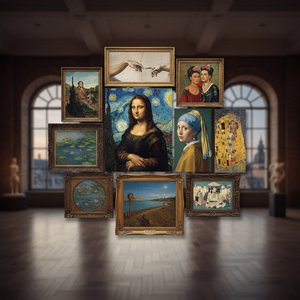 Топ-10 легендарних шедеврів олійного живопису, які змінили мистецтво назавжди | OriginalUniqueArt.comВідкрийте для себе 10 легендарних шедеврів олійного живопису, які змінили світ мистецтва! Історія Ван Гога, Моне та інших геніїв. Репродукц…