Expressionist Orientalism
Chinoiseries (Джеймс Енсор)
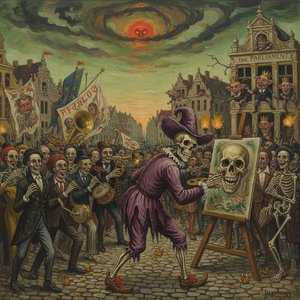
Джеймс Енсор (1860–1949) створив Chinoiseries. Він належить до напряму Expressionist Orientalism. Виконано в Акрил на полотні.
- Акрил на полотні

 Переглянути в інтер'єрі

 Картина олією ручної роботи
 Надіслати як листівку
 Поділитися
 Інформаційна картка


 Завантажити
 Схожі екземпляри
 Рентгенівське дослідження
 Слайд-шоу
 Питання та відповіді

 Статистика
Chinoiseries коротко
- Назва
- Chinoiseries
- Художник
- Джеймс Енсор (1860–1949)
- Рік народження митця
- Остенде, Бельгія
- Матеріал
- Акрил на полотні
Що зображено на Chinoiseries?
A World Within Walls: Unpacking James Ensor’s “Chinoiseries”
James Ensor's "Chinoiseries," painted in 1880, isn’t merely a depiction of an interior scene; it’s a carefully constructed psychological landscape. This captivating work, residing within the Royal Museums of Fine Arts of Belgium in Brussels, offers a glimpse into the artist’s uniquely unsettling and intensely personal vision. Ensor, born in Ostend to an English father and Belgian mother, possessed a sensibility deeply shaped by his upbringing amidst the vibrant chaos of a seaside resort town – a place saturated with masks, curiosities, and a potent sense of theatricality. This early exposure profoundly influenced his artistic trajectory, leading him away from conventional academic training and toward a fiercely independent style that would forever challenge the established norms of art.
The Dance of Form and Feeling: Style and Technique
“Chinoiseries” is a masterclass in Expressionist technique, subtly blended with elements of Orientalism. Ensor’s brushstrokes are not delicate or refined; they are bold, assertive, and often deliberately rough, conveying an underlying sense of unease and emotional intensity. The color palette—dominated by deep blues and greens—creates a claustrophobic atmosphere, intensifying the feeling of being trapped within the confines of the room. Notice how he utilizes contrasting colors – the vibrant reds and yellows of the decorative objects against the somber background – to draw the eye and heighten the drama. The composition itself is deliberately unbalanced, with the figures positioned in ways that disrupt any sense of harmony or stability. This deliberate distortion reflects Ensor’s interest in exploring the darker aspects of human experience.
- Oil on Canvas: The medium lends itself perfectly to Ensor's expressive style, allowing for rich textures and a dynamic application of paint.
- Bold Brushwork: Visible brushstrokes contribute significantly to the painting’s emotional impact.
- Color Palette: Deep blues and greens create an atmosphere of mystery and introspection.
Decoding the Symbols: Orientalism, Masks, and Human Connection
The title itself, “Chinoiseries,” immediately signals Ensor’s fascination with the exotic – specifically, Chinese-inspired motifs. The table laden with porcelain vases, bowls, and cups isn't simply decorative; it represents a deliberate attempt to introduce an element of the ‘other’ into a European setting. This reflects a broader trend in 19th-century art, where artists sought to explore and interpret foreign cultures through visual representation. However, Ensor doesn’t offer a romanticized view of the Orient. Instead, he presents these objects within a context that is unsettling and ambiguous. The two figures present – one standing, the other seated – are deliberately undefined, their faces obscured or averted, suggesting a lack of genuine connection. The cat, perched on the floor, adds another layer of intrigue, embodying mystery and perhaps even a touch of foreboding.
A Portrait of an Artist’s Mind: Context and Legacy
“Chinoiseries” is often compared to the work of Clyfford Still, a pioneer of Abstract Expressionism, due to their shared emphasis on emotional intensity and non-representational forms. However, Ensor's approach is far more rooted in psychological observation than pure abstraction. His paintings are not simply about depicting objects; they’re about conveying feelings – anxiety, isolation, and the unsettling nature of human relationships. The painting’s creation coincided with a period of significant social and artistic change, mirroring the growing anxieties of modern life. It's a testament to Ensor’s ability to capture the complexities of the human condition through a uniquely personal and often disturbing lens. Reproductions of “Chinoiseries” offer a remarkable opportunity to experience this powerful work firsthand, bringing its enigmatic atmosphere into any space.
Explore more captivating works by James Ensor and discover high-quality reproductions at OriginalUniqueArt.com. For deeper insights into the artist’s life and oeuvre, visit his Wikipedia profile: https://en.wikipedia.org/wiki/James_Ensor.
Зображення високої роздільної здатності Chinoiseries

Суспільне надбання: художник помер у 1949 році.
Інші розміри, кадри та цитування →Джеймс Енсор, Chinoiseries. Суспільне надбання
Відповіді на запитання про Chinoiseries
Яка техніка була використана для створення «Chinoiseries» роботи Джеймс Енсор?
Для створення «Chinoiseries» Джеймс Енсор використав(ла) техніку Акрил на полотні. Саме ця техніка визначає матеріальну природу оригінального твору.
Чи є «Chinoiseries» роботи Джеймс Енсор суспільним надбанням?
Статус авторського права для «Chinoiseries» роботи Джеймс Енсор: цей твір є є суспільним надбанням — термін дії авторського права закінчився. Це визначає, чи можна вільно створювати репродукції зображення.
Хто є автором "Chinoiseries"?
Автором твору «Chinoiseries» є Джеймс Енсор. Робота внесена до каталогу під іменем Джеймс Енсор.
До якого художнього напряму належить «Chinoiseries» роботи Джеймс Енсор?
Мистецький напрям, до якого належить «Chinoiseries» роботи Джеймс Енсор, — це Expressionist Orientalism. Така класифікація дозволяє розмістити цей твір у контексті суміжних митців та творів мистецтва.
Яке місце посідає «Chinoiseries» у творчому шляху Джеймс Енсор?
«Chinoiseries» належить до Mature Period творчого шляху Джеймс Енсор. Ця класифікація пов’язує твір із етапом становлення митця.
Чи є твір «Chinoiseries» авторства Джеймс Енсор суспільним надбанням, і чому?
«Chinoiseries» за авторством Джеймс Енсор перебуває у є суспільним надбанням — термін дії авторського права закінчився. Термін дії авторського права розраховується з року смерті митця; Джеймс Енсор помер(ла) у 1949.
Про художника Джеймс Енсор

1860–1949, Бельгія
Джеймс Енсор
Ранні роки, родина та мистецька освіта Джеймс Енсор народився 13 квітня 1860 року в Остенде, Бельгія. Його особистість була сформована на особливому культурному перетині: його батько, Джеймс Фредерік Енсор, народився в Брюсселі в англійської родини, тоді як мати, Марія Катерина Хагеман, була бельгійкою. Це подвійне походження заклало фундамент для світогляду, який часто виходив за вузькі межі місцевих традицій. Зростаючи, художник жив у стінах сувенірної крамниці, якою керували його батьки в Остенде.
Також за участю Джеймс Енсор
 Вхід Христа в Брюссель1888
 Автопортрет із масками1899
 Купальні в Остенде
 Скелети, що гріються1889

Есе до твору Chinoiseries
 Raw Emotion & Bold Strokes: Top 10 Neo-Expressionism MasterpiecesExplore iconic Neo-Expressionist works by Basquiat and Baselitz. Discover museum-quality art at OriginalUniqueArt.com.
 James Ensor's Grotesque Visions: Social Commentary & Artistic InnovationExplore the unsettling yet captivating world of James Ensor, a pioneer of Expressionism. Discover his satirical masterpieces, symbolic imag…
 Capturing the Exotic: A Journey Through the Allure and Complex Legacy of Orientalist ArtExplore the mesmerizing world of Orientalist art. From Napoleon's influence to Renoir's exotic textures, discover the history, beauty, and …