Analytical Cubism · 1929
The Round Table (Жорж Брак, 1929)
Жорж Брак (1882–1963) створив The Round Table. Дата створення — 1929. Він належить до напряму Analytical Cubism. Виконано в Acrylic. Розмір: 144 × 114 cm
- 1929
- Acrylic
- 144 × 114 cm

 Переглянути в інтер'єрі

 Картина олією ручної роботи
 Надіслати як листівку
 Поділитися
 Інформаційна картка


 Завантажити
 Схожі екземпляри
 Рентгенівське дослідження
 Слайд-шоу
 Питання та відповіді

 Статистика
The Round Table коротко
- Назва
- The Round Table
- Художник
- Жорж Брак (1882–1963)
- Рік народження митця
- Аржантей, Франція
- Дата
- 1929
- Матеріал
- Acrylic
- Розміри
- 144 × 114 cm
- Сюжет
- bookshelf composition, table setting, fruit symbolism, geometric forms, artist's gesture, spatial illusion
Що зображено на The Round Table?
Georges Braque’s “The Round Table”: A Dialogue Between Tradition and Innovation
- Subject Matter and Composition:
- Cubist Style and Technique:
- Historical Context – The Birth of Cubism:
- Symbolic Resonance – Apples, Books, and Spatial Illusion:
- Emotional Impact – Quiet Contemplation and Artistic Exploration
Cubist Style and Technique
Braque, alongside Pablo Picasso, spearheaded the development of Analytical Cubism, characterized by its radical fragmentation of form and simultaneous depiction of multiple viewpoints. Unlike Impressionists who sought to capture fleeting moments of light and color, Cubists aimed to represent objects as they appear to the eye when viewed from various angles simultaneously. In “The Round Table,” this is achieved through meticulous geometric reduction—the table surface and books are broken down into interlocking planes that overlap and intersect, creating a disconcerting yet captivating illusion of depth. The artist’s use of muted earthy tones – browns, ochres, and creams – reinforces the sense of stillness and contemplation inherent in the scene. Careful layering of paint contributes to textural richness without resorting to overtly expressive brushstrokes; Braque prioritizes precision and intellectual rigor over emotive gesture.Historical Context – The Birth of Cubism
The genesis of Cubism can be traced back to Picasso’s groundbreaking “Les Demoiselles d'Avignon” (1907), which shattered established artistic norms by depicting figures rendered in fractured planes and incorporating influences from African sculpture. Braque responded swiftly, furthering the exploration of spatial ambiguity and geometric abstraction. The painting emerged during a period of intense intellectual ferment—the burgeoning influence of Einstein’s theory of relativity challenged Newtonian conceptions of space and time, mirroring the Cubists' desire to dismantle traditional perspectival representations. This artistic rebellion was fueled by a broader cultural shift toward questioning accepted truths and embracing new modes of perception.Symbolic Resonance – Apples, Books, and Spatial Illusion
The inclusion of an apple—a motif frequently revisited in Surrealist art—introduces a subtle element of visual paradox. Traditionally associated with knowledge, temptation, and immortality, the apple’s placement on the table subtly disrupts the geometric order established by Braque's technique. Simultaneously, the books symbolize intellectual pursuit and contemplation – mirroring the figure’s posture and gaze. More importantly, the overall spatial arrangement contributes to a feeling of disorientation—the viewer is invited to consider multiple perspectives simultaneously, reflecting the Cubist preoccupation with challenging conventional visual experience. The careful positioning of objects reinforces the idea that reality itself is multifaceted and elusive.Emotional Impact – Quiet Contemplation and Artistic Exploration
Ultimately, “The Round Table” transcends mere formal innovation; it communicates a profound sense of quiet contemplation. Despite its complex geometric structure, the painting exudes an atmosphere of stillness—suggesting a moment of introspection rather than dramatic action. Braque’s masterful control over color and texture invites viewers to engage in a dialogue with the artwork itself, prompting reflection on themes of knowledge, perception, and artistic endeavor. It stands as a testament to Braque's ability to distill complex ideas into a deceptively simple visual form—a lasting legacy of Cubist artistry that continues to inspire admiration and contemplation today.Зображення високої роздільної здатності The Round Table
Захищено авторським правом: ці файли призначені для особистого ознайомлення і не є ліцензією на переопублікацію.
Жорж Брак, The Round Table (1929).
Відповіді на запитання про The Round Table
У якому році було створено «The Round Table» роботи Жорж Брак?
«The Round Table» датована 1929 роком. Ця дата дозволяє визначити місце твору в творчому шляху Жорж Брак та відповідну епоху.
Яка техніка виконання у «The Round Table» роботи Жорж Брак?
«The Round Table» виконано в техніці Acrylic.
Які розміри оригінального твору «The Round Table» роботи Жорж Брак?
Розміри оригіналу «The Round Table» роботи Жорж Брак становлять 144 x 114 cm. Репродукції можна замовити в інших розмірах із збереженням тих самих пропорцій.
Що зображено на творі "The Round Table"?
Тематика, представлена у «The Round Table» роботи Жорж Брак, включає bookshelf composition, table setting, fruit symbolism, geometric forms, artist's gesture, spatial illusion, color palette. Разом вони підсумовують зміст твору.
Чи є «The Round Table» роботи Жорж Брак суспільним надбанням?
«The Round Table» роботи Жорж Брак перебуває у все ще перебуває під захистом авторського права. Цей статус визначає правила відтворення зображення твору.
Якому художнику приписують роботу "The Round Table"?
«The Round Table» було створено Жорж Брак. Інформація на цій сторінці описує оригінальний твір Жорж Брак.
До якого стилю належить "The Round Table"?
Мистецький напрям, до якого належить «The Round Table» роботи Жорж Брак, — це Analytical Cubism. Така класифікація дозволяє розмістити цей твір у контексті суміжних митців та творів мистецтва.
До якого періоду творчості Жорж Брак належить твір "The Round Table"?
«The Round Table» належить до Analytical Cubism творчого шляху Жорж Брак. Ця класифікація пов’язує твір із етапом становлення митця.
Скільки років було Жорж Брак, коли він(ла) створив(ла) "The Round Table"?
Жорж Брак створив(ла) «The Round Table» у віці 47 років. Митець народився(лася) у 1882, а дата створення твору — 1929.
Про художника Жорж Брак
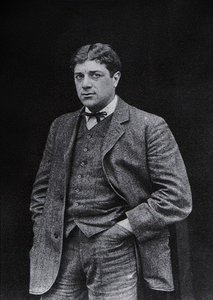
1882–1963, Франція
Жорж Брак
Ранні роки, родина та навчання Жорж Брак народився в Аржентеї, Франція, у 1882 році. Його дитинство пройшло в Гаврі, у середовищі, де панували практичні аспекти деколювання та роботи з кольором. Виростаючи в родині малярів та декораторів, він змалечку занурювався в тактильні реалії своєї майбутньої справи. Таке виховання заклало міцний фундамент технічної майстерності, який згодом незміцнено вплинув на його підхід до живописного полотна.
Також за участю Жорж Брак
 Мандолина1910
 Чоловік з гітарою1914
 Будинки в Л’Естаке
 Прилив в Нормандию1909
Есе до твору The Round Table
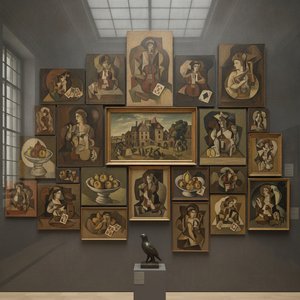 Mastering Cubism: The Top 25 Georges Braque ArtworksJourney through the revolutionary world of Georges Braque. Explore 25 iconic Cubist masterpieces, from geometric abstractions to timeless s…
 Deconstructing Reality: Cubism's Revolutionary Impact on 20th-Century ArtExplore the revolutionary world of Cubism with OriginalUniqueArt. Discover Picasso & Braque's groundbreaking techniques, its philosophical …
 Understanding the Difference Between Analytical and Synthetic CubismMaster the differences between Analytical and Synthetic Cubism with our expert guide. Learn to identify these iconic art movements now.