
 Переглянути в інтер'єрі
 Надіслати як листівку
 Поділитися
 Деталі витвору
 Посібник

 Завантажити
 Схожі екземпляри
 Рентгенівське дослідження
 Слайд-шоу
 Питання та відповіді
 Статистика
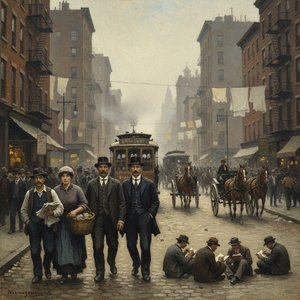
Noontime, St. Botolph Street, Boston


 Розгорнути текст
Гікле / Художній принт
Друк جيкле або на полотні музейної якості з оперативним виготовленням та різноманітними варіантами фінішної обробки. ( Замовити картину ручної роботи Перейти до цифрових зображень)




P118B ₴10

P118H ₴10

P118W ₴10

P438Z ₴10

P508JH ₴12

P508YH ₴12

P805H ₴10

P805Z ₴10

P919BZ ₴10

P919G ₴10

P919XJ ₴10

P959ZH ₴10

P968JZ ₴12

W106C ₴8

W218G ₴10

W218JH ₴8

W218Y ₴10

W307PJ ₴10

W316G ₴10

W316PJ ₴8

W316Y ₴10

W398PJ ₴8

W4111J ₴10

W500HY ₴15

W500JH ₴15

W692G ₴12

W849H ₴8

W940BG ₴15

W953PJ ₴8




Обирайте з наших стандартних розмірів, що відповідають оригінальним пропорціям твору мистецтва.

Введіть необхідну ширину та висоту, щоб принт ідеально підійшов до вашої рами або стіни. Принт можна лише обрізати, але не можна зробити більшим за оригінал, тому при зміні пропорцій частина зображення буде втрачена. Перед друком ми надсилаємо вам цифровий макет для затвердження. Зображення на цій сторінці не відображає реальну обрізку — її можна побачити лише на макеті.
Доставка по всьому світу () за 2 тижні замість стандартних 4/5 тижнів. (5 Листопад)

Безкоштовна експрес-доставка по всьому світу

Високоякісне лляне полотно

Повне страхове покриття доставки

Гарантія повернення митних зборів

Гарантія точного відтворення кольорів

Політика повернення протягом 100 днів (лише у разі виявлення дефектів)

Гарантія повернення 100% коштів

Пропозиція на оптові замовлення
 Скляний варіант доступний лише для розмірів до 110 см

Noontime, St. Botolph Street, Boston
Гікле / Художній принт
Розмір репродукції
-


Підсумкова вартість
₴ 3644
Noontime in Boston: A Study of Urban Life by George Benjamin Luks
George Benjamin Luks’s “Noontime, St. Botolph Street, Boston,” painted in 1923, isn't merely a depiction of a rainy afternoon; it’s a poignant snapshot of American urban life at the cusp of modernity. Housed within the Museum of Fine Arts, Boston, this oil on canvas offers a rare glimpse into the everyday rhythms and quiet dramas unfolding amidst the bustling streets of early 20th-century Boston. Luks, a key figure in the Ashcan School movement, rejected the idealized portrayals favored by the National Academy of Design, instead choosing to capture the gritty reality of working-class life with unflinching honesty and remarkable empathy.
The painting immediately draws the eye to its central figure – a man navigating the rain-slicked sidewalk, clutching an umbrella and a worn suitcase. His posture suggests both weariness and determination, hinting at a journey, perhaps a temporary escape or a return home. Around him, a carefully constructed tableau of ordinary individuals unfolds: a woman hurrying past with her own umbrella, a group pausing beneath awnings, and the subtle suggestion of activity in the background – a bench occupied by a solitary figure, a chair leaning against a building. These aren’t grand historical scenes or heroic narratives; they are fragments of human experience, rendered with remarkable detail and psychological insight.
A Masterclass in Realist Technique
Luks's distinctive style is immediately apparent in the painting’s bold brushstrokes and vibrant color palette. He masterfully employs a technique that blends elements of realism and impressionism, capturing not just the visual appearance of the scene but also its atmosphere—the dampness, the muted light filtering through the clouds, and the sense of movement inherent in a busy street. The use of loose, expressive brushwork creates a dynamic energy, contrasting with the carefully observed details of the figures and their surroundings. Note particularly how he uses color to evoke the feeling of rain – subtle blues, grays, and greens dominate, punctuated by the brighter tones of umbrellas and clothing.
The artist’s attention to light and shadow is equally impressive. The wet pavement reflects the diffused sunlight, creating a shimmering effect that adds depth and realism to the scene. Luks skillfully uses chiaroscuro – the contrast between light and dark – to sculpt the figures and define their forms, drawing the viewer's eye to key elements within the composition. The subtle play of light on the wet pavement is particularly evocative, suggesting both the discomfort of the rain and the beauty of its reflection.
Contextualizing a Moment in Time
“Noontime, St. Botolph Street, Boston” was created during a period of significant social and economic change in America. The early 20th century witnessed rapid industrialization, urbanization, and immigration, leading to the growth of densely populated cities like Boston and the emergence of new working-class communities. Luks’s painting reflects this reality, portraying the lives of ordinary people struggling to make a living in an increasingly complex world. The inclusion of the suitcase suggests themes of migration and displacement – common experiences for many immigrants arriving in America at the time.
Furthermore, understanding the context of Boston itself is crucial. St. Botolph Street was a vibrant, working-class neighborhood during this period, a microcosm of the larger urban landscape. The painting’s location within the city's historical fabric adds another layer of meaning to the scene, reminding us of the rich and often overlooked history of everyday life in America.
Symbolism and Emotional Resonance
Beyond its realistic depiction of urban life, “Noontime, St. Botolph Street, Boston” carries a subtle emotional resonance. The solitary figure with the suitcase embodies themes of loneliness, uncertainty, and the challenges of navigating an unfamiliar city. The rain itself can be interpreted as a symbol of cleansing or renewal, suggesting that even in difficult circumstances, there is always the possibility for hope. Luks’s ability to capture these nuanced emotions through his masterful technique and keen observation makes this painting a truly enduring work of art.
OriginalUniqueArt offers meticulously crafted hand-painted reproductions of “Noontime, St. Botolph Street, Boston,” allowing you to bring this captivating scene into your home or office. Each reproduction is created by skilled artists using archival quality materials, ensuring that the beauty and detail of Luks’s original work are faithfully preserved for generations to come.
Питання та відповіді
Чи має "Noontime, St. Botolph Street, Boston" виражений світлотіньовий контраст?
Рівень контрасту твору «Noontime, St. Botolph Street, Boston» роботи Георг Люське становить Заява.
Яку емоцію передає твір "Noontime, St. Botolph Street, Boston", що належить до стилю Ashcan School?
«Noontime, St. Botolph Street, Boston» сповнене Спокійний емоційності в межах стилю Ashcan School.
Які емоції викликає "Noontime, St. Botolph Street, Boston"?
«Noontime, St. Botolph Street, Boston» асоціюється з Спокійний настроєм. Емоційний тон передає враження, яке справляє цей твір.
Біографія митця
A Life Forged in the Crucible of American Realism
George Benjamin Luks, a name that echoes through the annals of early 20th-century American art, was far more than just a painter; he was a keen observer, a social commentator, and a passionate advocate for portraying the realities of everyday life. Born in Williamsport, Pennsylvania, in 1867 to a family steeped in both Polish medical heritage and German musical traditions – his father a multilingual physician, his mother a talented musician – Luks’s upbringing instilled within him a profound empathy for the diverse experiences of humanity. This sensitivity would become the cornerstone of his artistic vision, shaping his choice of subjects and informing his distinctive style. His early years were marked by an unconventional path; before dedicating himself fully to canvas and brush, he and his brother found success as performers in the vibrant world of vaudeville, honing their observational skills and developing a deep understanding of human character – a skill that would prove invaluable in capturing the nuances of performance and emotion within his paintings. This period, filled with fleeting moments, exaggerated gestures, and raw theatricality, served as an essential training ground for translating the essence of life onto canvas.From European Studies to the Ashcan School
Luks’s formal artistic education began at the Pennsylvania Academy of the Fine Arts, a traditional institution that nevertheless provided him with a foundational understanding of classical techniques. However, it was his subsequent travels across Europe – particularly to Florence and Düsseldorf – that truly ignited his creative spirit and broadened his aesthetic horizons. He immersed himself in the works of the Old Masters, particularly Velázquez and Hals, absorbing their mastery of light, shadow, and the ability to capture the individual character of each subject. These encounters weren’t merely acts of imitation; they were moments of profound synthesis, as Luks began to integrate these influences into a uniquely personal style. Upon his return to America, he found employment as a newspaper illustrator, first in Philadelphia and then in New York City – an experience that proved transformative. This work exposed him directly to the bustling streets, diverse populations, and often-overlooked hardships of urban life, providing him with a wealth of subject matter and solidifying his commitment to depicting the realities of American society. Crucially, he connected with a group of like-minded artists—Robert Henri, John Sloan, William Glackens—who shared a rejection of academic conventions and a desire to create art that reflected their own experiences and perspectives. This collective spirit gave rise to the Ashcan School, a movement that challenged the established norms of the art world and celebrated the beauty found in the everyday.Capturing the Pulse of Urban Life
Luks’s paintings are instantly recognizable for their dynamic energy, bold compositions, and unflinching portrayal of urban life. He deliberately avoided romanticizing or idealizing his subjects; instead, he presented a gritty, honest depiction of the realities faced by ordinary people in early 20th-century America. His canvases often featured scenes from New York City – cab drivers navigating crowded streets, street performers entertaining passersby, laborers toiling in factories and mines, and everyday individuals going about their daily routines. His most famous works, such as *The Cabby* and *Sulky Boy*, are not simply depictions of these subjects; they are imbued with a sense of pathos and humanity. *The Cabby*, for example, captures the weariness etched on the face of a hardworking man, while simultaneously conveying a quiet dignity. Similarly, *Sulky Boy* offers a poignant glimpse into the vulnerability and introspection of youth. Luks’s technique was as distinctive as his subject matter; he employed a thick impasto style, applying paint liberally to the canvas, creating a textured surface that seemed to vibrate with energy. His use of color was often muted – reflecting the grimy realities of urban life – but punctuated by flashes of brilliance that drew the viewer's eye and added depth to the composition.A Voice for the Underrepresented and Lasting Legacy
As a key member of “The Eight,” Luks played a pivotal role in challenging the established art world and paving the way for American modernism. This group, which included Henri, Sloan, and Glackens, staged an independent exhibition in 1908 that generated considerable controversy but also garnered significant attention for their innovative approach to painting. Luks wasn’t simply interested in documenting reality; he sought to convey its emotional weight, its inherent drama. He wanted his paintings to be felt as much as seen – to evoke a sense of empathy and understanding in the viewer. Beyond his artistic achievements, Luks was also a dedicated advocate for American art and artists. He taught at the Art Students League, inspiring generations of young painters to embrace their own unique voices and perspectives. His influence can be seen in the work of countless subsequent artists who sought to capture the spirit of the urban experience – from Edward Hopper’s solitary figures in anonymous cityscapes to the social realism of later American painters. George Benjamin Luks died in 1933, leaving behind a remarkable body of work that continues to resonate with viewers today. His paintings are not merely historical documents; they are powerful testaments to the human condition, reminders of the struggles and triumphs of those whose stories might otherwise have been forgotten. He remains a vital figure in American art history – a champion of realism, a social observer, and a voice for the often-overlooked members of society.
Георг Люське
1867 - 1933 , США
Короткі факти
- Artistic Movement Or Style: Ashcan School, Реалізм
- Artists Or Movements Influenced By This Artist: ['Американський модернізм']
- Artists Who Influenced This Artist:
- Velázquez
- Hals
- Manet
- Date Of Birth: 1867
- Date Of Death: 1933
- Full Name: George Benjamin Luks
- Nationality: Американський
- Notable Artworks:
- The Cabby
- Sulky Boy
- Coal Mining Town
- Place Of Birth: Williamsport, USA
Пов'язані статті
The Ashcan School: Realism, Urban Life & the Democratization of American Art
Explore the revolutionary Ashcan School! Discover how artists like Henri & Sloan challenged tradition with gritty realism, capturing urban life in early 20th-century America. Learn about their impact on American art history.

Romantic Realism's Finest: 10 Masterpieces for Your Home | OriginalUniqueArt
Explore 10 defining masterpieces of Romantic Realism! Discover Courbet, Millet & Daumier's powerful paintings—capturing emotion and social realities. Find museum-quality reproductions for your home at OriginalUniqueArt.com.

Топ-25 шедеврів Жоржа Брака: мистецтво кубізму для вашого дому | OriginalUniqueArt
Відкрийте для себе 25 найвідоміших шедеврів Жоржа Брака! Пориньте у світ кубізму, аналізуйте кольори та техніку легендарного французького художника. Репродукції картин Брак для вашого дому – на OriginalUniqueArt.com

25 шедеврів Жоржа Сера: Відкрийте світ точкового малярства | OriginalUniqueArt
Відкрийте світ Жоржа Сера! 25 культових картин імпресіонізму та пуантилізму. Історія мистецтва, унікальні техніки живопису та натхнення для декору вашого дому. Купуйте репродукції картин Сера високої якості на OriginalUniqueArt.com!

Concrete Visions: Exploring the Urban Landscape in Painting – From Realism to Contemporary Art
Explore the evolution of cityscape painting from Realism to contemporary art with OriginalUniqueArt. Discover key artists & invest in timeless urban visions. Expert guidance, museum-quality reproductions.
