Cubist Style
Mechanical Elements (Фернан Леже)
Фернан Леже (1881–1955) створив Mechanical Elements. Він належить до напряму Cubist Style. Виконано в Oil On Canvas. Екземпляр зберігається в Метрополітен-музей у Нью-Йорк, Сполучені Штати Америки.
- Oil On Canvas
- Метрополітен-музей, Нью-Йорк

 Переглянути в інтер'єрі

 Картина олією ручної роботи
 Надіслати як листівку
 Поділитися
 Інформаційна картка


 Завантажити
 Схожі екземпляри
 Рентгенівське дослідження
 Слайд-шоу
 Питання та відповіді

 Статистика
Mechanical Elements коротко
- Назва
- Mechanical Elements
- Художник
- Фернан Леже (1881–1955)
- Рік народження митця
- Аржантан, Франція
- Матеріал
- Oil On Canvas
- Де подивитися
- Метрополітен-музей, Нью-Йорк, Сполучені Штати Америки
- Рух
- Cubist Style
- Період
- Modern
- Сюжет
- mechanical elements, cubism, geometry, industrial design, abstraction, assemblage
Що зображено на Mechanical Elements?
A Vision of Industrial Harmony
Fernand Léger’s “Mechanical Elements,” painted in 1924, stands as a striking testament to the burgeoning fascination with technology during the interwar period. More than just a depiction of gears and pipes—though undeniably prominent—the artwork embodies Léger's ambitious goal: to synthesize Cubist fragmentation with the dynamism of the machine age, creating an aesthetic that simultaneously challenged artistic conventions and reflected the transformative realities of modern life.
Born Joseph Fernand Henri Léger in Argentan, Normandy, 1881, Léger embarked on a journey from rural landscapes to the epicenter of Parisian avant-garde. Initially drawn to architecture, his artistic path swiftly pivoted toward painting after arriving in Paris around 1900, fueled by an unwavering conviction that art could engage with the complexities of its time.
Cubism Revisited: Geometric Precision
Léger’s stylistic evolution is inextricably linked to Cubism. Influenced profoundly by Picasso and Braque, he adopted the fractured perspective and simultaneous viewpoints characteristic of this revolutionary movement—a deliberate rejection of traditional representation in favor of exploring spatial relationships through geometric forms. However, Léger didn't simply replicate Cubist principles; he pushed them further, distilling them into a simplified vocabulary of circles, squares, and lines.
“Mechanical Elements” exemplifies this approach brilliantly. The canvas is dominated by interlocking geometric shapes—primarily circles and squares—arranged in a rhythmic pattern that evokes the precision and repetition found in industrial machinery. These forms aren’t merely decorative; they actively contribute to conveying a sense of movement and energy, mirroring the ceaseless pace of urban life.
Symbolism Beyond Mechanism
While the artwork's visual language speaks directly to the influence of technology, Léger imbued “Mechanical Elements” with deeper symbolic resonance. The repetition of geometric shapes isn’t merely a stylistic device; it represents an attempt to capture the impersonal logic and order inherent in industrial processes—a deliberate contrast to the organic forms favored by Impressionism and Post-Impressionism.
Furthermore, Léger's use of color – predominantly shades of gray punctuated by vibrant accents – underscores this thematic preoccupation. Gray symbolizes the materiality of metal and concrete, while bursts of color represent human vitality and creativity—a harmonious blend reflecting Léger’s belief that art could coexist with technological advancement without sacrificing beauty or emotional depth.
A Legacy of Innovation
"Mechanical Elements" cemented Léger's position as a pioneer of Tubism – a variant of Cubism developed by Léger himself—characterized by the use of tubular forms to represent objects and figures. This innovative technique anticipated developments in Pop Art decades later, demonstrating Léger’s enduring influence on subsequent generations of artists.
Today, reproductions of “Mechanical Elements” continue to captivate audiences with their bold aesthetic and intellectual ambition. They serve as a powerful reminder that art can not only reflect the spirit of its time but also actively shape our understanding of it—a timeless masterpiece celebrating both geometric precision and human resilience.
У якому музеї зберігається Mechanical Elements?
Метрополітен-музей
Нью-Йорк, Сполучені Штати Америки
Витоки та історія Метрополітен-музею Історія Метрополітен-музею бере свій початок від спільного бачення групи підприємців, фінансистів, провідних митців та мислителів. Після офіційної реєстрації у 1870 році заклад почав пошуки постійного дому для своїх невпинно зростаючих колекцій. Перш ніж оселитися на нинішньому місці, музей недовго перебував у маєтку Дуглас-Меншн на Західній 14-й вулиці.


Зображення високої роздільної здатності Mechanical Elements

Суспільне надбання: художник помер у 1955 році.
Інші розміри, кадри та цитування →Фернан Леже, Mechanical Elements, Метрополітен-музей. Суспільне надбання
Кольори підібрані цифровим експертом відповідно до оригіналу, файл ретельно ретушований і точно передає мазки художника.
Придбати файл у високій роздільній здатностіВідповіді на запитання про Mechanical Elements
У якому музеї зберігається оригінал «Mechanical Elements»?
Оригінал «Mechanical Elements» роботи Фернан Леже зберігається в Метрополітен-музей, Нью-Йорк, Сполучені Штати Америки. Репродукція дозволяє прикрасити цим твором ваш дім.
Яка техніка виконання у «Mechanical Elements» роботи Фернан Леже?
Техніка виконання «Mechanical Elements» роботи Фернан Леже — Oil On Canvas. Репродукції мають на меті відтворити вигляд цієї техніки.
Які сюжети зображені у «Mechanical Elements» роботи Фернан Леже?
«Mechanical Elements» роботи Фернан Леже зображує: mechanical elements, cubism, geometry, industrial design, abstraction, assemblage, modern art.
Чи можна вільно відтворювати зображення «Mechanical Elements» роботи Фернан Леже?
Статус авторського права для «Mechanical Elements» роботи Фернан Леже: цей твір є є суспільним надбанням — термін дії авторського права закінчився. Це визначає, чи можна вільно створювати репродукції зображення.
Хто є автором твору "Mechanical Elements"?
«Mechanical Elements» було створено Фернан Леже. Інформація на цій сторінці описує оригінальний твір Фернан Леже.
До якого художнього напряму належить «Mechanical Elements» роботи Фернан Леже?
«Mechanical Elements» роботи Фернан Леже належить до течії Cubist Style. Цей напрям визначає стилістичний контекст твору.
До якого періоду творчості Фернан Леже належить твір "Mechanical Elements"?
«Mechanical Elements» належить до Mechanical Period творчого шляху Фернан Леже. Ця класифікація пов’язує твір із етапом становлення митця.
Яким чином обґрунтовано статус авторського права на «Mechanical Elements» роботи Фернан Леже?
Статус авторського права на твір "Mechanical Elements" — є суспільним надбанням — термін дії авторського права закінчився — визначається датою смерті митця у 1955.
Чи знаходиться «Mechanical Elements» роботи Фернан Леже у рідній країні митця?
Ні — твір зберігається за кордоном. Твір "Mechanical Elements" зберігається в Сполучені Штати Америки, тоді як Фернан Леже народився(-лася) в Франція.
Про художника Фернан Леже

1881–1955, Франція
Фернан Леже
The Life of Fernand Léger The story of Fernand Léger begins in the village of Argentan, located in the Orne region of Lower Normandy. He arrived into this world on February 4, 1881, as an only son. His early years were shaped by the quietude of the French countryside and the presence of his mother, Marie-Adèle Daunou. His father, a man who made his living as a cattle dealer, passed away when Fernand was still a young boy, leaving the child to be raised by his mother in a household marked by her piety and a certain self-effacing nature.
Також за участю Фернан Леже
 Місто1919
 Механік1920
 Трьох жінок1921
 Нюди в лісі1910

Есе до твору Mechanical Elements
 Cubism Unveiled: How Picasso and Braque Redefined Modern Art through Geometric RevolutionExplore the revolutionary world of Cubism. Discover how Pablo Picasso and Georges Braque dismantled perspective to redefine modern art thro…
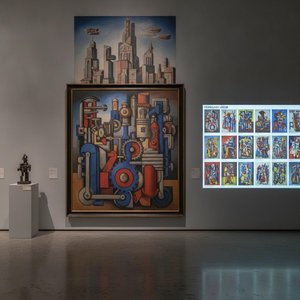 Mastering the Machine Age: The 25 Best Artworks by Fernand LégerImmerse yourself in the vibrant world of Fernand Léger. Explore 25 iconic masterpieces of Cubism and Tubism, from bold geometric forms to m…
 Індустріальний Естетизм: 10 Шедеврів Мистецтва, Що Відображають Еру Машин та Металу | OriginalUniqueArtВідкрийте для себе 10 шедеврів мистецтва, що передають дух індустріальної епохи! Дізнайтесь історії Моне, Піссаро та інших художників. Репр…