Expressionism
Summer Clouds (Еміль Нольде)
Еміль Нольде (1867–1956) створив Summer Clouds. Він належить до напряму Expressionism. Виконано в Oil.
- Oil

 Переглянути в інтер'єрі

 Картина олією ручної роботи
 Надіслати як листівку
 Поділитися
 Інформаційна картка


 Завантажити
 Схожі екземпляри
 Рентгенівське дослідження
 Слайд-шоу
 Питання та відповіді

 Статистика
Summer Clouds коротко
- Назва
- Summer Clouds
- Художник
- Еміль Нольде (1867–1956)
- Рік народження митця
- Нольде, Данія
- Матеріал
- Oil
- Період
- Modern
- Сюжет
- ocean, clouds, sky, blue, white
Що зображено на Summer Clouds?
Identification of the Artwork and Artist
Summer Clouds is an expressionist work by Emil Nolde. Born in 1867 in Nolde, Denmark, the artist developed a visual language centered on intense, personal feeling and the psychological weight of his subjects. His approach moved beyond mere representation to capture the internal pulse of the natural world.
Nolde’s career spanned much of the early twentieth century until his death in 1956. His practice was defined by a search for a visual language capable of holding the intensity of his observations, often utilizing color as the primary substance of form. This work reflects his preoccupation with the immediate sensation of light and atmosphere.
The Composition and Visual Elements
The composition is defined by a horizontal division between a blue ocean and the sky above. Within the celestial expanse, at least thirteen white clouds are scattered across the scene. These forms vary in both size and shape, with some positioned closer to the water's surface while others recede into the distance. The arrangement creates a sense of depth through the varying scale of these atmospheric elements.
The interaction of the blue water and the white clouds establishes a serene and peaceful atmosphere. The work captures the quiet beauty of nature through this simple, direct arrangement of color and form. The visual weight is distributed across the canvas, focusing on the relationship between the sea and the sky.
Зображення високої роздільної здатності Summer Clouds

Суспільне надбання: художник помер у 1956 році.
Інші розміри, кадри та цитування →Еміль Нольде, Summer Clouds. Суспільне надбання
Відповіді на запитання про Summer Clouds
Яка техніка була використана для створення «Summer Clouds» роботи Еміль Нольде?
Техніка виконання «Summer Clouds» роботи Еміль Нольде — Oil. Репродукції мають на меті відтворити вигляд цієї техніки.
Що зображено на творі "Summer Clouds"?
Тематика, представлена у «Summer Clouds» роботи Еміль Нольде, включає ocean, clouds, sky, blue, white. Разом вони підсумовують зміст твору.
Чи є «Summer Clouds» роботи Еміль Нольде суспільним надбанням?
Щодо авторського права, «Summer Clouds» є є суспільним надбанням — термін дії авторського права закінчився.
Якому художнику приписують роботу "Summer Clouds"?
«Summer Clouds» приписують Еміль Нольде.
До якого стилю належить "Summer Clouds"?
«Summer Clouds» роботи Еміль Нольде належить до течії Expressionism. Цей напрям визначає стилістичний контекст твору.
Чи є твір «Summer Clouds» авторства Еміль Нольде суспільним надбанням, і чому?
«Summer Clouds» роботи Еміль Нольде перебуває у є суспільним надбанням — термін дії авторського права закінчився. Термін дії авторського права розраховується від року смерті митця, яка відбулася у 1956.
Яким чином твір "Summer Clouds" перегукується з іншими роботами Еміль Нольде?
«Summer Clouds» поділяє з іншими творами Еміль Нольде характерний стиль Expressionism та притаманні йому теми: post-impressionist influences, die brücke group member, expressionist style, focus on color and form, subjective and primal themes.
Чи є "Summer Clouds" типовим для звичного стилю Еміль Нольде?
«Summer Clouds» змальовує ocean, clouds, sky, blue, white, тоді як характерні теми Еміль Нольде — це post-impressionist influences, die brücke group member, expressionist style, focus on color and form, subjective and primal themes. Порівняння цих двох аспектів демонструє, як цей твір перегукується зі звичними сюжетами митця.
Про художника Еміль Нольде
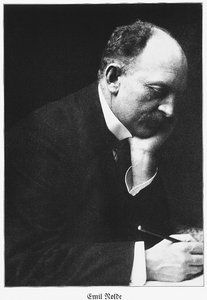
1867–1956, Данія
Еміль Нольде
The Life and Identity of Emile Nolde Born Hans Emil Hansen on 7 August 1867, the man who would become known as Emile Nolde grew up near the village of Nolde in the Duchy of Schleswig. His early years were shaped by the rural, agrarian life of his family. He eventually moved away from this path, choosing instead to work as a wood carver and furniture decorator. This tactile, physical labor preceded his shift toward painting and printmaking.
Також за участю Еміль Нольде
 Sunset
 Sea with Red Sky
 Couple on the beach1903
 Masks1911

Есе до твору Summer Clouds
 Ethereal Skies: The Curated Collector's Guide to Cloudscape Masterpieces and Atmospheric GrandeurDiscover the sublime beauty of cloudscape masterpieces. From Impressionist light to atmospheric depth, explore a curated journey through fi…
 Expressionism vs. New Objectivity: Emotion vs. Precision in German ArtMaster the tension between Expressionist emotion and New Objectivity precision. Explore the soul of German modern art now.
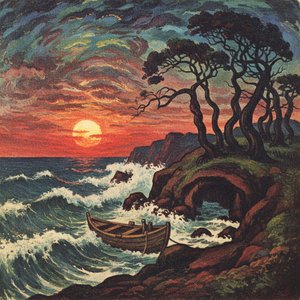 Emile Nolde: A Journey into Expressionist Nature & the Primal SelfExplore the powerful Expressionism of Emile Nolde – a pioneer of emotive landscapes & spiritual themes. Discover his journey, influences, a…