

 Переглянути в інтер'єрі
 Надіслати
 Поділитися
 Деталі
 Посібник

 Завантажити
 Схожі предмети колекціонування
 Рентгенівське дослідження
 Слайд-шоу
 Статистика переглядів
excited people - -
 Олія на полотні
- Настінний декор
- Expressionist Movement
 1913
1913- — Модерн
 103.0 x 77.0 cm
 Читати далі
Придбайте цифрову копію високої роздільної здатності з покращеною якістю, що значно перевершує онлайн-перегляд.
Кожен файл ретельно підготовлений нашими фахівцями за допомогою сучасних інструментів та професійної ручної ретуші. Ми гарантуємо виняткову чіткість, точну передачу кольору та високу деталізацію кожного зображення.
Фінальний файл надсилається електронною поштою протягом 72 годин і оптимізований для негайного використання у професійних виданнях та друкованих матеріалах. Таку якість обирають провідні дизайнерські студії, видавництва та галереї.
Цифрове зображення
Завантажте файл високої роздільної здатності для особистого використання, друку та творчих проєктів. ( Перейти до друку Купити картину ручної роботи)
Що входить у кожне замовлення цифрових зображень
Експертна цифрова доставка з гарантією якості
Обираючи OriginalUniqueArt.com, ви отримуєте не просто зображення — ви отримуєте професійно вдосконалений цифровий витвір мистецтва, створений з надзвичайною точністю та підкріплений гарантією задоволення. Ось усе, що автоматично додається до вашого замовлення:

Швидка доставка на email
Ваш цифровий файл із зображенням високої роздільної здатності буде надісланий вам електронною поштою протягом 72 годин після оформлення замовлення — він буде готовий до негайного використання.

Цифровий файл із покращенням ШІ
Ваш витвір мистецтва професійно оптимізовано за допомогою передових інструментів штучного інтелекту та ручної корекції, що забезпечує максимальну деталізацію, чіткість і точність передачі кольорів.

Безкоштовне повторне завантаження назавжди
Випадково видалили або втратили файл? Не хвилюйтеся — ми надішлемо його вам повторно в будь-який час безкоштовно.

Без митних зборів — завжди
Насолоджуйтесь вашим витвором мистецтва миттєво без жодних мит, зборів або плати за доставку — цифрові завантаження завжди не оподатковуються.

Гарантія точності кольорів
Ми гарантуємо максимально точне відтворення оригінальних кольорів на вашому цифровому зображенні завдяки використанню професійних інструментів та систем управління кольором.

100-денна гарантія задоволення клієнта
Якщо ви не задоволені придбаним цифровим зображенням, ми внесемо правки або повернемо 100% вартості протягом 100 днів — без зайвих запитань.

Гарантія повернення 100% коштів
Незадоволені покупкою? Отримайте повне повернення коштів протягом 100 днів після отримання цифрового файлу — без зайвих запитань.

Знижки на оптові замовлення
Купуйте 3 зображення — заощаджуйте 10% — Купуйте 5 — заощаджуйте 15% — Купуйте 10+ — заощаджуйте 20%. Чудово підходить для творчих проєктів, галерей та агентств.
A Moment Frozen in Vibrant Expression
The painting “Excited People” by Emile Nolde, completed in 1913, isn’t merely an image; it's a palpable distillation of emotion captured on canvas. Measuring 103 x 77 cm, this oil on canvas piece resides within the esteemed Arnot Art Museum collection in the United States—a testament to Nolde’s enduring legacy as a pivotal figure in European Expressionism. Examining its surface reveals more than just pigment; it unveils a profound engagement with the human condition and a masterful command of artistic technique.The Canvas Speaks Volumes: Style and Technique
Nolde's stylistic approach is immediately recognizable—bold, unapologetic color dominates the composition. He eschewed academic conventions, prioritizing intuition and feeling over meticulous realism. The vibrant green background isn’t simply decorative; it serves as an anchor for the energetic hues of the figures themselves – reds, yellows, and blues pulsating with intensity. Nolde employed a technique characterized by thick impasto—heavy application of paint—creating textured surfaces that convey movement and dynamism. This tactile quality invites viewers to immerse themselves in the scene, mirroring the palpable excitement radiating from the subjects depicted.Echoes of Primitive Art: Historical Context
“Excited People” emerged during a period of significant artistic upheaval, coinciding with the rise of Expressionism as a reaction against Impressionistic ideals. Influenced by artists like Vincent van Gogh and Paul Gauguin, Nolde sought to express inner psychological states rather than objective representations of reality. His fascination with primitive art—particularly African masks and carvings—fueled his desire for simplification and symbolic resonance. These artistic explorations reflected broader societal anxieties surrounding the rapid industrialization and urbanization of the early 20th century, capturing a fleeting moment of communal fervor amidst uncertainty.Decoding the Emotion: Symbolism and Interpretation
The central figures – two men engaged in animated conversation – embody the core themes of Expressionist art: spontaneity, passion, and vulnerability. The man lifting his face towards the sky symbolizes aspiration and perhaps even spiritual yearning, while the open mouth suggests unrestrained emotion—a desire to communicate, to share experience. The green background, often associated with fertility and renewal, subtly underscores the energy and vitality of the scene. Beyond its immediate visual impact, “Excited People” invites contemplation on the complexities of human relationships and the enduring power of emotional expression.A Legacy Preserved: Reproductions Available
At https://OriginalUniqueArt.com/, you can experience the brilliance of Nolde’s vision through meticulously crafted oil painting reproductions. Our artisans painstakingly recreate the original artwork, ensuring exceptional accuracy and capturing the textural richness of Nolde's distinctive impasto technique. Discover “Excited People” and explore our extensive collection of Emile Nolde masterpieces: /art/list/?Filter=9GEJUX-Emile-Nolde-excited-people-. Bring a touch of Expressionist dynamism into your home or inspire your creative endeavors—a vibrant reminder of art’s ability to convey profound emotion.Запитання та відповіді
Якою технікою виконано "excited people - -" та який його розмір?
«excited people - -» виконана в техніці Олія на полотні, її розмір у оригіналі становить 103 x 77 cm.
Який розмір друку «excited people - -» Еміль Нольде підійде для рекомендованої кімнати?
Рекомендоване поєднання для «excited people - -» Еміль Нольде: принт розміром Середній розмір у Вітальня.
Чи можу я побачити рентгенівський знімок «excited people - -» Еміль Нольде?
Сторінка Рентгенівське дослідження для твору «excited people - -» Еміль Нольде — це інтерактивний візуалізатор, який дозволяє переглядати одинадцять оптичних шарів зображення, включаючи рентгенівський зріз.
Біографія митця
Early Life and Artistic Beginnings
Emil Nolde, a name synonymous with vibrant expressionism, was born Hans Emil Hansen on August 7th, 1867, in the small village of Nolde, nestled within the Schleswig-Holstein region of Germany. His origins were deeply rooted in rural life – his family’s livelihood intertwined with the rhythms of farming and a strong connection to their local community. Despite this grounding, young Hans harbored an intense yearning for artistic expression, a passion that initially met resistance from his parents who envisioned a more practical future for him. However, Nolde's determination burned bright, and he relentlessly pursued his artistic dreams, beginning with humble beginnings as a wood carver and furniture decorator – skills that would later inform the tactile quality of his paintings. It was in his late twenties that he truly dedicated himself to painting, embarking on a journey of self-discovery through color and form.Artistic Development and Influences
Nolde’s artistic path wasn't paved with formal training; instead, it unfolded through a process of intense self-education and profound immersion in diverse cultural experiences. He traveled extensively, absorbing the spirit of various landscapes and art movements. Early influences were undeniably shaped by the revolutionary works of Vincent van Gogh – his passionate brushstrokes and emotive color palettes – and Paul Gauguin’s exploration of primitive themes and symbolic imagery. Crucially, Nolde was deeply moved by the expressive power of traditional folk art, particularly the masks and carvings prevalent in rural communities, which instilled within him a fascination with primal emotions and ritualistic symbolism. These encounters ignited a desire to break free from academic constraints and explore a more subjective, emotionally charged approach to painting. Initially experimenting with Realism and Impressionism, Nolde quickly gravitated towards a bolder, more expressive style – one that prioritized conveying inner feelings over strict adherence to representational accuracy.Die Brücke and Expressionist Breakthrough
In 1905, a pivotal moment arrived in Nolde’s artistic life: he co-founded *Die Brücke* (The Bridge), a groundbreaking group of German Expressionist artists based in Dresden. This collective represented a radical departure from the established art world, seeking to dismantle traditional conventions and express profound inner experiences through unrestrained experimentation. *Die Brücke* was driven by a desire to capture the anxieties and uncertainties of modern life, often depicting urban landscapes and figures with distorted forms and jarring colors. Nolde’s contribution to *Die Brücke* was significant; his masterful manipulation of color – particularly his use of intense reds, blues, and yellows – pushed the boundaries of representation and injected a raw emotionality into their work. However, Nolde maintained a somewhat independent trajectory within the group, often diverging in subject matter and stylistic approach, reflecting his deeply personal artistic vision.Key Themes and Artistic Style
Nolde’s oeuvre is characterized by recurring motifs that reveal his profound engagement with spirituality, nature, and the human condition. He frequently depicted religious scenes – from biblical narratives to depictions of saints – imbued with a sense of drama and emotional intensity. Landscapes and seascapes also held a prominent place in his work, often rendered with a brooding atmosphere and a fascination for the power of elemental forces. Portraits, too, were a recurring subject, capturing the essence of individuals through expressive brushwork and symbolic gestures. A defining characteristic of Nolde’s style is his fearless use of color – he employed it not merely to depict reality but to convey emotion, create mood, and evoke psychological states. His paintings are often marked by thick impasto techniques, adding a tactile dimension to the work. Furthermore, Nolde was deeply influenced by primitive art, particularly masks, which he saw as potent symbols of primal emotions and spiritual power.Notable Works and Historical Significance
Throughout his prolific career, Nolde created an extraordinary body of work that continues to captivate audiences today. Some of his most celebrated paintings include *Masks* (1906-1907), a series exploring the symbolic significance of masks; *The Mocking of Christ* (1909), a powerfully emotive depiction of religious suffering; *Autumn Sea* (1908), showcasing his ability to capture the drama and beauty of the natural world; *Flower Garden (Girl and Washing)*, and *Dance around the Golden Calf*. Despite facing criticism and censorship during the rise of Nazism – his work was deemed “degenerate” and removed from museums – Nolde remained steadfast in his artistic convictions. He continued to paint in secret, producing a remarkable collection of watercolor paintings that offer a glimpse into his inner world. Emil Nolde’s legacy extends far beyond his individual achievements; he remains a pivotal figure in the history of German Expressionism, whose innovative use of color and expressive brushwork profoundly influenced generations of artists. His work stands as a testament to the power of art to convey profound emotions and explore the complexities of the human experience.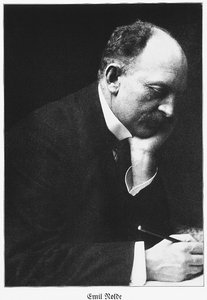
Еміль Нольде
1867 - 1956 , Німеччина
Коротко про автора
- Artistic Movement Or Style: Виразникизм / Die Brücke
- Artists Or Movements Influenced By This Artist: ['Едуард Мунк']
- Artists Who Influenced This Artist:
- Вінсент ван Гог
- Пабло Пікассо
- Date Of Birth: 7 серпня 1867
- Date Of Death: 15 квітня 1956
- Full Name: Emil Nolde / Hans Emil Hansen
- Nationality: Німєцько-данський
- Notable Artworks:
- Надрукування Христа
- Сад квітів
- Осінній морський пейзаж
- Place Of Birth: Нільд, Шлезвіг-Гольштейн, Німеччина