Expressionism · 1893
Storm (Едвард Мунк, 1893)
Едвард Мунк (1863–1944) створив Storm. Дата створення — 1893. Він належить до напряму Expressionism. Виконано в Олія на полотні.
- 1893
- Олія на полотні

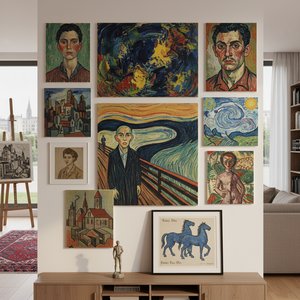
 Переглянути в інтер'єрі

 Картина олією ручної роботи
 Надіслати як листівку
 Поділитися
 Інформаційна картка


 Завантажити
 Схожі екземпляри
 Рентгенівське дослідження
 Слайд-шоу
 Питання та відповіді

 Статистика
Storm коротко
- Назва
- Storm
- Художник
- Едвард Мунк (1863–1944)
- Рік народження митця
- Одальсбрук, Норвегія
- Дата
- 1893
- Матеріал
- Олія на полотні
Що зображено на Storm?
A Tempestuous Soul: Edvard Munch’s “The Storm”
Edvard Munch's "The Storm," painted in 1893, isn’t merely a depiction of a raging tempest; it’s a visceral embodiment of inner turmoil—a profound exploration of anxiety and the fragility of human existence. This iconic work, currently residing within the esteemed collection of the Museum of Modern Art (MoMA) in New York City, stands as a cornerstone of Expressionism, a movement that sought to capture not just external reality but the raw, unfiltered emotions simmering beneath the surface. Munch, already grappling with personal tragedies including the early deaths of his mother and sister, channeled these profound experiences into a visual language characterized by bold color, distorted forms, and an unsettling sense of unease—elements powerfully realized in “The Storm.” The painting’s power resides not just in its dramatic subject matter but in its ability to evoke a deeply felt emotional response within the viewer, mirroring the artist's own turbulent inner world.
Visualizing Inner Chaos: Style and Technique
Munch’s technique is deliberately unsettling. The composition immediately plunges the viewer into a scene of chaotic energy. Thick, swirling brushstrokes dominate the canvas, conveying the relentless force of the wind and rain. These aren't delicate lines; they are aggressive marks, imbued with an almost frantic quality. The color palette contributes significantly to this sense of unease. Muted tones—primarily deep blues, grays, and ochres—create a somber atmosphere, punctuated by jarring flashes of intense yellow in the clouds and the distant light. This contrast isn’t merely aesthetic; it represents the struggle between darkness and hope, despair and perhaps a fleeting glimpse of resilience. The figure in the foreground, rendered with simplified forms and a slightly elongated face, seems to be caught within this maelstrom, her posture suggesting both vulnerability and a desperate attempt to maintain composure. Note how Munch uses perspective—the receding road and distant house create a sense of isolation and emphasize the overwhelming power of nature.
Symbolism and Psychological Depth
“The Storm” is rich in symbolic meaning, deeply rooted in Munch’s personal experiences and his exploration of psychological themes. The storm itself represents not just meteorological conditions but also the internal storms raging within the human psyche—fear, grief, anxiety, and a sense of impending doom. The woman standing on the road has been interpreted as representing humanity confronting these forces, perhaps even succumbing to them. Some scholars connect her posture and gaze to depictions of women awaiting news from loved ones lost at sea – a poignant reflection of Munch’s own anxieties about loss and mortality. The distant house, barely visible through the storm clouds, symbolizes a fragile sense of security, threatened by the overwhelming power of nature. The overall composition can be viewed as an allegory for the human condition—a constant struggle against forces beyond our control.
A Legacy of Emotional Intensity
Edvard Munch’s “The Storm” remains a profoundly moving and influential work of art, solidifying his place as a pioneer of Expressionism. Its enduring appeal lies in its ability to tap into universal emotions—fear, anxiety, and the awareness of our own mortality. Reproductions of this masterpiece offer an opportunity to experience the raw emotional power of Munch’s vision firsthand. Whether displayed in a grand salon or a more intimate setting, “The Storm” continues to resonate with viewers, reminding us of the complexities of the human spirit and the enduring beauty—and terror—of the natural world. For those seeking a high-quality reproduction, OriginalUniqueArt.com offers meticulously crafted hand-painted versions that faithfully capture the essence of this iconic artwork. Further exploration into Munch’s life and artistic journey can be found on platforms like Edvard Munch on OriginalUniqueArt.com and through resources such as Smarthistory and the Metropolitan Museum of Art.
Зображення високої роздільної здатності Storm

Суспільне надбання: художник помер у 1944 році.
Інші розміри, кадри та цитування →Едвард Мунк, Storm (1893). Суспільне надбання
Кольори підібрані цифровим експертом відповідно до оригіналу, файл ретельно ретушований і точно передає мазки художника.
Придбати файл у високій роздільній здатностіВідповіді на запитання про Storm
У якому році було створено «Storm» роботи Едвард Мунк?
«Storm» роботи Едвард Мунк було створено у 1893 році.
Яка техніка використана у творі "Storm"?
Для створення «Storm» Едвард Мунк використав(ла) техніку Олія на полотні. Саме ця техніка визначає матеріальну природу оригінального твору.
Чи можна вільно відтворювати зображення «Storm» роботи Едвард Мунк?
Щодо авторського права, «Storm» є є суспільним надбанням — термін дії авторського права закінчився.
Хто є автором "Storm"?
Автором твору «Storm» є Едвард Мунк. Робота внесена до каталогу під іменем Едвард Мунк.
До якого художнього напряму належить «Storm» роботи Едвард Мунк?
Мистецький напрям, до якого належить «Storm» роботи Едвард Мунк, — це Expressionism. Така класифікація дозволяє розмістити цей твір у контексті суміжних митців та творів мистецтва.
Яке місце посідає «Storm» у творчому шляху Едвард Мунк?
«Storm» належить до Late Period Едвард Мунк.
Скільки років було Едвард Мунк, коли він(ла) створив(ла) "Storm"?
Едвард Мунк створив(ла) «Storm» у віці 30 років. Митець народився(лася) у 1863, а дата створення твору — 1893.
Чому статус авторського права на "Storm" саме такий?
«Storm» за авторством Едвард Мунк перебуває у є суспільним надбанням — термін дії авторського права закінчився. Термін дії авторського права розраховується з року смерті митця; Едвард Мунк помер(ла) у 1944.
Про художника Едвард Мунк

1863–1944, Норвегія
Едвард Мунк
Життя та ідентичність Едварда Мунка Едвард Мунк був норвезьким художником, чиє життя було глибоко переплете з пейзажами та важкою атмосферою його батьківщини. Народившись 12 грудня 1863 року, він присвятив більшу частину свого існування дослідженню складнощів людської психіки через пензель та інструменти для друку. Його творчість часто здавалася прямим продовженням його власних внутрішніх болінь, перетворюючи приватні емоції на щось видиме та спільне для багатьох. Він залишався активною постаттю у світі мистецтва аж до своєї смерті 23 січня 1944 року.
Також за участю Едвард Мунк
 Крик1893
 Вампір німецького національного музею Осло
 Пубертат1914
 Тривога 21894

Есе до твору Storm
 Топ-10 шедеврів експресіонізму: мистецтво емоцій та самовираження від OriginalUniqueArtПориньте у світ експресіонізму! Відкрийте 10 шедеврів Мунка, Ван Гога та інших геніїв. Історія мистецтва, емоції та кольори – все це на Ori…
 Echoes of Anxiety: The 25 Most Iconic Masterpieces by Edvard MunchJourney through the raw emotion of Expressionism with our curated guide to Edvard Munch's top 25 masterpieces. Explore the stories behind h…
 Unveiling the Masterpieces: Top 25 Must-See Artworks at the Munch Museum in OsloExplore 25 iconic Edvard Munch masterpieces from Oslo's Munch Museum. Discover timeless Expressionist art on OriginalUniqueArt.com.