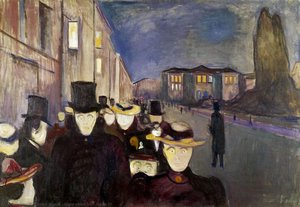
Олія на полотні
 Все про Red vine







































 Для творів мистецтва або репродукцій, розмір яких перевищує 105 см (приблизно 41 дюйм) з будь-якого боку, рама доставляється у вигляді розібраного комплекту. Такий метод гарантує безпечну доставку та запобігає пошкодженням під час транспортування.


Red Vine: A Haunting Expression of Isolation
“Red Vine” (1898) by Edvard Munch is a seminal work within the Expressionist movement, offering a profound exploration of human emotion and psychological distress. This painting isn't merely a depiction of a landscape; it’s a visceral representation of inner turmoil projected onto the external world.
The Painting Style: Expressionism
Expressionism, as an art movement, arose in the late 19th and early 20th centuries as a reaction against Impressionism's focus on objective reality. Instead, Expressionist artists sought to convey subjective emotions and experiences through distortion, exaggeration, and bold use of color. Munch was a key figure in this movement, and "Red Vine" exemplifies its core tenets. The painting utilizes rough brushstrokes, intense reds, and an unsettling composition to evoke a sense of anxiety and unease.
Significance in the Context of Expressionism
“Red Vine” stands as a powerful example of Expressionist principles at work:
- Intense Color Palette: The dominant use of red, far from representing natural foliage, creates an atmosphere of heightened emotion and potential danger. It symbolizes passion, anxiety, and perhaps even impending doom.
- Distorted Forms: The figure within the painting is not realistically rendered; instead, it appears isolated and vulnerable, contributing to the overall feeling of alienation. The house itself seems almost consumed by the encroaching vines, further emphasizing a sense of entrapment.
- Emotional Narrative: The scene doesn't tell a straightforward story but rather evokes a complex emotional state. It suggests themes of isolation, fear, and the struggle against overwhelming forces.
Symbolism and Interpretation
While Munch rarely provided definitive explanations for his works, "Red Vine" is rich in potential symbolism:
- The Red Vines: These are not simply decorative elements; they represent a suffocating force, potentially symbolizing jealousy, obsession, or the destructive power of emotions.
- The Figure: The lone figure’s posture and expression convey a sense of dread and vulnerability. It could be interpreted as representing Munch himself, grappling with his inner demons, or a universal symbol of human fragility in the face of adversity.
- The House: The dilapidated house suggests decay, instability, and perhaps even the crumbling foundations of the psyche. Its integration within the landscape emphasizes its vulnerability to external forces.
Emotional Impact and Legacy
“Red Vine” leaves a lasting impression on viewers due to its raw emotional power. The painting’s unsettling atmosphere and ambiguous narrative invite introspection, prompting audiences to confront their own anxieties and fears. Munch's masterful use of color and form continues to inspire artists today, solidifying his place as one of the most influential figures in modern art. It serves as a poignant reminder of the expressive potential of art to convey profound human experiences.
Питання та відповіді
Red vine — це ручна робота чи принт?
Написано вручну: професійний художник відтворює Red vine олією на лляному полотні.
Який розмір мені обрати для Red vine?
Розміри варіюються від 32.0 x 31.2 cm (₴9109) до 242.5 x 236.8 cm (₴94327); у таблиці на цій сторінці наведено доступні варіанти та їхню вартість.
Скільки триває доставка?
Доставка займає від 4 до 5 тижнів із безкоштовною експрес-доставкою по всьому світу; на цій сторінці також доступна опція термінового виготовлення. Ви можете повернути товар протягом 100 днів і отримати повне відшкодування без жодних додаткових умов.
Яку техніку використав(ла) Едвард Мунк для створення Red vine?
Acrylic On Canvas
 Переглянути в інтер'єрі

 Надіслати як листівку
 Поділитися
 Деталі витвору
 Інформаційна картка


 Завантажити
 Схожі екземпляри
 Рентгенівське дослідження
 Слайд-шоу
 Питання та відповіді

 Статистика