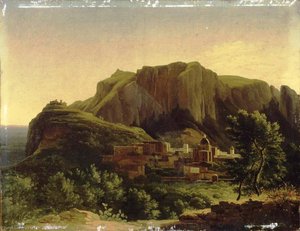
Переглянути в інтер'єрі
 Надіслати як листівку
 Поділитися
 Детальніше

 Завантажити
 Схожі експонати
 Рентгенівське дослідження
 Слайд-шоу
 Статистика
Benoît-Agnes Trioson
 Acrylic On Canvas
- WallArt
- Romanticism
 1800
1800 73.0 x 59.0 cm
 Лувр
Лувр
 Читати далі
Гікле / Художній принт
Музейна якість друку جيкле або на полотні з оперативним виготовленням та різноманітними варіантами фінішної обробки. ( Замовити репродукцію ручної роботи Перейти до цифрових зображень)




P118B $10

P118H $10

P118W $10

P438Z $10

P508JH $12

P508YH $12

P805H $10

P805Z $10

P919BZ $10

P919G $10

P919XJ $10

P959ZH $10

P968JZ $12

W106C $8

W218G $10

W218JH $8

W218Y $10

W307PJ $10

W316G $10

W316PJ $8

W316Y $10

W398PJ $8

W4111J $10

W500HY $15

W500JH $15

W692G $12

W849H $8

W940BG $15

W953PJ $8




Обирайте з наших стандартних розмірів, що відповідають оригінальним пропорціям твору мистецтва.

Ви можете вказати власні розміри, щоб репродукція ідеально підійшла до конкретної рами або інтер'єру. Якщо обраний вами розмір не відповідає пропорціям оригіналу, ми або обріжемо полотно, або розширимо зображення за допомогою дзеркального відображення чи суцільної заливки країв. Перед початком виробництва вам буде надіслано цифровий макет для затвердження.
Будь ласка, зверніть увагу, що попередній перегляд на екрані не відображає фактичне обрізання або розширення. Тільки макет точно покаже фінальну композицію.
Хоча можливість замовлення індивідуальних розмірів доступна, ми рекомендуємо обирати формат із попередньо визначеного списку, щоб зберегти оригінальні пропорції.
Доставка по всьому світу () за 2 тижні замість стандартних 4/5 тижнів. (16 Вересень)

Безкоштовна експрес-доставка по всьому світу

Високоякісне лляне полотно

Повне страхове покриття доставки

Гарантія відшкодування митних зборів

Гарантія точного відтворення кольорів

Політика повернення протягом 100 днів (тільки у разі виявлення дефектів)

Гарантія повернення 100% коштів

Пропозиція на оптові замовлення
 Скляний варіант доступний лише для розмірів до 110 см

Benoît-Agnes Trioson
Гікле / Художній принт
Розмір репродукції
-


Підсумкова вартість
$ 80
The Enigmatic Figure of Benoît-Agnes Trioson
Anne-Louis Girodet de Roussy-Trioson’s “Benoît-Agnes Trioson,” painted in 1804, is not merely a portrait; it's a carefully constructed tableau of restrained emotion and subtle narrative. The subject, identified as the son of Dr. Benoît-François Trioson – Girodet’s adoptive father – sits poised within a richly appointed interior, radiating an aura of quiet contemplation. The painting immediately draws the viewer in with its delicate palette—muted browns, creams, and hints of deep crimson—creating a sense of intimacy and subdued drama. It's a scene that invites speculation: what thoughts occupy this young man’s mind as he withdraws into himself? This initial impression is crucial to understanding the work’s enduring power.
- Subject Matter: The portrait focuses on a young boy, seemingly lost in his own world.
- Setting: A classically inspired interior suggests wealth and refinement, yet also hints at isolation.
- Pose: His posture—hands raised to his face—is instantly recognizable as a symbol of melancholy and introspection.
Bridging Neoclassicism and the Dawn of Romanticism
Girodet’s artistic journey is defined by its fascinating transition between Neoclassical precision and the burgeoning emotional currents of Romanticism. Trained under Jacques-Louis David, he initially adhered to the strict rules of academic painting—clarity, order, and idealized beauty were paramount. However, Girodet's personal life, marked by loss and shaped by his close relationship with his adoptive father, began to infuse his work with a deeper sense of feeling. “Benoît-Agnes Trioson” exemplifies this shift; while the composition retains elements of Neoclassical restraint—the carefully arranged furniture, the balanced lighting—it’s imbued with an undeniable emotional weight that anticipates the Romantic emphasis on subjective experience.
The painting's creation coincided with a period of significant social and political change in France. The Napoleonic era was reshaping European society, and artists were increasingly exploring themes of individual identity, national pride, and the complexities of human relationships. Girodet’s work reflects this broader cultural context, offering a glimpse into the psychological landscape of a young man grappling with his own emotions within a rapidly evolving world.
Symbolism and Artistic Technique
Beyond its immediate visual appeal, “Benoît-Agnes Trioson” is rich in symbolic detail. The violin resting on the floor, the book open on the table—these objects suggest intellectual pursuits and a yearning for knowledge. Yet, the boy’s withdrawn demeanor hints at a dissatisfaction with these endeavors. The muted color palette contributes to the overall mood of melancholy, while the soft lighting creates an atmosphere of intimacy and vulnerability. Girodet's masterful use of chiaroscuro – the dramatic contrast between light and shadow – further emphasizes this emotional effect, drawing attention to the boy’s face and hands.
The painting’s technique is characterized by a remarkable level of detail and precision. Girodet meticulously rendered every brushstroke, capturing the texture of fabrics, the sheen of polished wood, and the subtle nuances of light and shadow. This commitment to realism—combined with his expressive use of color and composition—creates a work that is both visually stunning and emotionally resonant.
A Portrait of Quiet Intensity
“Benoît-Agnes Trioson” remains a captivating masterpiece, offering viewers an intimate glimpse into the inner life of a young man caught between tradition and emotion. It’s a testament to Girodet's artistic skill—his ability to capture not just a likeness but also a profound sense of mood and psychological depth. The painting’s enduring appeal lies in its capacity to evoke empathy and invite contemplation, prompting us to consider the complexities of human experience and the universal themes of melancholy, introspection, and the search for meaning.
Біографія митця
A Bridge Between Worlds: The Life and Art of Anne-Louis Girodet
Anne-Louis Girodet de Roussy-Trioson, a name perhaps less instantly recognizable than his teacher Jacques-Louis David, nevertheless occupies a pivotal position in the transition from Neoclassicism to Romanticism. Born in Montargis, France, in 1767, Girodet’s artistic journey was one of both rigorous academic training and burgeoning emotional expression—a delicate balance that defined his unique style and secured his place as a significant figure in French art. His early life was marked by loss; the untimely deaths of both parents left him an orphan, entrusted to the care of his guardian, Benoît-François Trioson – a physician who would later become his adoptive father and whose influence remained constant throughout Girodet’s career. This familial connection ultimately led to the artist adopting “Trioson” as part of his name in 1806, signifying a deep personal bond alongside his artistic identity. Initially drawn to architecture, Girodet soon found himself captivated by painting, entering David's studio and immersing himself in the prevailing Neoclassical aesthetic—an emphasis on clarity, precision, and moral gravitas. This foundation proved crucial, instilling within him a mastery of form and composition that would remain evident even as his work began to diverge from strict classical principles. His triumph at the Prix de Rome with a depiction of the story of Joseph and his brethren at the young age of 22 signaled a promising future, and his subsequent years in Italy (1789-1793) were formative, resulting in acclaimed works like *Hippocrate refusant les presents d'Artaxerxes* and *Endymion-dormant*.Early Career and Neoclassical Foundations
Girodet’s artistic development wasn’t a sudden break from the past, but rather a gradual infusion of new sensibilities into the established framework of Neoclassicism. While he retained the clarity and precision characteristic of David's school—a testament to his rigorous training—his work increasingly embraced emotional intensity and explored themes previously considered unconventional for the genre. He began by meticulously studying classical sculpture and architecture, absorbing the ideals of order, harmony, and proportion that underpinned Neoclassical art. This foundation provided him with a solid technical base, allowing him to execute his compositions with remarkable accuracy and detail. His early works, such as *La Mort de Marat*, demonstrated an impressive command of form and perspective, reflecting David’s influence while hinting at the emotional depth he would later develop. However, it was during his time in Italy that Girodet truly began to forge his own artistic path. He spent several years studying Italian art and culture, absorbing the vibrant colors, dramatic lighting, and expressive gestures of the Venetian masters. This exposure broadened his artistic horizons and encouraged him to experiment with new techniques and approaches.The Influence of Italy and Early Romanticism
His time in Italy proved transformative, resulting in works like *Hippocrate refusant les presents d'Artaxerxes* (1793) and *Endymion-dormant* (1793), both now housed in the Louvre. These paintings showcased a shift towards greater emotionalism and dramatic intensity—qualities that would become hallmarks of the emerging Romantic movement. *Hippocrate refusant les presents d'Artaxerxes*, depicting the Greek physician rejecting bribes from Artaxerxes, is particularly noteworthy for its dynamic composition, carefully rendered details, and subtle portrayal of Hippocrates’ moral integrity. *Endymion-dormant*, a depiction of the mythical shepherd king in his eternal sleep, exemplifies Girodet’s exploration of sensuality and beauty—themes that would become increasingly prominent in his later work. These early Italian paintings demonstrated a willingness to move beyond the purely didactic and allegorical themes favored by Neoclassical artists, embracing instead more intimate and emotionally charged subjects.A Pioneer of Erotic Undertones and Literary Inspirations
What truly set Girodet apart from many of his contemporaries was his willingness to incorporate elements of eroticism into his paintings—a daring move that challenged artistic norms and paved the way for later artists to explore similar themes with greater freedom. This wasn’t mere sensationalism; rather, it reflected a broader Romantic interest in passion, desire, and the complexities of human experience. His fascination with literature also profoundly influenced his art. He didn't simply illustrate stories; he sought to capture their emotional core, often choosing subjects that allowed for dramatic expression and psychological exploration. The influence of writers like Chateaubriand is particularly noticeable, as seen in portraits and scenes inspired by the author’s works. *Ossian et les généraux français* (1801), a monumental canvas depicting the legendary Scottish warrior Ossian rallying French troops after the Revolution, exemplifies this fusion of literature and art—a unique and evocative composition that captured the spirit of its time. The painting blends imagery drawn from Macpherson’s Ossianic poems with portraits of fallen heroes, creating a powerful visual narrative that explores themes of heroism, sacrifice, and national identity.Later Works and Legacy
In 1806, Girodet was adopted by and took the name of Benoît-François Trioson, who was his tutor and guardian and probably his biological father. Upon inheriting a large fortune (1815), Girodet-Trioson painted little, shuttered himself from daylight, and wrote poetry about painting, adjudged unreadable, and essays on aesthetics. Despite this later period of relative inactivity, Girodet’s earlier works—particularly *Atala au tombeau* (1808) and *La Reddition de Vienne* (1808)—continue to be admired for their dramatic power, psychological insight, and technical brilliance. He remained a respected member of both the Académie de peinture and the Institut de France, receiving honors including the Légion d'honneur—acknowledgements of his artistic merit and societal standing. Anne-Louis Girodet de Roussy-Trioson’s legacy endures as a pivotal figure in the transition from Neoclassicism to Romanticism, demonstrating that innovation often arises from a thoughtful synthesis of tradition and experimentation. His willingness to challenge conventions and explore new artistic territories makes him a compelling figure—a true pioneer who helped shape the course of French painting. Girodet’s works can be found in prestigious museums such as the Musée Girodet in his hometown of Montargis, and the Louvre in Paris, ensuring that his legacy endures for generations to come.
Anne-Louis Girodet
1767 - 1824 , Франція
Короткі факти
- Artistic Movement Or Style: Неокласицизм та Романтизм
- Artists Or Movements Influenced By This Artist: ['Ранній Романтизм']
- Artists Who Influenced This Artist: ['Jacques-Louis David']
- Date Of Birth: 1767
- Date Of Death: 1824
- Full Name: Anne-Louis Girodet de Roussy-Trioson
- Nationality: Француз
- Notable Artworks:
- Scène du déluge
- Atala au tombeau
- Pygmalion et Galatée
- Place Of Birth: Montargis, Франція
Пов'язані статті
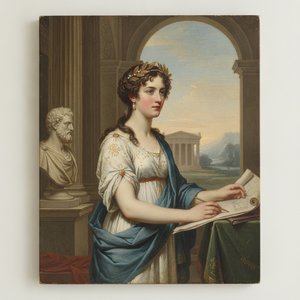
The Revival of Antiquity: Exploring Ideals of Beauty & Power in Neoclassical Portraiture
Explore the captivating world of Neoclassical portraiture! Discover the power & ideals behind masterpieces by David, Girodet & more. Expert analysis, custom reproductions & art appraisal at OriginalUniqueArt.
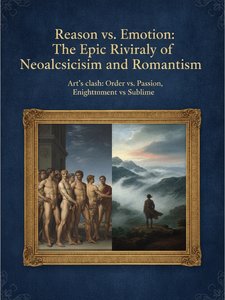
Reason vs. Emotion: The Epic Clash of Neoclassicism and Romanticism in Art History
Explore the profound tension between Neoclassicism's rational order and Romanticism's emotional depth. An expert journey through the masters of art history, from David to Delacroix, perfect for collectors and enthusiasts seeking a deeper understanding of artistic evolution.

Neoclassical Portraiture: The Timeless Elegance of Order, Grace, and Academic Mastery
Explore the refined world of Neoclassical portraiture. Discover the mastery of line, light, and order through an expert exploration of academic art history, from Jacques-Louis David to Jean-Antoine Houdon. Immerse yourself in the timeless elegance of classical realism.
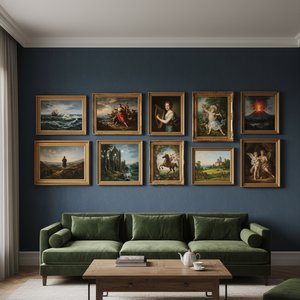
Топ-10 шедеврів романтизму: картини, що змінили мистецтво | OriginalUniqueArt.com
Відкрийте для себе 10 шедеврів романтизму від Делакруа, Фрідріха та інших геніїв! Історія мистецтва, емоційні пейзажі та історичні полотна. Репродукції картин преміум-якості на OriginalUniqueArt.com. Дослідіть колекцію онлайн!

Anne-Louis Girodet: Bridging Neoclassicism & Romanticism with Emotional Truth
Explore the captivating world of Anne-Louis Girodet, a pivotal figure bridging Neoclassicism & Romanticism. Discover his masterpieces and unique artistic vision with OriginalUniqueArt.