Introduction
What does it mean to feel 'modern'? It’s a question that has echoed through centuries, evolving with each shift in perspective, technology, and societal upheaval. The artworks we consider ‘modern’ aren't simply defined by their date of creation; they are imbued with a spirit – a sense of questioning, experimentation, and a break from tradition. They reflect the anxieties, aspirations, and radical changes that have shaped our world.
The late 19th and early 20th centuries witnessed an explosion of artistic movements—Impressionism, Post-Impressionism, Cubism, Surrealism, Abstract Expressionism—each a response to the rapidly changing landscape. Industrialization brought new materials and possibilities, while philosophical shifts challenged established norms. Artists began to look inward, exploring the subconscious, emotion, and the very nature of representation itself. This period wasn’t just about *what* was being painted, but *how*, and even *why*. The traditional academic styles were cast aside in favor of personal expression and a search for new visual languages.
But these works aren't relics of the past. Their power lies in their continued resonance with contemporary audiences. They speak to universal human experiences—isolation, joy, uncertainty, beauty—in ways that transcend time and culture. The bold colors, fragmented forms, and evocative imagery continue to challenge and inspire us, prompting reflection on our own place within a constantly evolving world.
Over the following list, we’ll explore ten artworks that embody this ‘modern’ vibe or mood. Each piece represents a pivotal moment in art history, but more importantly, each offers a unique window into the human condition—a glimpse of what it means to be alive, questioning, and searching for meaning in a complex world. Prepare to journey through landscapes of emotion, innovation, and enduring beauty.
Woman in a Green Jacket - August Macke
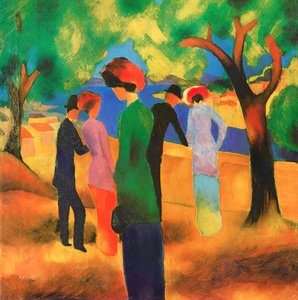 Woman in a Green Jacket - August Macke
Before the storm, a moment of quiet grace. Before the world fractured into war and uncertainty, there was an afternoon like any other—a stroll through a park, sunlight dappling through leaves, the murmur of conversation. This is the essence captured in Woman in a Green Jacket by August Macke , painted in 1913.
Macke, a pivotal figure within the German Expressionist movement “Der Blaue Reiter,” wasn’t interested in replicating reality; he sought to convey inner experience. This painting exemplifies that pursuit—bold, non-naturalistic colors vibrate with energy, simplified forms suggest rather than define, and a sense of optimistic leisure permeates the scene. Influenced by Fauvism and Delaunay’s Orphic Cubism, Macke synthesized these styles into something uniquely his own.
Notice the loose brushstrokes, the deliberate asymmetry, the way figures are rendered from behind, inviting us to project ourselves onto them. The vibrant greens and blues evoke a feeling of vitality, yet there’s also a subtle anonymity—a hint of modern alienation beneath the surface. It's a scene that feels both familiar and distant, capturing a fleeting moment before the world irrevocably changed.
More than just a depiction of everyday life, Woman in a Green Jacket is a testament to the power of color and form to evoke emotion. It reminds us that even in moments of peace, there’s an undercurrent of complexity—a quiet tension that resonates deeply with our own modern sensibilities. This artwork continues to transform spaces, inviting contemplation on the beauty and fragility of life.
The City of Paris - Robert Delaunay
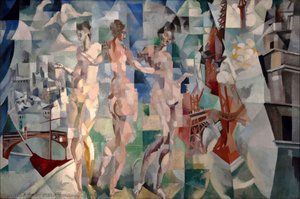 The City of Paris - Robert Delaunay
Imagine a city pulsing with energy—a kaleidoscope of movement, sound, and light. This is the sensation evoked by The City of Paris by Robert Delaunay , painted in 1912. More than just a cityscape, it’s a dynamic exploration of modernity itself.
Delaunay, a pioneer of Orphism, sought to liberate color from representation and explore its expressive power independently. Here, he fractures the urban landscape into geometric shapes, creating a fragmented narrative that anticipates the speed and dynamism of the 20th century. Notice the interplay of muted blues, greys, and ochres punctuated by strategic bursts of red—a masterful use of complementary colors to create visual tension.
The composition eschews traditional perspective, opting for multiple viewpoints simultaneously. Figures and architectural elements overlap, creating a sense of exhilarating chaos. While hints of classical imagery emerge – the chariot motif – they are deconstructed and re-imagined, reflecting the anxieties and excitement of a rapidly changing world.
The City of Paris isn’t simply *about* Paris; it's about the feeling of being alive in a modern metropolis. It reminds us that even within fragmentation and uncertainty, there is beauty to be found—a vibrant energy that continues to resonate today, transforming spaces with its bold vision and enduring spirit.
Houses At L'estaque - Georges Braque
 Houses At L'estaque - Georges Braque
Before Picasso’s groundbreaking explorations, before the full flowering of Cubism, there was a quiet revolution unfolding on the coast of France. Houses At L'estaque by Georges Braque , painted around 1908, isn’t merely a landscape; it’s a pivotal moment in art history—a bridge between Impressionism and the radical new forms that would define the 20th century.
Braque deconstructed the traditional representation of space, fracturing the houses and trees into geometric shapes. Notice the interplay of warm browns, ochres, and greens, creating a sense of depth despite the flattened perspective. The visible brushstrokes add a tactile quality, inviting us to feel the texture of the Mediterranean countryside.
This artwork challenged conventional notions of beauty and representation, paving the way for Cubism’s exploration of multiple viewpoints and abstract forms. It's a testament to Braque’s artistic genius—his ability to capture the essence of a place not through faithful depiction, but through a profound understanding of its underlying structure.
Houses At L'estaque continues to inspire today, reminding us that art isn’t about replicating reality, but about interpreting it. Its enduring spirit—a celebration of form, color, and the power of abstraction—transforms spaces into sanctuaries of refined beauty, inviting contemplation and a deeper connection with the world around us.
Guitar player - Pablo Picasso
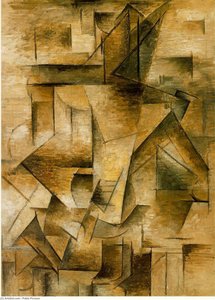 Guitar player - Pablo Picasso
Imagine a melody broken into fragments, reassembled not as a perfect whole, but as an exploration of its underlying structure—a deconstruction that reveals new layers of meaning. This is the essence of Guitar Player by Pablo Picasso , painted in 1910.
At the height of Analytical Cubism, Picasso shattered traditional representation, fracturing form and perspective into a symphony of geometric shapes. Notice the muted palette of browns, ochres, and grays—a deliberate choice that emphasizes line and structure over vibrant color. The visible brushstrokes add a tactile quality, inviting us to feel the energy of the artist’s hand.
This artwork isn't about depicting a guitar player; it’s about exploring the very *idea* of music—its rhythm, its complexity, and its emotional resonance. The fragmented forms symbolize the breakdown of conventional viewpoints, reflecting the anxieties and innovations of a rapidly changing world.
Guitar Player continues to inspire today, reminding us that art isn’t about replication, but about interpretation. Its enduring spirit—a celebration of form, structure, and the power of abstraction—transforms spaces into sanctuaries of intellectual curiosity and refined aesthetic sensibility.
Three Women - Fernand Léger
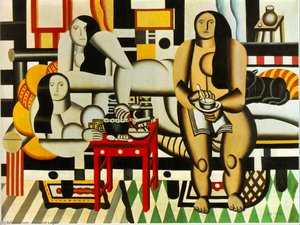 Three Women - Fernand Léger
Imagine a sun-drenched afternoon, a quiet moment of leisure shared among friends—a scene imbued with both sophistication and a subtle undercurrent of modernity. This is the feeling evoked by Three Women by Fernand Léger , painted in 1921.
Léger seamlessly blends Cubist fragmentation with the sleek lines of Art Deco, creating a dynamic composition that captures the spirit of post-war Paris. Notice the bold palette of reds, blues, and yellows—a vibrant contrast to the simplified forms and precise outlines. The figures aren’t rendered realistically; they are stylized, almost mannequin-like, reflecting the mechanization of society.
This artwork isn't simply a depiction of three women; it’s an exploration of form, color, and the evolving role of women in modern life. The geometric patterns and flat planes create a sense of detachment, inviting us to contemplate the complexities of human interaction.
Three Women continues to resonate today, transforming spaces with its bold aesthetic and sophisticated energy. Its enduring spirit—a celebration of form, color, and the dynamism of modern life—invites contemplation and adds a touch of refined elegance to any interior.
Broadway Boogie Woogie - Piet Mondrian
 Broadway Boogie Woogie - Piet Mondrian
Imagine a city’s pulse translated into pure form—a vibrant rhythm captured not with sound, but with color and line. This is the essence of Broadway Boogie Woogie by Piet Mondrian , painted in 1943.
Inspired by the bustling streets of Manhattan and the infectious energy of jazz music, this iconic painting transcends traditional representation. Notice the precise grid-like structure of bold yellow lines, creating a framework for an array of rectangular shapes rendered in primary colors—red, blue, and yellow. The composition isn’t chaotic; it's a carefully orchestrated balance of dynamic movement.
Mondrian sought to create universal beauty through abstract forms, believing that pure color and geometric precision could evoke deeper meaning. Broadway Boogie Woogie is more than just an artwork; it’s a testament to his belief in the power of abstraction to capture the spirit of modernity.
Its enduring presence continues to inspire today, transforming spaces with its harmonious energy and sophisticated aesthetic. This piece invites contemplation on the interconnectedness of life—a celebration of rhythm, color, and the vibrant pulse of the modern world.
Nude Descending a Staircase, No.2 - Marcel Duchamp
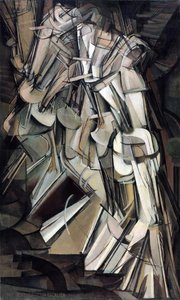 Nude Descending a Staircase, No.2 - Marcel Duchamp
Imagine a figure dissolving into motion—a cascade of forms captured not as a single moment, but as an echo of energy and time. This is the captivating spirit of Nude Descending a Staircase, No. 2 by Marcel Duchamp , painted in 1912.
This groundbreaking artwork challenged traditional notions of representation, fracturing form into a dynamic interplay of geometric shapes and planes. Notice the muted palette of ochres and browns—a subtle contrast to the vibrant energy conveyed through its composition. The overlapping layers create a sense of depth and dimensionality, inviting us to contemplate the fluidity of movement.
Nude Descending a Staircase, No. 2 isn’t simply a painting; it's a revolutionary statement—a rejection of conventional perspective in favor of capturing the essence of modern experience. Its enduring presence continues to inspire today, transforming spaces with its intellectual energy and sophisticated aesthetic.
At OriginalUniqueArt, we believe that great art should be accessible—a source of inspiration for refined homes, offices, and personal sanctuaries. This masterpiece serves as a striking focal point, sparking conversation and inviting contemplation on the beauty and complexity of the modern world.
Still Life before an Open Window aka Place Ravignan - Juan Gris
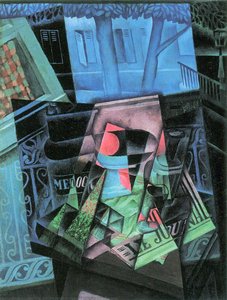 Still Life before an Open Window aka Place Ravignan - Juan Gris
Imagine a world seen through fractured lenses—a kaleidoscope of perspectives reflecting the complexities of modern life. This is the captivating essence of Still Life before an Open Window aka Place Ravignan by Juan Gris , painted in 1915.
Gris, a master of Synthetic Cubism, seamlessly blends geometric abstraction with everyday objects, creating a dynamic composition that invites us to explore the interplay of form and space. Notice the rich palette of blues, greens, and reds—a vibrant contrast to the fragmented planes and overlapping shapes.
This artwork isn’t simply a depiction of a still life; it's a revolutionary statement about perception itself. The inclusion of text – “MENO” – adds another layer of complexity, suggesting a connection between visual art and language. Still Life before an Open Window continues to inspire today, transforming spaces with its intellectual energy and sophisticated aesthetic.
At OriginalUniqueArt, we believe that great art should be accessible—a source of inspiration for refined homes and personal sanctuaries. This masterpiece serves as a striking focal point, sparking conversation and inviting contemplation on the beauty and complexity of the modern world.
Nudes in the Forest - Fernand Léger
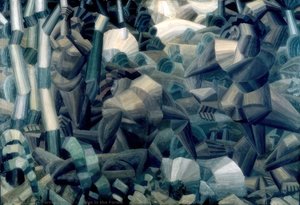 Nudes in the Forest - Fernand Léger
Imagine a world where form dissolves into rhythm—where human figures and natural elements intertwine as geometric echoes. This is the captivating spirit of Nudes in the Forest by Fernand Léger , painted between 1909-1910.
This pivotal work marks a crucial stage in the development of Cubism, diverging from traditional representation to explore the interplay of volume and perspective. Notice the restrained palette of cool blues, grays, and whites—a deliberate choice that emphasizes form over color. The fragmented figures aren’t anatomically defined; they are collections of interlocking shapes *suggesting* humanity rather than explicitly depicting it.
Nudes in the Forest isn't simply a painting; it’s a revolutionary statement about perception itself, foreshadowing Léger’s later explorations of mechanical imagery. Its enduring presence continues to inspire today, transforming spaces with its contemplative energy and sophisticated aesthetic.
At OriginalUniqueArt, we believe that great art should be accessible—a source of inspiration for refined homes and personal sanctuaries. This masterpiece serves as a striking focal point, sparking conversation and inviting contemplation on the beauty and complexity of the modern world.
Eiffel Tower - Robert Delaunay
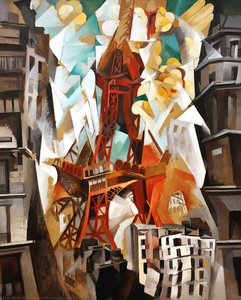 Eiffel Tower - Robert Delaunay
Behold a rare glimpse into the heart of Parisian modernity—a vibrant tapestry of color and form that captures the very essence of a city in motion. This is Eiffel Tower by Robert Delaunay , painted in 1914.
This iconic artwork isn’t simply a depiction of a landmark; it's a revolutionary statement about perception itself, embodying the spirit of Orphism and Cubism. Notice the dynamic interplay of geometric shapes and bold lines—a symphony of color that mirrors the energy of urban life.
Eiffel Tower continues to inspire today, transforming spaces with its sophisticated aesthetic and timeless beauty. Its enduring presence speaks to a legacy of innovation and artistic mastery.
At OriginalUniqueArt, we believe that great art should be accessible—a source of inspiration for refined homes and personal sanctuaries. This masterpiece serves as a striking focal point, sparking conversation and inviting contemplation on the beauty and complexity of the modern world.
Conclusion
As we conclude our journey through these ten iconic artworks, it’s clear that ‘modernity’ isn't a fixed point in time—it’s an enduring spirit of innovation, introspection, and bold expression. These paintings aren’t simply relics of the past; they are living presences, continuing to move hearts, shape interiors, and inspire creativity today.
Each brushstroke, each color choice, each fragmented form speaks to a deeper human connection—a longing for beauty, a questioning of reality, and an embrace of change. They remind us that art isn’t merely about *what* is depicted, but *how* it makes us feel, how it challenges our perceptions, and how it invites us to see the world anew.
At OriginalUniqueArt.com , we believe in bringing this timeless beauty into your home. Our skilled artists meticulously hand-paint reproductions of these masterpieces—honoring the original’s soul and detail with every stroke. Imagine experiencing the energy of Delaunay's Eiffel Tower or the contemplative stillness of Gris’s still life, reborn as a vibrant presence on your wall.
Explore our full collection and discover the artwork that speaks to *your* spirit. Let these masterpieces become more than just decorations—let them be windows into another world, sources of inspiration, and cherished companions on your own creative journey.