Baskı Satışına Geç
 Devamını Oku







































 Herhangi bir kenarı 105 cm'den (yaklaşık 41 inç) büyük olan sanat eserleri veya reprodüksiyonlar için çerçeve, demonte edilmiş bir kit halinde gönderilecektir. Bu yöntem, güvenli teslimat sağlar ve taşıma sırasında oluşabilecek hasarları önler.


Eiffel Tower: A Pioneering Vision of Modernity
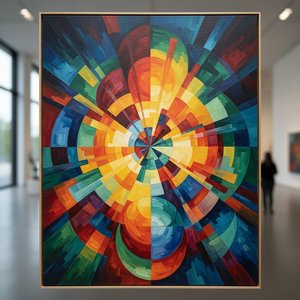
Robert Delaunay’s “Eiffel Tower,” completed in 1914, stands as an arresting testament to the burgeoning avant-garde spirit of early twentieth century Paris. More than just a depiction of an iconic landmark—the Eiffel Tower itself, erected for the Exposition Universelle—this painting embodies the radical aesthetic shifts occurring at the time, firmly rooted in the influential movements of Cubism and Orphism.
- Style: Delaunay’s approach is unmistakably Cubist, prioritizing geometric abstraction over realistic representation. He dismantles the tower’s form into fragmented planes and angular shapes—a deliberate rejection of traditional perspective—creating a dynamic visual experience that mirrors the complexities of urban life.
- Technique: Employing oil on canvas, Delaunay utilizes visible brushstrokes to achieve textural richness and depth. These marks aren't merely decorative; they convey a sense of movement and contribute to the overall impression of instability inherent in Cubist art.
A Symphony of Color and Form
The painting’s palette is dominated by warm, earthy tones—primarily reds, oranges, and yellows—contrasting sharply with cooler blues and greens. Delaunay’s masterful use of color isn't merely aesthetically pleasing; it reflects the scientific theories of color prevalent during his time, championed by luminaries like Michel Eugène Chevreuil and Félix Hoffmann.
- Composition: The arrangement of geometric shapes—rectangles and triangles—is meticulously crafted to generate a feeling of depth and movement. Delaunay’s overlapping forms invite viewers to consider the tower from multiple viewpoints simultaneously, mirroring the multifaceted nature of Parisian society during the Belle Époque.
Historical Context and Symbolic Resonance
Painted amidst the fervor of artistic innovation—the Exposition Universelle served as a catalyst for experimentation—Delaunay’s “Eiffel Tower” captures the essence of an era defined by scientific breakthroughs and a growing fascination with abstraction. The tower itself, symbolizing industrial progress and French pride, became a focal point for artists grappling with new ways to express their vision.
“This monument will symbolise not only the art of the modern engineer,” Eiffel declared during his presentation, “but also the century of Industry and Science in which we are living.” The painting’s fragmented representation subtly conveys a sense of melancholy—a poignant acknowledgement of the passage of time and the transformative power of artistic reimagining.Capturing Parisian Modernity
Ultimately, Delaunay's "Eiffel Tower" transcends its architectural subject matter; it embodies the spirit of Paris at the dawn of the twentieth century – a city brimming with energy, innovation, and intellectual curiosity. This artwork remains an enduring symbol of artistic courage and a captivating reflection of a pivotal moment in art history.
Soru ve Cevaplar
Renk paleti göz önüne alındığında, "Eiffel Kulesi" eserinin hangi odada sergilenmesi öneriliyor?
Robert Delaunay imzalı "Eiffel Kulesi" eserinin Toprak tonlu renkleri, önerilen mekanı olan Yaşam Alanı ile mükemmel bir uyum içindedir.
Robert Delaunay imzalı "Eiffel Kulesi" eserinin telif hakkı durumunu ne açıklamaktadır?
Robert Delaunay imzalı "Eiffel Kulesi" adlı eser kamu malıdır - telif hakkı süresi dolmuştur statüsündedir. Telif hakları süresi sanatçının ölüm tarihinden itibaren hesaplanmaktadır ve Robert Delaunay, 1941 yılında vefat etmiştir.
Robert Delaunay imzalı "Eiffel Kulesi" portre, manzara mı yoksa kare kompozisyon mu?
"Eiffel Kulesi" eserinin formatı Dikey format şeklindedir. Bu bilgi, bir reprodüksiyonun nereye yerleştirileceğini planlarken faydalıdır.
 Önizle
 Gönder
 Paylaş
 Detaylar
 Rehber

 Dosyayı İndir
 Benzerleri
 X-Işını
 Slayt Gösterisi
 Q&A
Q&A İstatistikler