 Yağlı Boya Versiyonu
 St. Jerome hakkında her şey







































 Herhangi bir kenarı 105 cm'den (yaklaşık 41 inç) büyük olan sanat eserleri veya reprodüksiyonlar için çerçeve, demonte edilmiş bir kit halinde gönderilecektir. Bu yöntem, güvenli teslimat sağlar ve taşıma sırasında oluşabilecek hasarları önler.


A Moment of Profound Grief: Exploring Botticelli’s *St. Jerome*
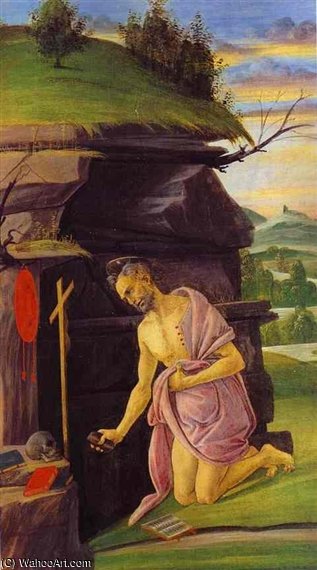
Sandro Botticelli's *St. Jerome*, a poignant depiction of sorrow and contemplation, offers a captivating glimpse into the artistic sensibilities of the Early Renaissance. While often overshadowed by his more celebrated mythological works like *The Birth of Venus*, this painting reveals Botticelli’s mastery of religious iconography and emotional depth.
Subject & Narrative
- A Scene of Lamentation: Though initially identified as the Lamentation, recent scholarship suggests this work depicts St. Jerome in his final moments, receiving communion before death. The central figure, surrounded by mourners, is likely not Joseph of Arimathea but figures expressing grief over the saint’s impending passing.
- St. Jerome – A Scholar and Ascetic: Saint Jerome (c. 347–420 AD) was a prominent theologian and translator of the Bible into Latin (the Vulgate). His life, marked by both scholarly pursuits and periods of intense asceticism, makes him a compelling subject for artistic representation.
- Setting the Stage: The rocky, cave-like setting evokes a sense of seclusion and spiritual retreat. This isolated location emphasizes the solemnity of the occasion and invites contemplation on mortality.
Artistic Style & Technique
- Renaissance Linearity: Botticelli’s style is characterized by elegant, flowing lines that define forms with precision. This linearity bridges the gap between the late Gothic and Early Renaissance aesthetics.
- Oil on Panel – A Flourishing Medium: Executed in oil on panel, the technique allows for subtle gradations of color and a smooth application of paint, enhancing the realism of the figures and drapery.
- Subdued Palette & Dramatic Lighting: The painting employs a subdued color palette, dominated by earth tones and muted hues. This is contrasted with dramatic lighting that highlights the central figure and casts shadows, intensifying the emotional impact.
- Perspective & Composition: While perspective isn’t fully developed as in later Renaissance works, Botticelli utilizes layering and overlapping forms to create a sense of depth within the confined space. The composition draws the viewer's eye towards St. Jerome through strategic arrangement and contrast.
Symbolism & Iconography
- Mortality & Remembrance: Symbolic elements, such as a skull (a *memento mori*), serve as reminders of human mortality and the transient nature of life.
- Religious Devotion: The act of receiving communion underscores St. Jerome’s unwavering faith and devotion to God in his final moments.
- The Mourners: The surrounding figures represent the grief and sorrow felt by those witnessing the saint's passing, emphasizing the human cost of spiritual dedication.
Historical Context & Legacy
- Florentine Renaissance: Created during the vibrant artistic climate of Florence in the late 15th century, *St. Jerome* reflects the humanist ideals and religious fervor of the period.
- Botticelli’s Diverse Oeuvre: While renowned for his mythological paintings, Botticelli also produced numerous religious works, demonstrating his versatility as an artist.
- Rediscovery & Appreciation: Like many Renaissance masters, Botticelli's work experienced a period of relative obscurity before being rediscovered and celebrated by the Pre-Raphaelites in the 19th century.
Emotional Impact & Interpretation
St. Jerome* evokes feelings of profound sadness, reverence, and contemplation. The painting invites viewers to reflect on themes of mortality, faith, and the human condition. Its quiet intensity and masterful execution make it a compelling work of art that continues to resonate with audiences today.
Soru ve Cevaplar
St. Jerome adlı bu eser el ile mi boyanmıştır yoksa baskı mıdır?
El ile boyanmıştır: eğitimli bir ressam, St. Jerome eserini keten kanvas üzerine yağlı boya ile yeniden çalışır.
St. Jerome için hangi boyutu seçmeliyim?
Boyutlar 42.4 x 23.6 cm (₺12524) ile 248.1 x 138.0 cm (₺67979) arasında değişmektedir; bu sayfadaki tablo ana seçenekleri ve fiyatlarını listelemektedir.
Teslimat ne kadar sürer?
Dünya çapında ücretsiz ekspres kargo ile teslimat 4 ila 5 hafta sürmektedir; bu sayfa üzerinden acil üretim seçeneği de sunulmaktadır. Hiçbir koşul aranmaksızın, 100 gün içinde tam iade ile ürünü geri gönderebilirsiniz.
St. Jerome adlı eserin orijinali nerede?
Orijinal eser Hermitaj Müzesi, Saint Petersburg koleksiyonunda yer almaktadır.
Sandro Botticelli, St. Jerome eserinde hangi tekniği/malzemeyi kullanmıştır?
Oil On Panel
Bu tablo hakkında daha fazla bilgi
 Gerçek Boyutta Önizle

 Paylaş
 Paylaş
 Detayları Gör
 Bilgi formu


 İndir
 Benzer ürünler
 X-Işını
 Slayt Gösterisi
 Soru & Cevap

 İstatistikler