Önizleme yap
 Paylaş
 Paylaş
 Detayları Gör

 İndir
İndir
 Benzerlerini gör
 X-Işını
 Slayt Gösterisi
 İstatistikler
San Matías

 Tümünü Gör
El Yapımı Yağlı Boya Reproduksiyon
Sanatçılarımız tarafından sipariş üzerine hazırlanan; istediğiniz boyut ve çerçevede, tuval üzerine el boyaması yağlı boya. ( Baskı Moduna Geç Dijital Görsele Geç)




P118B $10

P118H $10

P118W $10

P438Z $10

P508JH $12

P508YH $12

P805H $10

P805Z $10

P919BZ $10

P919G $10

P919XJ $10

P959ZH $10

P968JZ $12

W106C $8

W218G $10

W218JH $8

W218Y $10

W307PJ $10

W316G $10

W316PJ $8

W316Y $10

W398PJ $8

W4111J $10

W500HY $15

W500JH $15

W692G $12

W849H $8

W940BG $15

W953PJ $8




Eserin orijinal oranlarıyla uyumlu, önceden belirlenmiş boyutlarımız arasından seçim yapın.

Belirli bir çerçeveye veya alana uyması için kendi boyutlarınızı girebilirsiniz. Seçtiğiniz boyut orijinal görüntünün oranlarıyla eşleşmiyorsa, sanat eserini kırparak veya ek el boyaması öğelerle resmi uzatarak ayarlayacağız. Üretim başlamadan önce onayınız için dijital bir taslak gönderilecektir.
Lütfen ekrandaki önizlemenin gerçek kırpmayı veya uzatmayı yansıtmadığını unutmayın. Nihai kompozisyonu yalnızca hazırlanan taslak doğru şekilde gösterecektir.
Özel boyutlar mevcut olsa da, orijinal oranları korumak adına önceden tanımlanmış listeden bir boyut seçmenizi öneririz.
Siparişten sonra, OriginalUniqueArt.com ekibi talimatlar için müşteriye e-posta gönderecek ve bir taslak önizleme sunacaktır
Dünya Çapında Teslimat (); standart 5 hafta yerine 3/4 haftada. (11 Eylül). Kaliteden ödün verilmez.

Dünya Çapında Ücretsiz Ekspres Kargo

Yüksek Kaliteli Keten Tuval

Tam Kapsamlı Nakliye Sigortası

Gümrük Vergisi İade Garantisi

Gerçek Renk Uyumu Garantisi

100 Günlük İade Politikası (Sadece Kusurlu Ürünler İçin)

%100 Para İade Garantisi

Toplu Alım İndirimi
 Cam seçeneği yalnızca 110 cm altındaki boyutlar için mevcuttur.

San Matías
Reproduksiyon Tekniği
Reproduksiyon Boyutu
-


Toplam Tutar
$ 300
Francisco de Zurbarán’s “San Matías”: A Study in Solitude and Spiritual Intensity
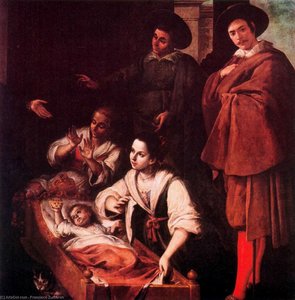
Francisco de Zurbarán's "San Matías" is not merely a portrait; it’s an immersion into a profound state of contemplation, a window into the soul of a man wrestling with faith. Painted circa 1630-1635 during his most intensely productive period in Seville, this oil on panel captures a moment of quiet reverence, radiating a stillness that speaks volumes about the artist's mastery of capturing both physical realism and profound emotional depth. The painting’s power lies not just in its technical brilliance – the meticulous rendering of fabric, the subtle play of light – but also in its ability to evoke a sense of timelessness and spiritual gravity.
The subject himself, identified as Saint Matthias (Matías), is presented with an almost austere dignity. Dressed in deep crimson robes, he’s positioned within a simple, dark interior, the muted tones emphasizing his figure and drawing the viewer's eye to his face – etched with lines of age and experience, yet radiating an inner peace. His hands are clasped gently over his chest, holding a book open before him, suggesting a deep engagement with scripture or prayer. The pose is deliberately restrained, devoid of dramatic gestures; it’s a posture of quiet devotion, inviting the viewer to share in his meditative state.
The Baroque Embrace: Light, Shadow, and Dramatic Realism
Zurbarán was a pivotal figure in the development of Spanish Baroque painting, and “San Matías” exemplifies this style perfectly. He’s often described as “Spanish Caravaggio” due to his masterful use of *tenebrismo*, a technique characterized by stark contrasts between light and shadow. This dramatic lighting isn't merely decorative; it serves to heighten the emotional impact of the scene, isolating Saint Matthias within a pool of illumination while enveloping the background in darkness. This creates an atmosphere of mystery and introspection, drawing attention to the central figure and his spiritual journey.
The artist’s meticulous attention to detail is remarkable. The folds of the robe are rendered with astonishing realism, each crease and wrinkle meticulously depicted. The texture of the fabric appears almost tangible, inviting the viewer to reach out and touch it. Zurbarán's skill in portraying light on reflective surfaces – particularly the polished wood of the table – further enhances the painting’s visual impact. This commitment to realistic detail was a hallmark of his style, setting him apart from many of his contemporaries who favored more idealized representations.
Historical Context and Spiritual Themes
To understand “San Matías,” it's crucial to consider the historical context in which it was created. Spain during the 17th century was a deeply religious nation, profoundly influenced by the Counter-Reformation. The Catholic Church played a central role in all aspects of life, and art served as a powerful tool for conveying religious messages and reinforcing faith. Zurbarán’s paintings frequently depicted scenes from the lives of saints and biblical figures, often emphasizing themes of piety, humility, and devotion.
The choice of Saint Matthias himself is significant. He was one of the twelve apostles, martyred by Herod for refusing to renounce his faith. His story embodies sacrifice, unwavering conviction, and a deep connection to God. By portraying him in this moment of quiet contemplation, Zurbarán invites viewers to reflect on their own spiritual journeys and the importance of inner strength and devotion.
Symbolism and Emotional Resonance
Beyond its technical brilliance, “San Matías” is rich in symbolism. The book represents knowledge and divine guidance, while the crimson robes symbolize sacrifice and martyrdom. The darkness surrounding the figure suggests both the earthly realm and the mysteries of faith. The overall effect is one of profound serenity and spiritual intensity – a testament to Zurbarán’s ability to capture not just a likeness but also the very essence of his subject's soul.
Reproductions of “San Matías” offer an exceptional opportunity to bring this powerful work into your home or office. OriginalUniqueArt provides meticulously crafted, hand-painted reproductions that faithfully recreate the artist’s original techniques and atmosphere, allowing you to experience the painting’s beauty and emotional depth firsthand. Consider how this evocative image can contribute a sense of contemplation and spiritual grounding to your space.
Sanatçı Özgeçmişi
Francisco de Zurbarán (1598 – 1664): The Soul of Spanish Baroque
Francisco de Zurbarán stands as one of Spain’s most compelling Baroque masters, a painter whose austere vision and dramatic use of light transformed religious subjects into profound meditations on faith and devotion. Baptized on November 7, 1598, in Fuente de Cantos, Extremadura, and passing on August 27, 1664, in Madrid, Zurbarán earned the nickname “Spanish Caravaggio” for his masterful command of chiaroscuro and tenebrism—a technique borrowed from Michelangelo Merisi da Caravaggio that employed dramatic contrasts between light and shadow to create a sense of drama and emphasize the emotional intensity of his subjects. His artistic journey began amidst the fervent religious landscape of Extremadura, where he absorbed influences from the region’s austere traditions and cultivated an early fascination with observation and representation.
Early Life and Artistic Formation
Born into a modest haberdashery family—Luis de Zurbarán and Isabel Márquez—young Francisco demonstrated artistic inclination from childhood, imitating objects with charcoal. Recognizing his son’s talent, his father entrusted him to Seville in 1614 to apprentice for three years under Pedro Díaz de Villanueva, an artist of whom little is known today. This formative period exposed him to the burgeoning Baroque style and instilled within him a sensibility that favored simplicity, solemnity, and a deep engagement with spiritual themes—characteristics that would define his mature work. His initial training focused on mastering naturalistic techniques, mirroring the stylistic conventions prevalent in Seville at the time, particularly those championed by Juan Martínez Montañés—a sculptor whose works embodied the spirit of Baroque elegance and precision.
The Seville Period: Establishing a Singular Style
By 1617, Zurbarán established himself in Seville, attracting commissions primarily for religious paintings intended for churches and monasteries. This period witnessed the full flowering of his signature style—a compelling blend of stark realism and intense spirituality. He quickly gained recognition as a painter, securing patronage from wealthy families and establishing a workshop that would become a hub of artistic activity. Zurbarán’s distinctive approach to painting was characterized by an unwavering commitment to *tenebrism*, a technique borrowed from Caravaggio that utilized dramatic contrasts between light and shadow to heighten emotional impact and create a sense of theatrical grandeur. He wasn't merely replicating what he saw; he was striving to convey inner truth—a profound spiritual presence within each figure—reflecting the influence of Mannerist compositional principles.
Mastery of Light and Shadow: The Zurbarán Technique
Zurbarán’s artistic genius lay in his ability to transform religious narratives into powerfully moving visual experiences. He achieved renown for his depictions of monks, nuns, martyrs, and saints—figures often portrayed in moments of profound contemplation or suffering. His meticulous attention to detail—particularly his masterful rendering of draperies—became a hallmark of his style, earning him the moniker “Painter of White Drapery.” He employed *tenebrism* with unparalleled skill, creating luminous figures against dark backgrounds that conveyed both solemn dignity and spiritual intensity. This technique—characterized by extreme chiaroscuro—was perfected through painstaking observation and experimentation, resulting in paintings that possessed an almost sculptural quality.
Royal Patronage and Legacy
Around 1630, Zurbarán ascended to prominence when he was appointed painter to Philip IV—a pivotal moment in his career that brought him increased recognition and access to royal commissions. This patronage enabled him to produce monumental works celebrating the monarchy’s piety and grandeur—further solidifying his reputation as one of Spain’s foremost Baroque artists. Despite facing economic hardships during the mid-17th century, Zurbarán continued to work diligently, adapting his style and exploring new themes—leaving behind a rich artistic legacy that continues to inspire admiration and scholarly study. His influence on subsequent generations of Spanish painters is undeniable; Zurbarán's unwavering commitment to realism and spiritual contemplation remains a testament to the enduring power of Baroque art.

Francisco De Zurbarán
1598 - 1664 , İspanya
Kısa Bilgiler
- Artistic Movement Or Style: Barok
- Artists Who Influenced This Artist: ['Juan Sánchez Cotán']
- Date Of Birth: 7 Kasım 1598
- Full Name: Francisco de Zurbarán
- Nationality: İspanyol
- Notable Artworks:
- Immaculate Conception
- Agnus Dei
- St Francis Receiving Stigmata
- Place Of Birth: Fuente de Cantos, İspanya
İlgili Makaleler

The Dramatic Flourish: Exploring the Baroque Movement's Enduring Legacy in Art History
Explore the dramatic world of Baroque art! Discover iconic artists like Caravaggio & Rubens, defining techniques, and its lasting impact on art history. Expert insights for collectors & enthusiasts at OriginalUniqueArt.

Francisco de Zurbarán: Mysticism, Realism & the Golden Age of Spanish Painting
Explore the captivating world of Francisco de Zurbarán, a master of Spanish Baroque painting. Discover his dramatic tenebrism, religious masterpieces like 'La Porciúncula,' and lasting influence on art history.
The Golden Age Reforged: Dramatic Realism & Religious Zeal in Spanish Baroque Art
Explore the dramatic world of Spanish Baroque art! Discover masters like Zurbarán & the powerful influence of religious zeal on painting techniques – a guide for collectors and enthusiasts.

Theatricality & Triumph: Baroque Drama in Painting & Sculpture
Explore the dramatic world of Baroque art! Discover its history, defining characteristics, & lasting influence on painting & sculpture. Expert insights into Caravaggio, Zurbarán, and Bernini – plus high-quality reproductions at OriginalUniqueArt.
The Dramatic Flourish: Exploring Themes of Power, Faith & Emotion in Baroque Artworks
Explore the dramatic world of Baroque art! Discover masters like Zurbarán & the powerful influence of religious zeal on painting techniques. Expert insights for collectors and enthusiasts.