
 Förhandsvisa
 Skicka
 Dela
Dela
 Visa detaljer
 Guide
Guide

 Ladda ner
 Liknande objekt
 Röntgen
 Bildspel
 Statistik
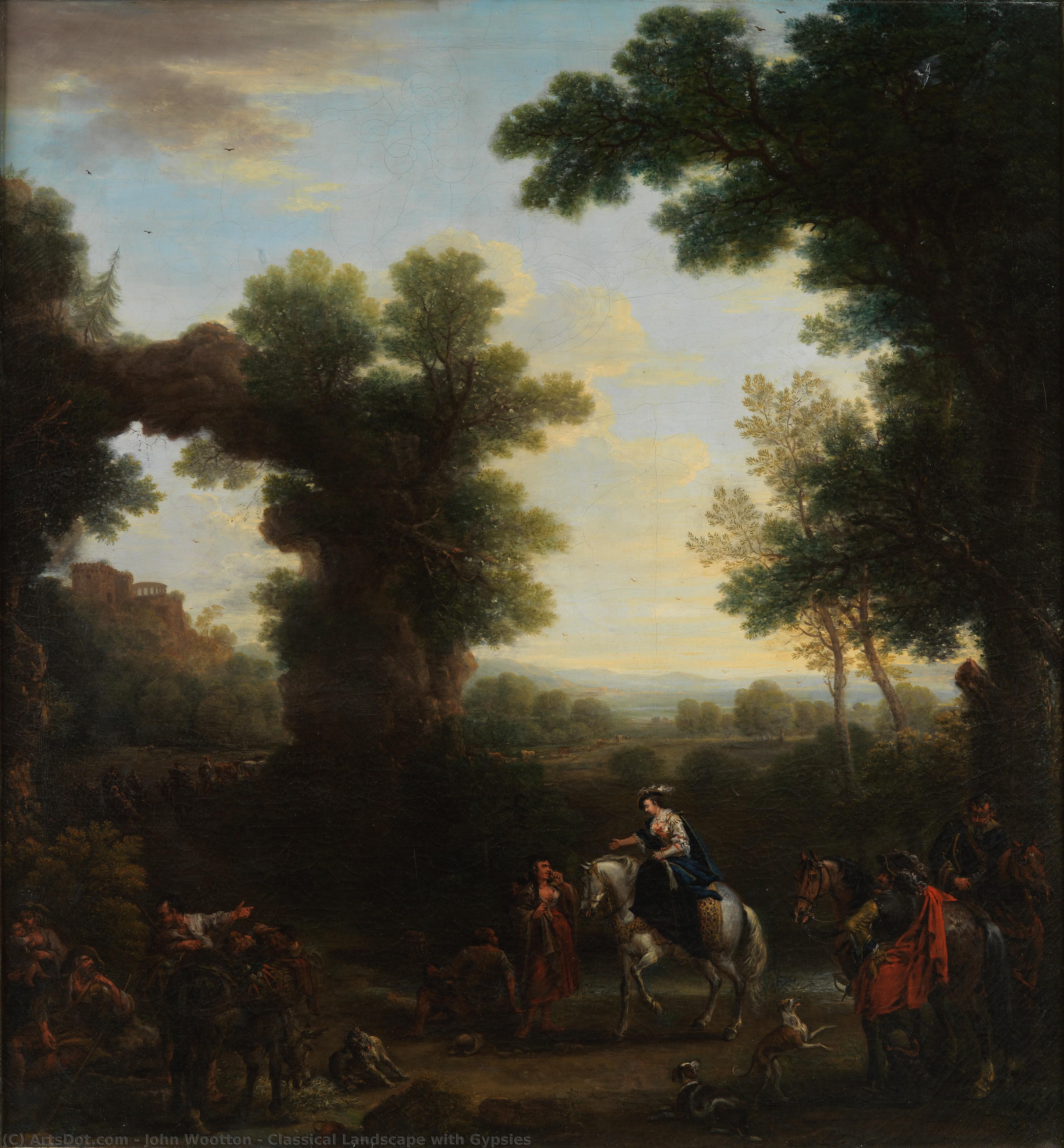
Classical Landscape with Gypsies
 Oil On Canvas
- WallArt
- Baroque Landscape Painting
 1748
1748- Early Modern
 140.0 x 131.0 cm
 Metropolitan Museum of Art
 Visa mer
Få en utskriftsfärdig fil som vida överträffar webbförhandsvisningen. Varje digital bild vi säljer kommer från en högupplöst master i vår bilddatabas – vanligtvis mellan 5 000 och 15 000 pixlar bred – så att du med trygghet kan göra stora utskrifter, beskära tätt eller återge fina detaljer.
Ingen fil lämnar vår studio utan att ha bearbetats. En digital expert kontrollerar färgerna mot originalmålningen och korrigerar dem vid behov, för att sedan förbättra skärpa och detaljrikedom med professionella retuscheringsverktyg — alltid med full respekt för konstnärens penseldrag och stil. Resultatet är en bild som ser ut som målningen, inte som en filtrerad skanning.
Du godkänner innan arbetet slutförs: vår expert skickar bilden via e-post inom 72 timmar för din granskning. Inte nöjd? Be om förbättringar eller korrigeringar, eller begär återbetalning om kvaliteten inte lever upp till förväntningarna.
Detta är den kvalitet som förlag, designstudior, gallerier och tryckerier litar på.
Digital bild
Ladda ner en högupplöst fil för personlig visning, utskrift och kreativa projekt. ( Byt till tryck Beställ handmålad reproduktion)
Ingår i varje beställning av digital bild
Professionell digital leverans, garanterad
När du väljer OriginalUniqueArt.com får du inte bara en bild – du får ett professionellt förädlat digitalt konstverk, skapat med precision och med en garanterad tillfredsställelse. Här är allt som ingår i din beställning, automatiskt:

Snabb leverans via e-post
Din högupplösta digitala bild skickas till dig via e-post inom 72 timmar efter beställning – redo för omedelbar användning.

AI-förbättrad digital fil
Ditt konstverk optimeras professionellt med hjälp av avancerade AI-verktyg och manuell redigering, vilket garanterar maximal detaljrikedom, skärpa och färgnoggrannhet.

Fri livstidsåterleverans
Har du råkat radera eller tappa bort din fil? Ingen oro – vi skickar den kostnadsfritt till dig när som helst.

Inga importavgifter – någonsin
Njut av ditt konstverk omedelbart utan tull, importavgifter eller leveranskostnader – digitala nedladdningar är alltid skattefria.

Garanterad färgåtergivning
Vi säkerställer att din digitala bild återger de ursprungliga färgerna så exakt som möjligt med hjälp av professionella verktyg och färghantering.

100 dagars nöjdhetsgaranti
Om du inte är nöjd med din digitala bild kommer vi att revidera den eller återbetala 100% inom 100 dagar – utan frågor.

100% pengarna-tillbaka-garanti
Inte nöjd? Få full återbetalning inom 100 dagar efter att du mottagit din digitala fil – utan frågor.

Rabatt vid storköp
Köp 3 bilder, spara 10% – Köp 5, spara 15% – Köp 10+, spara 20%. Perfekt för kreativa projekt, gallerier och byråer.
A Pastoral Symphony: The Enchantment of Wootton’s Landscape
In the grand tapestry of eighteenth-century British art, few works capture the harmonious tension between aristocratic refinement and the untamed spirit of nature as gracefully as John Wootton’s "Classical Landscape with Gypsies." Executed in 1748, this monumental canvas serves as a breathtaking window into the Regency era's profound fascination with pastoral beauty. The scene unfolds not merely as a static depiction of countryside, but as a meticulously choreographed tableau where the rolling hills and muted greens of the English landscape provide a stage for a lively human narrative. As one gazes upon the composition, there is an immediate sense of entering a world where time slows down, inviting the viewer to wander through the atmospheric perspective and tonal gradations that Wootton mastered so exquisitely under the tutelage of Jan Wyck.
The painting’s subject matter strikes a delicate balance between the idyllic and the itinerant. At its heart, a gathering of gypsies moves through the landscape, their presence introducing a layer of nomadic vitality to the otherwise serene setting. This juxtaposition—the transient life of the travelers set against the permanent, stately backdrop of the countryside—was a hallmark of the era's artistic curiosity. The inclusion of horses, rendered with Wootton’s signature precision, further elevates the narrative; these noble creatures are not merely animals within the frame but symbols of status, freedom, and the deep-seated connection between the landed gentry and the natural world. For the discerning collector or interior designer, this piece offers a profound sense of movement and life, making it an ideal centerpiece for spaces that require a touch of historical grandeur and organic warmth.
Mastery of Brush and Light: The Technical Brilliance
To appreciate "Classical Landscape with Gypsies" is to witness the technical prowess of a pioneer of sporting art. Wootton’s technique eschews the rigid, clinical precision often found in academic painting of his time, opting instead for loose, expressive brushstrokes that imbue the canvas with palpable emotion and dynamism. One can almost feel the breeze moving through the scattered trees and sense the heat radiating from the sun-drenched hills. His ability to manipulate light and shadow creates a sense of depth that draws the eye inward, leading the viewer from the detailed interactions in the foreground—where figures converse and tend to their mounts—toward the hazy, distant horizons.
The color palette is a masterclass in subtlety, utilizing earthy browns, soft ochres, and deep forest greens to evoke a sense of timelessness. This restrained use of color ensures that the painting does not overwhelm a room but rather complements it, providing a sophisticated foundation for luxury decor. For those seeking to integrate fine art into a contemporary or classical interior, a high-quality reproduction of this work offers more than just decoration; it provides an infusion of historical soul. The way Wootton captures the texture of animal coats, the softness of the foliage, and the very atmosphere of the English afternoon makes this painting an enduring masterpiece that continues to inspire awe and tranquility in all who behold it.
Frågor och svar
Vem är konstnären bakom "Classical Landscape with Gypsies"?
Konstnären bakom "Classical Landscape with Gypsies" är John Wootton. Verket är katalogiserat under John Woottons namn.
Är "Classical Landscape with Gypsies" överlag mer ljus eller mörk?
De registrerade värdena för "Classical Landscape with Gypsies" av John Wootton är: deep_shadow i ljusstyrka och Soft Shadow i luminans.
Hur förhåller sig motivet i "Classical Landscape with Gypsies" till John Woottons vanliga teman?
Bland John Woottons dokumenterade teman – beaufort family patronage, equestrian tradition, aristocratic landscape, baroque style, decorative art – har "Classical Landscape with Gypsies" ett eget fokus på landscape, gypsies, equestrian art, aristocracy, pastoral scene, classical painting, british art, seventeenth century.
Konstnärsbiografi
John Wootton - Pioneer of British Sporting Art
John Wootton (c. 1682 – 1764) was an English painter of sporting subjects, battle scenes and landscapes, and illustrator who stands as a cornerstone in the history of British art. His remarkable talent for capturing the spirit of horses—together with Peter Tillemans and James Seymour—established him as the foremost practitioner of sporting art during his lifetime, securing patronage from influential figures like George II and Frederick, Prince of Wales. Wootton’s artistic journey began with formal training under Jan Wyck in the 1690s, where he honed foundational skills in draftsmanship and painting techniques – a bedrock upon which he built an oeuvre characterized by unparalleled detail and sensitivity.Early Life and Artistic Training
Born around 1686 in Snitterfield, Warwickshire (near Stratford-upon-Avon), Wootton’s early life remains somewhat shrouded in obscurity. However, biographical accounts suggest he entered the service of the Beaufort family at a young age—a formative experience that instilled within him an enduring fascination with equestrian pursuits and the aristocratic milieu of his time. This patronage provided invaluable access to artistic circles and fostered connections with fellow artists who would shape Wootton’s intellectual and creative trajectory. His initial training under Jan Wyck proved instrumental in developing his mastery of chiaroscuro—the dramatic interplay of light and shadow—a technique he skillfully employed throughout his career, imbuing his paintings with depth and realism.The Rise to Fame: Sporting Art and Newmarket
By 1706, Wootton had firmly established himself in London’s artistic landscape, swiftly gaining recognition for his depictions of horses at Newmarket—the epicenter of British racing culture. He wasn't merely documenting these animals; he was conveying their dynamism, their nobility, and their individual personalities with an unprecedented level of precision and empathy. This specialization cemented Wootton’s reputation as a visionary artist who understood the cultural significance of sport and skillfully translated it onto canvas. His canvases became highly sought after by members of the British aristocracy—a testament to his ability to capture both visual beauty and social prestige.A Landscape Innovator: Embracing Dughet's Influence
Wootton’s artistic vision extended beyond equine portraits; he spearheaded the introduction of what would become known as the “ideal landscape” to British art—a stylistic departure from prevailing Dutch and Flemish traditions. Heavily influenced by Gaspard Dughet (also Gaspar van Wittel), Wootton adopted a classical approach characterized by harmonious compositions, atmospheric perspective, and meticulous attention to detail. This stylistic choice represented a pivotal moment in British artistic history, fostering a new aesthetic sensibility that resonated throughout the eighteenth century—particularly with artists like Gainsborough who would subsequently champion this innovative style. Wootton’s landscapes weren't merely scenic representations; they were imbued with symbolic meaning—reflecting Enlightenment ideals of beauty and rationality.Legacy and Enduring Influence
Although later artists such as George Stubbs achieved greater technical prowess in animal painting, John Wootton’s pioneering role remains undeniable. He established sporting art as a legitimate genre, paving the way for subsequent generations to explore this subject matter with increasing sophistication. His masterful technique—characterized by luminous color palettes and dramatic lighting—continues to inspire admiration among art historians and collectors alike. Wootton's legacy extends beyond his individual artworks; he fundamentally altered the course of British painting—solidifying his place as a true visionary artist whose influence persists to this day. He bridged the gap between earlier traditions and the emerging styles that would define 18th-century British art. Today, Wootton’s works are held in prestigious collections worldwide – including the Tate Gallery (London), the Virginia Museum of Fine Arts (Richmond), and the Yale Center for British Art—ensuring his enduring contribution to artistic history is celebrated by audiences across generations.
John Wootton
1682 - 1764 , Storbritannien
Kort om konstnären
- Artistic Movement Or Style: Sporting art, Landscape
- Artists Or Movements Influenced By This Artist:
- Thomas Gainsborough
- George Stubbs
- Artists Who Influenced This Artist:
- Jan Wyck
- Gaspard Dughet
- Date Of Birth: c. 1682
- Date Of Death: 1764
- Full Name: John Wootton
- Nationality: British
- Notable Artworks:
- Bonny Black
- Before the hunt
- The Bloody-Shouldered Arabian
- Place Of Birth: Snitterfield, UK