

 Visa i rummet
 Skicka
 Dela
Dela
 Detaljer
 Studentguide för konstverk

 Ladda ner
 Liknande objekt
 Röntgen
 Bildspel
 Besökstatistik
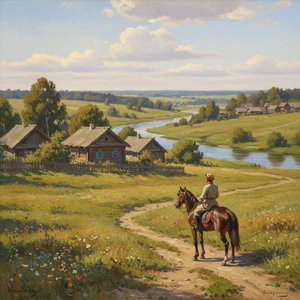
Deciduous forest
 Oil On Canvas
- WallArt
- Impressionism
 35.0 x 52.0 cm
 Tretyakovgalleriet
 Läs mer
Giclée / Konsttryck
Giclée- eller canvasprint av museumskvalitet med snabb produktion och flexibla ytbehandlingsalternativ. ( Köp handmålat konstverk Byt till digital bildförsäljning)




P118B Skr10

P118H Skr10

P118W Skr10

P438Z Skr10

P508JH Skr12

P508YH Skr12

P805H Skr10

P805Z Skr10

P919BZ Skr10

P919G Skr10

P919XJ Skr10

P959ZH Skr10

P968JZ Skr12

W106C Skr8

W218G Skr10

W218JH Skr8

W218Y Skr10

W307PJ Skr10

W316G Skr10

W316PJ Skr8

W316Y Skr10

W398PJ Skr8

W4111J Skr10

W500HY Skr15

W500JH Skr15

W692G Skr12

W849H Skr8

W940BG Skr15

W953PJ Skr8




Välj bland våra förinställda storlekar som motsvarar konstverkets ursprungliga proportioner.

Ange den bredd och höjd du behöver, för att passa din ram eller din vägg. Ett tryck kan endast beskäras, aldrig göras större än bilden, vilket innebär att ett format med en annan formform leder till att en del av bilden går förlorad. Vi skickar en digital mockup för godkännande innan vi trycker något. Bilden som visas på denna sida visar inte den faktiska beskärningen — det är endast mockuppen som gör det.
Leverans över hela världen () på 2 veckor istället för standard 4/5 veckor. (25 oktober)

Fri expressfrakt över hela världen

Högkvalitativ linnecanvas

Fullständig fraktförsäkring

Garantier för återbetalning av tullavgifter

Garantier för exakt färgåtergivning

100 dagars returrätt vid fabrikationsfel

100% pengarna tillbaka-garanti

Mängdrabatt erbjuds
 Glasalternativet är endast tillgängligt i storlekar under 110 cm.

Deciduous forest
Giclée / Konsttryck
Reproduktionsstorlek
-


Totalpris
Skr 793
A Soulful Embrace: Ivan Shishkin’s “Deciduous Forest”
“Deciduous Forest,” painted by Ivan Ivanovich Shishkin in the late 19th century, isn't merely a landscape; it’s a profound meditation on the enduring spirit of Russia’s vast woodlands. Shishkin, a master of capturing the subtle nuances of light and texture within the Russian forest, delivers here an image that transcends simple representation, inviting us into a realm of quiet contemplation and deep connection with nature. The painting immediately establishes a sense of enclosure – a dense tapestry of trees, their branches interwoven like ancient fingers reaching for the sky. This isn’t a dramatic vista; rather, it's a carefully constructed space designed to draw the viewer inward, fostering a feeling of both intimacy and awe.
Shishkin’s style is firmly rooted in Realism, yet imbued with an Impressionistic sensibility. He meticulously renders each leaf, each knot in the bark, each patch of moss – not for photographic accuracy, but to convey the *feeling* of being within this forest. The brushstrokes are loose and layered, creating a shimmering surface that captures the dappled sunlight filtering through the canopy. This technique isn’t about detail for its own sake; it's about suggesting volume, atmosphere, and the constant interplay of light and shadow. The composition is deliberately balanced, with the winding path acting as a visual anchor, guiding our eye deeper into the heart of the scene.
The Language of the Forest: Symbolism and Tradition
Shishkin’s work resonates deeply within the context of 19th-century Russian art. Following the emancipation of serfs in 1861, there was a renewed interest in depicting the natural world – not as a romanticized ideal, but as a source of national identity and spiritual sustenance. The forest, particularly the birch forest (known as “beloe lesostoi” or “white forest”), held immense symbolic significance for the Russian people. It represented resilience, strength, and connection to the land—qualities deeply valued in a nation undergoing rapid social and political change.
The specific trees depicted – predominantly beech, oak, and maple – are not chosen arbitrarily. Each species carries its own cultural weight within Russian folklore and tradition. Beech, for instance, is often associated with purity and nobility, while oak symbolizes strength and longevity. The winding path itself can be interpreted as a journey of self-discovery, mirroring the spiritual quest that many Russians sought during this period. Shishkin’s meticulous rendering of these elements speaks to a deep understanding and respect for the Russian landscape – a reverence that was becoming increasingly important in shaping national consciousness.
Technique and Materials: A Master's Touch
Examining Shishkin’s technique reveals a remarkable level of control and artistry. He employed oil paints on canvas, layering thin washes to build up texture and depth with incredible subtlety. The color palette is predominantly muted – browns, greens, ochres, and grays—creating a sense of harmony and tranquility. However, within this restraint, Shishkin skillfully introduces flashes of brighter color – the vibrant yellows and reds of autumn foliage, the deep blues of shadows – to draw our attention and heighten the emotional impact of the scene.
Notably, Shishkin’s work demonstrates a mastery of *sfumato*, an Italian technique popularized by Leonardo da Vinci. This involves softening outlines and blending colors to create a hazy, atmospheric effect. He achieves this through delicate brushwork and careful attention to light and shadow, lending the forest a sense of ethereal beauty. The slightly textured surface of the canvas further enhances the tactile quality of the painting, inviting us to almost feel the rough bark of the trees and the damp earth beneath our feet.
An Echo of Peace: Emotional Resonance
“Deciduous Forest” is more than just a beautiful landscape; it’s an invitation to pause, breathe deeply, and reconnect with the natural world. The painting evokes a profound sense of peace and tranquility—a feeling that stems from the quiet beauty of the forest itself. There's a subtle melancholy woven into the scene as well, perhaps reflecting the awareness of nature's cyclical rhythms – the inevitable passage of seasons, the decay and renewal that are inherent in all living things.
Reproductions of this iconic work capture much of its original power, offering a window into Shishkin’s artistic vision. Whether displayed as a centerpiece in a grand room or nestled within a smaller space, “Deciduous Forest” continues to resonate with viewers, reminding us of the enduring beauty and spiritual significance of the Russian wilderness.
Frågor och svar
Vad har "Deciduous forest" gemensamt med resten av Ivan Ivanovich Shishkins produktion?
"Deciduous forest" delar med Ivan Ivanovich Shishkins övriga verk sin Impressionism-stil och de återkommande temana: russian landscape tradition, plein air painting, tonalism, rural russia, nature's beauty, quiet contemplation.
Var kan jag hitta en guide till "Deciduous forest"?
Sidan Guide för "Deciduous forest" av Ivan Ivanovich Shishkin erbjuder ett utskrivbart faktablad på två sidor: konstverket med sin identitetstabell, en tidslinje som placerar det i konstnärens livstid, andra verk av konstnären, den uppmätta färgpaletten samt färdiga citatmallar i fyra olika stilar.
Hur stark är kontrasten i "Deciduous forest" av Ivan Ivanovich Shishkin?
Kontrastnivån i "Deciduous forest" av Ivan Ivanovich Shishkin är Statement.
Om konstnären
The Soul of the Russian Forest: A Life in Landscape
Ivan Ivanovich Shishkin, a name synonymous with the vast and soulful landscapes of Russia, was born into a world steeped in tradition on January 25, 1832, in Yelabuga, Vyatka Governorate. His early life, though rooted in the mercantile pursuits of his father, revealed an innate sensitivity to the natural world—a sensibility that would blossom into a lifelong artistic obsession. After completing his education at the Kazan Gymnasium, Shishkin embarked on a rigorous academic journey, first at the Moscow School of Painting, Sculpture and Architecture for four years, then continuing at the prestigious Saint Petersburg Imperial Academy of Arts from 1856 to 1860. It was here, under the tutelage of renowned masters, that his technical skills were honed, culminating in a gold medal upon graduation—a testament to his exceptional talent and dedication. This academic foundation provided him with the tools to translate his deep connection with nature onto canvas with unparalleled realism.A Master of Realism and the Peredvizhniki Movement
Shishkin’s artistic development was profoundly shaped by his association with the *Peredvizhniki*, or Wanderers, a group of Russian artists who rejected the constraints of academic tradition in favor of bringing art directly to the people. This movement championed realism and sought to depict life as it truly was—often focusing on social issues and the beauty of the Russian countryside. Shishkin’s landscapes perfectly aligned with this ethos; he wasn't merely painting scenery, but capturing the very essence of Russia’s forests, fields, and skies. He became a member of the Imperial Academy in St. Petersburg and later headed the landscape painting class at the Highest Art School there from 1873 to 1898, influencing generations of artists with his meticulous technique and unwavering commitment to portraying nature's grandeur. His dedication wasn’t simply about accurate depiction; it was about evoking a profound emotional response in the viewer—a sense of awe, tranquility, and connection to the land. The *Peredvizhniki* sought to represent Russia beyond the idealized portrayals favored by the official art establishment, and Shishkin's work embodied this spirit with its honest and detailed depiction of the Russian wilderness.Iconic Visions: Works That Defined a Nation
Shishkin’s oeuvre is populated with masterpieces that have become ingrained in the Russian cultural consciousness. Morning in a Pine Forest, perhaps his most famous work—often mistakenly credited as solely his, though featuring bears painted by Konstantin Savitsky—captures a serene yet powerful scene of sunlight filtering through towering pines. The painting’s enduring appeal lies not only in its technical brilliance but also in its symbolic resonance: the forest representing Russia itself, strong, resilient, and untamed. A Rye Field, with its sweeping expanse of golden wheat under a vast sky, exemplifies his ability to convey the scale and beauty of the Russian plains. Rain in an Oak Forest demonstrates his mastery of atmospheric effects, evoking the damp earthiness and somber mood of a forest after a downpour. These works weren’t simply landscapes; they were national symbols, imbued with a sense of pride and belonging. His attention to detail was legendary—every leaf, every blade of grass rendered with painstaking accuracy, yet always serving the larger composition and emotional impact. Other notable paintings include *The Oaks*, a study in the strength and enduring presence of ancient trees, and *Distant Forest*, which captures the vastness and mystery of the Russian wilderness.Technique and Influences: A Deep Connection to Nature
Shishkin’s artistic technique was characterized by an almost obsessive attention to detail and a profound understanding of natural light and color. He frequently worked *en plein air* (outdoors), meticulously observing the nuances of light, shadow, and texture. His studies were not merely reproductions but attempts to capture the very spirit of the landscape—its mood, its atmosphere, its inherent beauty. Shishkin’s work was influenced by several key figures: the Düsseldorf School of painting, with its emphasis on realism and tonal values; and the works of Ivan Aivazovsky, whose seascapes inspired him to explore the complexities of light and color in natural settings. He also drew inspiration from Russian literature and folklore, particularly the writings of Sergei Aksakov and Nikolai Nekrasov, which celebrated the simple beauty of rural life. His meticulous botanical studies informed his paintings, ensuring that every plant and tree was rendered with scientific accuracy while maintaining a sense of poetic grace.Legacy and Enduring Influence
Ivan Ivanovich Shishkin passed away on March 20, 1898, leaving behind a legacy that continues to inspire artists and captivate audiences today. His contributions to Russian landscape painting are immeasurable; he elevated the genre to new heights of realism and emotional depth. His work is prominently featured in numerous museum collections, including the Kartinnaja galerija Tambov and the Yaroslavl Arts Museum, and can be found on platforms like Kramskoy Museum of Fine Arts (Voronezh, Russia) and OriginalUniqueArt. Even beyond the art world, his influence extends to scientific circles—a minor planet, 3558 Shishkin, was named in his honor by Soviet astronomer Lyudmila Zhuravlyova in 1978, a fitting tribute to an artist who so profoundly captured the beauty and majesty of the natural universe. *Shishkin’s paintings remain powerful reminders of the enduring connection between humanity and the land—a testament to his skill, vision, and unwavering dedication to portraying the soul of the Russian forest.*
Ivan Ivanovich Shishkin
1832 - 1898 , Ryssland
Snabbfakta
- Artistic Movement Or Style: Peredvizhniki
- Artists Or Movements Influenced By This Artist: ['Impressionism']
- Artists Who Influenced This Artist: ['Apolon Mokritsky']
- Date Of Birth: 25 januari 1832
- Date Of Death: 20 mars 1898
- Full Name: Ivan Ivanovitj Shishkin
- Nationality: Rysk
- Notable Artworks:
- Morgon i tallskog
- Veteåkra
- Regn i tallskog
- Place Of Birth: Yelabuga, Ryssland
Relaterade artiklar

Ivan Bilibin: A Synthesis of Folklore, Modernism & National Identity in Russian Illustration
Explore the enchanting world of Ivan Bilibin, a master Russian illustrator who synthesized folklore, Art Nouveau & national identity. Discover his iconic fairy tale illustrations and legacy with OriginalUniqueArt.

Evocations of Place: A Historical Journey Through Landscape Art
Explore the rich history of landscape art with OriginalUniqueArt. Discover renowned artists, movements like Impressionism & tonalism, and expert guidance for collecting timeless pieces. Find your perfect serene escape today!

Paul Cézannes 25 Mästerverk: En Konsthistorisk Resa för Hemmet
Utforska Paul Cézannes 25 mest ikoniska målningar! Fördjupa dig i impressionismens värld, från Mont Sainte-Victoire till stillsben. Hitta inspiration & museumkvalitativa konsttryck på OriginalUniqueArt.com.

Evocations of Place: A Historical Journey Through Landscape Art
Explore the rich history of landscape art with OriginalUniqueArt. Discover renowned artists, movements like Impressionism & Romanticism, and expert guidance for collecting timeless pieces. Find your perfect serene escape today!
Vasily Polenov: A Pioneer of Landscape Impressionism & Russian National Identity
Explore the captivating landscapes of Vasily Polenov, a pivotal figure in Russian art history. Discover his lyrical realism, biblical series & influence on Impressionism. Learn about the 'Knight of Beauty' and his enduring legacy.

