

 Visa i rummet
 Skicka
 Dela
Dela
 Detaljer
 Studentguide för konstverk

 Ladda ner
 Liknande objekt
 Röntgen
 Bildspel
 Besökstatistik
Flora Macdonald
 Oil On Canvas
- WallArt
- Rococo Portraiture
 1749
1749 74.0 x 61.0 cm
 Ashmoleanmuseet i Oxford
 Läs mer
Giclée / Konsttryck
Giclée- eller canvasprint av museumskvalitet med snabb produktion och flexibla ytbehandlingsalternativ. ( Köp handmålat konstverk Byt till digital bildförsäljning)




P118B Skr10

P118H Skr10

P118W Skr10

P438Z Skr10

P508JH Skr12

P508YH Skr12

P805H Skr10

P805Z Skr10

P919BZ Skr10

P919G Skr10

P919XJ Skr10

P959ZH Skr10

P968JZ Skr12

W106C Skr8

W218G Skr10

W218JH Skr8

W218Y Skr10

W307PJ Skr10

W316G Skr10

W316PJ Skr8

W316Y Skr10

W398PJ Skr8

W4111J Skr10

W500HY Skr15

W500JH Skr15

W692G Skr12

W849H Skr8

W940BG Skr15

W953PJ Skr8




Välj bland våra förinställda storlekar som motsvarar konstverkets ursprungliga proportioner.

Ange den bredd och höjd du behöver, för att passa din ram eller din vägg. Ett tryck kan endast beskäras, aldrig göras större än bilden, vilket innebär att ett format med en annan formform leder till att en del av bilden går förlorad. Vi skickar en digital mockup för godkännande innan vi trycker något. Bilden som visas på denna sida visar inte den faktiska beskärningen — det är endast mockuppen som gör det.
Leverans över hela världen () på 2 veckor istället för standard 4/5 veckor. (21 oktober)

Fri expressfrakt över hela världen

Högkvalitativ linnecanvas

Fullständig fraktförsäkring

Garantier för återbetalning av tullavgifter

Garantier för exakt färgåtergivning

100 dagars returrätt vid fabrikationsfel

100% pengarna tillbaka-garanti

Mängdrabatt erbjuds
 Glasalternativet är endast tillgängligt i storlekar under 110 cm.

Flora Macdonald
Giclée / Konsttryck
Reproduktionsstorlek
-


Totalpris
Skr 787
Flora Macdonald: A Portrait of Courage and Resilience
Allan Ramsay’s “Flora Macdonald,” painted in 1749, is more than just a likeness; it's a potent distillation of Scottish history, embodying the spirit of rebellion and the quiet heroism of an ordinary woman thrust into extraordinary circumstances. Housed within the Ashmolean Museum’s collection in Oxford, this oil on canvas portrait captures a pivotal moment – the clandestine assistance offered to Charles Edward Stuart after the devastating Battle of Culloden, a scene that has resonated through generations.
Ramsay, a master of capturing both aristocratic elegance and subtle emotion, skillfully portrays Flora as a young woman of striking composure. Her fair skin and dark hair are rendered with meticulous detail, styled in an updo indicative of the late 18th century’s fashion trends. The neutral expression on her face—a slight parting of her lips suggesting either a recent utterance or a thoughtful pause—allows the viewer to project their own interpretations onto her demeanor. The carefully chosen attire – a blue dress with a high collar and puffy sleeves, complemented by a vibrant red plaid shawl draped over her shoulder – speaks volumes about her social standing and adds a touch of warmth to the otherwise formal composition.
A Dramatic Narrative in Paint
The painting’s power lies not just in its technical brilliance but also in the narrative it conveys. The red plaid, instantly recognizable as associated with Clan MacDonald, immediately anchors Flora within her Highland heritage and subtly hints at the turbulent events surrounding her. Crucially, she holds a small bouquet of white and pink blooms – flowers often symbolizing purity, remembrance, and even sacrifice – suggesting both her role in protecting the Prince and the poignant cost of his ambition. The placement of her hand resting on what appears to be a chair or bench subtly conveys a sense of weary strength, hinting at the burdens she carried.
The dark background, punctuated by subtle hints of foliage, serves to isolate Flora as the central figure, amplifying her importance within the scene. Ramsay’s use of light is particularly noteworthy; it's soft and diffused, casting gentle shadows that add depth and dimension to the portrait, creating a sense of intimacy and drawing the viewer into Flora’s world.
Historical Context: A Heroine Forged in Rebellion
Flora Macdonald’s story is inextricably linked to the Jacobite rising of 1745. Following Culloden, she risked her life to help Charles Edward Stuart, the exiled heir to the throne, evade capture by government forces. Her bravery and resourcefulness – transporting the Prince disguised as a maidservant across the Highlands – became legendary, cementing her place in Scottish folklore. The painting captures this pivotal moment of defiance against overwhelming odds, transforming a simple Highland woman into a symbol of resistance.
It’s important to note that the portrait's attribution has been debated over time; initially believed to be Flora Macdonald, it is now widely considered to be a generic representation of a lady. However, its enduring popularity and association with the iconic story of her bravery ensure its continued significance within the art historical canon.
Symbolism and Emotional Resonance
Beyond the factual details of the Jacobite uprising, “Flora Macdonald” resonates deeply due to its exploration of themes such as courage, loyalty, and sacrifice. Flora’s quiet dignity and resolute expression speak volumes about her inner strength and unwavering commitment to a cause greater than herself. The painting invites contemplation on the complexities of historical events and the often-unrecognized heroism found in ordinary individuals. It's a powerful reminder that even in times of great upheaval, acts of kindness and bravery can leave an indelible mark on history – and on our collective imagination.
Frågor och svar
Vilken mättnad och intensitet uppvisar "Flora Macdonald" av Allan Ramsay?
Färgerna i "Flora Macdonald" av Allan Ramsay uppvisar en Muted mättnad med en Monochromatic intensitet.
Hur beskrivs färgpaletten i "Flora Macdonald" av Allan Ramsay?
"Flora Macdonald" av Allan Ramsay använder en Earthy färgpalett. Paletten sammanfattar verkets övergripande färgkaraktär.
Kan jag se "Flora Macdonald" som ett bildspel i helskärm?
"Flora Macdonald" av Allan Ramsay kan visas som ett bildspel på verkets Bildspel-sida.
Om konstnären
Allan Ramsay: En Epok av Elegans och Konstnärlighet
Född i Edinburgh, Skottland den 13 oktober 1713, framträdde Allan Ramsay som en framstående skotsk porträttmålare vars verk fångade tidens elegans och förfining. Hans konstnärliga resa började vid tjugo års ålder då han reste till London för studier under den svenske målaren Hans Hysing, följt av undervisning vid St. Martin's Lane Academy. Denna grundläggande utbildning gav honom en solid bas i teknik och komposition.
Italienska Influenser & Konstnärlig Utveckling
Ramsays konstnärliga utveckling tog en betydande vändning med hans resor till Rom och Neapel, där han spenderade tre år (1736-1738) under handledning av Francesco Solimena och Imperiali (Francesco Fernandi). Dessa italienska mästare påverkade djupt hans stil, främjade en större förståelse för klassiska principer och förbättrade hans förmåga att fånga likhet och karaktär. Han absorberade den rådande rokokoestetiken samtidigt som han utvecklade en uppskattning för nyklassiska ideal. Han studerade noggrant de italienska mästarnas användning av ljus och skugga, deras dramatiska kompositioner och förmågan att förmedla psykologisk djup i sina porträtt.
En Blomstrande Karriär & Viktiga Verk
Efter sin återkomst till Storbritannien 1738 etablerade Ramsay snabbt en framgångsrik karriär som porträttmålare. Hans förmåga att porträttera sina motiv med både precision och grace gav honom snart en ansedd klientel. Några av hans mest anmärkningsvärda verk inkluderar:
- Drottning Charlotte (1744-1818) med hennes två äldsta söner (Royal Collection, London): En kunglig skildring som visar drottningens modersliga närvaro.
- Mary Degg, Lady Robert Manners (Scottish National Gallery, Edinburgh): Ett elegant porträtt som demonstrerar Ramsays förmåga att fånga aristokratisk skönhet.
- Huvudet av Duncan Forbes of Culloden: Detta tidiga verk uppmärksammades av hertigen av Argyll och visades senare på Royal Bank of Scotland sedlar.
Kunglig Utnämning & Höjdpunkten av Karriären
En avgörande händelse i Ramsays karriär inträffade 1761 med hans utnämning till Hovmålare för George III. Denna prestigefulla position cementerade hans status bland konstnärseliten och säkerställde ett stadigt flöde av beställningar från kungafamiljen och det högre samhället. Han blev *den* porträttmålaren under den georgianska eran, känd för sin förmåga att fånga inte bara yttre likhet utan också personlighet och inre karaktär hos sina modeller.
Senare Liv & Arv
Ramsays senare liv präglades av ett skifte mot litterära strävanden, vilket speglar hans breda intellektuella intressen. Personliga tragedier – en oavsiktlig förskjutning av hans högra arm och bortgången av hans andra fru 1782 – påverkade dock hans hälsa och produktivitet. Han dog 1784.
Trots dessa utmaningar lämnade Ramsay ett bestående arv som en av Skottlands mest firade porträttmålare. Som Samuel Johnson noterat, “Jag älskar Ramsay. Du kommer inte att hitta en man i vars samtal det finns mer undervisning, mer information och mer elegans än i Ramsays.” Hans verk fortsätter att beundras för sin tekniska skicklighet, raffinerade estetik och insiktsfulla porträtt av 1700-talets samhälle. Hans förmåga att kombinera rokokoens lekfullhet med nyklassicismens värdighet gjorde honom unik i sin tid.
Historisk Betydelse
Allan Ramsays bidrag sträcker sig utöver hans konstnärliga talang. Han spelade en avgörande roll för att forma den visuella kulturen i Skottland under en period av betydande social och politisk förändring. Hans porträtt ger värdefulla insikter i livet, modet och värderingarna hos den skotska adeln och överklassen. Hans verk kan hittas på platser som Ayr Town Hall och Scottish National Portrait Gallery.
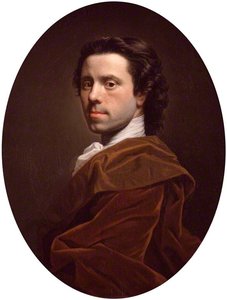
Allan Ramsay
1713 - 1784 , Storbritannien
Snabbfakta
- Artistic Movement Or Style: Rokokokonst, Neoklassicism
- Artists Who Influenced This Artist:
- Hans Hysing
- Francesco Solimena
- Date Of Birth: 1713-10-13
- Date Of Death: 1784
- Full Name: Allan Ramsay
- Nationality: Skotsk
- Notable Artworks:
- Drottning Charlotte
- Mary Degg
- Duncan Forbes
- Place Of Birth (City And Country): Edinburgh, Storbritannien
Relaterade artiklar
George Paul Chalmers: Rediscovering the Angus Rembrandt & Scottish Colourist Roots
Explore the captivating world of George Paul Chalmers (1833-1878), a pivotal Scottish painter. Discover his landscapes, portraits & connection to the Aesthetic Movement and Colourists. Learn about this 'Angus Rembrandt's' legacy with OriginalUniqueArt.
Sir John Watson Gordon: A Study in Scottish Landscape Painting & Tonal Impressionism
Explore the captivating portraits of Sir John Watson Gordon, a leading Scottish master. Discover his evolution from neoclassical style to atmospheric Tonalism and influence on 19th-century British art. Learn about his iconic sitters & legacy.

James Giles: Capturing Scottish Life Through the Lens of British Realism
Explore the life & work of James Giles (1801-1870), a master of Scottish landscape painting and favored artist of Queen Victoria. Discover his atmospheric realism & royal commissions.
Alexander Nasmyth: Picturing Scotland's Romantic Landscape – Innovation & Identity
Explore the life & art of Alexander Nasmyth, a pivotal figure in Scottish Romantic landscape painting. Discover his iconic works, including portraits of Robert Burns, and learn about his lasting influence on national identity. Fine art reproductions available.

Allen Ramsay: Portraiture, Patronage & Shaping Georgian Identity
Explore the life & work of Allen Ramsay, pivotal portraitist to George III. Discover his Rococo style, influence on Georgian society, and lasting legacy in British art history. Learn about his key works & patronage.


