Portret Тео Ван Дусбург

Slike umetnika Тео Ван Дусбург: Najpoznatijih 100 kroz oči galerije

Ažurirano: октобар 2026 · rangirano prema našem koeficijentu popularnosti (pretrage, posete i porudžbine za svako delo) · 225 dela Тео Ван Дусбург u našem katalogu

Ukratko

Iz perspektive galerije, najpoznatije delo umetnika Тео Ван Дусбург je Counter composition XV (1925). Rhythm of a Russian Dance i Troelstra (1910) čine triju koju svako oko prepoznaje. Od 225 dela umetnika Тео Ван Дусбург u našem katalogu, galerija u nastavku predstavlja 100 najpoznatijih dela, od kojih je svako originalno, sa navedenom godinom nastanka, muzejom i onim što ga čini jedinstvenim.

1883 – 1931, Утрехт De stijl Najviše dela: Centraal Museum

Top 10 slika umetnika Тео Ван Дусбург u galeriji

1
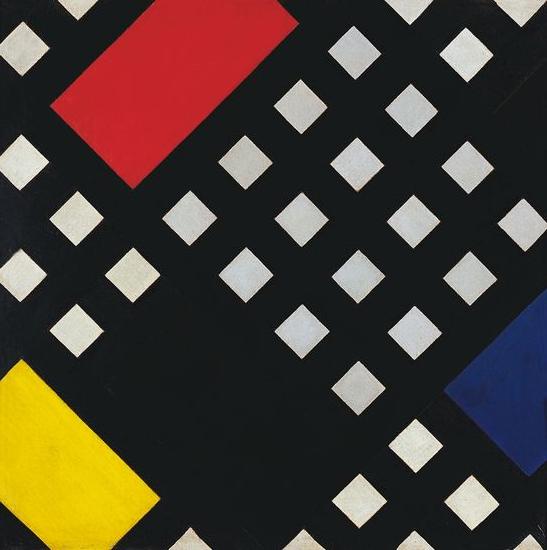
Counter composition XV (1925) čiji je Тео Ван Дусбург

Counter composition XV

1925 · Acrylic On Canvas

Theo van Doesburg's "Counter Composition XV," painted in 1925, isn’t merely a painting; it’s a distilled essence of the De Stijl movement – a radical declaration of order and universal harmony. This deceptively simple work, executed against a stark white canvas, pulsates with an underlying tension born from the careful orchestration of geometric forms and primary colors. It represents a pivotal moment in 20th-century art, moving beyond representational imagery to…

2
Rhythm of a Russian Dance čiji je Тео Ван Дусбург

Rhythm of a Russian Dance

Oil On Canvas

The composition consists of an arrangement of intersecting horizontal and vertical lines that form a series of rectangular and square shapes. These geometric forms overlap across the canvas, creating a sense of depth through visual layering rather than traditional perspective. The color palette is restricted to white, black, blue, pink, and gold or yellow hues. Each color is applied in flat planes with minimal shading, resulting in a smooth and…

3
Troelstra (1910) čiji je Тео Ван Дусбург

Troelstra

1910 · Charcoal

The artwork Troelstra is a monochromatic portrait rendered in charcoal on paper, dating to 1910. The composition is tightly focused on the head and shoulders of the subject, creating an intimate and close-up view. The man's face occupies the majority of the frame, characterized by an asymmetrical arrangement where features are not proportionally accurate. A collar or cravat is visible around the neck, providing a sense of formality to the…

4
Study for Composition VIII (The Cow) (1918) čiji je Тео Ван Дусбург

Study for Composition VIII (The Cow)

1918 · Oil

A cow is reduced to a series of intersecting planes. In this 1918 study, the animal is no longer a creature of flesh and breath, but a rhythmic arrangement of vertical and horizontal lines. The subject is stripped of its organic curves, replaced by the sharp precision of a geometric skeleton. Green blocks of color anchor the composition, cutting through a field of white and black. There is a tension…

5
Composition (The Cow) (1917) čiji je Тео Ван Дусбург

Composition (The Cow)

1917 · Pencil

The eye meets Composition (The Cow), a work that captures a moment of radical transformation. Created by the artist Theo van Doesburg, this piece emerges from 1917, a time when the boundaries of representation begin to fracture. The subject, a cow, exists here not as a living creature of flesh and breath, but as a series of energetic, geometric investigations. It is a study of form that seeks to find…

6
Composition (1923) čiji je Тео Ван Дусбург

Composition

1923 · Oil On Canvas

The canvas known as Composition emerges from the mind of Theo van Doesburg, a work that captures a specific moment in 1923. This piece exists as a precise arrangement of form and color, born from a period of intense creative focus. The artist, Theo van Doesburg, brings a sense of equilibrium to the surface, translating abstract thought into a tangible presence. It is a work that demands attention through its…

7
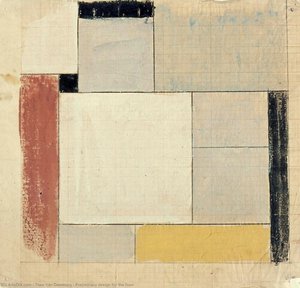
Preliminary design for the floor (1923) čiji je Тео Ван Дусбург

Preliminary design for the floor

1923 · Pencil

The gaze meets Preliminary design for the floor, a work that breathes with the structured intent of Theo van Doesburg. Created in 1923, this piece exists as a vision for a specific space: a tiled floor intended for the De Vonk holiday home located in Noordwijkerhout. It is a moment of pure architectural thought captured on paper, where the abstract becomes a tangible plan for a lived environment.

8
Composition (1931) čiji je Тео Ван Дусбург

Composition

1931 · Oil

The painting titled Composition is a work by the artist Theo van Doesburg. Created in 1931, this piece occupies a small, intimate space of 31 x 24 cm. It exists as a quiet arrangement of form and color, captured within its rectangular boundaries.

9
Portrait of a man with hat (1908) čiji je Тео Ван Дусбург

Portrait of a man with hat

1908 · Oil On Board · Kunstmuseum Den Haag, Hag

The portrait presents a close-up, bust-length view of a man wearing a hat. The subject's face occupies the central portion of the frame, positioned slightly to the left. The lighting is low-key, catching the left side of the forehead and the cheek, while the remaining features recede into deep shadow. This use of chiaroscuro creates a sense of depth through the contrast between light and dark. The color palette is…

Slike umetnika Тео Ван Дусбург, rangirane od 11 do 100

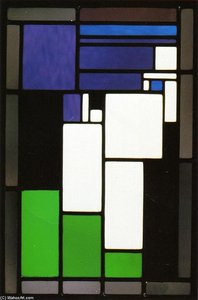
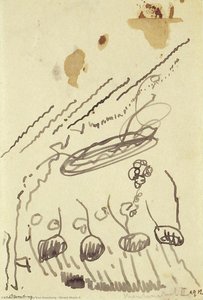
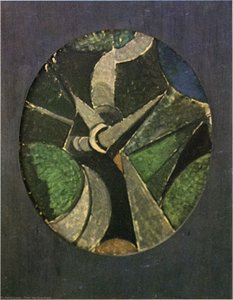
11Portrait of Agnita Feis (1904) čiji je Тео Ван ДусбургPortrait of Agnita Feis1904 · Centraal Museum 12Female Nude (1904) čiji je Тео Ван ДусбургFemale Nude1904 13Portrait of a Man with Hat (1909) čiji je Тео Ван ДусбургPortrait of a Man with Hat1909 14Portrait of a Man with Hat (1908) čiji je Тео Ван ДусбургPortrait of a Man with Hat1908 15Portrait of Christian Leibbrandt (1908) čiji je Тео Ван ДусбургPortrait of Christian Leibbrandt1908 16Portrait of Agnita Feis (1906) čiji je Тео Ван ДусбургPortrait of Agnita Feis1906 · Centraal Museum 17Smiling man (self-portrait?) (1907) čiji je Тео Ван ДусбургSmiling man (self-portrait?)1907 · Centraal Museum 18Workman head (1906) čiji je Тео Ван ДусбургWorkman head1906 · Centraal Museum 19Man with moustache and cap (self-portrait?) (1907) čiji je Тео Ван ДусбургMan with moustache and cap (self-portrait?)1907 · Centraal Museum 20Portrait of a boy en profil (1906) čiji je Тео Ван ДусбургPortrait of a boy en profil1906 · Centraal Museum 21Workmanshead (1906) čiji je Тео Ван ДусбургWorkmanshead1906 · Centraal Museum 22Portrait of Agnita Feis with closed eyes (1906) čiji je Тео Ван ДусбургPortrait of Agnita Feis with closed eyes1906 · Centraal Museum 23Portrait of een man met baret (1908) čiji je Тео Ван ДусбургPortrait of een man met baret1908 24Don Juan (1910) čiji je Тео Ван ДусбургDon Juan1910 25Burgerman (1910) čiji je Тео Ван ДусбургBurgerman1910 26Archangel (1910) čiji je Тео Ван ДусбургArchangel1910 27Abraham Kuyper (1910) čiji je Тео Ван ДусбургAbraham Kuyper1910 28Farmer (1910) čiji je Тео Ван ДусбургFarmer1910 29Alderman of education (1910) čiji je Тео Ван ДусбургAlderman of education1910 30Quérido (1910) čiji je Тео Ван ДусбургQuérido1910 31Frederik van Eeden (1910) čiji je Тео Ван ДусбургFrederik van Eeden1910 32Old Faun (self portrait) (1909) čiji je Тео Ван ДусбургOld Faun (self portrait)1909 33Dutch peasent girl (1913) čiji je Тео Ван ДусбургDutch peasent girl1913 · Centraal Museum 34Portrait of A. J. J. de Winter (1916) čiji je Тео Ван ДусбургPortrait of A. J. J. de Winter1916 35Study for Composition VIII (The Cow) (1917) čiji je Тео Ван ДусбургStudy for Composition VIII (The Cow)1917 36Beggar (1914) čiji je Тео Ван ДусбургBeggar1914 · Centraal Museum 37Abstract portrait (1915) čiji je Тео Ван ДусбургAbstract portrait1915 · Museum de Lakenhal 38Portrait of Nelly van Doesburg (1899-1975) (1922) čiji je Тео Ван ДусбургPortrait of Nelly van Doesburg (1899-1975)1922 · Museum de Lakenhal 39Self portrait (1928) čiji je Тео Ван ДусбургSelf portrait1928 · Centraal Museum 40Nelly van Doesburg Viewed from behind, and a harbor scene (1924) čiji je Тео Ван ДусбургNelly van Doesburg Viewed from behind, and a harbor scene1924 41Dancing man from sketchbook 60 (1931) čiji je Тео Ван ДусбургDancing man from sketchbook 601931 42Archer (1919) čiji je Тео Ван ДусбургArcher1919 · Szépművészeti Múzeum 43Tripartite stained glass window čiji je Тео Ван ДусбургTripartite stained glass window 44Self portrait with hat (1909) čiji je Тео Ван ДусбургSelf portrait with hat1909 · Centraal Museum 45Café Aubette, Strasbourg, France (Preliminary color scheme for ceiling and short walls of ballroom) (1927) čiji je Тео Ван ДусбургCafé Aubette, Strasbourg, France (Preliminary color scheme for ceiling and short walls of ballroom)1927 · MoMA - Muzej moderne umetnosti 46Self portrait with hat (1909) čiji je Тео Ван ДусбургSelf portrait with hat1909 47Composition I (still life) (1916) čiji je Тео Ван ДусбургComposition I (still life)1916 · Kröller-Müller Museum 48Landscape (1901) čiji je Тео Ван ДусбургLandscape1901 49Figure on Bridge in Forest (1903) čiji je Тео Ван ДусбургFigure on Bridge in Forest1903 50Woman in Landscape (1903) čiji je Тео Ван ДусбургWoman in Landscape1903 · Centraal Museum 51Figure on a Bridge in a Forest (1903) čiji je Тео Ван ДусбургFigure on a Bridge in a Forest1903 · Centraal Museum 52Landscape (1901) čiji je Тео Ван ДусбургLandscape1901 · Centraal Museum 53River Landscape with Steeple and Mill (1900) čiji je Тео Ван ДусбургRiver Landscape with Steeple and Mill1900 54A Child (1904) čiji je Тео Ван ДусбургA Child1904 55Landscape with hay cart, church towers and windmill (1901) čiji je Тео Ван ДусбургLandscape with hay cart, church towers and windmill1901 · Centraal Museum 56Still Life (1906) čiji je Тео Ван ДусбургStill Life1906 57Tree (1906) čiji je Тео Ван ДусбургTree1906 · Centraal Museum 58Banister post, Huis De Lange, Alkmaar čiji je Тео Ван ДусбургBanister post, Huis De Lange, Alkmaar 59Portrait of Nelly van Doesburg čiji je Тео Ван ДусбургPortrait of Nelly van Doesburg 60Self portrait (1906) čiji je Тео Ван ДусбургSelf portrait1906 61Cover of ''The masks'' (1910) čiji je Тео Ван ДусбургCover of ''The masks''1910 62The discarded basket (1913) čiji je Тео Ван ДусбургThe discarded basket1913 · Centraal Museum 63Haystacks (1913) čiji je Тео Ван ДусбургHaystacks1913 · Centraal Museum 64Study for Composition X (1917) čiji je Тео Ван ДусбургStudy for Composition X1917 65Composition VI (on black fond) (1917) čiji je Тео Ван ДусбургComposition VI (on black fond)1917 66Composition (The Cow) (1917) čiji je Тео Ван ДусбургComposition (The Cow)1917 67Composition (The Cow) (8) (1917) čiji je Тео Ван ДусбургComposition (The Cow) (8)1917 68Cover of "Balance" by J. Elgenhuis (1916) čiji je Тео Ван ДусбургCover of "Balance" by J. Elgenhuis1916 69Composition (The Cow) (1917) čiji je Тео Ван ДусбургComposition (The Cow)1917 70Composition (The Cow) (1917) čiji je Тео Ван ДусбургComposition (The Cow)1917 71Composition (The Cow) (1917) čiji je Тео Ван ДусбургComposition (The Cow)1917 72Krishna playing a flute (1916) čiji je Тео Ван ДусбургKrishna playing a flute1916 73Lena in interieur (1917) čiji je Тео Ван ДусбургLena in interieur1917 74Colour design for a chimney (1917) čiji je Тео Ван ДусбургColour design for a chimney1917 75Design for a tile floor, and entrance hall (1917) čiji je Тео Ван ДусбургDesign for a tile floor, and entrance hall1917 76Stained glass composition ''Woman'' (1917) čiji je Тео Ван ДусбургStained glass composition ''Woman''1917 77Potrait of Evert Rinsema (1915) čiji je Тео Ван ДусбургPotrait of Evert Rinsema1915 78Abstract church (1915) čiji je Тео Ван ДусбургAbstract church1915 79Dance II (1917) čiji je Тео Ван ДусбургDance II1917 80Street Music I (1915) čiji je Тео Ван ДусбургStreet Music I1915 81Dance I (1917) čiji je Тео Ван ДусбургDance I1917 82Street Music II (1915) čiji je Тео Ван ДусбургStreet Music II1915 83Design for a tile floor, and entrance hall (1917) čiji je Тео Ван ДусбургDesign for a tile floor, and entrance hall1917 84Leaded glass composition I (1917) čiji je Тео Ван ДусбургLeaded glass composition I1917 85The Cardplayers (1916) čiji je Тео Ван ДусбургThe Cardplayers1916 86Composition with window with coloured glass III (1917) čiji je Тео Ван ДусбургComposition with window with coloured glass III1917 87Composition II (Still life) (1916) čiji je Тео Ван ДусбургComposition II (Still life)1916 88Landscape (1916) čiji je Тео Ван ДусбургLandscape1916 89Portrait of Lena Milius (1915) čiji je Тео Ван ДусбургPortrait of Lena Milius1915 90Dunes and sea (1912) čiji je Тео Ван ДусбургDunes and sea1912 · Kröller-Müller Museum 91Still Life with Bottle (1919) čiji je Тео Ван ДусбургStill Life with Bottle1919 · Museum de Lakenhal 92Still Life (1918) čiji je Тео Ван ДусбургStill Life1918 93Plastic garden (Vases) (1919) čiji je Тео Ван ДусбургPlastic garden (Vases)1919 94Study for Rhythm of a Russian Dance (1918) čiji je Тео Ван ДусбургStudy for Rhythm of a Russian Dance1918 95Study for Rhythm of a Russian Dance (1918) čiji je Тео Ван ДусбургStudy for Rhythm of a Russian Dance1918 96Landscape (study for composition XII) (1918) čiji je Тео Ван ДусбургLandscape (study for composition XII)1918 97Composition in gray (Rag Time) (1919) čiji je Тео Ван ДусбургComposition in gray (Rag Time)1919 · Solomon R. Guggenheim Museum 98Cover design for magazine ''Klei'' (1920) čiji je Тео Ван ДусбургCover design for magazine ''Klei''1920 99Cover of ''Classic, Modern, Baroque'' (1920) čiji je Тео Ван ДусбургCover of ''Classic, Modern, Baroque''1920 100Cover of ''Three lectures about the new art'' (1919) čiji je Тео Ван ДусбургCover of ''Three lectures about the new art''1919

Čuvena dela Тео Ван Дусбург po periodima

Motivi koji su privlačili pažnju Тео Ван Дусбург

Četiri teme koje se najčešće ponavljaju u ovim originalima, svaka sa svojim vrhunskim primerom.

Muzeji u kojima se čuvaju originalna dela umetnika Тео Ван Дусбург

7 muzeja u kojima se nalazi najviše slika sa ove stranice.

Muzej Grad Radovi umetnika Тео Ван Дусбург Slike iz ovog spiska
Centraal Museum, UtrehtCentraal Museum Utreht 33 Self-portrait with beard, Portrait of Agnita Feis, Portrait of Agnita Feis
Museum de Lakenhal, LejdenMuseum de Lakenhal Lejden 9 Abstract portrait, Portrait of Nelly van Doesburg (1899-1975), Still Life with Bottle
Kröller-Müller Museum, OtterloKröller-Müller Museum Otterlo 12 Composition I (still life), Dunes and sea
MoMA - Muzej moderne umetnosti, New York CityMoMA - Muzej moderne umetnosti New York City 9 Café Aubette, Strasbourg, France (Preliminary color scheme for ceiling and short walls of ballroom)
Kunstmuseum Den Haag, HagKunstmuseum Den Haag Hag 4 Portrait of a man with hat
Solomon R. Guggenheim Museum, New YorkSolomon R. Guggenheim Museum New York 3 Composition in gray (Rag Time)
Szépművészeti Múzeum, BudimpeštaSzépművészeti Múzeum Budimpešta 1 Archer

Тео Ван Дусбург, jedno autentično delo po deceniji

Radovi po decenijama

Izaberite deceniju da biste videli original koji je definiše.

Slike umetnika Тео Ван Дусбург: odgovori galerije

Koja je najpoznatija slika umetnika Тео Ван Дусбург?Otkrij odgovor

Counter composition XV (1925). Slede Rhythm of a Russian Dance i Troelstra (1910).

Koliko je godina imao/la Тео Ван Дусбург kada je dovršio/la Counter composition XV?Otkrij odgovor

42 godina: Counter composition XV datira iz 1925, a Тео Ван Дусбург je rođen/a 1883.

Koja su najbolja 10 dela umetnika Тео Ван Дусбург?Otkrij odgovor

Counter composition XV, Rhythm of a Russian Dance, Troelstra, Study for Composition VIII (The Cow), Composition (The Cow), Composition, Preliminary design for the floor, Composition, Portrait of a man with hat i Self-portrait with beard. Gornji rang pokazuje godinu i muzej za svako od njih.

Koliko je dela stvorio/la Тео Ван Дусбург?Otkrij odgovor

Naš katalog sadrži 225 dela umetnika Тео Ван Дусбург, datiranih od 1900 do 1931.

Gde se nalaze najpoznatiji originali umetnika Тео Ван Дусбург?Otkrij odgovor

Većinom u Centraal Museum (Utreht), Museum de Lakenhal (Lejden) i Kröller-Müller Museum (Otterlo). Tabela muzeja iznad sadrži njih sve.

Kada je Тео Ван Дусбург stvorio svoje najpoznatije slike?Otkrij odgovor

U 1910s: 56 od 100 dela na ovoj stranici nastalo je tada, od čega je Troelstra.

Koja su najranija i najkasnija poznata dela umetnika Тео Ван Дусбург?Otkrij odgovor

Na ovoj stranici, najstarije delo je iz River Landscape with Steeple and Mill (1900), a najnovije iz Composition (1931).

Kojim se motivima Тео Ван Дусбург najčešće bavio?Otkrij odgovor

Men (12), Designs and sketches (11) i Characters (8), kroz svih 100 dela na ovoj stranici.

U kojoj je tehnici najviše radio/la Тео Ван Дусбург?Otkrij odgovor

Oil On Canvas, za 3 od 100 dela na ovoj stranici.

Sa kojim umetničkim pravcem je Тео Ван Дусбург povezan/a?Otkrij odgovor

De stijl, sudeći po originalima na ovoj stranici.

Koje originale umetnika Тео Ван Дусбург poseduje Centraal Museum?Otkrij odgovor

Self-portrait with beard, Portrait of Agnita Feis i Portrait of Agnita Feis: Centraal Museum, Utreht čuva 20 dela sa ove stranice.

Тео Ван Дусбург: umetnik

Архитекта Апстракције: Живот у Геометријској Хармонији

Тео ван Дузбург, рођен као Кристијан Емил Марије Купер 1883. године у Утрехту, Холандија, био је више од сликара; он је био револуционарна сила која је преобликовала саме основе модерне уметности. Његов пут је започео у сенци Импресионизма и Постимпресионизма, првобитно огледајући стилове подсећајуће на Винсента ван Гога – како по тематици тако и по емоционалном интензитету. Међутим, ова рана фаза служила је као кључни прелиминијари, неопходни степеник ка радикалној трансформацији која ће дефинисати његово трајно наслеђе. Преломни тренутак дошао је 1913. године са сусретом са *Rückblicke* Василија Кандинског. Овај текст је пробудио у ван Дузбургу дубоко увиђање: права уметничка експресија не лежи у реплицирању спољашњег света, већ у каналисању унутрашње, духовне стварности кроз чисту апстракцију. Управо је ово уверење родило Неопластицизам, познатији као Де Стијл – покрет који је он основао и жестоко заступао, постајући његов најстраственији присталица.

Ковање Новог Визуелног Језика: Принципи Де Стијла

Де Стијл није био само уметнички стил; то је била свеобухватна филозофска декларација преведена у визуелни облик. Ван Дузбург је веровао да треба скинути уметност до њених најсуштинскијих елемената – правих линија, правих углова и примарних боја црвене, жуте и плаве, заједно са црном, белом и сивом. Ова строга палета није рођена из ограничења, већ из жеље за универзалношћу – уверење да ови фундаментални облици одговарају основном космичком поретку. Замислио је *тотално* уметничко дело, које се протеже ван платна како би обухватило архитектуру, дизајн и чак обичне предмете. Сарадња је била кључна; ван Дузбург је блиско радио са архитектима као што су Ј.Ј.П. Оуд и Герит Ритвелд, пројектујући витраже, намештај и читаве ентеријере који су уградили принципе Де Стијла. Његова сарадња се протезала на колеге уметнике као што је Пит Мондријан, са којим је заједно основао угледни часопис *Де Стијл*, платформу за ширење својих идеја и привлачење сродних стваралаца. Ипак, упркос њиховом заједничком почетку, тензије су настале између ван Дузбурга и Мондријана у вези крутости Неопластицизма. Ван Дузбург је представио “Елементаризам” 1926. године, заговарајући дијагоналне линије и динамичнији композициони приступ – одступање које је на крају довело до раскола унутар покрета, откривајући његов немиран дух и константну потрагу за уметничком еволуцијом.

Иза Сликарства: Многострана Уметничка Визија

Иако је слављен као сликар, ван Дузбургове уметничке тежње биле су изузетно разноврсне. Био је плодан писац, песник и критичар, користећи перо да артикулише теоријске основе Де Стијла и оспорава конвенционална схватања уметности. Његово ангажовање са Дадаизмом раних двадесетих година додатно је проширило његов уметнички хоризонт, доводећи до експерименталних дела која су укључивала колаж и типографију. Ово доба га је такође видело како предаје на Баухаусу, где је делио своје идеје са новом генерацијом уметника и дизајнера. Није био задовољан да остане у оквирима традиционалних уметничких форми; ван Дузбург је активно тражио да интегрише уметност у свакодневни живот, верујући да има моћ да трансформише друштво. Његови дизајни за ентеријере и намештај нису били само естетички експерименти, већ покушаји стварања хармоничних животних простора који су одражавали принципе Де Стијла. Још један пример је његова сарадња са Софијом Таубер-Арп и Жоржем Вантонгелоом на пројектовању резиденција уметника, демонстрирајући холистички приступ стваралаштву – покушај изградње света *у* слици његових идеала.

Наслеђе и Трајан Утицај: Пионир Модернизма

Живот Теа ван Дузбурга је трагично прекинут 1931. године у доби од 47 година, али његов утицај на модерну уметност остаје дубок. Де Стијл, иако релативно краткотрајан као кохезивни покрет, имао је огроман утицај на каснији уметнички развој, укључујући Баухаус дизајн, Минимализам и Конструктивизам. Његов акцент на геометријској апстракцији, чистој боји и функционализму наставља да одјекује са уметницима и дизајнерима данас. Његово дело служи као подсетник да уметност није само о репрезентацији, већ о истраживању фундаменталних облика и идеја. Ван Дузбургово наслеђе се протеже ван његових слика и дизајна; лежи у његовој непоколебљивој посвећености уметничкој иновацији и веровању у трансформативну моћ апстракције. Његова визија унификованог, хармоничног света – изражена кроз језик Де Стијла – наставља да инспирише оне који траже стварање лепшег и значајнијег окружења.

Кључна Дела & Трајан Утицај

  • Студија за Композиције Двадесет и две (1922): Квинтeсенцијални пример Неопластицизма, који показује карактеристичне геометријске облике покрета и ограничену палету боја.
  • Композиција са пола вредности (1928): Демонстрира ван Дузбургово истраживање тоналних варијација унутар Де Стијл естетике.
  • Плесачи (1917-1918): Представља прелазни период у његовом раду, спајајући фигуративне елементе са новим апстрактним тенденцијама.
  • Сарадња на часопису *Де Стијл*: Кључна платформа за ширење идеја покрета и неговање дијалога међу уметницима и интелектуалцима.
  • Елементаризам (1926): Ван Дузбургов покушај да убризне динамику у Неопластицизам, уведући дијагоналне линије и флуиднији композициони приступ.
Ван Дузбургов утицај се може видети у безброј аспеката модерног дизајна – од архитектуре и намештаја до графичког дизајна и типографије. Он остаје кључна фигура у историји уметности, прави пи