

 Pređi na štampu
 Pročitaj više







































 Za umetnička dela ili reprodukcije čija je bilo koja strana veća od 105 cm (približno 41 inč), okvir će biti isporučen u obliku rastavljenog seta za sklapanje. Ovaj metod osigurava bezbednu dostavu i sprečava oštećenja tokom transporta.


A Symphony of Geometry: Rediscovering Theo van Doesburg’s Composition I
In the quiet evolution of modernism, few works capture the radical shift from representation to pure abstraction as poignantly as Theo van Doesburg’s Composition I (still life). Created in 1916, this masterpiece serves as a profound bridge between the tangible world and the spiritual realm of geometry. At first glance, the viewer is presented with a familiar tableau—the humble arrangement of bowls, cups, apples, and a vase resting upon a table. Yet, as one lingers, the recognizable forms begin to dissolve. The objects are not merely depicted; they are distilled. Through a masterful application of Neoplasticism, van Doesburg strips away the superficial textures of reality to reveal a skeletal structure of horizontal lines, vertical axes, and overlapping circles that pulse with an internal, rhythmic life.
The technique employed in this work is a testament to the artist's disciplined pursuit of clarity. Eschewing the expressive, thick impasto of his contemporaries, van Does andburg utilized precise, meticulous brushstrokes to apply pigment onto the canvas. This method ensures that every intersection of line and every curve of a circle feels intentional and balanced. The composition is anchored by a central, tree-like structure composed of concentric circles, which draws the eye inward, creating a sense of depth that defies the flatness of the abstract plane. This interplay between the weight of the geometric forms and the lightness of the negative space creates a visual equilibrium that is both intellectually stimulating and aesthetically soothing.
The Spirit of De Stijl: Historical and Symbolic Resonance
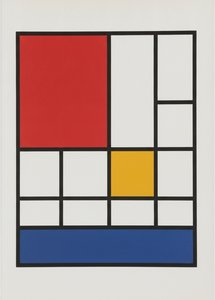
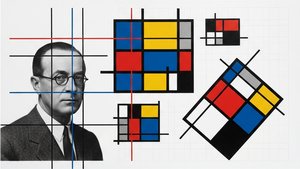
To understand Composition I, one must look toward the turbulent era of its birth. Painted amidst the shadows of World War I, the work emerged from a period of intense intellectual ferment. Van Doesburg, alongside luminaries like Piet Mondriaan, sought to establish the De Stijl movement—a collective mission to redefine art’s role in a fractured society. They believed that by moving away from the "sensory" and toward the "universal," art could foster a new sense of cosmic harmony. The painting is not merely an experiment in shape; it is a philosophical manifesto. The dominant circles within the work are deeply symbolic, representing spiritual unity and the infinite nature of the cosmos—concepts heavily influenced by the writings of Wassily Kandinsky.
For the discerning collector or interior designer, this piece offers more than just visual interest; it provides an emotional anchor of warmth and stability. Despite its austere, geometric vocabulary, the palette—rich with warm hues—imbues the canvas with a surprising sense of intimacy. It is a work that demands contemplation, inviting the viewer to transcend the chaos of the external world and enter a realm of pure intellect and emotion. Whether placed in a contemporary gallery setting or as a focal point in a sophisticated modern interior, Composition I radiates a timeless elegance, making it an incomparable choice for those who appreciate art that speaks to both the mind and the soul.
Pitanja i odgovori
Pod kojim drugim imenima je Тео Ван Дусбург poznat/a?
Тео Ван Дусбург se pojavljuje i pod drugim imenima: Кристијан Емил Марије Купер, I.K. Бонсет, Алдо Камини, Доес, Christian Emil Marie Küpper.
Koliko ljudi posmatra "Composition I (still life)"?
Statistika za „Composition I (still life)”, autor Тео Ван Дусбург dostupna je na stranici Statistika ovog umetničkog dela: mesečni broj poseta delu, broj poseta radovima umetnika, kao i pregled nedavnih posetilaca prema zemljama i jezicima.
U kom delu doma bi se reprodukcija dela "Composition I (still life)" lepo uklopila?
„Composition I (still life)”, autor Тео Ван Дусбург se preporučuje za Living Room. Ovaj predlog je zasnovan na temi, bojama i raspoloženju dela.




 Pregledaj u prostoru
 Pošalji
 Podeli
 Detalji o delu
 Vodič
Vodič

 Preuzmi
 Slični predmeti
 Rendgenski snimak
 Automatska prezentacija
 Q&A
Q&A Statistika