Portret Николај Ге

95 najpoznatijih slika umetnika Николај Ге, izbor iz galerije

Ažurirano: новембар 2026 · rangirano prema našem koeficijentu popularnosti (pretrage, posete i porudžbine za svako delo) · 95 dela Николај Ге u našem katalogu

Ukratko

Od svih originala koje je Николај Ге ostavio, najpoznatiji je Петр Велики испитује царевича Алексеја Петровића у Петропавловску (1871), koji se nalazi u kolekciji Tretyakovljeva galerija, Moskva. Odmah za njima slede Christ and his disciples entered the Garden of Gethsemane (1888) i Harbingers of the Resurrection (1867). Naš katalog sadrži 95 dela umetnika Николај Ге; galerija je čuvala 95 dela koja svet najviše admira, od kojih je svako prikazano sa svojim datumom, muzejom i pričom.

1831 – 1894, Вороњеж Realism Najviše dela: Tretyakovljeva galerija

Top 10 slika umetnika Николај Ге: izbor galerije

1
Петр Велики испитује царевича Алексеја Петровића у Петропавловску (1871) čiji je Николај Ге

Петр Велики испитује царевича Алексеја Петровића у Петропавловску

1871 · Ulje na platnu · Tretyakovljeva galerija, Moskva

Ovo ulje na platnu prikazuje mračnu istorijsku scenu smeštenu u enterijer palate Monplaisir u Peterhofu. Kompozicija je fokusirana na dve figure raspoređene na suprotnim stranama velikog, ukrašenog stola. Na desnoj strani, Petar I sedi u naslonjenoj stolici ukrašenoj crvenim baršunom, blago nagnut napred sa autoritativnim pogledom. Na levoj strani, carovigrevič Aleksej Petrovič stoji uspravno sa spuštenom glavom i oborenim izrazom lica. Njegova odeća, sastojena od baršunastog prslika, visokih svilenih čarapa…

2
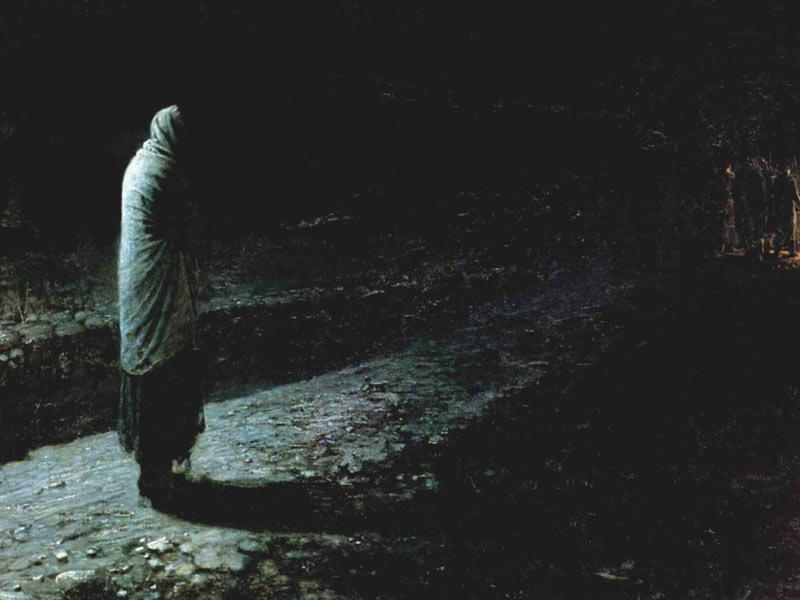
Christ and his disciples entered the Garden of Gethsemane (1888) čiji je Николај Ге

Christ and his disciples entered the Garden of Gethsemane

1888 · Oil On Canvas

Nikolai Ge’s Christ and his disciples entered the Garden of Gethsemane, painted about 1888, captures a pivotal moment from the New Testament. The religious subject matter focuses on the group of figures gathered in the garden. Christ stands prominently with outstretched arms, a gesture suggesting sacrifice and the acceptance of fate. Around him, the disciples are clustered in a solemn assembly. Their somber expressions convey a sense of anxiety and…

3
Harbingers of the Resurrection (1867) čiji je Николај Ге

Harbingers of the Resurrection

1867 · Oil

In the painting Harbingers of the Resurrection, created by Nikolai Ge about 1867, the central figure is Jesus Christ. He is positioned in the middle of the composition, flanked by two men. These two figures on either side of Christ appear to be angels or messengers. Each of these men holds a staff, an object that may symbolize their functions as protectors or guides. The presence of these figures establishes…

4
Portrait of Nikolai Nekrasov (1872) čiji je Николај Ге

Portrait of Nikolai Nekrasov

1872 · Oil On Canvas · Ermitaž, Sankt Peterburg

An elderly man sits within the heavy embrace of a patterned armchair. The fabric of his suit carries a palpable weight, rendered in deep blacks and muted earth tones that seem to absorb the surrounding light. His face, pale against the dark void of the background, holds a quiet melancholy. Light falls sharply across his forehead and eyes, catching the texture of skin and the silvered strands of facial hair.…

5
Leila and Khaji-Abrek (1852) čiji je Николај Ге

Leila and Khaji-Abrek

1852 · Oil

In the painting Leila and Khaji-Abrek by Nikolai Ge, two figures occupy the central space of the composition. Created about 1852, the work depicts a woman and a man in a specific physical arrangement. The woman is positioned kneeling on the ground, facing the man. He is situated before her, appearing as a soldier or a leader in stature and presence. Both individuals are dressed in traditional clothing that covers…

6
Bridge in Viko (1858) čiji je Николај Ге

Bridge in Viko

1858 · Oil On Paper

We are looking at Bridge in Viko, a work from 1858 by the Russian artist Nikolai Ge. This piece belongs to the Realism movement, a period where the focus shifted toward a more direct and unadorned representation of the world. It is a quiet study of landscape and structure, captured during a formative time in the artist's career.

7
Returning from the burial of Christ (1859) čiji je Николај Ге

Returning from the burial of Christ

1859 · Oil

In this quiet composition titled Returning from the burial of Christ, we encounter a profound moment of transition. The work is attributed to the Russian artist Nikolai Ge and dates to 1859. It captures a solemn procession of figures moving through a natural landscape, their presence marked by the heavy folds of their long robes. There is a stillness here that invites a closer look at the gravity of the…

8
Portrait of Leo Tolstoy (1884) čiji je Николај Ге

Portrait of Leo Tolstoy

1884 · Oil On Canvas · Tretyakovljeva galerija, Moskva

In the quiet, amber-hued atmosphere of a Moscow study, time seems to suspend itself within Nikolai Ge’s 1884 masterpiece, Portrait of Leo Tolstoy. This is not merely a depiction of a man at work; it is an intimate window into the very soul of Russian literature. The painting captures the legendary author seated at his desk, enveloped by the weight of his own profound thoughts. As he leans over his…

9
Portrait of Alexander Herzen (1867) čiji je Николај Ге

Portrait of Alexander Herzen

1867 · Oil On Canvas · Ermitaž, Sankt Peterburg

This oil painting is a somber and intense psychological portrait of an older man, presented as an oval-shaped bust-length figure. Set against a dark, indistinct background, the subject is illuminated by directional lighting coming from the upper left, which casts one side of his face and much of his clothing into deep shadow. This technique creates a sense of depth and three-dimensionality through dramatic chiaroscuro. The color palette is dominated…

10
Catherine II at the Coffin of Empress Elizabeth (1709) čiji je Николај Ге

Catherine II at the Coffin of Empress Elizabeth

1709 · Oil

In Catherine II at the Coffin of Empress Elizabeth, Nikolai Ge constructs a grand hall where history feels heavy and crowded. The composition is a dense gathering of figures, a chaotic assembly of dignitaries and attendants that fills the space with ceremonial weight. Amidst this throng, the eye is drawn to Catherine II, positioned slightly off-center. She exists within a shallow perspective that pushes the solemnity of the court toward…

Izbor umetnika Николај Ге se nastavlja, od 11 do 95

11Achilles and the body of Patroclus čiji je Николај ГеAchilles and the body of PatroclusNational Art Museum of The Republic of Belarus 12Mary, sister of Lazarus, Greets Jesus (1863) čiji je Николај ГеMary, sister of Lazarus, Greets Jesus1863 13Portrait of Russian baritone opera singer Gennady Kondratiev (1863) čiji je Николај ГеPortrait of Russian baritone opera singer Gennady Kondratiev1863 14Portrait of V.N.Rostovtseva (1861) čiji je Николај ГеPortrait of V.N.Rostovtseva1861 15Portrait of Joseph Daumang (1868) čiji je Николај ГеPortrait of Joseph Daumang1868 16Portrait of Princess Olga Volkonskaya (nee Kleinmichel) (1882) čiji je Николај ГеPortrait of Princess Olga Volkonskaya (nee Kleinmichel)1882 · Ermitaž 17Conscience, Judas (1891) čiji je Николај ГеConscience, Judas1891 18Portrait of P.A. Kostichev (1892) čiji je Николај ГеPortrait of P.A. Kostichev1892 19Portrait of Yelena Likhachova (1892) čiji je Николај ГеPortrait of Yelena Likhachova1892 20Portrait of Yekaterina Ge, the Artist's Daughter-in-Law (1880) čiji je Николај ГеPortrait of Yekaterina Ge, the Artist's Daughter-in-Law1880 · Ermitaž 21Crucifixion čiji je Николај ГеCrucifixion 22Portrait of Evdokiya Nikolaevna Kostycheva (1845) čiji je Николај ГеPortrait of Evdokiya Nikolaevna Kostycheva1845 23Portrait of Yakov Merkulov (1855) čiji je Николај ГеPortrait of Yakov Merkulov1855 24Portrait of Nikolay O.Ge, Artist's Father (1854) čiji je Николај ГеPortrait of Nikolay O.Ge, Artist's Father1854 25Frascati Clouds (1859) čiji je Николај ГеFrascati Clouds1859 26The view from Santo Terenzo at Lerici by night (1862) čiji je Николај ГеThe view from Santo Terenzo at Lerici by night1862 27Portrait of Piotr Zabela (1856) čiji je Николај ГеPortrait of Piotr Zabela1856 28Bay in Livorno. sunset (1862) čiji je Николај ГеBay in Livorno. sunset1862 29Death of Imelda Lambertatstsi (1860) čiji je Николај ГеDeath of Imelda Lambertatstsi1860 30Death of Virginia, Study (1857) čiji je Николај ГеDeath of Virginia, Study1857 31Witch of Endor (1857) čiji je Николај ГеWitch of Endor1857 32The destruction of the Temple in Jerusalem (1859) čiji je Николај ГеThe destruction of the Temple in Jerusalem1859 33love of Vestal (1857) čiji je Николај Геlove of Vestal1857 34Portrait of the Artist's Wife Anna Ge (1858) čiji je Николај ГеPortrait of the Artist's Wife Anna Ge1858 · Kiev National Picture Gallery 35Portrait of Shestova with daughter (1859) čiji je Николај ГеPortrait of Shestova with daughter1859 36Death of Virginia, Study (1857) čiji je Николај ГеDeath of Virginia, Study1857 37Vineyard at Vico (1858) čiji je Николај ГеVineyard at Vico1858 38Death of Virginia, Study (1857) čiji je Николај ГеDeath of Virginia, Study1857 39Livorno. Road to the Sea at Antiniano near Livorno (1862) čiji je Николај ГеLivorno. Road to the Sea at Antiniano near Livorno1862 40Sorrento (1869) čiji je Николај ГеSorrento1869 41Oaks in the mountains of Carrara (1868) čiji je Николај ГеOaks in the mountains of Carrara1868 42Marble Saw in Carrara (1868) čiji je Николај ГеMarble Saw in Carrara1868 43Loading marble (1868) čiji je Николај ГеLoading marble1868 44Portrait of the Author Alexander Herzen (1867) čiji je Николај ГеPortrait of the Author Alexander Herzen1867 45The Transportation of Marble at Carrara (1868) čiji je Николај ГеThe Transportation of Marble at Carrara1868 46Christ in front of Annas (1868) čiji je Николај ГеChrist in front of Annas1868 47Portrait of an Unknown Woman in a blue blouse (1868) čiji je Николај ГеPortrait of an Unknown Woman in a blue blouse1868 48Christ in the synagogue (1868) čiji je Николај ГеChrist in the synagogue1868 49Portrait of A.N.Pypin (1871) čiji je Николај ГеPortrait of A.N.Pypin1871 50Florence. The Cascina Park (1868) čiji je Николај ГеFlorence. The Cascina Park1868 51Portrait of the Poet Nikolay Nekrasov (1872) čiji je Николај ГеPortrait of the Poet Nikolay Nekrasov1872 52Tsar Boris and the Queen Martha (1874) čiji je Николај ГеTsar Boris and the Queen Martha1874 53Portrait of Alexei Antipowitsch Potechin (1876) čiji je Николај ГеPortrait of Alexei Antipowitsch Potechin1876 54Portrait of Anna Olsufyeva (1881) čiji je Николај ГеPortrait of Anna Olsufyeva1881 55An Old Peasant (1880) čiji je Николај ГеAn Old Peasant1880 56Portrait of Adam Olsufyev (1881) čiji je Николај ГеPortrait of Adam Olsufyev1881 57On the Mount of Olives (1880) čiji je Николај ГеOn the Mount of Olives1880 58Portrait of Natalia Petrunkevich (1892) čiji je Николај ГеPortrait of Natalia Petrunkevich1892 59Self-Portrait (1892) čiji je Николај ГеSelf-Portrait1892 · Kiev National Picture Gallery 60Sophia Tolstaya (1886) čiji je Николај ГеSophia Tolstaya1886 61Portrait of Maria Gabayeva (1886) čiji je Николај ГеPortrait of Maria Gabayeva1886 62Portrait of Tatyana Tolstaya, Leo Tolstoy's Daughter (1887) čiji je Николај ГеPortrait of Tatyana Tolstaya, Leo Tolstoy's Daughter1887 63Portrait of Nikolay Ge, the Artist's Grandson (1889) čiji je Николај ГеPortrait of Nikolay Ge, the Artist's Grandson1889 64Old Park (1893) čiji je Николај ГеOld Park1893 65Crusifixion čiji je Николај ГеCrusifixion 66Mother at the funeral of her child čiji je Николај ГеMother at the funeral of her child 67Portrait of Barbara Kochubey čiji je Николај ГеPortrait of Barbara Kochubey 68Portrait of Olga Kostycheva čiji je Николај ГеPortrait of Olga Kostycheva 69Return of Tobias čiji je Николај ГеReturn of Tobias 70Carrara čiji je Николај ГеCarrara 71Judah čiji je Николај ГеJudah 72The Temptation of Christ čiji je Николај ГеThe Temptation of Christ 73Pushkin in the village Mihaylovskoye čiji je Николај ГеPushkin in the village Mihaylovskoye 74Ruslan and Lyudmila čiji je Николај ГеRuslan and Lyudmila 75The road into the forest čiji je Николај ГеThe road into the forest 76Bay in Livorno čiji je Николај ГеBay in Livorno 77Boys at the beach. Study čiji je Николај ГеBoys at the beach. Study 78Bay. Vyko čiji je Николај ГеBay. Vyko 79Portrait of Historian M.Kostomarov čiji je Николај ГеPortrait of Historian M.Kostomarov 80Gorge in the mountains of Carrara čiji je Николај ГеGorge in the mountains of Carrara 81Portrait of M.P.Svet čiji je Николај ГеPortrait of M.P.Svet 82Portrait of the Author Mikhail Saltykov-Shchedrin čiji je Николај ГеPortrait of the Author Mikhail Saltykov-Shchedrin 83Christ Head čiji je Николај ГеChrist HeadKiev National Picture Gallery 84Portrait of the Ukrainian boy čiji je Николај ГеPortrait of the Ukrainian boy 85The head of John the Apostle čiji je Николај ГеThe head of John the Apostle 86Katerina Ivanovna Zabello čiji je Николај ГеKaterina Ivanovna Zabello 87Portrait of Maria Tolstaya, Leo Tolstoy's Daughter čiji je Николај ГеPortrait of Maria Tolstaya, Leo Tolstoy's Daughter 88Portrait of M.V. Alekhin čiji je Николај ГеPortrait of M.V. Alekhin 89Christand Robber čiji je Николај ГеChristand Robber 90Peter I interrogates Tsarevich Alexei čiji je Николај ГеPeter I interrogates Tsarevich Alexei 91The Judgment of King Solomon čiji je Николај ГеThe Judgment of King Solomon 92Last Supper (1863) čiji je Николај ГеLast Supper1863 · Државни руски музеј 93What is Truth. Christ and Pilate (1890) čiji je Николај ГеWhat is Truth. Christ and Pilate1890 · Tretyakovljeva galerija 94Golgotha (1893) čiji je Николај ГеGolgotha1893 · Tretyakovljeva galerija 95The Judgment of the Sanhedrin (1892) čiji je Николај ГеThe Judgment of the Sanhedrin1892 · Tretyakovljeva galerija

Čuvena dela Николај Ге po periodima

Motivi koji su privlačili pažnju Николај Ге

Četiri teme koje se najčešće ponavljaju u ovim originalima, svaka sa svojim vrhunskim primerom.

Muzeji u kojima se čuvaju originalna dela umetnika Николај Ге

5 muzeja u kojima se nalazi najviše slika sa ove stranice.

Muzej Grad Radovi umetnika Николај Ге Slike iz ovog spiska
Tretyakovljeva galerija, MoskvaTretyakovljeva galerija Moskva 5 Петр Велики испитује царевича Алексеја Петровића у Петропавловску, Portrait of Leo Tolstoy, What is Truth. Christ and Pilate
Ermitaž, Sankt PeterburgErmitaž Sankt Peterburg 4 Portrait of Nikolai Nekrasov, Portrait of Alexander Herzen, Portrait of Princess Olga Volkonskaya (nee Kleinmichel)
Kiev National Picture Gallery, KyivKiev National Picture Gallery Kyiv 3 Portrait of the Artist's Wife Anna Ge, Self-Portrait, Christ Head
National Art Museum of The Republic of Belarus, MinskNational Art Museum of The Republic of Belarus Minsk 1 Achilles and the body of Patroclus
Државни руски музеј, St. PetersburgДржавни руски музеј St. Petersburg 1 Last Supper

Николај Ге deceniju po deceniju: original koji definiše svaku od njih

Radovi po decenijama

Izaberite deceniju da biste videli original koji je definiše.

Pitanja kolekcionara o slikama umetnika Николај Ге

Po kojem delu je Николај Ге najpoznatiji/a?Otkrij odgovor

Петр Велики испитује царевича Алексеја Петровића у Петропавловску (1871), Tretyakovljeva galerija, Moskva. Slede Christ and his disciples entered the Garden of Gethsemane (1888) i Harbingers of the Resurrection (1867).

Koliko je godina imao/la Николај Ге kada je nastalo delo Петр Велики испитује царевича Алексеја Петровића у Петропавловску?Otkrij odgovor

40 godina: Петр Велики испитује царевича Алексеја Петровића у Петропавловску datira iz 1871, a Николај Ге je rođen/a 1831.

Koja su deset najpoznatijih slika umetnika Николај Ге?Otkrij odgovor

Петр Велики испитује царевича Алексеја Петровића у Петропавловску, Christ and his disciples entered the Garden of Gethsemane, Harbingers of the Resurrection, Portrait of Nikolai Nekrasov, Leila and Khaji-Abrek, Bridge in Viko, Returning from the burial of Christ, Portrait of Leo Tolstoy, Portrait of Alexander Herzen i Catherine II at the Coffin of Empress Elizabeth. Gornji rang pokazuje godinu i muzej za svako od njih.

Koliko je slika ostavio Николај Ге?Otkrij odgovor

Naš katalog sadrži 95 dela umetnika Николај Ге, datiranih od 1845 do 1893.

U kojim muzejima se nalaze remek-dela umetnika Николај Ге?Otkrij odgovor

Većinom u Tretyakovljeva galerija (Moskva), Ermitaž (Sankt Peterburg) i Kiev National Picture Gallery (Kyiv). Tabela muzeja iznad sadrži njih sve.

U kojim godinama je Николај Ге naslikao svoja najpoznatija dela?Otkrij odgovor

U 1860s: 21 od 95 dela na ovoj stranici nastalo je tada, od čega je Harbingers of the Resurrection.

Koja su prva i poslednja čuvena originalna dela umetnika Николај Ге?Otkrij odgovor

Na ovoj stranici, najstarije delo je iz Portrait of Evdokiya Nikolaevna Kostycheva (1845), a najnovije iz Old Park (1893).

Koje je motive Николај Ге najčešće birao/la?Otkrij odgovor

Portraits (23), Men (16) i Women (11), kroz svih 95 dela na ovoj stranici.

Koju je tehniku najčešće koristio/la Николај Ге?Otkrij odgovor

Oil On Canvas, za 9 od 95 dela na ovoj stranici.

Kojem umetničkom pravcu pripada Николај Ге?Otkrij odgovor

Realism, sudeći po originalima na ovoj stranici.

Čija se dela umetnika Николај Ге nalaze u Tretyakovljeva galerija?Otkrij odgovor

Петр Велики испитује царевича Алексеја Петровића у Петропавловску, Portrait of Leo Tolstoy i What is Truth. Christ and Pilate: Tretyakovljeva galerija, Moskva čuva 5 dela sa ove stranice.

Николај Ге: život i delo

Николај Ге: Живот посвећен уметности и филозофији

Николај Николајевич Ге (1831-1894) представља изузетно значајну фигуру у историји руске уметности. Рођен у племенитој породици француског порекла, његов живот је био обележен интелектуалним тежњама и посвећеношћу стваралаштву. Првобитно предодређен за научну каријеру – студирао је физику и математику на Универзитету у Кијеву и Санкт Петербургу – Ге је драматично променио свој пут 1850. године, одлучивши да се посвети сликању на Императорској Академији Уметности у Санкт Петербургу. Та одлука је обликовала не само његову судбину већ и значајно допринела еволуцији руског сликарства.

Рани тренинг и утицаји

Геова рана дела демонстрирала су мајсторство академске технике, али су истовремено наговештавала дубља филозофска истраживања која ће карактерисати његов каснији рад. Академија је била место где је усавршавао своје умеће под менторством Петра Басина, а 1857. године добио је златну медаљу за слику “Вештица из Ендора призива дух пророка Самуила”. Утицај Карла Брулова, водећег руског академског сликара, био је изузетно снажан у његовим раним годинама. Путовања кроз Немачку, Швајцарску и Француску, омогућена стипендијом након дипломирања, проширила су његов уметнички хоризонт. У Риму је Ге сусрео Александра Андрејевича Иванова, чији је рад снажно обликовао његов будући стил и избор тема.

Пионирска употреба фотографије и контроверзне радове

Године 1861. Ге је насликао “Последњу вечеру”, дело које је изазвало велику полемику због необичне методе – користио је фотографију Сергеја Лвовича Левицког, на којој је Александар Иванович Херцен позирао као модел за Христа. Овај приступ, у то време радикалан и неконвенционалан, био је претеча будуће улоге фотографије у финој уметности. Реализам слике и ослањање на фотографију изазвали су оштре критике, са оптужбама да Ге промовише материјализам и нихилизам. Упркос контроверзи, “Последња вечера” оставила је снажан утисак, што је довело до његовог именовања за професора на Императорској Академији Уметности 1863. године. Ге није оклевао да експериментише и укључи нове технологије у свој рад, постављајући питање граница традиционалних уметничких техника.

Каснији радови: Религиозне теме и филозофско усмерење

Ге се касније вратио историјским темама, постижући велики успех са “Петар Велики испитује царевића Алексеја у Петерхофу” (1871). Упознавање са Левом Толстојем било је преломни тренутак – Ге је прихватио његову филозофију, што је значајно утицало на његов каснији избор тема и начин приказивања. Осамдесетих година 19. века се поново посветио религиозним мотивима, али су његове интерпретације често биле критиковане због тога што су илустровале Ернеста Ренана уместо традиционалних библијских наратива. Радови попут “Шта је истина? Христос и Пилат” (1890) били су подвргнути цензури, али Ге није одустајао од своје визије. Познато је да је пристајао да слика портрете по цени коју му је наручилац могао приуштити, верујући да свако заслужује портрет.

Заоставштина и откривање

Иако су многи Геови радови били остављени његовој швајцарској добротворки, Беатриси де Ватвил, која је након њене смрти 1952. године нестали, цртежи су откривени у швајцарским радњама са половном робом 1974. године. Након дугих преговора, значајан део његових дела стечен је од стране Третјаковске галерије и враћен у Русију 2011. године. Упркос периодима непознатости, Николај Геова уметничка заоставштина је поново процењена последњих деценија. Пионирска употреба фотографије, истраживање сложених филозофских тема и посвећеност приказивању човечанства са реализмом и дубином настављају да резонарају са публиком данас.