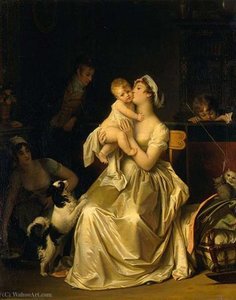
Portret Margerit Žerar

44 najpoznatijih slika umetnika Margerit Žerar, svaka potpuno jedinstvena

Ažurirano: новембар 2026 · rangirano prema našem koeficijentu popularnosti (pretrage, posete i porudžbine za svako delo) · 45 dela Margerit Žerar u našem katalogu

Ukratko

A Young Woman who has just Received a Letter from her Husband. Her Father is looking on a Globe for the Distance from Which the Letter Came (1808) je slika autora Margerit Žerar koja privlači najviše pažnje; original se nalazi u muzeju Nationalmuseum, Стокхолм. Nakon toga, pogled se seli na The Reader (1817) i The Reader (1783). Među 45 dela umetnika Margerit Žerar u našem katalogu, ovih 44 su najpoznatija, od kojih je svako jedinstveni original predstavljen sa godinom nastanka, muzejom i razlogom zbog kojeg je i danas neprocenjivo.

1761 – 1837, Gras Neoclassicism Najviše dela: Villa Fragonard

Top 10 slika umetnika Margerit Žerar, iz ugla galerije

1
A Young Woman who has just Received a Letter from her Husband. Her Father is looking on a Globe for the Distance from Which the Letter Came (1808) čiji je Margerit Žerar

A Young Woman who has just Received a Letter from her Husband. Her Father is looking on a Globe for the Distance from Which the Letter Came

1808 · Oil On Canvas · Nationalmuseum, Стокхолм

The air in the room feels heavy with the weight of unspoken words. A young woman stands poised, her silhouette framed by the soft, luminous glow of an unseen light source. She holds a letter, her fingers brushing the paper as she absorbs the news within. Her expression is serene, yet there is a quiet intensity in her gaze that suggests the contents of the parchment have momentarily stilled the…

3
The Reader (1783) čiji je Margerit Žerar

The Reader

1783 · Oil On Canvas · Fitzwilliam Museum

The Reader is an oil on canvas painted by Marguerite Gérard. Executed in Paris about 1817, the work captures a quiet moment within a refined indoor setting. A woman sits amidst the stillness, her presence anchored by a table laden with papers and a book. Nearby, a child and a cat inhabit this private sphere, their forms softened by the domestic atmosphere. The scene is a study of texture and…

4
Portrait of a Man in his Study (1785) čiji je Margerit Žerar

Portrait of a Man in his Study

1785 · Oil On Panel · Muzej finih umetnosti u Bostonu, Boston

In Marguerite Gérard's Portrait of a Man in his Study, a young man sits within a quiet, scholarly sanctuary. The composition presents a full-length view, positioning the subject slightly off-center to create a balanced yet dynamic arrangement between the figure and the objects of his study. He is surrounded by the tools of a curious mind, specifically a globe and a large, open book. These elements suggest a life dedicated…

5
The Triumph of Minette (1785) čiji je Margerit Žerar

The Triumph of Minette

1785 · Oil · Pushkin State Museum, Moskva

The Triumph of Minette is a Neoclassical genre painting by Marguerite Gérard. Executed around 1785, the work reflects the artist's established reputation as a gifted painter of domestic scenes. Gérard, born in Grasse, France, achieved significant recognition during this period, becoming one of the first French women to specialize in the genre of everyday life.

6
Presumed Portrait of Jean-Jacques Lagrenée, also known as Portrait of a Man in a Double-Breasted Coat (1787) čiji je Margerit Žerar

Presumed Portrait of Jean-Jacques Lagrenée, also known as Portrait of a Man in a Double-Breasted Coat

1787 · Oil On Canvas · Musée Cognacq-Jay, Pariz

A single light source descends from the upper left, carving a face out of the darkness. The man sits in a green upholstered chair, his body angled toward a wooden desk. He is draped in a heavy, double-breasted coat, the fabric catching the light in thick, sculptural folds. His hands rest near a large, open book, the white pages acting as a bright anchor amidst the surrounding gloom. This is…

7
Portrait of Læticia Bonaparte with Her Two Daughters (1786) čiji je Margerit Žerar

Portrait of Læticia Bonaparte with Her Two Daughters

1786 · Oil On Canvas

The oil on canvas titled Portrait of Læticia Bonaparte with Her Two Daughters captures a quiet moment of domesticity. Painted by Marguerite Gérard in 1786, the work centers on a mother and her two young children. The scene is set within an intimate interior, where the figures are gathered in a soft, shared space. It is a study of familial connection through the lens of Neoclassical poise.

8
Portrait of Claude-Nicolas Ledoux (1787) čiji je Margerit Žerar

Portrait of Claude-Nicolas Ledoux

1787 · Oil On Board · Musée Cognacq-Jay, Pariz

The Portrait of Claude-Nicolas Ledoux presents a formal encounter with the celebrated architect, capturing him in a moment of professional poise. Marguerite Gérard, the artist behind this work, renders the subject with a clarity that speaks to his intellectual stature. The sitter is positioned within a studio setting, surrounded by the tools of his trade that hint at the structural precision of his life's work. Every line of his period…

9
Portrait of Jean-Honoré Fragonard (1788) čiji je Margerit Žerar

Portrait of Jean-Honoré Fragonard

1788 · Oil On Canvas

In this three-quarter length portrait of Jean-Honoré Fragonard, Marguerite Gérard presents the sitter in a moment of quiet, intellectual repose. Seated slightly off-center, the subject gazes toward the viewer with a slight, knowing smile. He holds a writing implement, a detail that suggests an artistic or scholarly persona. The composition is set against a dark, atmospheric background that pushes the figure into the foreground, creating a sense of immediate presence.

10
I Reread them with Pleasure (1787) čiji je Margerit Žerar

I Reread them with Pleasure

1787 · Oil On Canvas · Bavarske državne slikopisne kolekcije, Minhen

The air in the room feels heavy with the scent of old paper and the soft rustle of satin. A young man and woman sit in a shared, intimate silence, their bodies angled toward one another in a gentle triangular arrangement that pulls the viewer into their private world. They are lost in the act of reading, perhaps sharing the same letters or perhaps lost in their own separate reflections…

Čuvena dela umetnika Margerit Žerar, od 11 do 44

11The Song (1795) čiji je Margerit ŽerarThe Song1795 · Villa Fragonard 12Portrait of doctor François Thiery (1787) čiji je Margerit ŽerarPortrait of doctor François Thiery1787 13A Young Lady and a Little Girl (1790) čiji je Margerit ŽerarA Young Lady and a Little Girl1790 · Holburne Museum 14Head of a Blond Child (Évariste Fragonard) (1800) čiji je Margerit ŽerarHead of a Blond Child (Évariste Fragonard)1800 · Villa Fragonard 15Portrait of Madame Gérard, wife of Henri Gérard (1799) čiji je Margerit ŽerarPortrait of Madame Gérard, wife of Henri Gérard1799 · Villa Fragonard 16A Woman Seated Holding a Young Girl on Her Lap (1799) čiji je Margerit ŽerarA Woman Seated Holding a Young Girl on Her Lap1799 · Musée des Beaux-Arts de Dijon 17Unknown woman (1800) čiji je Margerit ŽerarUnknown woman1800 · Nationalmuseum 18Bad news (1804) čiji je Margerit ŽerarBad news1804 19The Nursing Mother (1804) čiji je Margerit ŽerarThe Nursing Mother1804 20Portrait of Henri Gérard, the artist's brother (1799) čiji je Margerit ŽerarPortrait of Henri Gérard, the artist's brother1799 · Villa Fragonard 21Jeune femme à la rose (1797) čiji je Margerit ŽerarJeune femme à la rose1797 · Musée Antoine Vivenel 22Petite fille au panier de fleurs (1797) čiji je Margerit ŽerarPetite fille au panier de fleurs1797 · Musée Antoine Vivenel 23The Hussar and His Family (1800) čiji je Margerit ŽerarThe Hussar and His Family1800 · Denver Art Museum 24Clemency of Napoleon (1806) čiji je Margerit ŽerarClemency of Napoleon1806 · Musée national de Malmaison et Bois-Préau 25Portrait of a Young Girl (1820) čiji je Margerit ŽerarPortrait of a Young Girl1820 26La Lecture d'une lettre (1817) čiji je Margerit ŽerarLa Lecture d'une lettre1817 · Musée Thomas-Henry 27La Visite (1815) čiji je Margerit ŽerarLa Visite1815 · Musée des Augustins 28The Summer (1820) čiji je Margerit ŽerarThe Summer1820 · Musée Hyacinthe Rigaud 29Artist Painting a Portrait of a Musician (1803) čiji je Margerit ŽerarArtist Painting a Portrait of a Musician1803 · Ermitaž 30Artist Painting a Portrait of a Musician (1796) čiji je Margerit ŽerarArtist Painting a Portrait of a Musician1796 · Ermitaž 31An Architect and His Family čiji je Margerit ŽerarAn Architect and His FamilyThe Baltimore Museum of Art 32Lady Reading in an Interior (1795) čiji je Margerit ŽerarLady Reading in an Interior1795 33The Beloved Child (L (1790) čiji je Margerit ŽerarThe Beloved Child (L1790 34Prelude to a Concert (1810) čiji je Margerit ŽerarPrelude to a Concert1810 · National Museum of Women in the Arts 35Portrait of Maréchale Lannes, Duchesse de Montebello with Her Children (1814) čiji je Margerit ŽerarPortrait of Maréchale Lannes, Duchesse de Montebello with Her Children1814 · Muzej fine umetnosti u Hjustonu 36The Drawing Lesson čiji je Margerit ŽerarThe Drawing LessonVilla Fragonard 37Sleep my child čiji je Margerit ŽerarSleep my childStaatliche Kunsthalle Karlsruhe 38Gift (1788) čiji je Margerit ŽerarGift1788 · Ermitaž 39The Duchess of Abrantes and General Junot čiji je Margerit ŽerarThe Duchess of Abrantes and General Junot 40Motherhood čiji je Margerit ŽerarMotherhood 41Madame de Stael and her daughter čiji je Margerit ŽerarMadame de Stael and her daughter 42The first steps čiji je Margerit ŽerarThe first stepsErmitaž 43Young Girl Giving Milk to Her Cat čiji je Margerit ŽerarYoung Girl Giving Milk to Her CatVilla Fragonard 44The Interesting Student (1786) čiji je Margerit ŽerarThe Interesting Student1786

Motivi koji su privlačili pažnju Margerit Žerar

Četiri teme koje se najčešće ponavljaju u ovim originalima, svaka sa svojim vrhunskim primerom.

Muzeji u kojima se čuvaju originalna dela umetnika Margerit Žerar

8 muzeja u kojima se nalazi najviše slika sa ove stranice.

Muzej Grad Radovi umetnika Margerit Žerar Slike iz ovog spiska
Villa Fragonard, GrasseVilla Fragonard Grasse 6 The Song, Head of a Blond Child (Évariste Fragonard), Portrait of Madame Gérard, wife of Henri Gérard
Ermitaž, Sankt PeterburgErmitaž Sankt Peterburg 4 Artist Painting a Portrait of a Musician, Artist Painting a Portrait of a Musician, Gift
Nationalmuseum, СтокхолмNationalmuseum Стокхолм 2 A Young Woman who has just Received a Letter from her Husband. Her Father is looking on a Globe for the Distance from Which the Letter Came, Unknown woman
Musée Cognacq-Jay, ParizMusée Cognacq-Jay Pariz 2 Presumed Portrait of Jean-Jacques Lagrenée, also known as Portrait of a Man in a Double-Breasted Coat, Portrait of Claude-Nicolas Ledoux
Musée Antoine Vivenel, CompiègneMusée Antoine Vivenel Compiègne 2 Jeune femme à la rose, Petite fille au panier de fleurs
Barber Institute of Fine Arts, BirminghamBarber Institute of Fine Arts Birmingham 1 The Reader
Fitzwilliam MuseumFitzwilliam Museum 1 The Reader
Muzej finih umetnosti u Bostonu, BostonMuzej finih umetnosti u Bostonu Boston 1 Portrait of a Man in his Study

Margerit Žerar kroz decenije: jedan jedinstveni original za svaku

Radovi po decenijama

Izaberite deceniju da biste videli original koji je definiše.

Slike umetnika Margerit Žerar: pitanja za galeriju

Koje je najpoznatije delo umetnika Margerit Žerar?Otkrij odgovor

A Young Woman who has just Received a Letter from her Husband. Her Father is looking on a Globe for the Distance from Which the Letter Came (1808), Nationalmuseum, Стокхолм. Slede The Reader (1817) i The Reader (1783).

U kojoj je godini Margerit Žerar stvorio/la A Young Woman who has just Received a Letter from her Husband. Her Father is looking on a Globe for the Distance from Which the Letter Came?Otkrij odgovor

47 godina: A Young Woman who has just Received a Letter from her Husband. Her Father is looking on a Globe for the Distance from Which the Letter Came datira iz 1808, a Margerit Žerar je rođen/a 1761.

Koji je deset najpoznatijih slika autora Margerit Žerar?Otkrij odgovor

A Young Woman who has just Received a Letter from her Husband. Her Father is looking on a Globe for the Distance from Which the Letter Came, The Reader, The Reader, Portrait of a Man in his Study, The Triumph of Minette, Presumed Portrait of Jean-Jacques Lagrenée, also known as Portrait of a Man in a Double-Breasted Coat, Portrait of Læticia Bonaparte with Her Two Daughters, Portrait of Claude-Nicolas Ledoux, Portrait of Jean-Honoré Fragonard i I Reread them with Pleasure. Gornji rang pokazuje godinu i muzej za svako od njih.

Koliko je poznatih dela umetnika Margerit Žerar?Otkrij odgovor

Naš katalog sadrži 45 dela umetnika Margerit Žerar, datiranih od 1783 do 1820.

Gde se mogu videti najpoznatiji originali umetnika Margerit Žerar?Otkrij odgovor

Većinom u Villa Fragonard (Grasse), Ermitaž (Sankt Peterburg) i Nationalmuseum (Стокхолм). Tabela muzeja iznad sadrži njih sve.

U kom periodu je Margerit Žerar stvorio/la svoje najpoznatije slike?Otkrij odgovor

U 1780s: 11 od 44 dela na ovoj stranici nastalo je tada, od čega je The Reader.

Ko je najraniji, a koje je najkasnije čuveno delo umetnika Margerit Žerar?Otkrij odgovor

Na ovoj stranici, najstarije delo je iz The Reader (1783), a najnovije iz Portrait of a Young Girl (1820).

Koje su teme Margerit Žerar preferirao/la?Otkrij odgovor

Woman (23), Man (13) i Child (10), kroz svih 44 dela na ovoj stranici.

Sa kojim materijalima je Margerit Žerar najčešće slikao?Otkrij odgovor

Oil On Canvas, za 21 od 44 dela na ovoj stranici.

Kojem umetničkom pravcu pripada delo umetnika Margerit Žerar?Otkrij odgovor

Neoclassicism, sudeći po originalima na ovoj stranici.

Koja originalna dela Margerit Žerar mogu videti u Villa Fragonard?Otkrij odgovor

The Song, Head of a Blond Child (Évariste Fragonard) i Portrait of Madame Gérard, wife of Henri Gérard: Villa Fragonard, Grasse čuva 6 dela sa ove stranice.

Margerit Žerar: portret umetnika

Život posvećen umetnosti

Margerit Žerar se pojavila kao izuzetna figura u kasnom 18. i početku 19. veka u Francuskoj, kao pionirka koja je stvorila uspešnu karijeru kao slikarka žanra u vreme kada je umetnički svet bio gotovo u potpunosti pod dominacijom muškaraca. Rođena u mirisnom gradu Grasu 1761. godine, njen put ka umetničkom priznanju nije počeo u uzvišenim halama akademije – koja je većini žena tog doba bila zatvorena – već kroz porodične veze i velikodušno mentorstvo njenog zeta, slavnog rokokoskog majstora Žan-Onora Fragonara. Sa samo osam godina, selidba u Pariz sa sestrom Mari-An, koja je bila u braku sa Fragonarom, neopozovivo je promenila tok života mlade Margerit. Ovaj premeštaj postavio ju je u samo srce pariskog umetničkog scene i pružio joj neprocenjivu priliku da uči od jednog od njenih vodećih svetlosti.

Fragonard-ova atmosfera u domu bila je nesumnjivo podsticajiva, pravo ognjište u kojem je umetnički talenat mogao da procveta. Margerit Žerar je brzo postala neformalna šegrtica, počevši od polaganog usavršavanja veština proučavanjem crteža koje je stvarao Fragonard, kao i kreiranjem litografija zasnovanih na njegovim delima. Ovaj rani period saradnje kulminirao je 1778. godine izradom devet litografija, projekta za koji se danas smatra da je u velikoj meri bio vođen upravo od strane same Žerarove. Istoričari veruju da je ona bila primarni umetnik iza pet od tih dela, dok je Fragonard verovatno pružao smernice ili izrađivao duplikate u obrazovne svrhe. Taj duh saradnje nije bio samo tehničke prirode; on je negovao duboku umetničku srodnost koja će oblikovati stil i tematski fokus Žerarove. Međutim, zbog nedostatka formalnog akademskog obrazovanja – konkretno, pristupa crtanju ljudske figure – ona je svesno skrenula sa puta istorijskih ili mitoloških motiva, fokusirajući se umesto toga na intiman svet svakodnevnog života.

Prepoznatljiv stil: Domestika i holandski uticaji

Umetnički razvoj Margerit Žerar bio je jedinstveno oblikovan njenim životnim okolnostima. S obzirom na to da nije mogla da studira akt, ona se okrenula žanrovskim scenama – prikazima domaćih enterijera, porodičnih interakcija i trenutaka tihe kontemplacije. Njen stil otkriva jasnu zahvalnost prema holandskim majstorima iz 17. veka, kao što su Gerard ter Borch i Gabriel Metsu, umetnicima poznatim po svojoj pedantnoj pažnji posvećenoj detaljima, suptilnoj upotrebi svetlosti i fino izmešanim potezima četkice. Za razliku od mnogih slikarica koje su tražile legitimitet kroz reference na klasičnu antiku, Žerar je namerno izabrala da prikazuje scene iz ranijih vekova, evocirajući osećaj nostalgije i intimnosti. Ponovljeni motivi u njenom radu – kućne mačke i psi, muzički instrumenti, knjige – naglašavaju teme majčinstva, detinjstva, ženskog prijateljstva i jednostavnih užitaka kućnog života. Njene slike nisu grandiozne izjave, već tiha zapažanja, prožeta toplinom i psihološkim uvidom.

Priznanje i nasleđe

Karijera koju je vodila Margerit Žerar trajala je više od pedeset godina, služeći kao neoboriv dokaz njene posvećenosti i izuzetnog talenta. Od 1799. do 1824. godine redovno je izlagala na Pariskom salonu, gde je osvojila tri medalje za svoja dela i stekla priznanje među naj prominentnijim pokroviteljima umetnosti. Posebno je značajno što je sam imperator Napoleon 1808. godine kupio sliku Clemency of Napoleon, što je predstavljalo veliku potvrdu njenog rastuće reputacije. Njena dela bila su veoma tražena od strane bogatih kolekcionara, dok su grafike njenih radova značajno proširile krug njenih poklonika. Remek-dela kao što su Lady Reading in an Interior (1795), sa svojom neoklasicističkom elegancijom i tihim intelektualizmom, i Portrait of Maréchale Lannes, Duchesse de Montebello with Her Children (1814), pokazuju njenu vrhunsku veštinu kako u žanrovskom slikarstvu, tako i u portretizmu. Možda jedan od najdirljivijih primera njenog stila predstavlja Sleep my child, slika uljanim bojama koja prikazuje majčinstvo i muziku prožetu neoklasicističkom otmenošću. Istorijski značaj koji nosi Margerit Žerar ne ogleda se samo u njenim umetničkim dostignućima, već i u tome što je rušila barijere za žene umetnice. Ona je dokazala da je uspeh moguć i izvan okvira tradicionalnog akademskog sistema, čime je otvorila put budućim generacijama da slijede svoje kreativne ambicije. Njen uticaj protezao se čak i unutar njene porodice; ona je bila mentorka svom nećaku, Alexandre-Évariste Fragonard, negujući njegov talenat sa istom pažnjom i predanošću koja je bila posvećena njoj samoj. Nasleđe Margerit Žerar opstaje kao svedočanstvo snage istrajnosti, umetničke vizije i neprolazne privlačnosti intimnih scena iz svakodnevnog života.