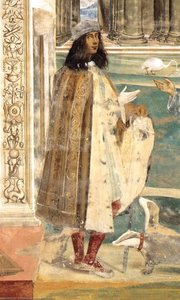
Portret Ил Содома

69 najpoznatijih slika umetnika Ил Содома, izbor iz galerije

Ažurirano: новембар 2026 · rangirano prema našem koeficijentu popularnosti (pretrage, posete i porudžbine za svako delo) · 71 dela Ил Содома u našem katalogu

Ukratko

Od svih originala koje je Ил Содома ostavio, najpoznatiji je Razboj Sabinešćana (1506), koji se nalazi u kolekciji Galleria Nazional d Art Antica, Рим. Odmah za njima slede Head of Christ (1537) i The Holy Family with Saint Elizabeth and the Infant Saint John the Baptist (1527). Naš katalog sadrži 71 dela umetnika Ил Содома; galerija je čuvala 69 dela koja svet najviše admira, od kojih je svako prikazano sa svojim datumom, muzejom i pričom.

1477 – 1549, Верчели Renesansa Najviše dela: National Gallery

Top 10 slika umetnika Ил Содома: izbor galerije

1
Razboj Sabinešćana (1506) čiji je Ил Содома

Razboj Sabinešćana

1506 · Ulje na panelu · Galleria Nazional d Art Antica, Рим

Ovaj umetnički projekt predstavlja nezaboravljivu potvrdu umetničkog talenta Il Sodome i njegovih vremenskih kolega. Ako želite da dodate umetnosti ovog vremena svom domu ili kancelariji, možete pronaći visokokvalitetne reprodukcije „Razboja Sabinekih Žensk“ na https://AllPaintingsStore.com. Za više informacija o Il Sodomi i njegovim delima posetite /art/list/?Filter=8Y3HXW-Il-Sodoma-(Giovanni-Antonio-Bazzi)-The-Rape-of-the-Sabine-Women ili posetite https://en.wikipedia.org/wiki/Il_Sodoma.

2
Head of Christ (1537) čiji je Ил Содома

Head of Christ

1537 · Oil · National Gallery, London

In "Head of Christ" by Giovanni Gerolamo Savoldo, the viewer is met with a close-up portrait that focuses tightly on the face and upper shoulders. The subject is framed by long, dark, wavy hair and a full beard. A crown of thorns rests upon the brow, rendered through textured, dark lines that press against the skin. The eyes are cast downward, heavy with a sense of sadness or exhaustion. This…

3
The Holy Family with Saint Elizabeth and the Infant Saint John the Baptist (1527) čiji je Ил Содома

The Holy Family with Saint Elizabeth and the Infant Saint John the Baptist

1527 · Oil · Walters Art Museum, Baltimore

Within the circular confines of this tondo, a quiet intimacy unfolds. The air feels heavy with the warmth of a Mediterranean afternoon, filtered through a soft, directional light that carves the figures out of the surrounding landscape. We find ourselves watching a tender moment of familial connection, where the boundaries between the divine and the human seem to blur. The Holy Family gathers closely, their forms wrapped in heavy, tactile…

4
The Ecstasy of Saint Catherine of Siena (1532) čiji je Ил Содома

The Ecstasy of Saint Catherine of Siena

1532 · Oil · Yale University Art Gallery, New Haven

The spiritual intensity of The Ecstasy of Saint Catherine of Siena unfolds before us through the hand of Il Sodoma. This religious art piece captures a profound moment of divine connection, centering entirely on the figure of Catherine of Siena. The scene invites a sense of wonder as the saint experiences a celestial encounter, her presence anchoring the composition amidst a swirling, sacred atmosphere. Every brushstroke seeks to translate the…

5
The Holy Family and St. John (1477) čiji je Ил Содома

The Holy Family and St. John

1477 · Oil On Panel · Detroit Institute of Arts, Detroit

The Holy Family and St. John is a devotional work by the Italian artist Il Sodoma. This oil on wood panel depicts a sacred grouping of figures, centering on the intimate connection between Mary, Joseph, and the young Saint John the Baptist. The composition focuses on the quiet, tender interactions shared between the holy figures, presented in a manner that invites a sense of spiritual closeness.

6
The Madonna and Child with Saints and a Donor (1530) čiji je Ил Содома

The Madonna and Child with Saints and a Donor

1530 · Oil On Panel · National Gallery, London

Step closer to observe the way the light settles upon these figures. In this composition from around 1530, we find a sense of stability born from a pyramidal arrangement. At the apex sits the Virgin Mary, her presence anchoring the group. She holds the Christ Child with a natural, unforced tenderness that grounds the divine subject in something deeply human. The palette relies on deep ultramarine blue in her mantle…

7
Saint Jerome in Penitence (1540) čiji je Ил Содома

Saint Jerome in Penitence

1540 · Oil On Canvas · National Gallery, London

A muscular, semi-nude figure occupies the center of this 1540 oil painting, captured in a dynamic, crouching pose that cuts a diagonal path across the canvas. The subject, Saint Jerome, is immersed in a moment of intense religious devotion and physical hardship. Deep, earthy tones of brown and dark green dominate the composition, grounded by the heavy textures of a rugged, rocky landscape. A strong directional light source, characteristic of…

8
Death of Lucretia (1515) čiji je Ил Содома

Death of Lucretia

1515 · Oil On Panel · Galleria Sabauda, Turin

In this work, we find ourselves witnessing the final, harrowing moments of Lucretia, a woman whose life is being extinguished in a flash of steel and sorrow. The scene freezes a moment of profound tragedy, capturing the climactic end of a Roman noblewoman whose life was defined by virtue and ended by violence. The composition is thick with tension; the stillness of her form contrasts sharply with the looming presence…

9
Holy Family with St. John the Baptist as child (1525) čiji je Ил Содома

Holy Family with St. John the Baptist as child

1525 · Oil · Kunsthistorisches Museum, Beč

This oil painting, dated 1525, is presented within an arched lunette format. The scene focuses on a group of four figures: the Virgin Mary, the Christ Child, Saint Joseph, and a young Saint John the Baptist. Mary is positioned centrally, wearing a red tunic beneath a deep blue mantle. Her pale skin and the skin of the infants are illuminated by a soft, directional light that emerges from the side,…

10
The Madonna and Child (1525) čiji je Ил Содома

The Madonna and Child

1525 · Oil On Panel · National Gallery, London

The composition centers on the Virgin Mary and the infant Jesus, set against an atmospheric landscape of distant hills and trees. A soft, directional light illuminates the faces of the subjects and the child's body, while much of the background remains in shadow. This use of chiaroscuro creates a sense of three-dimensionality, sculpting the figures through subtle gradations of tone.

Izbor umetnika Ил Содома se nastavlja, od 11 do 69

11charity (1504) čiji je Ил Содомаcharity1504 · Gemäldegalerie 12Benedict Presents the Olivetan Monks with His Rule (1505) čiji je Ил СодомаBenedict Presents the Olivetan Monks with His Rule1505 13Life of St Benedict, Scene 13: Benedict Frees a Monk (1505) čiji je Ил СодомаLife of St Benedict, Scene 13: Benedict Frees a Monk1505 14Life of St Benedict, Scene 12: Benedict Receives Maurus and Placidus (1505) čiji je Ил СодомаLife of St Benedict, Scene 12: Benedict Receives Maurus and Placidus1505 15Life of St Benedict, Scene 32: Benedict Appears in the Dreams of Two Monks (1505) čiji je Ил СодомаLife of St Benedict, Scene 32: Benedict Appears in the Dreams of Two Monks1505 16Holy Family with young Saint John (1525) čiji je Ил СодомаHoly Family with young Saint John1525 17Terrestrial Venus with Eros and Celestial Venus with Anteros and Two Cupids (1525) čiji je Ил СодомаTerrestrial Venus with Eros and Celestial Venus with Anteros and Two Cupids1525 18St Sebastian (1525) čiji je Ил СодомаSt Sebastian1525 · Palazzo Pitti 19Christ Carrying the Cross (1545) čiji je Ил СодомаChrist Carrying the Cross1545 · Gemäldegalerie 20The Crucifixion (1549) čiji je Ил СодомаThe Crucifixion1549 · Cleveland Museum of Art 21The Presentation of the Virgin in the Temple (1518) čiji je Ил СодомаThe Presentation of the Virgin in the Temple1518 · Oratory of San Bernardino 22The Holy Family (1511) čiji je Ил СодомаThe Holy Family1511 · Bavarske državne slikopisne kolekcije 23The Death of Lucretia (1513) čiji je Ил СодомаThe Death of Lucretia1513 · Szépművészeti Múzeum 24The Mystic Marriage of St Catherine (1539) čiji je Ил СодомаThe Mystic Marriage of St Catherine1539 · Galleria Nazional d Art Antica 25Pietà (1540) čiji je Ил СодомаPietà1540 · Galleria Borghese 26Holy Family with the Infant Saint John the Baptist (1530) čiji je Ил СодомаHoly Family with the Infant Saint John the Baptist1530 27Ecce Homo (1510) čiji je Ил СодомаEcce Homo1510 · Pinacoteca di Brera 28The Confirmation of the Olivetan Order by the Bishop of Arezzo (1503) čiji je Ил СодомаThe Confirmation of the Olivetan Order by the Bishop of Arezzo1503 29Man of Sorrow (1505) čiji je Ил СодомаMan of Sorrow1505 30Life of St Benedict, Scene 5: The Devil Destroys the Little Bell (1505) čiji je Ил СодомаLife of St Benedict, Scene 5: The Devil Destroys the Little Bell1505 31The Road to Calvary (1510) čiji je Ил СодомаThe Road to Calvary1510 · Szépművészeti Múzeum 32Life of St Benedict, Scene 6: A Priest Shares His Easter Meal with Benedict (1505) čiji je Ил СодомаLife of St Benedict, Scene 6: A Priest Shares His Easter Meal with Benedict1505 33Life of St Benedict, Scene 3: Benedict Repairs a Broken Colander through Prayer (detail) (1505) čiji je Ил СодомаLife of St Benedict, Scene 3: Benedict Repairs a Broken Colander through Prayer (detail)1505 34Deposition from the Cross (detail) (1510) čiji je Ил СодомаDeposition from the Cross (detail)1510 · Pinacoteca Nazionale 35Life of St Benedict, Scene 8: Benedict is Tempted (detail) (1505) čiji je Ил СодомаLife of St Benedict, Scene 8: Benedict is Tempted (detail)1505 36Life of St Benedict, Scene 19: Benedict Sends away the Harlots (1505) čiji je Ил СодомаLife of St Benedict, Scene 19: Benedict Sends away the Harlots1505 37Life of St Benedict, Scene 4: The Monk Romanus Dresses Benedict (detail) (1505) čiji je Ил СодомаLife of St Benedict, Scene 4: The Monk Romanus Dresses Benedict (detail)1505 38The Women of Darius's Family before Alexander the Great (1517) čiji je Ил СодомаThe Women of Darius's Family before Alexander the Great1517 · Villa Farnesina 39Life of St Benedict, Scene 19: Benedict Sends away the Harlots (detail) (1505) čiji je Ил СодомаLife of St Benedict, Scene 19: Benedict Sends away the Harlots (detail)1505 40Life of St Benedict, Scene 3: Benedict Repairs a Broken Colander through Prayer (1505) čiji je Ил СодомаLife of St Benedict, Scene 3: Benedict Repairs a Broken Colander through Prayer1505 41Life of St Benedict, Scene 15: Benedict Fishes the Pieces of a Broken Ax (detail) (1505) čiji je Ил СодомаLife of St Benedict, Scene 15: Benedict Fishes the Pieces of a Broken Ax (detail)1505 42Deposition from the Cross (1510) čiji je Ил СодомаDeposition from the Cross1510 · Pinacoteca Nazionale 43Life of St Benedict, Scene 1: Benedict Leaves His Parent's House (1505) čiji je Ил СодомаLife of St Benedict, Scene 1: Benedict Leaves His Parent's House1505 44Life of St Benedict, Scene 12: Benedict Receives Maurus and Placidus (detail) (1505) čiji je Ил СодомаLife of St Benedict, Scene 12: Benedict Receives Maurus and Placidus (detail)1505 45Life of St Benedict, Scene 11: Benedict Founds Twelve Monasteries (1505) čiji je Ил СодомаLife of St Benedict, Scene 11: Benedict Founds Twelve Monasteries1505 46Life of St Benedict, Scene 33: Benedict Gives Posthumous Absolution to Two Nuns (1505) čiji je Ил СодомаLife of St Benedict, Scene 33: Benedict Gives Posthumous Absolution to Two Nuns1505 47Life of St Benedict, Scene 31: Benedict Feeds the Monk (1505) čiji je Ил СодомаLife of St Benedict, Scene 31: Benedict Feeds the Monk1505 48Life of St Benedict, Scene 30: Benedict Foretells the Destruction of Montecassino (1505) čiji je Ил СодомаLife of St Benedict, Scene 30: Benedict Foretells the Destruction of Montecassino1505 49Life of St Benedict, Scene 30: Benedict Foretells the Destruction of Montecassino (detail) (1505) čiji je Ил СодомаLife of St Benedict, Scene 30: Benedict Foretells the Destruction of Montecassino (detail)1505 50Life of St Benedict, Scene 7: Benedict Instructs the Peasants (1505) čiji je Ил СодомаLife of St Benedict, Scene 7: Benedict Instructs the Peasants1505 51Saint George and the Dragon (1518) čiji je Ил СодомаSaint George and the Dragon1518 · National Gallery of Art 52The Beheading of Niccolò di Tuldo (1526) čiji je Ил СодомаThe Beheading of Niccolò di Tuldo1526 · San Domenico 53View of the Oratory (1520) čiji je Ил СодомаView of the Oratory1520 · Oratory of San Bernardino 54View of the Cappella di Santa Caterina (1526) čiji je Ил СодомаView of the Cappella di Santa Caterina1526 · San Domenico 55Wedding of Alexander and Roxane (detail) (1517) čiji je Ил СодомаWedding of Alexander and Roxane (detail)1517 · Villa Farnesina 56The Death of Lucretia (1535) čiji je Ил СодомаThe Death of Lucretia1535 · Szépművészeti Múzeum 57Cupid in a Landscape (1510) čiji je Ил СодомаCupid in a Landscape1510 · Ermitaž 58Mučenište Kristovo (1510) čiji je Ил СодомаMučenište Kristovo1510 · Szépművészeti Múzeum 59Mary Magdalene čiji je Ил СодомаMary Magdalene 60Christ Carrying the Cross čiji je Ил СодомаChrist Carrying the CrossPalazzo d'Arco 61St George and the Dragon čiji je Ил СодомаSt George and the DragonNational Gallery of Art 62A Scene from the Vita of Saint Catherine of Siena / The Execution of Niccolò Tuldo čiji je Ил СодомаA Scene from the Vita of Saint Catherine of Siena / The Execution of Niccolò TuldoGemäldegalerie 63self-portrait čiji je Ил Содомаself-portrait 64Allegory of Celestial Love čiji je Ил СодомаAllegory of Celestial LoveChigi Saracini Collection 65Christ Presented to the People (Ecce Homo) (1544) čiji je Ил СодомаChrist Presented to the People (Ecce Homo)1544 · Metropoliten музеј у Њујорку 66Wedding of Alexander and Roxane (1517) čiji je Ил СодомаWedding of Alexander and Roxane1517 · Villa Farnesina 67Man of Sorrows (1500) čiji je Ил СодомаMan of Sorrows1500 68Holy Family with Saint John the Baptist and an Angel (1530) čiji je Ил СодомаHoly Family with Saint John the Baptist and an Angel1530 · Musée des Beaux-Arts de Strasbourg 69Pietà (1533) čiji je Ил СодомаPietà1533

Čuvena dela Ил Содома po periodima

Motivi koji su privlačili pažnju Ил Содома

Četiri teme koje se najčešće ponavljaju u ovim originalima, svaka sa svojim vrhunskim primerom.

Muzeji u kojima se čuvaju originalna dela umetnika Ил Содома

8 muzeja u kojima se nalazi najviše slika sa ove stranice.

Muzej Grad Radovi umetnika Ил Содома Slike iz ovog spiska
National Gallery, LondonNational Gallery London 4 Head of Christ, The Madonna and Child with Saints and a Donor, Saint Jerome in Penitence
Szépművészeti Múzeum, BudimpeštaSzépművészeti Múzeum Budimpešta 4 The Death of Lucretia, The Road to Calvary, The Death of Lucretia
Gemäldegalerie, BerlinGemäldegalerie Berlin 3 charity, Christ Carrying the Cross, A Scene from the Vita of Saint Catherine of Siena / The Execution of Niccolò Tuldo
Villa Farnesina, RimVilla Farnesina Rim 3 The Women of Darius's Family before Alexander the Great, Wedding of Alexander and Roxane (detail), Wedding of Alexander and Roxane
Galleria Nazional d Art Antica, РимGalleria Nazional d Art Antica Рим 2 Razboj Sabinešćana, The Mystic Marriage of St Catherine
Oratory of San Bernardino, SienaOratory of San Bernardino Siena 2 The Presentation of the Virgin in the Temple, View of the Oratory
Pinacoteca Nazionale, SijenaPinacoteca Nazionale Sijena 2 Deposition from the Cross (detail), Deposition from the Cross
National Gallery of Art, WashingtonNational Gallery of Art Washington 2 Saint George and the Dragon, St George and the Dragon

Ил Содома deceniju po deceniju: original koji definiše svaku od njih

Radovi po decenijama

Izaberite deceniju da biste videli original koji je definiše.

Pitanja kolekcionara o slikama umetnika Ил Содома

Po kojem delu je Ил Содома najpoznatiji/a?Otkrij odgovor

Razboj Sabinešćana (1506), Galleria Nazional d Art Antica, Рим. Slede Head of Christ (1537) i The Holy Family with Saint Elizabeth and the Infant Saint John the Baptist (1527).

Koliko je godina imao/la Ил Содома kada je nastalo delo Razboj Sabinešćana?Otkrij odgovor

29 godina: Razboj Sabinešćana datira iz 1506, a Ил Содома je rođen/a 1477.

Koja su deset najpoznatijih slika umetnika Ил Содома?Otkrij odgovor

Razboj Sabinešćana, Head of Christ, The Holy Family with Saint Elizabeth and the Infant Saint John the Baptist, The Ecstasy of Saint Catherine of Siena, The Holy Family and St. John, The Madonna and Child with Saints and a Donor, Saint Jerome in Penitence, Death of Lucretia, Holy Family with St. John the Baptist as child i The Madonna and Child. Gornji rang pokazuje godinu i muzej za svako od njih.

Koliko je slika ostavio Ил Содома?Otkrij odgovor

Naš katalog sadrži 71 dela umetnika Ил Содома, datiranih od 1500 do 1549.

U kojim muzejima se nalaze remek-dela umetnika Ил Содома?Otkrij odgovor

Većinom u National Gallery (London), Szépművészeti Múzeum (Budimpešta) i Gemäldegalerie (Berlin). Tabela muzeja iznad sadrži njih sve.

U kojim godinama je Ил Содома naslikao svoja najpoznatija dela?Otkrij odgovor

U 1500s: 26 od 69 dela na ovoj stranici nastalo je tada, od čega je Razboj Sabinešćana.

Koja su prva i poslednja čuvena originalna dela umetnika Ил Содома?Otkrij odgovor

Na ovoj stranici, najstarije delo je iz Man of Sorrows (1500), a najnovije iz The Crucifixion (1549).

Koje je motive Ил Содома najčešće birao/la?Otkrij odgovor

Man (21), People (21) i Woman (14), kroz svih 69 dela na ovoj stranici.

Koju je tehniku najčešće koristio/la Ил Содома?Otkrij odgovor

Fresco, za 29 od 69 dela na ovoj stranici.

Kojem umetničkom pravcu pripada Ил Содома?Otkrij odgovor

Renesansa, sudeći po originalima na ovoj stranici.

Čija se dela umetnika Ил Содома nalaze u National Gallery?Otkrij odgovor

Head of Christ, The Madonna and Child with Saints and a Donor i Saint Jerome in Penitence: National Gallery, London čuva 4 dela sa ove stranice.

Ил Содома: život i delo

Enigmatična duša sienske renesanse

U živopisnom tapiseriji italijanske renesanse, malo je figura koje poseduju ime tako provokativno ili nasleđe tako višestrano kao Đovani Antonio Bazi, koji je istoriji ostao upamćen pod upečatljivim nadimkom Il Sodoma. Rođen u Verčeliju oko 1477. godine, Bazi se nije pojavio samo kao slikar, već kao transformativna sila koja je premostila jaz između svetlog, uravnoteženog idealizma visoke renesanse i emotivne, često uznemirujuće drame manierizma. Njegovo umetničko putovanje bilo je prožeto dubokom sintezom, gde su se disciplinovane tradicije sienske škole susrele sa širokim, atmosferskim inovacijama lombardskog stila i suptilnom psihološkom dubinom inspirisanom samim Leonardom da Vinčijem.

Rane godine Bazijevog života obeležilo je rigorozno učenje koje je postavilo temelje njegovom tehničkom majstorstvu. Pod vođstvom majstora kao što su „arhaični” Martino Spanzotti i Giovenone, on je usvojio temeljno razumevanje forme i boje. Kako se seli u kulturno epicentrum Sijena, njegov rad je počeo da odražava jedinstvenu stilsku evoluciju. Posedovao je retku sposobnost da sofisticiranu, klasičnu gracioznost Rima početka 16. veka nadoveže na više provincijalne, dekorativne tradicije Toskanije. Ova fuzija omogućila mu je stvaranje dela koja su istovremeno bila ukorenjena u lokalnom nasleđu i deo mnogo šire, panitalijanske umetničke revolucije.

Majstorstvo svetlosti, emocije i forme

Posmatrati delo umetnika Il Sodoma znači svedočiti nežnom plesu između spokojstva i tenzije. Njegovu tehniku karakterisala je izuzetna vladavina nad sfumato tehnikom i bogata, emotivna upotreba boje koja je mogla da pređe iz nežne topline Madonine tvarni u dramatične senke mitološke borbe. Ova svestranost je možda najočiglednija u njegovom raznovrsnom spektru tema, koje su obuhvatale i ono što je sveto i ono što je svetovno sa jednakim žarom.

Njegov doprinos tradiciji freske je ništa manje nego monumentalan. U Oratoriju Svetog Bernarda u Sijenu, Bazi je pokazao sposobnost da vlada ogromnim arhitektonskim prostorima, tkanjem složenih narativa kroz uravnotežene kompozicije koje su ipak pulsirale ljudskom emocijom. Njegova religiozna dela, poput Predstavljanja Device u hramu, prikazuju duboku duhovnu milost, dok njegova svetovna i mitološka dela, kao što je očaravajući Kupid u pejzažu, otkrivaju fascinaciju senzualnim i idiličnim. U tim pejzažima pronalazimo spokojni italijanski vidik koji služi kao pozornica za božansko ili mitološko, prikazano sa jasnoćom koja poziva posmatrača u stanje slično snu.

Nasleđe majstora tranzicije

Istorijski značaj umetnika Il Sodoma leži u njegovoj ulozi stilskog posrednika. On nije samo pratio trendove svog doba; pomogao je u oblikovanju prelaza sa harmonične stabilnosti visoke renesanse ka eksperimentalnijem, izobličenom i ekspresivnijem jeziku manierizma. Uvođenjem preuveličanih gestova i pojačane emocionalnosti u utvrđeni sienski okvir, pripremio je put sledećoj generaciji umetnika da istraži složenosti ljudske psihe.

Čak i dok je njegovo ime nosilo određenu notoritet, njegov umetnički rad ostao je svedočanstvo tehničke briljantnosti i intelektualne dubine. Njegova sposobnost da upravlja prestižnim porudžbinama pape, kao i moćnih pokrovitelja — uključujući veze sa uticajnim Agostinom Đijijem — osigurala je da njegov uticaj odjekuje daleko izvan zidova Sijena. Danas, Bazi stoji kao ključna figura čija dela nastavljaju da očaravaju, podsećajući nas na period kada je umetnost bila duboko istraživanje kako zemaljske lepote, tako i duhovnih misterija ljudskog stanja.