Portret Бартоломео Муриљо

100 najpoznatijih slika umetnika Бартоломео Муриљо, svaka potpuno jedinstvena

Ažurirano: новембар 2026 · rangirano prema našem koeficijentu popularnosti (pretrage, posete i porudžbine za svako delo) · 454 dela Бартоломео Муриљо u našem katalogu

Ukratko

Immaculate Conception of Soult (1678) je slika autora Бартоломео Муриљо koja privlači najviše pažnje; original se nalazi u muzeju Музеј Прадо, Мадрид. Nakon toga, pogled se seli na Двоје деце који једу лубеницу и грозје (1646) i Две жене на прозору (1660). Među 454 dela umetnika Бартоломео Муриљо u našem katalogu, ovih 100 su najpoznatija, od kojih je svako jedinstveni original predstavljen sa godinom nastanka, muzejom i razlogom zbog kojeg je i danas neprocenjivo.

1617 – 1682, Севиља Барок Najviše dela: Музеј Прадо

Top 10 slika umetnika Бартоломео Муриљо, iz ugla galerije

1
Immaculate Conception of Soult (1678) čiji je Бартоломео Муриљо

Immaculate Conception of Soult

1678 · Ulje na platnu · Музеј Прадо, Мадрид

The Museo del Prado's celebrated “Immaculate Conception of Soult,” painted in 1678 by the prodigious Spanish artist Bartolomé Esteban Murillo, stands as a pinnacle of Baroque art. Measuring an imposing 274 x 190 cm, this oil on canvas work transcends mere religious iconography; it’s a profound meditation on faith, purity, and divine grace, born from a turbulent historical moment. Commissioned by Justino de Neve, the ecclesiastical president of the Hospital…

2
Двоје деце који једу лубеницу и грозје (1646) čiji je Бартоломео Муриљо

Двоје деце који једу лубеницу и грозје

1646 · Ulje na platnu · Bavarske državne slikopisne kolekcije, Minhen

Two young boys sit close together on the dusty ground, lost in the simple, tactile pleasure of their meal. The air feels heavy with the warmth of a Seville afternoon as they share what the earth has provided. One child reaches for a cluster of grapes, the fruit perhaps cool against his skin, while his companion focuses on a slice of melon. They hold their plates with a natural, unstudied…

3
Две жене на прозору (1660) čiji je Бартоломео Муриљо

Две жене на прозору

1660 · Ulje na platnu · National Gallery of Art, Washington

Bartolomé Esteban Murillo's *Two Women at a Window*, painted in 1660, is more than just a depiction of two women; it’s a poignant meditation on beauty, innocence, and the quiet drama of domestic life within the context of 17th-century Spain. Executed during a period of intense religious fervor – a time when Murillo's distinctive style began to emerge – this vertical composition offers a rare glimpse into the world of…

4
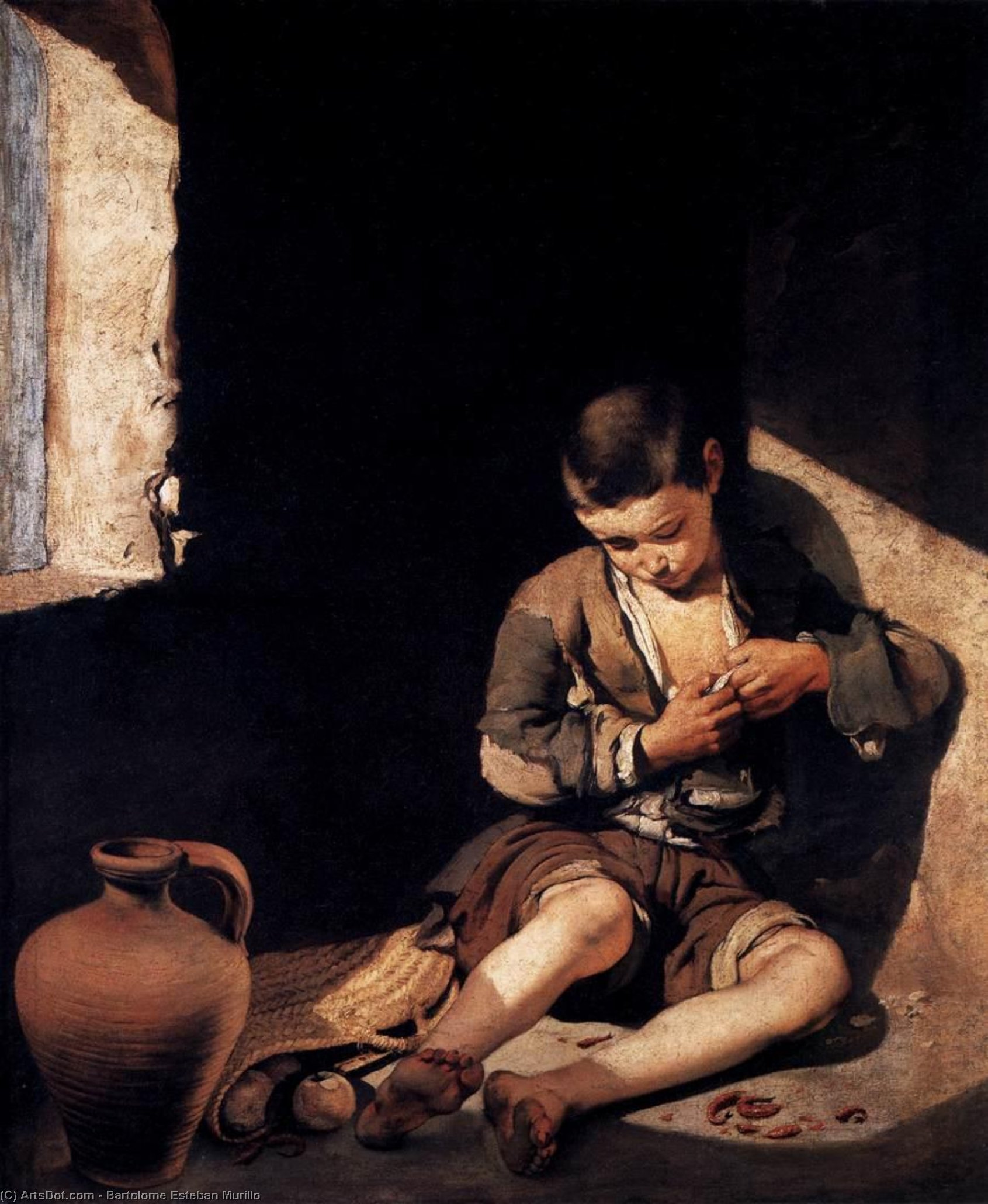
The Young Beggar (1650) čiji je Бартоломео Муриљо

The Young Beggar

1650 · Oil On Canvas

A single light source falls from above and to the right, striking the skin of a young boy seated on the ground. He occupies a dimly lit interior, his small frame positioned slightly off-center within the frame. His hands are occupied with a quiet, focused task: searching for and removing lice from his clothing. This act of self-grooming occurs amidst the debris of survival. To his left, a large earthenware…

5
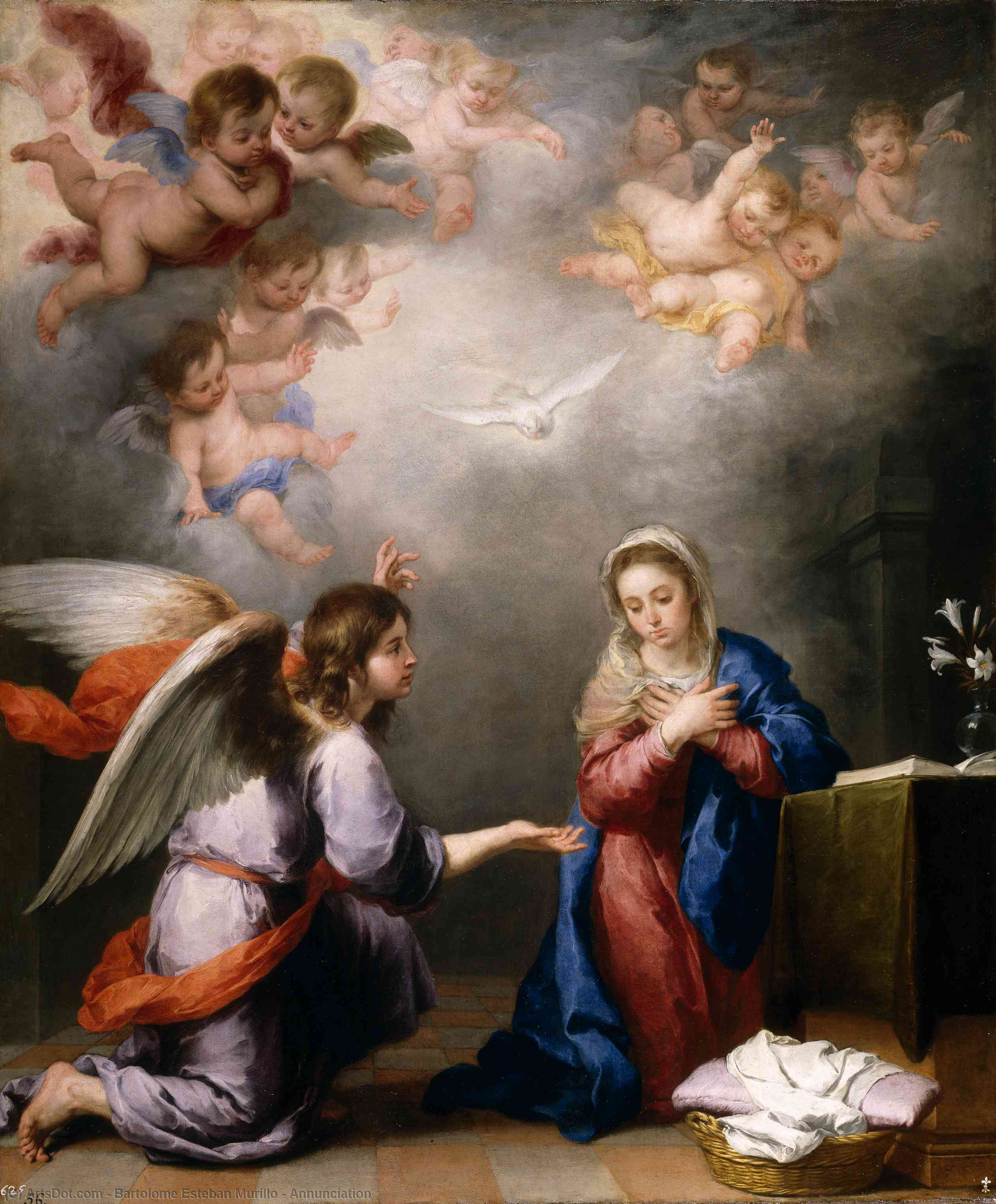
Annunciation čiji je Бартоломео Муриљо

Annunciation

Oil On Canvas · Ermitaž, Sankt Peterburg

The scene captures the moment Archangel Gabriel announces to Mary her role as the mother of Jesus Christ. Within a modestly furnished room, Mary kneels at a prie-dieu, her eyes cast downwards in a posture of profound reverence. A basket of handiwork sits aside, suggesting a quiet interruption of her daily labors. Above, the angel Gabriel appears with delicate wings and an expression of gentle authority, gesturing toward the dove…

6
The Baptism of Christ (1655) čiji je Бартоломео Муриљо

The Baptism of Christ

1655 · Oil On Canvas · Gemäldegalerie, Berlin

To stand before this depiction of The Baptism of Christ is to be transported across the centuries, into the very crucible of Christian narrative. Bartolomé Esteban Murillo masterfully captures not merely an event, but a profound spiritual transition. The scene unfolds along the banks of the Jordan River, centering on the intimate yet monumental encounter between Jesus and John the Baptist. Observe the composition: Jesus stands with a quiet dignity…

7
the immaculate conception čiji je Бартоломео Муриљо

the immaculate conception

Oil On Canvas · Detroit Institute of Arts, Detroit

Bartolomé Esteban Murillo's "The Immaculate Conception" isn’t merely a painting; it’s an immersion into the heart of 17th-century Spanish faith and artistic innovation. Completed around 1680, this oil on canvas masterpiece, currently residing in the Museo de Arte de Ponce in Puerto Rico, transcends its religious subject matter to become a profound meditation on grace, purity, and divine presence. Murillo, born in Seville amidst personal tragedy – the early loss…

8
The last supper čiji je Бартоломео Муриљо

The last supper

Oil On Canvas

To stand before a depiction of The Last Supper by Bartolomé Esteban Murillo is to step directly into a moment suspended between profound intimacy and impending tragedy. This masterpiece, steeped in the rich tradition of 17th-century Spanish Baroque art, does more than merely illustrate a biblical narrative; it captures the very breath held in the space before destiny changes everything. Murillo’s handling of this iconic scene is nothing short of…

9
Saint Francis Receiving the Stigmata (1650) čiji je Бартоломео Муриљо

Saint Francis Receiving the Stigmata

1650 · Oil On Canvas · English Heritage, London

To gaze upon Bartolomé Esteban Murillo's depiction of Saint Francis Receiving the Stigmata is to step directly into the heart of Spanish Baroque piety. This masterful oil painting, executed in 1650, transcends mere portraiture; it is a profound meditation on sacrifice, divine connection, and spiritual ecstasy. The central figure, Saint Francis of Assisi, is captured in a moment of breathtaking vulnerability and ultimate grace. His outstretched arms seem not merely…

10
Immaculate Conception (1680) čiji je Бартоломео Муриљо

Immaculate Conception

1680 · Oil On Canvas · Museo de Arte de Ponce, Ponce

In the heart of the Spanish Baroque, Bartolomé Esteban Murillo captured a moment of profound spiritual transcendence in his masterpiece, The Immaculate Conception. Created around 1680, this oil on canvas serves as a luminous meditation on purity and devotion. The painting is characterized by its ethereal atmosphere, where a radiant glow emanates from behind the Virgin Mary, bathing her in a light that seems to defy earthly constraints. Through his…

Čuvena dela umetnika Бартоломео Муриљо, od 11 do 100

11Virgin glorious čiji je Бартоломео МуриљоVirgin glorious 12Vision of St Antony of Padua (1670) čiji je Бартоломео МуриљоVision of St Antony of Padua1670 · Ermitaž 13Povratak избаченег сина (1670) čiji je Бартоломео МуриљоPovratak избаченег сина1670 · National Gallery of Art 14The Apparition of the Virgin to Saint Ildefonso (1655) čiji je Бартоломео МуриљоThe Apparition of the Virgin to Saint Ildefonso1655 · Музеј Прадо 15The Immaculate Conception (1665) čiji je Бартоломео МуриљоThe Immaculate Conception1665 · Nacionalna galerija Viktorije 16Baptism of Christ (1665) čiji je Бартоломео МуриљоBaptism of Christ1665 17An Old Woman Holding a Distaff and Spindle (1660) čiji je Бартоломео МуриљоAn Old Woman Holding a Distaff and Spindle1660 18The Annunciation (1670) čiji je Бартоломео МуриљоThe Annunciation1670 · Wallace Collection 19The Immaculate Conception (1670) čiji je Бартоломео МуриљоThe Immaculate Conception1670 · Dayton Art Institute 20The Virgin of the Immaculate Conception (1670) čiji je Бартоломео МуриљоThe Virgin of the Immaculate Conception1670 · Walters Art Museum 21Mary and Child with Angels Playing Music (1675) čiji je Бартоломео МуриљоMary and Child with Angels Playing Music1675 22A Girl and her Duenna (1670) čiji je Бартоломео МуриљоA Girl and her Duenna1670 23Baking of Flat Cakes (1650) čiji je Бартоломео МуриљоBaking of Flat Cakes1650 · Ermitaž 24A Spanish Boy with a Dog (1665) čiji je Бартоломео МуриљоA Spanish Boy with a Dog1665 25The Virgin and Child with St. Rosalina (1670) čiji je Бартоломео МуриљоThe Virgin and Child with St. Rosalina1670 · Музеј Тисен-Борнемиза 26The Two Trinities (1682) čiji je Бартоломео МуриљоThe Two Trinities1682 27The Heavenly and Earthly Trinities (The Pedroso Murillo) (1675) čiji je Бартоломео МуриљоThe Heavenly and Earthly Trinities (The Pedroso Murillo)1675 28The Immaculate Conception (1665) čiji je Бартоломео МуриљоThe Immaculate Conception1665 29Adoration of the Shepherds (1668) čiji je Бартоломео МуриљоAdoration of the Shepherds1668 30Madonna in the Clouds (1660) čiji je Бартоломео МуриљоMadonna in the Clouds1660 31The Holy Family with the Infant Baptist (1670) čiji je Бартоломео МуриљоThe Holy Family with the Infant Baptist1670 · Wallace Collection 32Virgin and Child in Glory (1673) čiji je Бартоломео МуриљоVirgin and Child in Glory1673 · Walker Art Gallery 33Self portrait (1673) čiji je Бартоломео МуриљоSelf portrait1673 34A Knight of Alcántara or Calatrava (1650) čiji je Бартоломео МуриљоA Knight of Alcántara or Calatrava1650 · Metropoliten музеј у Њујорку 35The Penintent Saint Jerome (1650) čiji je Бартоломео МуриљоThe Penintent Saint Jerome1650 · Музеј Прадо 36Le jeune mendiant čiji je Бартоломео МуриљоLe jeune mendiantLuvr 37An Old Woman Spinning. (1650) čiji je Бартоломео МуриљоAn Old Woman Spinning.1650 · Музеј Прадо 38The Immaculate Conception of the Virgin čiji je Бартоломео МуриљоThe Immaculate Conception of the VirginNational Gallery 39Saint Thomas of Villanueva Healing a Lame Man (Sketch) (1675) čiji je Бартоломео МуриљоSaint Thomas of Villanueva Healing a Lame Man (Sketch)1675 · Bavarske državne slikopisne kolekcije 40The Vision of Saint Francis of Paola (1670) čiji je Бартоломео МуриљоThe Vision of Saint Francis of Paola1670 · J. Paul Getty Museum 41Le Christ au jardin des oliviers čiji je Бартоломео МуриљоLe Christ au jardin des oliviersLuvr 42San Agustín entre Cristo y la Virgen čiji je Бартоломео МуриљоSan Agustín entre Cristo y la VirgenМузеј Прадо 43Sleeping Christ Child with Angels (1650) čiji je Бартоломео МуриљоSleeping Christ Child with Angels1650 · Bavarske državne slikopisne kolekcije 44L'apparition de l'Immaculée conception à six personnages čiji je Бартоломео МуриљоL'apparition de l'Immaculée conception à six personnagesLuvr 45Death of the Inquisitor Pedro de Arbues (1664) čiji je Бартоломео МуриљоDeath of the Inquisitor Pedro de Arbues1664 · Ermitaž 46Adoration of the Magi (1660) čiji je Бартоломео МуриљоAdoration of the Magi1660 · Toledo Museum of Art 47Two boys playing dice (1670) čiji je Бартоломео МуриљоTwo boys playing dice1670 · Academy of Fine Arts Vienna 48Self-Portrait (1650) čiji je Бартоломео МуриљоSelf-Portrait1650 · The Frick Collection 49Archangel Michael plunges the devil into the abyss (1666) čiji je Бартоломео МуриљоArchangel Michael plunges the devil into the abyss1666 · Kunsthistorisches Museum 50The Angels' Kitchen (1646) čiji je Бартоломео МуриљоThe Angels' Kitchen1646 51Saint Peter in prayer (1662) čiji je Бартоломео МуриљоSaint Peter in prayer1662 · Nacionalni muzej u Varšavi 52The Adoration of the Magi (1670) čiji je Бартоломео МуриљоThe Adoration of the Magi1670 · Dulwich Picture Gallery 53Saint Anne teaching the Virgin to read (1655) čiji je Бартоломео МуриљоSaint Anne teaching the Virgin to read1655 · Музеј Прадо 54St. Justa and St. Rufina (1665) čiji je Бартоломео МуриљоSt. Justa and St. Rufina1665 · Национални музеј западне уметности 55The Flight into Egypt (1650) čiji je Бартоломео МуриљоThe Flight into Egypt1650 · Detroit Institute of Arts 56Four Figures on a Step (1655) čiji je Бартоломео МуриљоFour Figures on a Step1655 · Kimbell Art Museum 57The Prodigal Son taking leave of his Home (1660) čiji je Бартоломео МуриљоThe Prodigal Son taking leave of his Home1660 · Музеј Прадо 58Madonna and Child (1638) čiji je Бартоломео МуриљоMadonna and Child1638 59The Good Shepherd (1678) čiji je Бартоломео МуриљоThe Good Shepherd1678 · Städel Museum 60The Holy Family with the Little Bird (1650) čiji je Бартоломео МуриљоThe Holy Family with the Little Bird1650 · Музеј Прадо 61Christ Bearing the Cross (1670) čiji je Бартоломео МуриљоChrist Bearing the Cross1670 · Philadelphia Museum of Art 62Two Franciscan Monks (1646) čiji je Бартоломео МуриљоTwo Franciscan Monks1646 · Nacionalna galerija Kanade 63The Virgin and Child with Saints (1655) čiji je Бартоломео МуриљоThe Virgin and Child with Saints1655 · Wallace Collection 64Laughing Shepherd Boy (1650) čiji je Бартоломео МуриљоLaughing Shepherd Boy1650 · Bavarske državne slikopisne kolekcije 65The Prodigal Son squandering his Inheritance (1660) čiji je Бартоломео МуриљоThe Prodigal Son squandering his Inheritance1660 · Музеј Прадо 66The Annunciation (1680) čiji je Бартоломео МуриљоThe Annunciation1680 · Rijksmuseum 67Portrait of a Nobleman (1670) čiji je Бартоломео МуриљоPortrait of a Nobleman1670 · Nacionalna galerija Kanade 68Saint Thomas of Villanueva Giving Alms to the Poor (1665) čiji je Бартоломео МуриљоSaint Thomas of Villanueva Giving Alms to the Poor1665 · Norton Simon Museum 69The Holy Family (1640) čiji je Бартоломео МуриљоThe Holy Family1640 · National Gallery of Ireland 70Sevillian Beggar Boys (Grape and Melon Eaters) (1650) čiji je Бартоломео МуриљоSevillian Beggar Boys (Grape and Melon Eaters)1650 · Bavarske državne slikopisne kolekcije 71Infant Sleeping (1660) čiji je Бартоломео МуриљоInfant Sleeping1660 72Saint Mary Magdalene Renouncing the Worldly Life (1650) čiji je Бартоломео МуриљоSaint Mary Magdalene Renouncing the Worldly Life1650 73The Prodigal Son Feeding Swine (1660) čiji je Бартоломео МуриљоThe Prodigal Son Feeding Swine1660 · National Gallery of Ireland 74The Prodigal Son Driven Out (1660) čiji je Бартоломео МуриљоThe Prodigal Son Driven Out1660 · National Gallery of Ireland 75The Departure of the Prodigal Son (1660) čiji je Бартоломео МуриљоThe Departure of the Prodigal Son1660 · National Gallery of Ireland 76The Prodigal Son Receiving his Portion (1660) čiji je Бартоломео МуриљоThe Prodigal Son Receiving his Portion1660 · National Gallery of Ireland 77St. John the Baptist with the Scribes and Pharisees (1655) čiji je Бартоломео МуриљоSt. John the Baptist with the Scribes and Pharisees1655 · Fitzwilliam Museum 78Two Angels (1650) čiji je Бартоломео МуриљоTwo Angels1650 · Musée d'Arts de Nantes 79The Christ Good Pastor (private collection) (1660) čiji je Бартоломео МуриљоThe Christ Good Pastor (private collection)1660 80Virgin and Child, with rosary (1655) čiji je Бартоломео МуриљоVirgin and Child, with rosary1655 81Saint Lawrence (1660) čiji je Бартоломео МуриљоSaint Lawrence1660 82Adoration of the Sheperds (1655) čiji je Бартоломео МуриљоAdoration of the Sheperds1655 · Gemäldegalerie 83S. Augustin washes Christ's Feet (1650) čiji je Бартоломео МуриљоS. Augustin washes Christ's Feet1650 84The Infant Christ as the Good Shepherd (1650) čiji je Бартоломео МуриљоThe Infant Christ as the Good Shepherd1650 · The Hunterian Museum and Art Gallery 85Santa Rufina (1665) čiji je Бартоломео МуриљоSanta Rufina1665 86Laban Searching for his Stolen Household Gods (1665) čiji je Бартоломео МуриљоLaban Searching for his Stolen Household Gods1665 · Cleveland Museum of Art 87Virgin and Child in Glory (1500) čiji je Бартоломео МуриљоVirgin and Child in Glory1500 · Walker Art Gallery 88The Immaculate Conception (1670) čiji je Бартоломео МуриљоThe Immaculate Conception1670 89A Putto-Angel holding something red: a fragment (1664) čiji je Бартоломео МуриљоA Putto-Angel holding something red: a fragment1664 · Kingston Lacy 90The Nativity (1665) čiji je Бартоломео МуриљоThe Nativity1665 · Muzej fine umetnosti u Hjustonu 91The Young Christ as the Good Shepherd (1662) čiji je Бартоломео МуриљоThe Young Christ as the Good Shepherd1662 · Muzej finih umetnosti u Bostonu 92Faith (1664) čiji je Бартоломео МуриљоFaith1664 93Dolorosa (1665) čiji je Бартоломео МуриљоDolorosa1665 94The Vision of Saint Anthony of Padua (1670) čiji je Бартоломео МуриљоThe Vision of Saint Anthony of Padua1670 · Birmingham Museum and Art Gallery 95The Infant Saint John Playing with a Lamb (1675) čiji je Бартоломео МуриљоThe Infant Saint John Playing with a Lamb1675 · National Gallery of Ireland 96Portrait of a gentleman, aged 34, presumably a member of the Ostigliani family (1677) čiji je Бартоломео МуриљоPortrait of a gentleman, aged 34, presumably a member of the Ostigliani family1677 97The Immaculate Conception (1680) čiji je Бартоломео МуриљоThe Immaculate Conception1680 · Cleveland Museum of Art 98The Virgin and Child (1680) čiji je Бартоломео МуриљоThe Virgin and Child1680 · Woburn Abbey 99Angel Raphael with a fish (1680) čiji je Бартоломео МуриљоAngel Raphael with a fish1680 100Virgin and Child (1680) čiji je Бартоломео МуриљоVirgin and Child1680

Čuvena dela Бартоломео Муриљо po periodima

Motivi koji su privlačili pažnju Бартоломео Муриљо

Četiri teme koje se najčešće ponavljaju u ovim originalima, svaka sa svojim vrhunskim primerom.

Muzeji u kojima se čuvaju originalna dela umetnika Бартоломео Муриљо

8 muzeja u kojima se nalazi najviše slika sa ove stranice.

Muzej Grad Radovi umetnika Бартоломео Муриљо Slike iz ovog spiska
Музеј Прадо, МадридМузеј Прадо Мадрид 41 Immaculate Conception of Soult, The Apparition of the Virgin to Saint Ildefonso, The Penintent Saint Jerome
National Gallery of Ireland, DublinNational Gallery of Ireland Dublin 10 The Holy Family, The Prodigal Son Feeding Swine, The Prodigal Son Driven Out
Bavarske državne slikopisne kolekcije, MinhenBavarske državne slikopisne kolekcije Minhen 11 Двоје деце који једу лубеницу и грозје, Saint Thomas of Villanueva Healing a Lame Man (Sketch), Sleeping Christ Child with Angels
Ermitaž, Sankt PeterburgErmitaž Sankt Peterburg 12 Annunciation, Vision of St Antony of Padua, Baking of Flat Cakes
Luvr, ParizLuvr Pariz 10 Le jeune mendiant, Le Christ au jardin des oliviers, L'apparition de l'Immaculée conception à six personnages
Wallace Collection, LondonWallace Collection London 9 The Annunciation, The Holy Family with the Infant Baptist, The Virgin and Child with Saints
Gemäldegalerie, BerlinGemäldegalerie Berlin 4 The Baptism of Christ, Adoration of the Sheperds
Nacionalna galerija Kanade, OtavaNacionalna galerija Kanade Otava 3 Two Franciscan Monks, Portrait of a Nobleman

Бартоломео Муриљо kroz decenije: jedan jedinstveni original za svaku

Radovi po decenijama

Izaberite deceniju da biste videli original koji je definiše.

Slike umetnika Бартоломео Муриљо: pitanja za galeriju

Koje je najpoznatije delo umetnika Бартоломео Муриљо?Otkrij odgovor

Immaculate Conception of Soult (1678), Музеј Прадо, Мадрид. Slede Двоје деце који једу лубеницу и грозје (1646) i Две жене на прозору (1660).

U kojoj je godini Бартоломео Муриљо stvorio/la Immaculate Conception of Soult?Otkrij odgovor

61 godina: Immaculate Conception of Soult datira iz 1678, a Бартоломео Муриљо je rođen/a 1617.

Koji je deset najpoznatijih slika autora Бартоломео Муриљо?Otkrij odgovor

Immaculate Conception of Soult, Двоје деце који једу лубеницу и грозје, Две жене на прозору, The Young Beggar, Annunciation, The Baptism of Christ, the immaculate conception, The last supper, Saint Francis Receiving the Stigmata i Immaculate Conception. Gornji rang pokazuje godinu i muzej za svako od njih.

Koliko je poznatih dela umetnika Бартоломео Муриљо?Otkrij odgovor

Naš katalog sadrži 454 dela umetnika Бартоломео Муриљо, datiranih od 1638 do 1682.

Gde se mogu videti najpoznatiji originali umetnika Бартоломео Муриљо?Otkrij odgovor

Većinom u Музеј Прадо (Мадрид), National Gallery of Ireland (Dublin) i Bavarske državne slikopisne kolekcije (Minhen). Tabela muzeja iznad sadrži njih sve.

U kom periodu je Бартоломео Муриљо stvorio/la svoje najpoznatije slike?Otkrij odgovor

U 1660s: 30 od 100 dela na ovoj stranici nastalo je tada, od čega je Две жене на прозору.

Ko je najraniji, a koje je najkasnije čuveno delo umetnika Бартоломео Муриљо?Otkrij odgovor

Na ovoj stranici, najstarije delo je iz Madonna and Child (1638), a najnovije iz The Two Trinities (1682).

Koje su teme Бартоломео Муриљо preferirao/la?Otkrij odgovor

Clouds (22), Woman (22) i Man (21), kroz svih 100 dela na ovoj stranici.

Sa kojim materijalima je Бартоломео Муриљо najčešće slikao?Otkrij odgovor

Oil On Canvas, za 79 od 100 dela na ovoj stranici.

Kojem umetničkom pravcu pripada delo umetnika Бартоломео Муриљо?Otkrij odgovor

Барок, sudeći po originalima na ovoj stranici.

Koja originalna dela Бартоломео Муриљо mogu videti u Музеј Прадо?Otkrij odgovor

Immaculate Conception of Soult, The Apparition of the Virgin to Saint Ildefonso i The Penintent Saint Jerome: Музеј Прадо, Мадрид čuva 9 dela sa ove stranice.

Бартоломео Муриљо: portret umetnika

Живот у светлу Андалузије

Бартоломе Естебан Муриљо, име синонимно за златну епоху шпанског барока, изашао је из живописног срца Севиље 1618. године. Његов живот, обележен личним трагедијама и друштвеним променама, растао је у уметничку каријеру која је заузела дух његовог времена – период религиозног жара, социјалних промена и цветајуће уметничке иновације. Рођен Гаспару Естебану, хирургу-берберу, и Марији Перез Муриљо, у великој породици од четрнаест деце, млади Бартоломе је рано доживео губитак оба родитеља, што га је привело под старатељство супруга своје сестре, Хуана Агустина Лагареса, кључне фигуре која ће индиректно водити његов уметнички пут. Муриљово почетно школовање започело је код Хуана дел Кастиља, локалног уметника и рођака преко мајке, постављајући основу за стил који би на крају постао јединствен. Ране године су биле потопљене реалистичким традицијама које су преовладавале у Севиљи, апсорбујући утицаје мајстора попут Зурбарана, Рибере и Кана – уметника који су давали приоритет оштом реализму и драматичном интензитету. Међутим, Муриљов гениј је лежао не у пуком опонашању већ у трансформацији тих основа у нешто мекше, светлије и дубље људско.

Од реализма до блиставе грације

Муриљово уметничко путовање није био изненадан скок у славу, већ еволуција обележена различитим фазама. Његови рани радови, под великим утицајем суздржаног реализма својих савременика, показали су прецизну пажњу на детаље и мрачну палету боја. *Младић са корпама воћа (Персонификација лета)*, настао око 1640-50. године, пример је овог периода – уземљено приказивање свакодневног живота рендеровано изузетном прецизношћу. Ипак, чак и у овим раним делима, наговештаји нежности и емоционалне дубине који су дефинисали његов зрео стил почели су да се појављују. *Млади просјак*, сликана око 1645. године, показује растућу осетљивост према људској патњи, одражавајући утицај Веласкезових мајсторских портрета обичних људи. Како је Муриљо сазревао, његов стил је прошао кроз изуванредну трансформацију. Одустао је од оштрог реализма својих претходника, прихватајући полиранији и рафиниранији естетички израз који је резоновао са укусом севиљанске буржоазије и аристократије. Ова промена била је посебно очигледна у његовим религиозним делима, где је традиционалну иконографију обогатио без преседана осећајем топлине, грације и емоционалне доступности. *Свети Јероним*, сликана између 1650-52. године, представља сведочанство овог зрелог стила – меко осветљено приказивање које зрачи спокојством и преданошћу.

Мајстор религиозног осећања и жанровских сцена

Муриљов уметнички излаз био је изузетно разнолик, обухватајући религиозне слике, жанровске сцене, портрете и митолошке теме. Међутим, најпознатији је по својим приказима Непорочног Зачећа – теми која га је заузела током његове каријере и довела до бројних варијација, од којих свака има јединствен осећај етеричне лепоте. Ова дела, карактерисана деликатном четкицом, светлим бојама и грациозним композицијама, постала су изузетно популарна и успоставила су Муриља као пресудног сликара религиозних слика у Шпанији. Осим својих светих субјеката, Муриљо је одлично успевао да заузиме свакодневни живот обичних људи. Његове жанровске сцене – прикази цвећарки, уличара и просјака – нуде емотивни увид у друштвену стварност Севиље из 17. века. Ове слике нису само опсервацијска проучавања; они су испуњени дубоким осећајем саосећања и састрадања, уздижући скромне субјекте на ниво достојанства и грације. Имао је изузетан дар да заузиме невинство детињства, портретишући младу децу са изузетним реализмом и нежношћу.

Наслеђе и трајни утицај

Утицај Бартоломе Естебана Муриља на ток шпанске уметности – и заправо европског сликања – је неоспоран. Установио је карактеристичан стил који је спојио религиозну преданост са хуманистичким осећањима, стварајући дела која су дубоко резоновала са публиком из различитих друштвених слојева. Његов утицај се протезао далеко ван његове родне Шпаније, инспиришући генерације уметника широм Европе. *Гејнсборо* и *Грез*, између осталих, признали су свој дуг Муриљовом блиставом стилу и осетљивим портретима људских емоција. Обучио је бројне ученике у својој севиљанској радионици, обезбеђујући наставак његовог уметничког наслеђа. Његове слике могу се наћи у престижним музејима широм света, укључујући Музео дел Прадо у Мадриду, Државни музеј Ермитаж у Санкт Петербургу, Волас Колекцију у Лондону и Тимкен музеј уметности у Сан Дијегу – сведочења његовог трајног апела и историјског значаја. Муриљова уметност наставља да очарава гледаоце својом лепотом, грациозношћу и дубоком људскошћу, учвршћујући његово место као једног од највољенијих и утицајних сликара шпанског барока. Његова способност да унесе емоционалну дубину у религиозне слике и прикаже свакодневни живот са саосећањем осигурава да његов рад остаје релевантан и инспиративан вековима након његове смрти 1682. године.