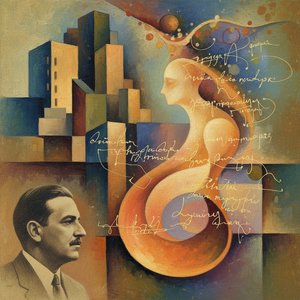
Matheus Fernandes Siqueira: A Forro Voice Bridging Tradition and Modernity
Born in Itaboraí, Rio de Janeiro, in 1998, Matheus Fernandes Siqueira’s journey is a compelling narrative of musical evolution rooted deeply within the vibrant traditions of Northeastern Brazil. Initially drawn to the energetic rhythms of Forro, a genre historically associated with the state of Ceará, Fernandes quickly transcended regional boundaries, establishing himself as a significant voice in contemporary Latin music. His rise isn't merely about replicating established sounds; it’s about reimagining them through a distinctly modern lens, blending the soulful warmth of Forro with elements of pop and electronic music, creating a sound that is both familiar and refreshingly new.
Fernandes’ early exposure to music was intrinsically linked to his family's connection to the Forro scene. Growing up in Fortaleza, he witnessed firsthand the enduring legacy of this musical heritage, absorbing its intricate rhythms, passionate vocals, and storytelling traditions. This immersion proved pivotal, shaping not only his musical preferences but also his artistic vision. However, unlike many artists who simply embrace a genre, Fernandes actively sought to understand its nuances, delving into the history and cultural significance behind each instrument and melody.
The Forro Foundation: Influences and Early Development
Fernandes’ musical education wasn't confined to formal training; it was forged through a deep appreciation for the masters of Forro. He cites pioneers like Luiz Gonzaga, Jackson do Borel, and Dominguinhos as key influences, recognizing their contributions to shaping the genre’s identity. Beyond these legendary figures, Fernandes draws inspiration from contemporary Forro artists such as Djavan, whose sophisticated arrangements and lyrical depth have resonated with him throughout his career. The influence of Brazilian Sertanejo (country music) is also subtly present in his work, particularly in the melodic structures and harmonic progressions that contribute to his accessible sound.
Crucially, Fernandes’ early recordings demonstrate a deliberate effort to honor Forro's traditions while simultaneously experimenting with new sonic textures. Tracks like “Baby Me Atende” (2017) showcased his vocal prowess and established his signature blend of traditional rhythms and contemporary production techniques. This initial success laid the groundwork for his subsequent exploration of diverse musical styles, including pop, electronic music, and even hints of funk.
A Rising Star: Major Achievements and Recognition
Fernandes’ career has experienced a remarkable trajectory since his breakthrough in 2017. He quickly gained popularity across Brazil and beyond, amassing millions of streams on platforms like YouTube and Spotify. His singles consistently chart well, demonstrating the broad appeal of his music. A significant milestone was his performance at the Festival Paraíso Tropical, a prestigious Brazilian music festival that provided him with invaluable exposure to a wider audience.
Notably, Fernandes’ collaboration with Dilsinho on “Balanco da Rede” (2018) propelled him further into the spotlight, solidifying his position as one of Brazil's most promising young artists. This track showcased his ability to seamlessly blend Forro elements with pop sensibilities, appealing to a diverse range of listeners. His 2023 album “MF No Rio” and subsequent releases continue this trend, cementing his status as a leading figure in the Latin music landscape.
The Art of the Forro Voice: Technique and Style
Fernandes’ vocal style is immediately recognizable—a warm, soulful timbre that effortlessly conveys emotion. He possesses a remarkable control over his voice, capable of delivering both delicate melodies and powerful, impassioned vocals. His phrasing is often characterized by subtle nuances and rhythmic variations, adding depth and complexity to his performances.
Beyond his vocal technique, Fernandes’ musical arrangements are equally noteworthy. He frequently incorporates elements of percussion—particularly the *pandero* (a small tambourine) – which are central to Forro's sound. He also skillfully utilizes synthesizers and electronic instruments to create layered textures and dynamic shifts within his songs. His production choices consistently prioritize a balance between tradition and innovation, resulting in music that feels both authentic and forward-thinking.
Historical Significance: Preserving and Reimagining a Legacy
Matheus Fernandes Siqueira’s work represents more than just individual artistic expression; it embodies a crucial effort to preserve and revitalize the legacy of Forro. In an era dominated by globalized music trends, Fernandes' commitment to celebrating Brazilian musical heritage is particularly significant. By seamlessly integrating traditional elements with contemporary sounds, he ensures that Forro remains relevant and accessible to new generations of listeners.
Furthermore, his success demonstrates the enduring power of regional musical traditions within Brazil’s diverse cultural landscape. Fernandes’ journey serves as an inspiring example of how artists can leverage their roots to create a unique and impactful artistic voice, bridging the gap between past and present while simultaneously shaping the future of Brazilian music.
Pitanja i odgovori
Koliko je umetničkih dela autora Matheus Fernandes Siqueira dostupno u katalogu?
Možete pregledati 2 umetnička dela dela umetnika Matheus Fernandes Siqueira na stranici Sva umetnička dela.
Gde mogu da vidim dela umetnika Matheus Fernandes Siqueira u 3D galeriji?
3D galerija umetnika Matheus Fernandes Siqueira je stranica koja prikazuje umetnikova dela u virtuelnoj trodimenzionalnoj galeriji.
Pod kojim drugim imenima ili pseudonimima je poznat/a Matheus Fernandes Siqueira?
Matheus Fernandes Siqueira je poznat/a i pod imenom Matheus Fernandes.