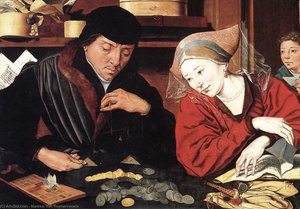
Portret Marinus Van Reymerswaele

Slike umetnika Marinus Van Reymerswaele: Najpoznatijih 43 kroz oči galerije

Ažurirano: новембар 2026 · rangirano prema našem koeficijentu popularnosti (pretrage, posete i porudžbine za svako delo) · 43 dela Marinus Van Reymerswaele u našem katalogu

Ukratko

Za ljubitelje galerije, najpoznatije delo umetnika Marinus Van Reymerswaele je The Calling of Matthew (1536), čiji se original nalazi u muzeju Museum voor Schone Kunsten, Gent. The Virgin Nursing the Child (1525) i The Moneychanger and his Wife (1538) čine triju koju svako oko prepoznaje. Od 43 dela umetnika Marinus Van Reymerswaele u našem katalogu, galerija u nastavku predstavlja 43 najpoznatijih dela, od kojih je svako originalno, sa navedenom godinom nastanka, muzejom i onim što ga čini jedinstvenim.

1490 – 1546, Rejmersval Northern renaissance Najviše dela: Музеј Прадо

Top 10 slika umetnika Marinus Van Reymerswaele u galeriji

1
The Calling of Matthew (1536) čiji je Marinus Van Reymerswaele

The Calling of Matthew

1536 · Oil On Canvas · Museum voor Schone Kunsten, Gent

To stand before this depiction of The Calling of Matthew is to step across the threshold of time and into a moment charged with divine electricity. The scene captures not merely an event, but a profound spiritual pivot point—the instant grace intersects with ordinary human life. We are drawn immediately to the central interaction: the commanding gesture of Jesus Christ reaching out, beckoning Matthew from his worldly pursuits. The composition…

2
The Virgin Nursing the Child (1525) čiji je Marinus Van Reymerswaele

The Virgin Nursing the Child

1525 · Oil · Музеј Прадо, Мадрид

In this intimate oil painting from 1525, we find ourselves drawn into a private, tender encounter between a mother and her infant. The composition is centered and close, pulling the viewer into the immediate space shared by the Virgin and the Child. There is a profound sense of maternal warmth here, expressed through the soft, naturalistic rendering of their skin tones. A deep teal or dark blue garment provides a…

3
The Moneychanger and his Wife (1538) čiji je Marinus Van Reymerswaele

The Moneychanger and his Wife

1538 · Oil On Panel · Музеј Прадо, Мадрид

The Moneychanger and his Wife is an oil on panel created by Marinus Van Reymerswaele. This work, dated 1539, offers a focused glimpse into the mercantile atmosphere of the sixteenth-century Low Countries. It remains a significant example of the artist's ability to render the textures of a prosperous, yet morally complex, domestic and commercial life.

4
The Moneychangers (1525) čiji je Marinus Van Reymerswaele

The Moneychangers

1525 · Oil On Panel · Ermitaž, Sankt Peterburg

A heavy, dark fur hat rests atop a man's head, its texture thick and coarse against the pale light. He leans forward, his body a shadow cast over a table of ledgers and scattered coins. Beside him, a woman in a white headpiece watches the transaction, her presence a quiet counterpoint to the metallic clink of wealth. The air in the room feels thick, crowded by the proximity of their…

5
St Jerome (1547) čiji je Marinus Van Reymerswaele

St Jerome

1547 · Oil On Panel · Музеј Прадо, Мадрид

In the quiet, contemplative depths of Marinus van Reymerswaele’s St Jerome, we are invited into a world where the pursuit of divine knowledge meets the heavy reality of human existence. Completed around 1547, this oil-on-panel masterpiece serves as a profound window into the Northern Renaissance—a period defined by an almost obsessive devotion to detail and a deep-seated fascination with the symbolic language of everyday objects. The painting captures the saint…

6
Parable of the unjust steward (1540) čiji je Marinus Van Reymerswaele

Parable of the unjust steward

1540 · Oil · Kunsthistorisches Museum, Beč

In this 1540 oil painting, the composition is crowded with the physical remnants of commerce and administration. Two primary figures occupy the immediate foreground. On the left, an older man wears a large, pointed dark green hat and a heavy red robe. His facial features are sharp and weathered. To his right, a bearded man looks upward with a startled or contemplative expression, his dark garments accented by red drapery.…

7
Saint Jerome (1521) čiji je Marinus Van Reymerswaele

Saint Jerome

1521 · Oil On Panel · Sacred Art Museum of Funchal, Funchal

A somber, tightly framed composition captures a moment of intense spiritual struggle. The subject is immersed in a claustrophobic atmosphere, where deep, earthy tones of crimson and burgundy robes meet a background of dark shadows. Light falls sharply upon the saint's face and weathered hands, creating a chiaroscuro effect that pulls the viewer into his private, intellectual labor. Every texture is rendered with meticulous precision, from the coarse hair of…

8
Saint Jerome (1528) čiji je Marinus Van Reymerswaele

Saint Jerome

1528 · Oil On Panel · Bavarske državne slikopisne kolekcije, Minhen

The portrait of Saint Jerome emerges from the shadows of the sixteenth century. Painted by Marinus Van Reymerswaele, this work captures the scholar in a moment of heavy, silent thought. The artist, born in Reimerswaal, Netherlands, brought a meticulous eye to the textures of the saint's world. This specific depiction dates to about 1528.

9
Parable of the unjust steward (1530) čiji je Marinus Van Reymerswaele

Parable of the unjust steward

1530 · Oil · Nacionalni muzej u Varšavi, Varšava

A heavy silence fills the room, thick with the scent of old parchment and the tension of an unspoken debt. Two men sit anchored in a shallow space, their lives colliding over a desk cluttered with the debris of commerce. On the left, a man in a voluminous red cloak gazes upward, his expression caught between a sudden realization and a quiet dread. His dark vest and green sleeves are…

Slike umetnika Marinus Van Reymerswaele, rangirane od 11 do 43

11Saint Jerome with a Skull (after Albrecht Dürer) (1530) čiji je Marinus Van ReymerswaeleSaint Jerome with a Skull (after Albrecht Dürer)1530 12The Money Changers (1540) čiji je Marinus Van ReymerswaeleThe Money Changers1540 · Rhode Island School of Design Museum of Art 13The Tax Collector and His Wife (1538) čiji je Marinus Van ReymerswaeleThe Tax Collector and His Wife1538 · Bavarske državne slikopisne kolekcije 14Saint Jerome (1534) čiji je Marinus Van ReymerswaeleSaint Jerome1534 · Bijbels Museum 15The Merchant and his Wife (1540) čiji je Marinus Van ReymerswaeleThe Merchant and his Wife1540 · Statens Museum For Kunst 16The Tax Collectors (1538) čiji je Marinus Van ReymerswaeleThe Tax Collectors1538 · Palazzo Pepoli Campogrande 17The Tax Collectors (1538) čiji je Marinus Van ReymerswaeleThe Tax Collectors1538 · Royal Palace of Naples 18Two Tax Collectors (1540) čiji je Marinus Van ReymerswaeleTwo Tax Collectors1540 19The Misers (1540) čiji je Marinus Van ReymerswaeleThe Misers1540 · Bavarske državne slikopisne kolekcije 20St. Jerome in his Cell (1550) čiji je Marinus Van ReymerswaeleSt. Jerome in his Cell1550 · Gemäldegalerie 21Two Tax Collectors (1550) čiji je Marinus Van ReymerswaeleTwo Tax Collectors1550 22The Banker and his Wife (1551) čiji je Marinus Van ReymerswaeleThe Banker and his Wife1551 · Kraljevski muzej lepih umetnosti u Antverpenu 23Two Excisemen (1550) čiji je Marinus Van ReymerswaeleTwo Excisemen1550 · Audley End House 24The Moneychanger and his wife (1550) čiji je Marinus Van ReymerswaeleThe Moneychanger and his wife1550 · Gemäldegalerie 25St. Jerome in His Study (1550) čiji je Marinus Van ReymerswaeleSt. Jerome in His Study1550 · Schorr Collection 26The Calling of Saint Matthew (1530) čiji je Marinus Van ReymerswaeleThe Calling of Saint Matthew1530 · Музеј Тисен-Борнемиза 27St. Jerome in His Study čiji je Marinus Van ReymerswaeleSt. Jerome in His StudyMusée des Beaux-Arts 28St Jerome (1541) čiji je Marinus Van ReymerswaeleSt Jerome1541 · Koninklijk Museum voor Schone Kunsten 29Two tax collectors (1540) čiji je Marinus Van ReymerswaeleTwo tax collectors1540 · Nacionalni muzej u Varšavi 30Saint Jerome in his Study (1501) čiji je Marinus Van ReymerswaeleSaint Jerome in his Study1501 · Музеј Прадо 31The Moneychanger and his Wife (1541) čiji je Marinus Van ReymerswaeleThe Moneychanger and his Wife1541 · Staatliche Kunstsammlungen Dresden 32The Calling of St. Matthew (1540) čiji je Marinus Van ReymerswaeleThe Calling of St. Matthew1540 · Muzej kolekcije im. Jovana Pavla II 33St Jerome čiji je Marinus Van ReymerswaeleSt JeromeRijksmuseum 34Tax collector čiji je Marinus Van ReymerswaeleTax collectorNew Orleans Museum of Art 35The Money Changer čiji je Marinus Van ReymerswaeleThe Money ChangerGemäldegalerie 36The Money Changers čiji je Marinus Van ReymerswaeleThe Money ChangersMuseo de Bellas Artes de Bilbao 37The Tax Collectors čiji je Marinus Van ReymerswaeleThe Tax CollectorsErmitaž 38Saint Jerome in His Study čiji je Marinus Van ReymerswaeleSaint Jerome in His Study 39The Banker and His Wife čiji je Marinus Van ReymerswaeleThe Banker and His WifeMusée des Beaux-Arts 40The Tax Collectors čiji je Marinus Van ReymerswaeleThe Tax CollectorsKoninklijk Museum voor Schone Kunsten 41Two tax gatherers čiji je Marinus Van ReymerswaeleTwo tax gatherers 42Money-Changer and his Wife (1539) čiji je Marinus Van ReymerswaeleMoney-Changer and his Wife1539 · Музеј Прадо 43The Tax Collectors (1540) čiji je Marinus Van ReymerswaeleThe Tax Collectors1540 · Luvr

Motivi koji su privlačili pažnju Marinus Van Reymerswaele

Četiri teme koje se najčešće ponavljaju u ovim originalima, svaka sa svojim vrhunskim primerom.

Muzeji u kojima se čuvaju originalna dela umetnika Marinus Van Reymerswaele

8 muzeja u kojima se nalazi najviše slika sa ove stranice.

Muzej Grad Radovi umetnika Marinus Van Reymerswaele Slike iz ovog spiska
Музеј Прадо, МадридМузеј Прадо Мадрид 5 The Virgin Nursing the Child, The Moneychanger and his Wife, St Jerome
Bavarske državne slikopisne kolekcije, MinhenBavarske državne slikopisne kolekcije Minhen 3 Saint Jerome, The Tax Collector and His Wife, The Misers
Gemäldegalerie, BerlinGemäldegalerie Berlin 3 St. Jerome in his Cell, The Moneychanger and his wife, The Money Changer
Ermitaž, Sankt PeterburgErmitaž Sankt Peterburg 2 The Moneychangers, The Tax Collectors
Nacionalni muzej u Varšavi, VaršavaNacionalni muzej u Varšavi Varšava 2 Parable of the unjust steward, Two tax collectors
Kraljevski muzej lepih umetnosti u Antverpenu, AntverpenKraljevski muzej lepih umetnosti u Antverpenu Antverpen 2 The Calling of Saint Matthew, The Banker and his Wife
Koninklijk Museum voor Schone Kunsten, AntwerpenKoninklijk Museum voor Schone Kunsten Antwerpen 2 St Jerome, The Tax Collectors
Museum voor Schone Kunsten, GentMuseum voor Schone Kunsten Gent 1 The Calling of Matthew

Marinus Van Reymerswaele, jedno autentično delo po deceniji

Radovi po decenijama

Izaberite deceniju da biste videli original koji je definiše.

Slike umetnika Marinus Van Reymerswaele: odgovori galerije

Koja je najpoznatija slika umetnika Marinus Van Reymerswaele?Otkrij odgovor

The Calling of Matthew (1536), Museum voor Schone Kunsten, Gent. Slede The Virgin Nursing the Child (1525) i The Moneychanger and his Wife (1538).

Koliko je godina imao/la Marinus Van Reymerswaele kada je dovršio/la The Calling of Matthew?Otkrij odgovor

46 godina: The Calling of Matthew datira iz 1536, a Marinus Van Reymerswaele je rođen/a 1490.

Koja su najbolja 10 dela umetnika Marinus Van Reymerswaele?Otkrij odgovor

The Calling of Matthew, The Virgin Nursing the Child, The Moneychanger and his Wife, The Moneychangers, St Jerome, Parable of the unjust steward, Saint Jerome, Saint Jerome, Parable of the unjust steward i The Calling of Saint Matthew. Gornji rang pokazuje godinu i muzej za svako od njih.

Koliko je dela stvorio/la Marinus Van Reymerswaele?Otkrij odgovor

Naš katalog sadrži 43 dela umetnika Marinus Van Reymerswaele, datiranih od 1501 do 1541.

Gde se nalaze najpoznatiji originali umetnika Marinus Van Reymerswaele?Otkrij odgovor

Većinom u Музеј Прадо (Мадрид), Bavarske državne slikopisne kolekcije (Minhen) i Gemäldegalerie (Berlin). Tabela muzeja iznad sadrži njih sve.

Kada je Marinus Van Reymerswaele stvorio svoje najpoznatije slike?Otkrij odgovor

U 1530s: 11 od 43 dela na ovoj stranici nastalo je tada, od čega je The Calling of Matthew.

Koja su najranija i najkasnija poznata dela umetnika Marinus Van Reymerswaele?Otkrij odgovor

Na ovoj stranici, najstarije delo je iz Saint Jerome in his Study (1501), a najnovije iz St Jerome (1541).

Kojim se motivima Marinus Van Reymerswaele najčešće bavio?Otkrij odgovor

Man (19), Table (18) i Coins (15), kroz svih 43 dela na ovoj stranici.

U kojoj je tehnici najviše radio/la Marinus Van Reymerswaele?Otkrij odgovor

Oil On Panel, za 32 od 43 dela na ovoj stranici.

Sa kojim umetničkim pravcem je Marinus Van Reymerswaele povezan/a?Otkrij odgovor

Northern renaissance, sudeći po originalima na ovoj stranici.

Koje originale umetnika Marinus Van Reymerswaele poseduje Музеј Прадо?Otkrij odgovor

The Virgin Nursing the Child, The Moneychanger and his Wife i St Jerome: Музеј Прадо, Мадрид čuva 5 dela sa ove stranice.

Marinus Van Reymerswaele: umetnik

Enigmatični majstor antverpskih senki

U užurbanom, trgovačkom srcu šesnaestovečkih Niskih zemalja, pojavio se slikar čija je četka zabeležila duboku napetost između duhovne predanosti i svetovne pohlepe. Marinus Van Reymerswaele, umetnik čije samo ime budi sećanje na obalni grad Reimersvaal gde je rođen, ostaje jedna od najfascinantnijih enigmi holandske renesanse. Njegov život pratio je tipičan put veštog zanatlije; nakon studija u Leuvenu, pronašao je profesionalni oslonac unutar prestižne Antverpske eskadrile Svetog Luke. Upisan kao učenik staklara Symona van Daele, Reymerswaele je posedovao oko za detalj i svetlost koje će kasnije definisati njegovo majstorstvo u prikazivanju teksture i atmosfere.

Kako se učvršćivao u Antverpenu, epicentru evropske trgovine, njegovo delo je počelo da odražava složeni identitet samog grada. Vodio je plodnu radionicu, užurbani studio sposoban da proizvede brojne verzije njegovih najslavnijih tema. Ova industrijskost omogućila je njegovom specifičnom vizuelnom jeziku — spoju pedantnog realizma i oštre društvene kritike — da prožema kolekcije tog doba. Njegove slike nisu samo prikazivale scene; one su stagirale moralne drame koje su odražavale anksioznost ere zarobljene između srednjovekovnog pobožnjaka i usponajućeg talasa kapitalizma.

Galerija pohlepe i milosti

Pogledati delo koje se pripisuje umetniku kao što je Marinus Van Reymerswaele znači zakoračiti u prostor gde se sveto i profano sudaraju. Bio je majstor veoma specifične, ponavljajuće ikonografije koja je osvajala maštu javnosti šesnaestog veka. Njegove kompozicije često su se vrtile oko četiri ključne teme koje su istraživale ljudsko stanje kroz različite prizme:

  • Intenzivno učenje Svetog Jeronima, koje predstavlja naučnu posvećenost i religiozno kontempliranje.
  • Užurbano delovanje poreskihlija, koje služi kao satirični komentar o pohlepi i korupciji.
  • Menjačnica i njegova supruga, koji beleže presek domaćeg života i trgovine.
  • Pravni svet, kao što je advokat u svojoj kancelariji, koji odražava rastuću složenost građanske birokratije.

Njegovo remek-delo, Dva poreskalije, stoji kao upečatljiv primer umetnosti severne renesanse. Korišćenjem ulja na hrastovom drvetu, postigao je osećaj dubine i teksture koji je oživio njegove subjekte. Slika služi kao živopisni komentar o korupciji poreskih službenika, koristeći detaljan prikaz odeće i okruženja kako bi svoju satiru utvrdio u prepoznatljivoj stvarnosti. U ovim delima, teške, staromodne odore njegovih likova dodaju sloj društvene kritike, podsećajući posmatrača na promenljivo moralno pejzaž tog doba.

Nasleđe i umetnički uticaj

Stilski razvoj umetnika Marinus Van Reymerswaele pokazuje dubok uticaj antverpskog slikara Quentina Matisa. Ova povezanost pomogla je u oblikovanju njegove sposobnosti da spoji elemente realizma sa oštrim, često karikaturalnim smislom za humor. Njegovo delo karakteriše pažnja posvećena detaljima koja omogućava posmatraču da svedoči o najsitnijim teksturama rukopisa, pravnih dokumenata i novčića, od kojih svi služe kao simboli opsednutosti tog doba bogatstvom i zakonom.

Iako je intenzivno radio u Antverpenu, njegovo putovanje ga je na kraju odvelo nazad u Severne Holandije. Nakon rada u Antverpenu sve do najmanje 1540. godine, preselio se u Goes, gde je njegov život pronašao svoj kraj. Iako su mnogi njegovi paneli poznati putem atribucije, a ne potpisa, njegov uticaj na žanrovsku scenu ostaje neporeciv. Za sobom je ostavio vizuelno nasleđe koje nastavlja da očarava, nudeći dubok uvid u um umetnika koji se bori sa verom, učenjem i neprestanim senkama ljudske pohlepe.