Portret Иван Ајвазовски

100 najpoznatijih slika umetnika Иван Ајвазовски, izbor iz galerije

Ažurirano: новембар 2026 · rangirano prema našem koeficijentu popularnosti (pretrage, posete i porudžbine za svako delo) · 1.123 dela Иван Ајвазовски u našem katalogu

Ukratko

Od svih originala koje je Иван Ајвазовски ostavio, najpoznatiji je Девятый вал (1850). Odmah za njima slede Pogled na Carigrad i Bosfor i Isus hodi po vodi (1888). Naš katalog sadrži 1,123 dela umetnika Иван Ајвазовски; galerija je čuvala 100 dela koja svet najviše admira, od kojih je svako prikazano sa svojim datumom, muzejom i pričom.

1817 – 1900, Феодосија Romantic idealism Najviše dela: Tretyakovljeva galerija

Top 10 slika umetnika Иван Ајвазовски: izbor galerije

1
Девятый вал (1850) čiji je Иван Ајвазовски

Девятый вал

1850 · Ulje na platnu

Aivazovskog *Deveti talas* smatra se remek-delom romantizma koji uspešno beleži sirovu i neukrotivu snagu prirode. Nastalo 1850. godine, ovo monumentalno morsko pejzažno delo prikazuje dramatičnu scenu preživljavanja i borbe protiv nepogoda. Slika svedoči o Aivazovskoj nezapamćenoj sposobnosti da prenese uzvišenu lepotu i zastrašujuću silu okeana, što je čini jednim od njegovih najslavnijih dela.

2
Pogled na Carigrad i Bosfor čiji je Иван Ајвазовски

Pogled na Carigrad i Bosfor

Ulje na platnu

Gledati u prikaz Ivana Ajvazovskog pod nazivom Pogled na Carigrad i Bosfor znači dati se oluji okeanskog daha, trenutku koji je ostao zaglavljen između dana i noći. Ovo delo prevazilazi okvire običnog pejzaža; to je uranjanje u samu dušu pomorskog života i neprolaznog duha jednog velikog grada. Kompozicija se razvija sa zadivljujućim širinom, vodeći pogled posmatrača preko prostranog prostranstva gde se azurne vode susreću sa toplim zagrljajem zalaska sunca. Čovek…

3
Isus hodi po vodi (1888) čiji je Иван Ајвазовски

Isus hodi po vodi

1888 · Ulje na platnu

Delo Ivana Konstantinovicha Aivazovskog pod nazivom „Isus hodi po vodi“, naslikano 1888. godine, predstavlja mnogo više od puke prikazivanja biblijske scene; to je proživljeno iskustvo sirove moći i duhovnog strahopoštovanja. Rođen u Feodosiji, u Rusiji, Aivazovski je svoj život posvetio hvatanju duše Crnog mora – njegovih promoljivih raspoloženja, očaravajući veličine i neizbežne opasnosti. Ova slika je vrhunac njegovog umeća, prebacujući posmatrača direktno u samo srce čuda.

4
Stvaranje sveta (1864) čiji je Иван Ајвазовски

Stvaranje sveta

1864 · Akril na platnu

Ivan Konstantinovich Aivazovsky’s “Creation of the World,” painted in 1864, is not merely a seascape; it’s a profound meditation on creation itself. This monumental canvas – measuring 196 x 233 cm – captures a moment of primordial chaos and nascent life, rendered with the masterful technique that cemented Aivazovsky's reputation as the “Wave Master” of Russian art. The scene unfolds beneath a dramatically lit sky, bruised with swirling clouds and…

5
Бој Напуљски при лунском ноћу. Везувиј (1840) čiji je Иван Ајвазовски

Бој Напуљски при лунском ноћу. Везувиј

1840 · Ulje na platnu

To gaze upon Ivan Konstantinovich Aivazovsky’s “The Bay of Naples at Moonlit Night. Vesuvius” is to be instantly enveloped in a profound sense of tranquility, a moment suspended between the day's vibrant activity and the deep embrace of nocturnal slumber. This masterpiece is far more than a mere topographical record of the Italian coastline; it is an emotional landscape where the drama of nature meets the quiet poetry of human…

6
Morski pejzaž sa punim mesecom čiji je Иван Ајвазовски

Morski pejzaž sa punim mesecom

Akril na platnu · Sakıp Sabancı Museum, Istanbul

Ivan Konstantinovič Aivazovski i njegovo delo „Morski pejzaž sa punim mesecom” predstavljaju mnogo više od običnog prikaza okeana u toku noći; to je duboka meditacija o uzvišenoj moći prirode, izvedena sa gotovo halucinantnim intenzitetom. Naslikano oko 1857–1858. godine, tokom vrhunca njegovog umetničkog stvaralaštva, ovo delo oličava Aivazovskov prepoznatljiv stil – majstorski spoj romantizma i pedantnog realizma koji je uspeo da uhvati samu suštinu mora. Slika trenutno uvlači posmatrača u svoju…

7
Potop (1864) čiji je Иван Ајвазовски

Potop

1864 · Ulje na platnu

U velikoj tradiciji romantizma, Ivan Konstantinovič Ajvazovski i njegov Potop stoje kaoi zadivljujući dokaz neukrotivog duha okeana. Ovo monumentalno ulje na platnu, impresivnih dimenzija 247 x 369 cm, ne prikazuje samo oluju; ono poziva posmatrača da stane na samu ivicu prirode u njenom najbrutalnijem kulminacionom trenutku. Scena je prožeta dubokom dramom, gde se uzburkana, tamna voda olujnog mora sudara sa krševitom obalom. Dok talasi udaraju sa snažnom, visceralnom silom o…

8
Napojski zaliv u mesečini. Vezuv (1870) čiji je Иван Ајвазовски

Napojski zaliv u mesečini. Vezuv

1870 · Ulje na platnu

Gledati u ovaj prikaz dela Napojski zaliv u mesečini. Vezuv znači biti obuzet dubokim osećajem spokojstva, trenutkom koji je lebdi između dnevne aktivnosti i dubokog zagrljaja sna. Ivan Konstantinovič Ajvazovski, majstor hroničar pomorskih raspoloženja, podario nam je mnogo više od običnog morskog pejzaža; on je uhvatio samu atmosferu—sam dah Mediterana pod prosvetljajnim, nebesnim pogledom. Pun mesec dominira platnom, prosipajući svoju eteričnu srebrnastu svetlost preko prostranstva vode. Ovo nije samo topografski…

9
Između talasa (1898) čiji je Иван Ајвазовски

Između talasa

1898 · Ulje na platnu · Feodosia National Gallery I. K. Aivazovsky, Feodosija

„Između talasa” predstavlja dramatičan morski pejzaž izveden sa neprevaziđenom veštinom, koji hvata trenutak intenzivne prirodne moći. Slika prikazuje olujno more, gde talasi naletaju na obalu sa zadihom i lepotom koja oduzima dah. Ovo nije samo prikaz vode; to je oličenje sirove energije okeana – njegovog potencijala i za razornost i za uzvišeno čudo.

10
Битка код Цезме у ноћу (1848) čiji je Иван Ајвазовски

Битка код Цезме у ноћу

1848 · Ulje na platnu

Battle of Cesme at Night is an oil on canvas work by the Russian Romantic painter Ivan Aivazovsky. Completed in 1848, the composition measures 193 x 183 cm. The scale of the work emphasizes the immense physical presence of the maritime conflict depicted.

Izbor umetnika Иван Ајвазовски se nastavlja, od 11 do 100

11Poseidonovo putovanje po moru (1894) čiji je Иван АјвазовскиPoseidonovo putovanje po moru1894 12Преображение Корабля Лефорт (1858) čiji je Иван АјвазовскиПреображение Корабля Лефорт1858 13The Harbor At Odessa On The Black Sea (1852) čiji je Иван АјвазовскиThe Harbor At Odessa On The Black Sea1852 14Battle of Sinop (1853) čiji je Иван АјвазовскиBattle of Sinop1853 15Stormy Sea. (1868) čiji je Иван АјвазовскиStormy Sea.1868 · Tretyakovljeva galerija 16Stene čiji je Иван АјвазовскиSteneSakıp Sabancı Museum 17Lunar night on Capri (1841) čiji je Иван АјвазовскиLunar night on Capri1841 18The Shipwreck on Northern sea (1865) čiji je Иван АјвазовскиThe Shipwreck on Northern sea1865 19Icebergs in the Atlantic (1870) čiji je Иван АјвазовскиIcebergs in the Atlantic1870 20Ivan Aivazovski

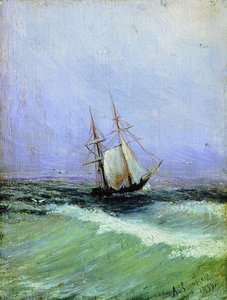
Morski pejzaž

24 x 18 cm

Ruski romantizam

Ulje na panelu

Romantizam

Lunski morski pejzaž

Noćni morski prizor

Moon Night

Noćna Luna

1885 (1885) čiji je Иван АјвазовскиIvan Aivazovski Morski pejzaž 24 x 18 cm Ruski romantizam Ulje na panelu Romantizam Lunski morski pejzaž Noćni morski prizor Moon Night Noćna Luna 18851885 21Lunar night in the Crimea (1862) čiji je Иван АјвазовскиLunar night in the Crimea1862 22A Lunar night on the Bosphorus (1894) čiji je Иван АјвазовскиA Lunar night on the Bosphorus1894 · Tretyakovljeva galerija 23Ships at the Feodosiya raid (1897) čiji je Иван АјвазовскиShips at the Feodosiya raid1897 24Peter the First to light out a watch fire (1846) čiji je Иван АјвазовскиPeter the First to light out a watch fire1846 · Државни руски музеј 25Bay of Naples (1845) čiji je Иван АјвазовскиBay of Naples1845 26Sea view (1895) čiji je Иван АјвазовскиSea view1895 27Moscow in Winter from the Sparrow Hills (1872) čiji je Иван АјвазовскиMoscow in Winter from the Sparrow Hills1872 28View of Constantinople by Moonlight (1846) čiji je Иван АјвазовскиView of Constantinople by Moonlight1846 · Државни руски музеј 29Sunset over the Golden Horn (1866) čiji je Иван АјвазовскиSunset over the Golden Horn1866 30A Lunar night in the Crimea (1859) čiji je Иван АјвазовскиA Lunar night in the Crimea1859 · Државни руски музеј 31The Bay of Naples at moonlit night (1842) čiji je Иван АјвазовскиThe Bay of Naples at moonlit night1842 32Moonlit Night on the Crimea. Gurzuf (1839) čiji je Иван АјвазовскиMoonlit Night on the Crimea. Gurzuf1839 · Nikanor Onatsky Regional Art Museum in Sumy 33A Rocky Coastal Landscape in the Aegean (1884) čiji je Иван АјвазовскиA Rocky Coastal Landscape in the Aegean1884 34Rescue at Sea (1872) čiji je Иван АјвазовскиRescue at Sea1872 35Storm (1880) čiji je Иван АјвазовскиStorm1880 · Sakıp Sabancı Museum 36Moonlit Night (1958) (1858) čiji je Иван АјвазовскиMoonlit Night (1958)1858 · Nacionalna galerija Armenije 37View of Odessa by Moonlight. (1846) čiji je Иван АјвазовскиView of Odessa by Moonlight.1846 38The Ruins of Pompeii (1889) čiji je Иван АјвазовскиThe Ruins of Pompeii1889 39Sevastopol (1852) čiji je Иван АјвазовскиSevastopol1852 40The Coast at Amalfi. (1841) čiji je Иван АјвазовскиThe Coast at Amalfi.1841 41Chumaks in Little Russia (1880) čiji je Иван АјвазовскиChumaks in Little Russia1880 42View of Yalta in evening (1870) čiji je Иван АјвазовскиView of Yalta in evening1870 43Sea on a moonlit night (1858) čiji je Иван АјвазовскиSea on a moonlit night1858 · Nacionalna galerija Armenije 44The Rainbow. (1873) čiji je Иван АјвазовскиThe Rainbow.1873 · Tretyakovljeva galerija 45The Battle of Chesme čiji je Иван АјвазовскиThe Battle of Chesme 46The Battle of Navarino (1846) čiji je Иван АјвазовскиThe Battle of Navarino1846 47Sea coast (1840) čiji je Иван АјвазовскиSea coast1840 · Tretyakovljeva galerija 48Tempest. Sunset (1856) čiji je Иван АјвазовскиTempest. Sunset1856 49Ice Breakers on the Frozen Neva in St. Petersburg (1877) čiji je Иван АјвазовскиIce Breakers on the Frozen Neva in St. Petersburg1877 50Sea view (1841) čiji je Иван АјвазовскиSea view1841 51Ocean (1896) čiji je Иван АјвазовскиOcean1896 52Tempest by coast of Odessa (1898) čiji je Иван АјвазовскиTempest by coast of Odessa1898 53The sunset (1866) čiji je Иван АјвазовскиThe sunset1866 54Before battle. Ship. Constantinople (1872) čiji je Иван АјвазовскиBefore battle. Ship. Constantinople1872 55Tempest (1850) čiji je Иван АјвазовскиTempest1850 56The Battle in the Chios Channel čiji je Иван АјвазовскиThe Battle in the Chios Channel 57Alexander II Crossing the Danube (1878) čiji je Иван АјвазовскиAlexander II Crossing the Danube1878 58Wave. Two Ships čiji je Иван АјвазовскиWave. Two ShipsNacionalna galerija Armenije 59Moonlit Night (1850) čiji je Иван АјвазовскиMoonlit Night1850 · Yekaterinburg Museum of Fine Arts 60Portrait of the Artist's Wife Anna Burnazyan (1882) čiji je Иван АјвазовскиPortrait of the Artist's Wife Anna Burnazyan1882 · Feodosia National Gallery I. K. Aivazovsky 61The gale on sea is over (1839) čiji je Иван АјвазовскиThe gale on sea is over1839 · Tretyakovljeva galerija 62Shipwreck on the Black Sea (1875) čiji je Иван АјвазовскиShipwreck on the Black Sea1875 63Misty morning in Italy (1864) čiji je Иван АјвазовскиMisty morning in Italy1864 64Ships on a raid (1851) čiji je Иван АјвазовскиShips on a raid1851 65View of Constantinople by Moonlight. (1846) čiji je Иван АјвазовскиView of Constantinople by Moonlight.1846 66Neapolitan Lighthouse (1842) čiji je Иван АјвазовскиNeapolitan Lighthouse1842 67Marina (1892) čiji je Иван АјвазовскиMarina1892 68Brig Mercury Attacked by Two Turkish Ships (1892) čiji je Иван АјвазовскиBrig Mercury Attacked by Two Turkish Ships1892 69Morning at Sea (1849) čiji je Иван АјвазовскиMorning at Sea1849 70Seashore. (1840) čiji je Иван АјвазовскиSeashore.1840 · Tretyakovljeva galerija 71Caravan in oasis, Egypt (1871) čiji je Иван АјвазовскиCaravan in oasis, Egypt1871 72Meeting of the Brig Mercury with the Russian Squadron After the Defeat of Two Turkish Battleships. (1848) čiji je Иван АјвазовскиMeeting of the Brig Mercury with the Russian Squadron After the Defeat of Two Turkish Battleships.1848 73Ship in the Stormy Sea (1887) čiji je Иван АјвазовскиShip in the Stormy Sea1887 · Ermitaž 74The Shipwreck (8) (1884) čiji je Иван АјвазовскиThe Shipwreck (8)1884 75Ноћ у Украјини (1871) čiji je Иван АјвазовскиНоћ у Украјини1871 76Windmill on the Sea Coast. (1837) čiji je Иван АјвазовскиWindmill on the Sea Coast.1837 77Odessa (1840) čiji je Иван АјвазовскиOdessa1840 · Pushkin State Museum 78Walking on the water 1 čiji je Иван АјвазовскиWalking on the water 1 79Tempest on the sea at nidht (1849) čiji je Иван АјвазовскиTempest on the sea at nidht1849 80Windmill on the Sea Coast (1851) čiji je Иван АјвазовскиWindmill on the Sea Coast1851 81Tempest by cape Aiya (1875) čiji je Иван АјвазовскиTempest by cape Aiya1875 82Sea view by Moonlight (1878) čiji je Иван АјвазовскиSea view by Moonlight1878 83Mountain Village Gunib in Daghestan. View from the East. (1869) čiji je Иван АјвазовскиMountain Village Gunib in Daghestan. View from the East.1869 84The Sunrize in Feodosiya (1855) čiji je Иван АјвазовскиThe Sunrize in Feodosiya1855 85Pogled na more sa planina u zalasku sunca. Krim. (1864) čiji je Иван АјвазовскиPogled na more sa planina u zalasku sunca. Krim.1864 86Darial Gorge (1862) čiji je Иван АјвазовскиDarial Gorge1862 87Pushkin and Countess Raevskaya by the sea near Gurzuf and Partenit (1886) čiji je Иван АјвазовскиPushkin and Countess Raevskaya by the sea near Gurzuf and Partenit1886 88Clouds above a sea, calm (1889) čiji je Иван АјвазовскиClouds above a sea, calm1889 89Wedding in Ukraine (1892) čiji je Иван АјвазовскиWedding in Ukraine1892 90Susret ribara na obali zaliva Napulja (1842) čiji je Иван АјвазовскиSusret ribara na obali zaliva Napulja1842 · Tretyakovljeva galerija 91Venice (1874) čiji je Иван АјвазовскиVenice1874 92Before the Storm: Theodosia čiji je Иван АјвазовскиBefore the Storm: TheodosiaNacionalna galerija Armenije 93Oriental scene (in a boat) (1846) čiji je Иван АјвазовскиOriental scene (in a boat)1846 94Shipwreck (1854) čiji je Иван АјвазовскиShipwreck1854 95Seashore. Calm. (1843) čiji je Иван АјвазовскиSeashore. Calm.1843 96Conversation On The Shore Dusk čiji je Иван АјвазовскиConversation On The Shore Dusk 97Tower. Shipwreck. (1847) čiji je Иван АјвазовскиTower. Shipwreck.1847 98Wave (1889) čiji je Иван АјвазовскиWave1889 99Fog over the Sea (A Storm at Sea) (1884) čiji je Иван АјвазовскиFog over the Sea (A Storm at Sea)1884 · The Art Museum RIGA BOURSE 100The Island of Rhodes (1861) čiji je Иван АјвазовскиThe Island of Rhodes1861 · Feodosia National Gallery I. K. Aivazovsky

Čuvena dela Иван Ајвазовски po periodima

Motivi koji su privlačili pažnju Иван Ајвазовски

Četiri teme koje se najčešće ponavljaju u ovim originalima, svaka sa svojim vrhunskim primerom.

Muzeji u kojima se čuvaju originalna dela umetnika Иван Ајвазовски

8 muzeja u kojima se nalazi najviše slika sa ove stranice.

Muzej Grad Radovi umetnika Иван Ајвазовски Slike iz ovog spiska
Tretyakovljeva galerija, MoskvaTretyakovljeva galerija Moskva 17 Stormy Sea., A Lunar night on the Bosphorus, The Rainbow.
Nacionalna galerija Armenije, JerevanNacionalna galerija Armenije Jerevan 25 Moonlit Night (1958), Sea on a moonlit night, Wave. Two Ships
Feodosia National Gallery I. K. Aivazovsky, FeodosijaFeodosia National Gallery I. K. Aivazovsky Feodosija 31 Između talasa, Portrait of the Artist's Wife Anna Burnazyan, The Island of Rhodes
Државни руски музеј, St. PetersburgДржавни руски музеј St. Petersburg 20 Peter the First to light out a watch fire, View of Constantinople by Moonlight, A Lunar night in the Crimea
Sakıp Sabancı Museum, IstanbulSakıp Sabancı Museum Istanbul 5 Morski pejzaž sa punim mesecom, Stene, Storm
Yekaterinburg Museum of Fine Arts, JekaterinburgYekaterinburg Museum of Fine Arts Jekaterinburg 3 Moonlit Night
Ermitaž, Sankt PeterburgErmitaž Sankt Peterburg 2 Ship in the Stormy Sea
Nikanor Onatsky Regional Art Museum in Sumy, SumyNikanor Onatsky Regional Art Museum in Sumy Sumy 1 Moonlit Night on the Crimea. Gurzuf

Иван Ајвазовски deceniju po deceniju: original koji definiše svaku od njih

Radovi po decenijama

Izaberite deceniju da biste videli original koji je definiše.

Pitanja kolekcionara o slikama umetnika Иван Ајвазовски

Po kojem delu je Иван Ајвазовски najpoznatiji/a?Otkrij odgovor

Девятый вал (1850). Slede Pogled na Carigrad i Bosfor i Isus hodi po vodi (1888).

Koliko je godina imao/la Иван Ајвазовски kada je nastalo delo Девятый вал?Otkrij odgovor

33 godina: Девятый вал datira iz 1850, a Иван Ајвазовски je rođen/a 1817.

Koja su deset najpoznatijih slika umetnika Иван Ајвазовски?Otkrij odgovor

Девятый вал, Pogled na Carigrad i Bosfor, Isus hodi po vodi, Stvaranje sveta, Бој Напуљски при лунском ноћу. Везувиј, Morski pejzaž sa punim mesecom, Potop, Napojski zaliv u mesečini. Vezuv, Između talasa i Битка код Цезме у ноћу. Gornji rang pokazuje godinu i muzej za svako od njih.

Koliko je slika ostavio Иван Ајвазовски?Otkrij odgovor

Naš katalog sadrži 1,123 dela umetnika Иван Ајвазовски, datiranih od 1837 do 1898.

U kojim muzejima se nalaze remek-dela umetnika Иван Ајвазовски?Otkrij odgovor

Većinom u Tretyakovljeva galerija (Moskva), Nacionalna galerija Armenije (Jerevan) i Feodosia National Gallery I. K. Aivazovsky (Feodosija). Tabela muzeja iznad sadrži njih sve.

U kojim godinama je Иван Ајвазовски naslikao svoja najpoznatija dela?Otkrij odgovor

U 1840s: 23 od 100 dela na ovoj stranici nastalo je tada, od čega je Бој Напуљски при лунском ноћу. Везувиј.

Koja su prva i poslednja čuvena originalna dela umetnika Иван Ајвазовски?Otkrij odgovor

Na ovoj stranici, najstarije delo je iz Windmill on the Sea Coast. (1837), a najnovije iz Između talasa (1898).

Koje je motive Иван Ајвазовски najčešće birao/la?Otkrij odgovor

Seascape (21), Aivazovsky (19) i Boats (19), kroz svih 100 dela na ovoj stranici.

Koju je tehniku najčešće koristio/la Иван Ајвазовски?Otkrij odgovor

Oil On Canvas, za 70 od 100 dela na ovoj stranici.

Kojem umetničkom pravcu pripada Иван Ајвазовски?Otkrij odgovor

Romantic idealism, sudeći po originalima na ovoj stranici.

Čija se dela umetnika Иван Ајвазовски nalaze u Tretyakovljeva galerija?Otkrij odgovor

Stormy Sea., A Lunar night on the Bosphorus i The Rainbow.: Tretyakovljeva galerija, Moskva čuva 7 dela sa ove stranice.

Иван Ајвазовски: život i delo

Early Life, Family and Training

To understand the technical precision of Ivan Konstantinovich Aivazovsky, one must look to his origins in the Crimean port of Feodosia. Born on 29 July [O.S. 17 July] 1817, he was raised in an Armenian family. His baptismal name, Hovhannes, son of Gevorg Aivazian, reflects a specific cultural lineage that preceded his emergence in the Russian imperial art scene. This early environment, defined by the constant presence of the Black Sea, provided the raw material for a career that would eventually dominate marine painting.

His formal development was not a matter of chance but the result of rigorous academic instruction. He moved from the coastal realities of Feodosia to the Imperial Academy of Arts in Saint Petersburg. It was here that his talent was refined through disciplined study. Under the guidance of the landscape painter Maxim Vorobyov, Aivazovsky acquired the foundational skills necessary to translate the movement of water and light onto canvas. This training provided the structural logic behind his later, more dramatic compositions.

Travels and Italian Influence

Aivazovsky’s time in Italy during the early 1840s changed his trajectory. It was here that he transitioned from his student identity to the name Aivazovsky, a shift that coincided with his growing recognition in Europe. This period provided more than just a change in scenery; it offered a direct encounter with the light and atmosphere that would define his technical approach. His ability to translate these observations into significant work earned him a gold medal from Pope Gregory XVI.

His movement through the Mediterranean and the Levant continued to expand his visual vocabulary. In 1845, he traveled to the Aegean Sea, the Ottoman capital Constantinople, and the Greek islands of Patmos and Rhodes. These excursions provided the specific maritime environments necessary to refine his depictions of coastal light and sea conditions. The exposure to these diverse locations ensured his work was grounded in direct observation rather than mere academic imitation.

Naval Commissions and Career

Aivazovsky’s professional ascent was cemented by his direct connection to the machinery of the Russian Empire. His appointment as the official painter of the Russian Navy provided more than just a title; it granted him the proximity required to render maritime life with technical authority. This role allowed him to witness naval maneuvers and the realities of seafaring firsthand. He moved within the highest circles of power, maintaining close ties with the military and political elite of the empire. This social standing was not merely a byproduct of his talent but a reflection of his integration into the state's institutional structure.

His status within the imperial hierarchy continued to rise throughout his long career. In 1896, he reached the rank of full privy councillor, a significant elevation in the civil service. This position underscored his transition from a mere observer of the sea to a figure of substantial social and political weight. His work during this period reflected the dignity and scale expected by his patrons, moving beyond simple landscape studies into the realm of official state representation.

Mastery of Technique and Style

Aivazovsky’s command over the medium stems from a refusal to rely on mere academic precision. As a Russian Romantic painter, he prioritized the visceral impact of light and movement over static accuracy. He achieved this through a specific technical discipline: applying paint in thin, translucent layers. This method allowed light to penetrate the surface, creating a luminous texture that mimics the way sunlight filters through seawater. In works like Among the Waves, he utilized a glazing technique to produce waves that appear transparent, capturing the specific clarity of water in motion.

His ability to render the atmosphere was not a product of studio imagination alone. He frequently worked en plein air, painting directly from nature to seize fleeting light effects before they vanished. This direct engagement with the elements allowed him to translate the actual behavior of light on the sea onto the canvas. He did not merely depict a scene; he reconstructed the physics of light and water. His compositions often rely on the tension between deep, dark shadows and sudden, sharp highlights, a technique that emphasizes the physical weight of the ocean.

Iconic Masterpieces and Key Works

Aivazovsky’s ability to render the physics of water remains his most significant technical achievement. In The Ninth Wave (1850), he moves beyond simple observation to depict the violent aftermath of a storm. The work focuses on survivors clinging to wreckage amidst a sea of foam and turbulent energy. He achieved a specific translucency in his waves through a glazing technique, allowing light to appear as if it were passing through the crests of the water. This method gives his depictions of the ocean a physical, almost sculptural depth that avoids the flat surfaces of his contemporaries.

His command of light is perhaps most evident in his nocturnal compositions. The Bay of Naples at moonlit night (1842) uses a cool palette of blues and greens to establish a sense of stillness, while Moonlight in Feodosia (1852) captures a more tranquil, atmospheric scene. These works rely on thick impasto to create a textured surface that catches the light, mimicking the way moonlight hits moving water. Even in his later years, his focus on the interaction between celestial light and the sea remained constant, as seen in Among the waves (1898), where he continued to use light to define the movement of the swells.

Other significant works include:

Legacy and Enduring Influence

Aivazovsky remains a central figure in the history of marine art, having established a standard for the genre that persists in modern collections. His technical approach to light and water left a clear imprint on subsequent painters, specifically influencing the work of Lev Lagorio, Mikhail Latri, Aleksey Ganzen, and Vartan Makhokhian. These artists operated within the shadow of his ability to render the ocean's physical presence. Beyond the sea, his contributions helped shape the trajectory of Russian landscape painting, moving the discipline toward a more dynamic engagement with natural forces.

The reach of his work is not confined to historical archives; his paintings continue to resonate with global audiences. This enduring appeal stems from a specific ability to translate the raw energy of the elements into a visual language that remains legible today. He did not merely paint scenes; he documented the interaction between light and liquid with a precision that defined an era of Romanticism. His influence is visible in the way later artists approached the atmospheric qualities of the coast and the sea.

Where to See the Works Today

Aivazovsky’s presence in modern collections remains substantial, ensuring his technical approach to light and water is still accessible to those studying marine art. In Moscow, the Tretyakov Gallery holds View of Leandrovsk tower in Constantinople, a work that demonstrates his ability to anchor a composition with architectural detail against a maritime backdrop. His reach extends to Istanbul, where the Sakıp Sabancı Museum maintains several of his canvases, including Seascape with Full Moon. These works allow for a direct examination of his glazing techniques and the way he handled nocturnal light.

The artist's most famous output, such as the 1850 work The Ninth Wave, continues to define the standard for dramatic seascape painting. While many of his approximately 6,000 paintings are dispersed across global institutions, specific collections provide the best insight into his evolution. For instance, The Harbor At Odessa On The Black Sea is held within our catalog, offering a view of his frequent subject matter. His legacy is not found in a single location but is distributed through major museums that preserve his specific rendering of the ocean's power.