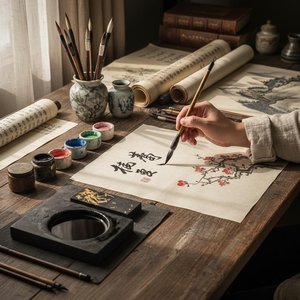
Vizionarska sinteza Zhang Daqian
Zhang Daqian, rođen 1899. godine u kineskoj provinciji Nei Jiang, predstavlja jednu od najprodigioznijih i najtransformativnijih figura dvadesetog veka. Njegov život bio je tapiserija ispredena od sudbinskih preokreta i duboke kulturne uronjenosti, počevši od rane, izvanredne talenta koji mu je već sa dvanaeste godine doneo angažmane za proricanje sudbine. Ovo rano bavljenje duhovnim i simboličkim postavilo je temelje za umetničko putovanje koje će na kraju povezati drevne kineske tradicacije sa avangardnim pokretima Zapada. Njegov put dodatno su oblikovale neočekivane teškoće; period zatvora tokom bande razbojnika postao je ognjište njegovog intelekta, podstičući intenzivnu posvećenost poeziji i izoštravajući preciznost zapažanja koja će kasnije definisati njegov rad četkicom.
Suština Zhangove veličine leži u njegovoj sposobnosti da odati počast prošlosti dok neustrašivo prihvata budućnost. On nije samo replikao klasične stilove, već im je udahnuo novi život kroz radikalnu reimaginu formu. Njegena rana istraživanja bila su duboko ukorenjena u majstorstvu kaligrafije i tradicionalnog akvarela mastilom, ipak je posedovao nezasitnu glad za inovacijama. Ova dualnost omogućila mu je da postane pionir geometrijske apstrakcije unutar kineskog konteksta, stvarajući vizuelni jezik koji je delovao istovremeno vanvremenski drevno i zapanjujuće moderno.
Putovanje kroz drevnu ikonografiju i modernost
Jedno od najključnijih poglavlja u razvoju Zhang Daqiana bilo je njegovo duboko povezivanje sa budističkom umetnošću Dunhunga. Pod pokroviteljstvom Ma Bufanga, guvernera provincije Qinghai, Zhang je otputovao kako bi proučio veličanstvene pećinske murale Dunhunga. Ovo uranjanje u drevnu ikonografiju pružilo mu je duhovnu i tehničku osnovu, dok je pedantno analizirao vibrantne boje i tečne linije budističkih fresaka. Ovaj period učvrstio je njegovu posvećenost očuvanju kulturne baštine, čak i dok je nastojao da ukloni granice reprezentativne umetnosti.
Kako se njegova karijera razvijala tokom 1930-ih i 40-ih godina u Šangaju, Zhang je počeo da eksperimentiše sa stilom koji će postati njegov zaštitni znak. Pod uticajem strukturalnog strogog principa Bauhaus pokreta i hrabre energije ruskog konstruktivizma, on se kretao ka pojednostavljenom, geometrijskom vokabularu. Koristeći krugove, kvadrate i trouglove, nastojao je da prenese duboki emocionalni rezonancu i univerzalne istine kroz strukturu, a ne samo kroz iluziju. Ova evolucija označila ga je kao kamen temeljac kineskog pokreta geometrijske apstrakcije, dokazujući da se tradicionalni medij mastila može koristiti za izražavanje složenosti modernog, fragmentiranog sveta.
Majstorstvo tehnike i trajno nasleđe
Tehnička briljantnost Zhang Daqiana možda je najočiglednija u njegovoj sposobnosti da manipuliše fluidnošću mastila i boje kako bi izazvao atmosferu i emociju. Njegova dela često osciliraju između delikatne preciznosti klasične umetnosti pejzaža i ekspresivne slobode modernog impresionizma. U remek-delima kao što su "Bambus i cvet šljive", on koristi zamršene detalje akvarela mastilom da simbolizuje otpornost i čistotu, dok u delu "Zabava u lotosovom jezeru", njegov slobodan, majstorski potez četkicom hvata osećaj filozofske dubine i spokojne prirodne lepote. Njegova sposobnost da vlada i finom linijom kaligrafa i širokim, atmosferskim potezom slikara pejzaža ostaje neprevaziđena.
Izvan njegovih pojedinačnih platna, istorijski značaj Zhang Daqiana leži u njegovoj ulozi kulturnog mosta. Uspešno je integrisao estetske vrednosti Istoka sa strukturnim inovacijama Zapada, stvarajući nasleđe koje nastavlja da inspiriše umetnike širom sveta. Delo njegovog života služi kao svedočanstvo o moći umetničke evolucije — putovanju od drevnih pećina Dunhunga do samog vrha moderne apstrakcije. Kroz svoje majstorstvo, on je osigurao da duša tradicionalne kineske umetnosti ne samo da preživi dvadeseti vek, već i da procveta unutar njega.

 Pređi na štampu
 Pročitaj više







































 Za umetnička dela ili reprodukcije čija je bilo koja strana veća od 105 cm (približno 41 inč), okvir će biti isporučen u obliku rastavljenog seta za sklapanje. Ovaj metod osigurava bezbednu dostavu i sprečava oštećenja tokom transporta.


 Pregledaj u prostoru
 Pošalji
 Podeli
 Detalji o delu
 Vodič
Vodič

 Preuzmi
 Slični predmeti
 Rendgenski snimak
 Automatska prezentacija
 Pitanja i odgovori
 Statistika