
 Pregledaj u prostoru
 Pošalji
 Podeli
 Detalji o delu
 Vodič
Vodič

 Preuzmi
 Slični predmeti
 Rendgenski snimak
 Automatska prezentacija
 Pitanja i odgovori
 Statistika
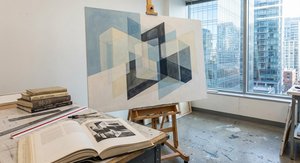
Black and White Structure

- 158.0 x 222.0 cm


 Pročitaj više
Umetničko delo prikazano na ovoj stranici zaštićeno je autorskim pravima, što znači da zakonski nismo u mogućnosti da kreiramo niti prodajemo identičnu reprodukciju. Ova zaštita se sprovodi u skladu sa međunarodnim sporazumima kao što su Bernska konvencija i nacionalnim zakonima, uključujući i one koji su definisani u Američki zakon o autorskom pravu – Naslov 17.
Ovaj metod je u potpunosti usklađen sa regulativama o autorskim pravima jer ne podrazumeva kopiranje ili dupliranje zaštićenih umetničkih dela. Umesto toga, reč je o kreativnoj reinterpretaciji – novom slikarskom delu koje je inspirisano originalom, ali nije identično njemu.
Giclee štampa / Umetnički otisak
Giclée štampa ili print na platnu muzejskog kvaliteta uz brzu izradu i raznovrsne opcije završne obrade. ( Kupite ručno oslikano delo Pređi na digitalnu sliku)




































Izaberite jednu od naših unapred definisanih veličina koje odgovaraju originalnim proporcijama umetničkog dela.

Unesite željenu širinu i visinu kako bi se štampa uklopila u vaš ram ili zid. Štampu je moguće samo iseći, ali nikada povećati iznad dimenzija originalne slike, stoga format sa drugačijim proporcijama uzrokuje gubitak dela slike. Pre početka štampe, poslaćemo vam digitalni prikaz radi potvrde. Slika prikazana na ovoj stranici ne predstavlja stvarni isrez — to pokazuje samo digitalni prikaz.
Dostava širom sveta () za 2 nedelje umesto uobičajenih 4/5 nedelja. (8 новембар)

Besplatna ekspresna dostava širom sveta

Visokokvalitetno laneno platno

Potpuno osiguranje transporta

Garancija povraćaja carine i uvoznih dažbina

Garancija vernosti boja

Politika povraćaja u roku od 100 dana (samo u slučaju nedostataka)

Garancija povrata 100% novca

Popust na više proizvoda
 Opcija sa staklom dostupna je samo za dimenzije manje od 110 cm

Black and White Structure
Giclee štampa / Umetnički otisak
Dimenzije reprodukcije
-


Ukupna cena
дин 8485
Pitanja i odgovori
U kojoj godini i u okviru kog umetničkog pravca je nastalo delo "Black and White Structure"?
Delo "Black and White Structure" nastalo je 1965. godine, u okviru pokreta Geometric Abstraction.
Koji umetnički pravac obuhvata „Black and White Structure”, autor Zdeněk Sýkora?
Umetnički pravac koji se povezuje sa delom „Black and White Structure”, autor Zdeněk Sýkora je Geometric Abstraction. Ova klasifikacija smešta rad među srodne umetnike i umetnička dela.
U kojoj godini je nastalo delo „Black and White Structure”, autor Zdeněk Sýkora?
Delo „Black and White Structure”, autor Zdeněk Sýkora nastalo je 1965.
Biografija umetnika
The Architect of Lines: The Life and Legacy of Zdeněk Sýkora
In the vast landscape of twentieth-century modernism, few figures command as much intellectual curiosity as Zdeněk Sýkora. Born in 1920 in Louny, Czechoslovakia, Sýkora’s journey was one of profound transformation, moving from the tangible beauty of the natural world to the mathematical precision of the digital frontier. His early years were marked by a traditional approach to the canvas, where his late 1940s works captured the essence of landscapes through a more representational lens. However, as the political and cultural tides of Central Europe shifted, so too did Sýkora’s vision. He began to shed the weight of the physical world, gravitating instead toward the rigorous, cerebral beauty of geometric abstraction.
The evolution of his style was not merely a personal choice but a response to the burgeoning technological era. Influenced by the structural complexities of Cubism and the dreamlike logic of Surrealism, Sýkora sought a way to bridge the gap between human intuition and algorithmic precision. By the 1960s, he emerged as a true pioneer, becoming one of the first artists to integrate computer technology into the creative process. This was a revolutionary leap; through the use of computers, he could manipulate geometric structures with a level of complexity that surpassed the capabilities of the human hand alone. His work began to pulse with a new kind of energy, where mathematical logic met artistic spontaneity.
A Symphony of Geometry and Chance
As his career progressed, Sýkora’s aesthetic underwent another mesmerizing metamorphosis. The rigid, strict systems of his early geometric structures gradually gave way to a more fluid, rhythmic language. He developed a signature style characterized by intricate line paintings, where vibrant streaks of color traversed expansive canvases in seemingly random yet deeply calculated directions. This period of his work felt less like a mathematical proof and more like a visual symphony, capturing the tension between order and chaos. His membership in the Křižovatka (Crossroad) group further solidified his place within the vanguard of Czech modernism, as he explored the intersections of different artistic movements.
This creative spirit was often a collaborative one. In 1985, Sýkora began a profound artistic partnership with his wife, Lenka Sýkora. Together, they expanded the boundaries of abstraction, applying their shared vision to large-scale architectural projects. Their work moved beyond the confines of the gallery wall and into the very fabric of the built environment, such as the striking flight operation building in Jeneč near Prague. This integration of fine art and architecture allowed Sýlam’s geometric explorations to inhabit three-dimensional space, influencing how viewers interact with modern structures.
Recognition and Eternal Influence
Despite the challenges posed by the Soviet occupation and the resulting limitations on international exhibition opportunities, Sýkora’s brilliance could not be contained. His resilience led to a global recognition that honored his immense contributions to the evolution of abstract art. The prestige of his career is reflected in the numerous accolades he received, including:
- The Vladimír Boudnik Award (2008)
- L'Ordre des Arts et des Lettres from France
- The Herbert-Boeckl-Preis from Austria
Today, the legacy of Zdeněk Sýkora lives on in the permanent collections of the world’s most esteemed institutions. From the Centre Georges Pompidou in Paris to the MUMOK in Vienna, his works serve as a testament to the power of innovation. He remains a monumental figure for anyone studying the intersection of technology and fine art, reminding us that even within the strictest mathematical lines, there is room for the infinite soul of creativity.

Zdeněk Sýkora
1920 - 2011 , Czech Republic
Osnovne informacije
- Full Name: Zdeněk Sýkora
- Nationality: Czech
- Date Of Birth: 1920
- Date Of Death: 2011
- Place Of Birth: Louny, Czech Republic
- Notable Artworks:
- Black & White Structure
- Lines No 24
- Artistic Movement Or Style: Geometric abstraction
- Artists Who Influenced This Artist:
- Cubism
- Surrealism
- Artists Or Movements Influenced By This Artist:
- Op Art
- Křižovatka group
Povezani članci
Beyond Form & Color: Geometric Abstraction's Enduring Legacy in Art History
Explore the captivating world of geometric abstraction! Discover its origins, key artists like Malevich & Mondrian, and why this movement remains highly valued by art collectors today. Expert insights at OriginalUniqueArt.

Beyond Form & Color: Geometric Abstraction's Evolution in 20th/21st Century Art
Explore the evolution of geometric abstraction from Cubism to contemporary art. Discover key artists like Malevich & Mondrian, investment insights, and expert collecting advice at OriginalUniqueArt.

Mastering Abstraction: The 25 Most Iconic Works by Wassily Kandinsky
Explore 25 iconic Kandinsky masterpieces and the birth of abstraction. Discover the full collection online at OriginalUniqueArt.com.

Top 10 dela geometrijske apstrakcije koje morate videti | OriginalUniqueArt.com
Istražite 10 remek-dela geometrijske apstrakcije – Mondrian, Malevič i Kandinski. Otkrijte priče iza ovih ikoničnih slika i pronađite inspiraciju za dekoraciju enterijera sa OriginalUniqueArt.com! Reprodukcije vrhunskog kvaliteta.

Neo-Abstract Art: The High-Impact Evolution of Modern Visual Energy and Geometric Sophistication
Discover the power of Neo-Abstract art. Explore how bold geometric forms and high-impact visual energy are redefining modern design. Learn to curate sophisticated, high-energy spaces with the latest trends in contemporary abstraction and structural color.