

 Pregledaj u prostoru
 Podeli
 Podeli
 Detalji
 Vodič
Vodič

 Preuzmi sliku
 Slični predmeti
 Rendgenski snimak
 Automatska prezentacija
 Statistika
Елијах
 Akril na platnu
- Umetnost za zidove
- Bezalel School Style
 1916
1916 90.0 x 91.0 cm
 Izraelski muzej
 Pročitaj više
Kupite digitalnu sliku visoke rezolucije i poboljšanog kvaliteta, koja je znatno superiornija od onoga što vidite u online prikazu.
Svaka datoteka je pedantno pripremljena od strane naših stručnjaka koristeći napredne alate i profesionalnu ručnu retušu. Osiguravamo da svaka slika ima izuzetnu oštrinu, preciznu reprodukciju boja i fine detalje.
Konačna datoteka se dostavlja putem e-pošte u roku od 72 sata, optimizovana za neposrednu upotrebu u profesionalnim, izdavačkim i štamparskim okruženjima. To je isti kvalitet kojem veruju vrhunski studiji dizajna, izdavači i galerije.
Digitalna slika
Preuzmite datoteku visoke rezolucije za ličnu upotrebu, štampanje i kreativne projekte. ( Pređi na prodaju štampanih primeraka Naručite ručno oslikano reprodukciju)
Uključeno uz svaku porudžbinu digitalne slike
Ekspertska digitalna isporuka, zagarantovana
Kada odaberete OriginalUniqueArt.com, ne dobijate samo sliku – vi primate profesionalno unapređeno digitalno umetničko delo, izrađeno sa najvećom preciznošću i uz garanciju zadovoljstva. Evo svega što automatski dolazi uz vašu porudžbinu:

Brza dostava putem e-pošte
Vaša digitalna slika visoke rezolucije biće vam poslata putem e-pošte u roku od 72 sata od poručivanja – spremna za trenutnu upotrebu.

Digitalna datoteka unapređena veštačkom inteligencijom
Vaše umetničko delo je profesionalno optimizovano primenom naprednih AI alata i ručne obrade, čime se osiguravaju maksimalni detalji, oštrina i preciznost boja.

Besplatna doživotna ponovna isporuka
Slučajno ste obrisali ili izgubili svoju datoteku? Ne brinite – poslaćemo vam je ponovo u bilo kom trenutku, potpuno besplatno.

Bez troškova uvoza – zauvek
Uživajte u svojim umetničkim delima trenutno, bez carine, akciza ili troškova dostave – digitalni download je uvek bez poreza.

Garancija preciznosti boja
Uz pomoć profesionalnih alata i upravljanja bojama, osiguravamo da vaša digitalna slika što vernije odražava originalne boje.

Garancija zadovoljstva u roku od 100 dana
Ako niste zadovoljni svojom digitalnom slikom, izvršićemo reviziju ili ćemo vam vratiti 100% novca u roku od 100 dana – bez ikakvih pitanja.

100% garancija povrata novca
Niste zadovoljni? Dobijte puni povraćaj novca u roku od 100 dana od prijema digitalne datoteke – bez suvišnih pitanja.

Popusti na velike porudžbine
Kupite 3 slike, uštedite 10% - Kupite 5 slika, uštedite 15% - Kupite 10+ slika, uštedite 20%. Odlično za kreativne projekte, galerije i agencije.
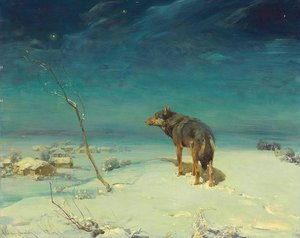
Elijah – A Testament to Faith and National Spirit
The artwork "Elijah" by Wolf Rawicki (Ze’ev Raban), created in 1916, stands as an emblem of the Bezalel School's artistic vision during its formative years. Founded in Jerusalem with a fervent ambition to forge a distinctive Israeli aesthetic rooted in both Jewish tradition and Zionist ideals, this piece embodies the spirit of that era—a yearning for cultural renewal intertwined with reverence for biblical heritage. Measuring 90 x 91 cm, it’s more than just a painting; it's a meticulously crafted symbol of Jewish identity and spiritual devotion.The Bezalel School’s Artistic Language
The Bezalel School sought to articulate the burgeoning Zionist movement through art, consciously rejecting Western artistic conventions in favor of a style deeply influenced by Byzantine iconography and Hebrew craftsmanship. Rawicki’s approach reflects this ethos—characterized by bold lines delineating intricate carvings depicting biblical narratives, primarily focusing on the prophetic figure of Elijah safeguarding the infant during circumcision rituals. This motif speaks directly to the core tenets of Jewish faith: protection of progeny and continuity with God's covenant throughout history. The artist skillfully employs a palette dominated by warm earth tones – browns and tans – mirroring the natural materials used in the original chair, complemented by subtle accents of gold or brass adorning inlaid elements that further elevate its grandeur.Detailed Technique and Composition
Rawicki’s meticulous technique involved combining carving—primarily utilizing hardwood—with inlaying techniques incorporating precious metals like gold and brass. The photograph captures this remarkable detail, highlighting the textural richness achieved through layering and relief sculpting. Strong, defined lines dominate the backrest and sides of the chair, creating a sense of depth and emphasizing the complexity of the decorative patterns. Curved lines grace the seat design—shaped as a stylized dog’s head—and embellish other ornamental motifs, contributing to an overall harmonious balance. The composition centers on the chair itself, bathed in diffused studio lighting that minimizes shadows and maximizes visibility of its intricate carvings. A bottle subtly positioned in the upper left corner serves as contextual element, grounding the artwork within its historical setting.Symbolism Beyond Decoration
“Elijah’s Chair” transcends mere ornamentation; it functions as a powerful visual representation of Jewish national revival. The biblical scenes depicted—representing the twelve tribes and echoing themes from scripture—underscore the importance of remembering Israel's past while striving for its future. Furthermore, the chair itself symbolizes the rite of circumcision – a ritual signifying God’s enduring promise to Abraham and his descendants. Its opulent design evokes a profound sense of reverence and underscores the belief that art can serve as a conduit for spiritual contemplation and cultural affirmation. The artwork is housed in The Israel Museum, Jerusalem, ensuring its preservation and accessibility for generations to come.Pitanja i odgovori
Koliko su intenzivne boje u delu „Елијах”, Wolf Rawicki (Ravitzki)?
Intenzitet boja dela "Елијах" je Monohromatski. Intenzitet opisuje koliko boje deluju snažno.
Kolika je percepcija osvetljenosti dela „Елијах”, Wolf Rawicki (Ravitzki)?
U pogledu percepcije osvetljenosti, „Елијах”, Wolf Rawicki (Ravitzki) je blistav.
Koliko svetlosti se čini da boje dela "Елијах" reflektuju?
„Елијах”, Wolf Rawicki (Ravitzki) ima luminancu od Svetlost. Luminanca opisuje koliko se čini da boje reflektuju svetlosti.
Biografija umetnika
The Pioneering Vision of Ze’ev Raban: From Rawicki to the Soul of Israeli Art
Ze’ev Raban, born Wolf Rawicki in Kaunas, Russia, in 1890, stands as a monumental figure in the genesis of Israeli art. His journey wasn't merely that of an artist finding his voice; it was the forging of a new aesthetic identity for a nation yearning to express itself. Rawicki’s early life, steeped in the cultural currents of Eastern Europe, laid the foundation for a career dedicated to synthesizing tradition and modernity, culminating in works that became iconic symbols of a burgeoning national consciousness. He wasn't simply *a* painter; he was an architect of visual culture, deeply involved in shaping the artistic landscape of the nascent State of Israel.
Early Formation & The Bezalel School
Rawicki’s formal training took him across Europe – Munich, Paris, and Brussels – exposing him to the prevailing styles of the early 20th century. He absorbed the lessons of Jugendstil, Symbolism, and Art Nouveau, but these influences were never adopted wholesale. A crucial turning point came with his arrival at Bezalel Academy in Jerusalem in 1906. Bezalel, founded by Boris Schatz, was more than an art school; it was a crucible for creating a distinctly “Hebrew style.” This wasn’t about replicating historical forms but rather excavating the spirit of Jewish culture and translating it into contemporary artistic expression. Raban quickly became a central figure in this endeavor, embracing the challenge of defining what that aesthetic might look like.
A Synthesis of Tradition & Modernity
Raban's work is characterized by a remarkable ability to blend diverse influences. He sought inspiration not only from European art movements but also from traditional Jewish crafts, Islamic motifs, and the archaeological discoveries unfolding in Palestine. This fusion manifested in his decorative arts – silver Hanukkah lamps, ceremonial objects, furniture—where intricate carvings and stylized forms evoked ancient patterns while remaining firmly rooted in a modern sensibility. He believed that true Hebrew art wasn’t about imitation but about *interpretation* – distilling the essence of Jewish heritage into new artistic languages. His designs weren't merely beautiful; they were imbued with symbolic meaning, reflecting a deep connection to history and faith.
Major Achievements & The Capitoline Wolf
While Raban excelled in numerous mediums, his impact extended beyond individual artworks. He was instrumental in establishing the aesthetic principles of early Israeli design, influencing everything from typography to public monuments. Perhaps his most enduring legacy is the “Capitoline Wolf,” a silver menorah created for the Hebrew University on Mount Scopus in 1926. This piece, inspired by the Roman wolf that suckled Romulus and Remus, became a powerful symbol of Jewish resilience and national aspiration. It wasn’t simply a religious object; it was a statement about reclaiming heritage and forging a new future. The menorah's design, incorporating stylized Hebrew letters and motifs, resonated deeply with the Zionist movement and solidified Raban’s position as a leading artistic voice.
Historical Significance & Lasting Influence
Ze’ev Raban died in 1970, leaving behind a body of work that continues to inspire. He wasn't just an artist; he was a cultural pioneer who helped define the visual identity of Israel. His commitment to synthesizing tradition and modernity, his dedication to creating a distinctly Hebrew aesthetic, and his ability to imbue objects with profound symbolic meaning cemented his place as one of the most important figures in Israeli art history. His influence can be seen in the work of subsequent generations of artists and designers, who continue to grapple with the challenges of balancing cultural heritage with contemporary expression. Raban’s legacy is a testament to the power of art to shape national identity and inspire a sense of belonging.
Wolf Rawicki (Ravitzki)
1890 - 1970 , Russia
Osnovne informacije
- Full Name: Ze'ev Raban
- Nationality: Israeli
- Date Of Birth: 1890
- Date Of Death: 1970
- Place Of Birth: Kaunas, Russia
- Notable Artworks:
- Elijah
- Standing Hanukkah Lamp
- Capitoline Wolf
- Artistic Movement Or Style: Bezalel School Style