
 Pregledaj u prostoru
 Podeli
 Podeli
 Detalji
 Vodič
Vodič

 Preuzmi sliku
 Slični predmeti
 Rendgenski snimak
 Automatska prezentacija
 Statistika
Roba iz Grčke
 Ulje na platnu
- Umetnost za zidove
- Romanticism
 1812
1812- 19. vek
 43.0 x 43.0 cm
 Pročitaj više
Giclee štampa / Umetnički otisak
Giclée štampa ili print na platnu muzejskog kvaliteta uz brzu izradu i raznovrsne opcije završne obrade. ( Naručite ručno oslikano reprodukciju Pređi na prodaju digitalnih slika)




































Izaberite jednu od naših unapred definisanih veličina koje odgovaraju originalnim proporcijama umetničkog dela.

Unesite širinu i visinu koja vam je potrebna, kako bi se uklopili u vaš ram ili na vaš zid. Štampa se može samo iseći, nikada ne može biti veća od originalne slike, stoga format sa drugačijim proporcijama gubi deo slike. Poslaćemo vam digitalni prikaz radi potvrde pre nego što započnemo štampu. Slika prikazana na ovoj stranici ne pokazuje stvarni rez — to pokazuje samo digitalni prikaz.
Dostava širom sveta () za 2 nedelje umesto uobičajenih 4/5 nedelja. (20 октобар)

Besplatna ekspresna dostava širom sveta

Visokokvalitetno laneno platno

Sveobuhvatno osiguranje transporta

Garancija povraćaja carine i uvoznih dažbina

Garancija vernosti boja i autentičnosti pri reprodukciji

Politika povraćaja u roku od 100 dana (samo u slučaju nedostataka)

Garancija povrata 100% novca

Popust pri većoj količini
 Opcija sa staklom dostupna je samo za dimenzije manje od 110 cm

Roba iz Grčke
Giclee štampa / Umetnički otisak
Veličina reprodukcije
-


Ukupna cena
дин 8181
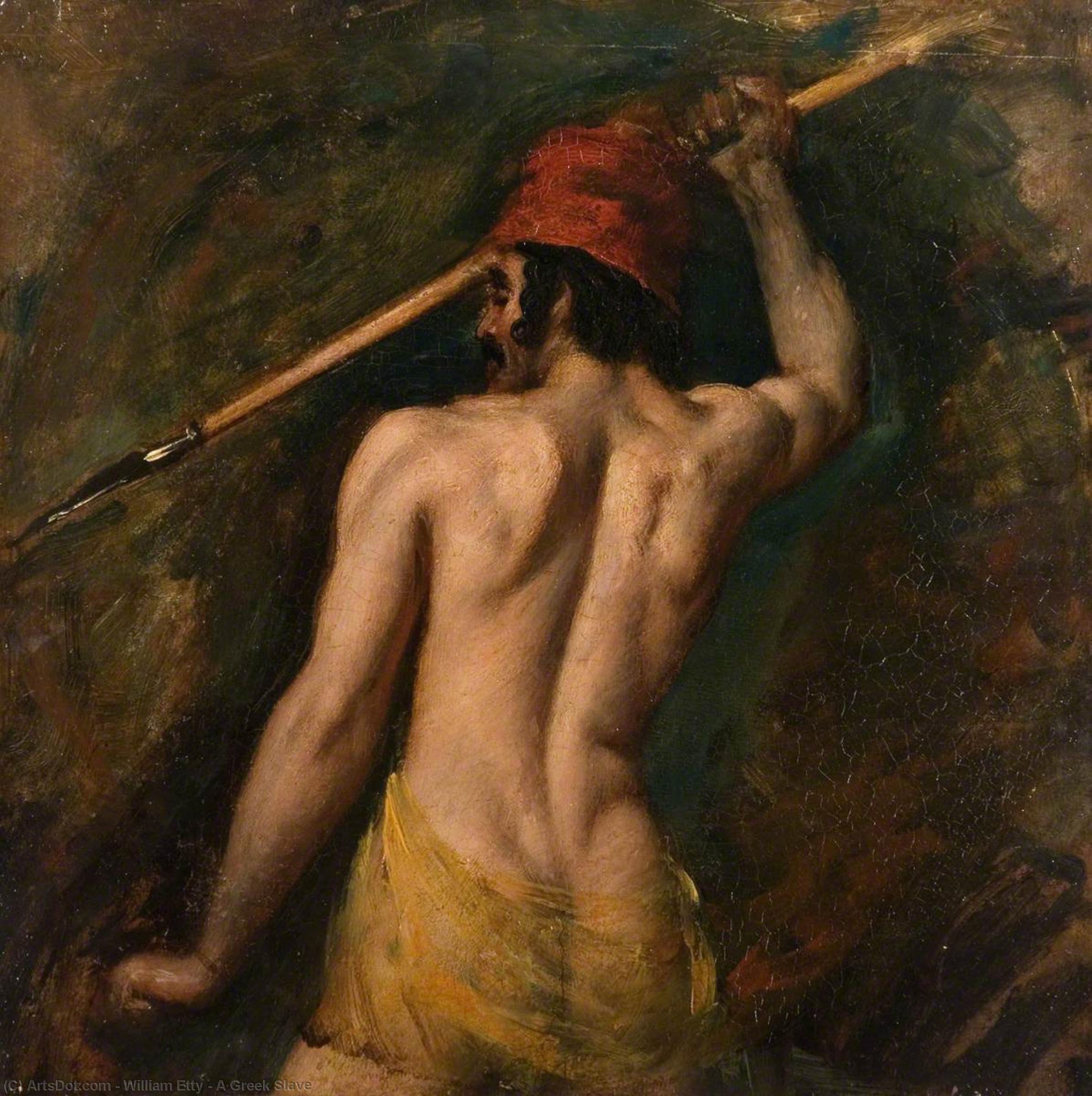
“A Greek Slave” – William Etty’s Monument to Resilience
William Etty's “A Greek Slave,” completed in 1812, is far more than a mere depiction of a figure; it’s a profoundly moving exploration of strength, vulnerability, and the enduring spirit of humanity. This arresting oil painting, measuring just 43 x 43 cm, immediately commands attention with its dramatic lighting and intensely focused composition. Etty, a truly pivotal figure in British art who bravely pioneered the depiction of nudes after years of societal resistance, deliberately avoids the idealized beauty so often sought in his time, instead presenting a raw, almost brutally realistic portrayal of a young woman held captive, awaiting an uncertain fate. The painting’s impact stems not just from its subject matter but from Etty's masterful execution – a testament to his skill and unwavering commitment to capturing genuine emotion.
A Romantic Vision: Style and Technique
Etty’s artistic style represents a fascinating confluence of Neoclassical tradition with the fervent emotionalism characteristic of the Romantic movement. While firmly rooted in the classical ideals of beauty and proportion, evident in the figure's muscular form and dignified posture, Etty infused his work with a distinctly Romantic sensibility. The subject matter – a powerfully rendered nude figure – was considered exceptionally controversial at the time, reflecting Etty’s courageous challenge to prevailing social norms. This boldness is further emphasized by the painting’s shallow perspective, which draws the viewer directly into the immediate space surrounding the slave, intensifying her sense of isolation and vulnerability. Notice the deliberate lack of refinement; visible brushstrokes create a textured surface, adding dynamism and preventing the image from feeling static or overly polished – a conscious choice reflecting Etty's desire to capture raw emotion with unflinching honesty.
Dramatic Lighting and Composition
Etty’s masterful use of light and shadow is central to the painting’s dramatic impact. This technique, a hallmark of the Romantic movement, sculpts the figure with intense precision. The strong contrasts highlight the muscularity of her body, emphasizing both her physical strength and the palpable tension of her situation. Her posture – rigid yet defiant – speaks volumes about her inner resolve, conveying a sense of quiet dignity amidst unimaginable suffering. The composition itself is strikingly direct; Etty doesn’t shy away from depicting the raw reality of her subject. The loose brushstrokes contribute to a dynamic surface, preventing the image from feeling static and overly polished. This deliberate imperfection amplifies the work's emotional power.
Symbolism and Historical Context
“A Greek Slave” was created during a period of significant political upheaval in Europe, following the Napoleonic Wars. The painting’s subject – a woman held captive – resonated deeply with contemporary anxieties about slavery and oppression. The spear she holds is not merely a weapon; it symbolizes resistance and defiance against her captors. Etty's choice to depict a young woman, rather than an older one, adds another layer of complexity, suggesting innocence lost and the tragic fate awaiting those caught in the grip of tyranny. The earthy color palette – dominated by browns, reds, and subtle variations – further enhances the painting’s dramatic effect, evoking a sense of both vulnerability and resilience. This artwork remains a powerful testament to human endurance and a poignant reminder of historical injustices.
Pitanja i odgovori
Da li je "Roba iz Grčke" tipično za ono što je Vilijam Eti obično stvarao?
Među zabeleženim temama umetnika Vilijam Eti – classical antiquity influence, romantic drama & emotion, royal academician’s signature style, neoclassical ideals embodied”, “heroic narratives depicted” – delo "Roba iz Grčke" donosi sopstveni fokus na greek slave, male nude art, romantic figure, dramatic lighting, classical strength, spear imagery, etty painting.
Koja je tehnika i dimenzija originalnog dela „Roba iz Grčke”, Vilijam Eti?
Tehnika dela „Roba iz Grčke”, Vilijam Eti je Ulje na platnu, a njegove dimenzije su 43 x 43 cm.
Koji je datum nastanka dela „Roba iz Grčke”, Vilijam Eti?
Datum nastanka dela „Roba iz Grčke”, Vilijam Eti je 1812.
Biografija umetnika
A Pioneer of the British Nude: The Life and Art of William Etty
William Etty, a name perhaps less instantly recognizable than his contemporaries like Turner or Constable, nevertheless occupies a pivotal position in 19th-century British art. Born in York on March 10, 1787, above his father’s bakery, Etty's journey from humble beginnings to Royal Academician was one marked by relentless dedication, artistic innovation, and no small measure of controversy. His early life offered little indication of the path he would forge. Apprenticed at age twelve to a printer in Hull, seven years were spent immersed in the practicalities of typography – a world far removed from the canvases that would eventually bear his signature. Yet, even amidst the mechanical demands of printmaking, Etty nurtured a burgeoning passion for drawing, an impulse that ultimately propelled him towards London and the hallowed halls of the Royal Academy Schools in 1807. There, under the tutelage of Thomas Lawrence, he honed his skills through diligent copying, laying the foundation for a career defined by masterful depictions of the human form.The Rise to Prominence: Nudes and Controversy
Etty’s breakthrough arrived in 1821 with Cleopatra's Arrival in Cilicia, a painting that immediately ignited both admiration and scandal. The work, teeming with nude figures, was exhibited to widespread acclaim, yet simultaneously earned him a reputation for indecency. This duality would become a defining characteristic of his career. He wasn’t merely depicting nudity; he was exploring the human form with an unprecedented realism and anatomical precision for a British artist of that era. His commitment to accurately rendering flesh tones, light, and shadow – influenced by his study of Venetian masters like Titian and Rubens during travels in Italy and France – set him apart. He continued to produce historical scenes populated with nudes, often drawn from classical mythology or literature, such as The Sirens and Ulysses. These works were commercially successful, allowing Etty to thrive despite the constant criticism leveled against his subject matter. In 1828, he was elected a Royal Academician, solidifying his position within the established art world, even as whispers of impropriety followed him. The sheer audacity of portraying the human body with such unflinching honesty challenged Victorian sensibilities and cemented Etty’s legacy as a provocateur who dared to confront societal norms.Beyond the Nude: Portraits and Still Life
While Etty is most celebrated for his nudes, his artistic range extended beyond this controversial domain. Recognizing the need to broaden his appeal – and perhaps secure a more stable income – he ventured into portraiture during the 1830s. Though not as groundbreaking as his figure paintings, these portraits demonstrate his technical skill and ability to capture character. Furthermore, Etty became one of the first English painters to seriously engage with still life, demonstrating an eye for detail and a sensitivity to texture that rivaled the Dutch masters he admired. This diversification reveals a pragmatic side to Etty’s artistic practice, a willingness to adapt to market demands while remaining true to his core aesthetic principles. He continued, however, to return to the nude form throughout his life, driven by an unwavering fascination with its beauty and expressive potential. His meticulous anatomical studies informed both his nudes and portraits alike, underscoring his dedication to mastering the art of representation.Influences and Artistic Style
Etty’s artistic vision was profoundly shaped by the masters of Venetian painting – Titian and Rubens – whom he encountered during his formative years in Italy and France. These artists championed dramatic lighting and expressive color palettes, techniques that Etty skillfully adopted into his own work. He meticulously dissected cadavers to achieve unparalleled anatomical accuracy, a practice considered unorthodox for its time but crucial to his artistic endeavors. Like many Romantic painters, Etty sought to convey emotion and psychological depth through his compositions, prioritizing atmosphere and gesture over mere visual representation. His canvases pulsate with energy, capturing fleeting moments of human experience with remarkable immediacy. The influence of Rembrandt’s chiaroscuro – the dramatic interplay between light and dark – is evident in numerous paintings, contributing to their haunting beauty and emotional resonance.Legacy and Rediscovery
William Etty died in York on November 13, 1849, leaving behind a substantial body of work that initially enjoyed considerable popularity. However, tastes shifted in the decades following his death, and his paintings fell into relative obscurity. By the late 19th century, his once-celebrated works were largely forgotten, dismissed as outdated or simply too shocking for Victorian sensibilities. A remarkable rediscovery began in the early 21st century. His inclusion in Tate Britain’s landmark Exposed: The Victorian Nude exhibition (2001–2002) sparked renewed interest in his art, prompting critical reevaluation and a reassessment of his place in British art history. The restoration of The Sirens and Ulysses in 2010 further cemented this revival, revealing the brilliance of his technique and the enduring power of his vision. Today, William Etty is recognized as a pioneering figure who challenged artistic conventions, celebrated the human form with unparalleled realism, and left an indelible mark on the landscape of British art. His works stand as testaments to his skill, dedication, and unwavering commitment to capturing the beauty and complexity of the human experience.
Vilijam Eti
1787 - 1849 , Велика Британија
Brzi pregled
- Datum Rođenja: 10. mart 1787.
- Datum Smrti: 13. novembar 1849.
- Mesto Rođenja: York, Ujedinjeno Kraljevstvo
- Nacionalnost: Britanski
- Puno Ime: William Etty
- Umetnički Pokret: Romantizam
- Značajna Dela: ['Kleopatra”, “Sirene i Ulises”, "Ženski akt"],\n "Uticajni umetnici": ["Thomas Lawrence"]\n}']
Srodni članci

William Etty: Rediscovering Victorian Sensibility & the Sublime in Historical Painting
Explore the captivating world of William Etty, a pioneering Victorian artist famed for his dramatic historical paintings and groundbreaking nude figures. Discover his life, controversial reception, and enduring legacy with our expert analysis.

The Enduring Legacy of Oil on Canvas: Technique, History & Aesthetic Impact
Explore the rich history & techniques of oil painting – from Renaissance masters to Impressionism. Discover pigments, layering methods, and why this timeless medium endures. Expert insights for artists & art enthusiasts.

Romantic Realism's Finest: 10 Masterpieces for Your Home | OriginalUniqueArt
Explore 10 defining masterpieces of Romantic Realism! Discover Courbet, Millet & Daumier's powerful paintings—capturing emotion and social realities. Find museum-quality reproductions for your home at OriginalUniqueArt.com.

Oil on Canvas: A Historical & Technical Exploration of a Timeless Artistic Medium
Explore the rich history & enduring techniques of oil painting on canvas. Discover the science behind its longevity, conservation practices, and contemporary relevance. Expert insights for art enthusiasts.

The Enduring Power of Painting: A Historical & Contemporary Exploration of Form and Emotion
Explore the rich history & enduring techniques of oil painting with OriginalUniqueArt. Discover masterpieces, learn about art collecting, and find authentic handmade reproductions crafted by skilled artists.


