

 Pregledaj u prostoru
 Pošalji
 Podeli
 Detalji o delu
 Vodič
Vodič

 Preuzmi
 Slični predmeti
 Rendgenski snimak
 Automatska prezentacija
 Q&A
Q&A Statistika
Jungle Form
 Oil On Canvas
- WallArt
- Surrealism
 1952
1952- Modern
 46.0 x 36.0 cm
 MAM Rio
 Pročitaj više
Umetničko delo prikazano na ovoj stranici zaštićeno je autorskim pravima, što znači da zakonski nismo u mogućnosti da kreiramo niti prodajemo identičnu reprodukciju. Ova zaštita se sprovodi u skladu sa međunarodnim sporazumima kao što su Bernska konvencija i nacionalnim zakonima, uključujući i one koji su definisani u Američki zakon o autorskom pravu – Naslov 17.
Ovaj metod je u potpunosti usklađen sa regulativama o autorskim pravima jer ne podrazumeva kopiranje ili dupliranje zaštićenih umetničkih dela. Umesto toga, reč je o kreativnoj reinterpretaciji – novom slikarskom delu koje je inspirisano originalom, ali nije identično njemu.
Giclee štampa / Umetnički otisak
Giclée štampa ili print na platnu muzejskog kvaliteta uz brzu izradu i raznovrsne opcije završne obrade. ( Kupite ručno oslikano delo Pređi na digitalnu sliku)




P118B дин10

P118H дин10

P118W дин10

P438Z дин10

P508JH дин12

P508YH дин12

P805H дин10

P805Z дин10

P919BZ дин10

P919G дин10

P919XJ дин10

P959ZH дин10

P968JZ дин12

W106C дин8

W218G дин10

W218JH дин8

W218Y дин10

W307PJ дин10

W316G дин10

W316PJ дин8

W316Y дин10

W398PJ дин8

W4111J дин10

W500HY дин15

W500JH дин15

W692G дин12

W849H дин8

W940BG дин15

W953PJ дин8




Izaberite jednu od naših unapred definisanih veličina koje odgovaraju originalnim proporcijama umetničkog dela.

Unesite željenu širinu i visinu kako bi se štampa uklopila u vaš ram ili zid. Štampu je moguće samo iseći, ali nikada povećati iznad dimenzija originalne slike, stoga format sa drugačijim proporcijama uzrokuje gubitak dela slike. Pre početka štampe, poslaćemo vam digitalni prikaz radi potvrde. Slika prikazana na ovoj stranici ne predstavlja stvarni isrez — to pokazuje samo digitalni prikaz.
Dostava širom sveta () za 2 nedelje umesto uobičajenih 4/5 nedelja. (30 октобар)

Besplatna ekspresna dostava širom sveta

Visokokvalitetno laneno platno

Potpuno osiguranje transporta

Garancija povraćaja carine i uvoznih dažbina

Garancija vernosti boja

Politika povraćaja u roku od 100 dana (samo u slučaju nedostataka)

Garancija povrata 100% novca

Popust na više proizvoda
 Opcija sa staklom dostupna je samo za dimenzije manje od 110 cm

Jungle Form
Giclee štampa / Umetnički otisak
Dimenzije reprodukcije
-


Ukupna cena
дин 8282
A Verdant Metamorphosis: The Biomorphic Allure of Jungle Form
In the evocative depths of William Baziotes’ Jungle Form, viewers are invited into a dreamscape where the boundaries between the human silhouette and the primordial wild begin to dissolve. Created in 1952, this masterpiece serves as a profound testament to the artist's ability to bridge the psychological intensity of Surrealism with the raw, gestural energy of Abstract Expressionism. The painting presents a striking green figure, a woman seen from behind, whose very essence seems woven from the lush, tangled textures of a tropical thicket. Her form is not merely painted; it is constructed through a sophisticated layering of emerald, moss, and forest hues, suggesting a being that is simultaneously flesh and flora.
The composition captures a moment of quiet, almost ritualistic movement. With one arm raised toward the heavens, the figure evokes a sense of reaching—perhaps for light, perhaps for transcendence. This gesture, combined with the rhythmic verticality of the background, creates a tension between the organic fluidity of the body and the structured, architectural elements that frame her. The interplay of light and shadow across her verdant skin gives the work a sculptural quality, making it an arresting focal point for any sophisticated interior. For the collector, this piece offers more than just visual beauty; it provides a window into the subconscious, where the human spirit finds its reflection in the untamed natural world.
Technique and the Language of Abstraction
Baziotes was a master of biomorphic abstraction, a technique that utilizes organic, rounded shapes reminiscent of biological life. In Jungle Form, his brushwork achieves a remarkable tactile depth. The application of paint suggests a variety of textures—some areas appear smooth and liquid, while others possess a rugged, bark-like density. This mastery of medium allows the artist to manipulate the viewer's perception, making the figure feel as though she is emerging from a dense, breathing organism. The use of a monochromatic green palette, punctuated by subtle shifts in value, prevents the composition from becoming chaotic, instead guiding the eye through a harmonious, rhythmic dance of form and shadow.
The historical context of this work is deeply rooted in the post-war American art movement. As a key figure associated with the WPA era and the subsequent rise of the New York School, Baziotes utilized his Greek heritage and Surrealist training to infuse American abstraction with a sense of myth and ancient memory. Jungle Form embodies this synthesis perfectly; it is an abstract work that feels deeply rooted in the primal history of life itself. For interior designers seeking to introduce a sense of organic luxury and intellectual depth into a space, this reproduction offers a sophisticated way to anchor a room with a conversation piece that is both visually soothing and intellectually stimulating.
Symbolism and Emotional Resonance
Beyond its formal brilliance, Jungle Form resonates on an emotional level that touches upon themes of identity, growth, and the cyclical nature of life. The choice of a green, arboreal figure suggests a profound connection to the Earth—a return to a state of primordial innocence or perhaps a metamorphosis into something more enduring than human bone and blood. There is a certain solitude in the figure's posture, yet it is not a lonely solitude; rather, it is a meditative state of being, an integration with the environment that feels both peaceful and powerful.
To possess a reproduction of this work is to bring a piece of the sublime into one's personal sanctuary. It serves as a reminder of the beauty found in complexity and the strength found in vulnerability. Whether placed in a contemporary gallery-style living room or a quiet study, Jungle Form commands attention through its quiet intensity, offering an enduring sense of wonder to all who linger before its verdant depths.
Pitanja i odgovori
U kojoj fazi karijere umetnika William Baziotes pripada delo "Jungle Form" (1952)?
Datum 1952 smešta "Jungle Form" u Mature Period razvoja umetnika William Baziotes.
Kako se opisuje paleta dela „Jungle Form”, autor William Baziotes?
„Jungle Form”, autor William Baziotes koristi Dark paletu boja. Ova paleta sažima opšti koloristički karakter dela.
Kog je oblika i dimenzija delo „Jungle Form”, autor William Baziotes?
„Jungle Form”, autor William Baziotes je u formatu Portrait dela dimenzija 46 x 36 cm.
Biografija umetnika
The Dreamscape Architect: The Life and Vision of William Baziotes
Within the vibrant, often turbulent constellation of the New York School, few artists captured the ethereal boundary between the conscious mind and the primordial subconscious as poignantly as William Baziotes. Born in 1912 to Greek immigrants in Pittsburgh, Pennsylvania, Baziotes carried within him a profound connection to ancient heritage—a fascination with classical sculpture and mythic resonance that would later breathe life into his abstract forms. His formal journey began at the National Academy of Design, where he emerged in 1936 as a painter deeply attuned to the technical rigors of his craft, yet possessed by an irrepressible urge to explore the unseen realms of the psyche.
The trajectory of Baziotes’ career was irrevocably shaped by the socio-economic landscape of the Great Depression. Through his involvement with the Works Progress Administration (WPA), particularly the easel project between 1938 and 1940, he found the freedom to experiment with large-scale canvases that demanded a more visceral, gestural approach. It was during this era that he began to weave together the disparate threads of European Surrealism and the burgeoning American Abstract Expressionism. While his contemporaries often leaned toward pure abstraction or intellectualized concepts, Baziotes remained a poet of the image, utilizing automatism not merely as a technique, but as a gateway to a more evocative, biomorphic language.
Biomorphic Echoes and Surrealist Shadows
Baziotes’ visual vocabulary is perhaps most famously defined by its use of biomorphic forms—organic, rounded shapes that suggest biological life, cellular structures, or the fluid movement of deep-sea organisms. His work often feels like a window into a prehistoric or extraterrestrial landscape, where the distinction between flesh and flora becomes beautifully blurred. In masterpieces such as Jungle Form (1952), one encounters a mesmerizing metamorphosis; a verdant figure emerges from a tangled thicket, her very essence seemingly woven from emerald and mossy textures. This ability to marry the psychological intensity of Surrealism with the raw, energetic brushwork of Abstract Expressionism allowed him to create works that are simultaneously haunting and deeply rhythmic.
His inspirations were as diverse as they were profound. Beyond the visual influence of primitive art, Baziotes drew immense spiritual and linguistic nourishment from the poetry of Charles Baudelaire and the timeless elegance of ancient Greek art. This literary and historical depth infused his paintings with a sense of tragic beauty and ritualistic movement. Whether through the melancholic color palettes found in works like The Falcon or the stark, haunting compositions of The Flesh Eaters, Baziotes sought to capture a moment of transcendence—a reaching toward the heavens or an exploration of the shadows lurking within the human spirit.
Legacy and the New York School
The mid-1940s marked the zenith of Baziotes’ professional recognition. His 1944 debut solo exhibition at Peggy Guggenheim’s legendary Art of This Century gallery served as a definitive arrival, placing him at the epicenter of the modern art world. He was not merely a participant in this movement but a foundational architect of its community. Alongside luminaries such as Mark Rothko, Robert Motherwell, and David Hare, Baziotes co-founded the Subjects of the Artist School in 1948. This institution became a vital crucible for artistic dialogue, hosting lectures by icons like John Cage and Jean Arp, and fostering a collaborative environment that would define the postwar American aesthetic.
In his later years, Baziotes transitioned into a period of significant pedagogical influence, teaching at prestigious institutions including the Museum of Modern Art and New York University. Though his life was tragically cut short by lung cancer in 1963, just days before his fifty-first birthday, his contribution to the evolution of modern art remains indelible. He leaves behind a legacy characterized by:
- The Synthesis of Styles: Successfully bridging the gap between the dream-logic of Surrealism and the gestural freedom of Abstract Expressionism.
- Biomorphic Innovation: Developing a unique visual language of organic, fluid forms that evoke both biological life and mythic archetypes.
- Cultural Integration: Infusing American abstraction with the weight of classical antiquity and European poetic traditions.
- Educational Leadership: Strengthening the New York art community through the establishment of collaborative schools and academic instruction.
Today, the works of William Baziotes continue to captivate collectors and historians alike, offering a profound meditation on the interconnectedness of the human soul and the untamed natural world.

William Baziotes
1912 - 1963 , United States of America
Osnovne informacije
- Full Name: William Baziotes
- Nationality: American
- Date Of Birth: 1912
- Date Of Death: 1963
- Place Of Birth: Pittsburgh, United States of America
- Notable Artworks:
- Aquatic
- Dusk
- The Room
- Artistic Movement Or Style: Abstract Expressionism
- Artists Who Influenced This Artist:
- Charles Curran
- Ivan Olinsky
- Gifford Beal
- Leon Kroll
- Artists Or Movements Influenced By This Artist: ['Surrealism']
Povezani članci

Kandinsky's Masterpieces: 25 Paintings That Define Abstract Art | OriginalUniqueArt
Journey through Wassily Kandinsky's 25 most iconic abstract paintings. Explore his revolutionary use of color, form & spiritual expressionism. Find museum-quality Kandinsky reproductions and elevate your home decor with OriginalUniqueArt.com. Discover all masterpieces on OriginalUniqueArt.com!

Top 10 dela geometrijske apstrakcije koje morate videti | OriginalUniqueArt.com
Istražite 10 remek-dela geometrijske apstrakcije – Mondrian, Malevič i Kandinski. Otkrijte priče iza ovih ikoničnih slika i pronađite inspiraciju za dekoraciju enterijera sa OriginalUniqueArt.com! Reprodukcije vrhunskog kvaliteta.

Paul Cézanne: 25 Remek-dela Revolucionarnog Umjetnika | OriginalUniqueArt
Istražite 25 remek-dela Paula Cézanna, revolucionarnog slikara impresionizma i postimpresionizma. Otkrijte priče iza ikoničnih pejzaža, portreta i mrtve prirode. Kupite luksuzne reprodukcije slika na OriginalUniqueArt.com!

Abstraktni Ekspresionizam: 10 Remek Dela Koja Su Definisala Pokret
Otkrijte 10 remek dela koja su definisala apstraktni ekspresionizam! Istražite dela Pola Krausa, Džejson Poloka i drugih. Saznajte priče iza umetnosti i inspirisanje za dekoraciju doma. Eksplorirajte kolekciju na OriginalUniqueArt.com!
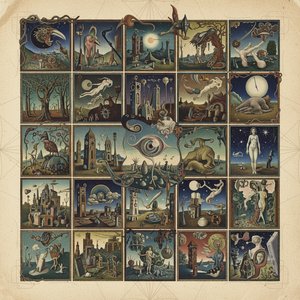
25 Remek-dela Maksa Ernsta: Surrealistička Vizija za Vaš Dom | OriginalUniqueArt
Istražite 25 remek-dela Maksa Ernsta, ikona surrealizma. Otkrijte priče iza apstraktnih slika, inovativnih tehnika i psiholoških vizija ovog nemačkog umetnika. Kupite reprodukcije vrhunskog kvaliteta za dekoraciju enterijera na OriginalUniqueArt.com!