Pregledaj u prostoru
 Podeli
 Podeli
 Detalji
 Vodič
Vodič

 Preuzmi sliku
 Slični predmeti
 Rendgenski snimak
 Automatska prezentacija
 Statistika
Kaglo II


 Pročitaj više
Umetničko delo prikazano na ovoj stranici zaštićeno je autorskim pravima, što znači da zakonski nismo u mogućnosti da kreiramo niti prodajemo identičnu reprodukciju. Ova zaštita se sprovodi u skladu sa međunarodnim sporazumima kao što su Bernska konvencija i nacionalnim zakonima, uključujući i one koji su definisani u Američki zakon o autorskom pravu – Naslov 17.
Ovaj metod je u potpunosti usklađen sa regulativama o autorskim pravima jer ne podrazumeva kopiranje ili dupliranje zaštićenih umetničkih dela. Umesto toga, reč je o kreativnoj reinterpretaciji – novom slikarskom delu koje je inspirisano originalom, ali nije identično njemu.
Giclee štampa / Umetnički otisak
Giclée štampa ili print na platnu muzejskog kvaliteta uz brzu izradu i raznovrsne opcije završne obrade. ( Naručite ručno oslikano reprodukciju Pređi na prodaju digitalnih slika)




P118B дин10

P118H дин10

P118W дин10

P438Z дин10

P508JH дин12

P508YH дин12

P805H дин10

P805Z дин10

P919BZ дин10

P919G дин10

P919XJ дин10

P959ZH дин10

P968JZ дин12

W106C дин8

W218G дин10

W218JH дин8

W218Y дин10

W307PJ дин10

W316G дин10

W316PJ дин8

W316Y дин10

W398PJ дин8

W4111J дин10

W500HY дин15

W500JH дин15

W692G дин12

W849H дин8

W940BG дин15

W953PJ дин8




Izaberite jednu od naših unapred definisanih veličina koje odgovaraju originalnim proporcijama umetničkog dela.

Unesite širinu i visinu koja vam je potrebna, kako bi se uklopili u vaš ram ili na vaš zid. Štampa se može samo iseći, nikada ne može biti veća od originalne slike, stoga format sa drugačijim proporcijama gubi deo slike. Poslaćemo vam digitalni prikaz radi potvrde pre nego što započnemo štampu. Slika prikazana na ovoj stranici ne pokazuje stvarni rez — to pokazuje samo digitalni prikaz.
Dostava širom sveta () za 2 nedelje umesto uobičajenih 4/5 nedelja. (23 октобар)

Besplatna ekspresna dostava širom sveta

Visokokvalitetno laneno platno

Sveobuhvatno osiguranje transporta

Garancija povraćaja carine i uvoznih dažbina

Garancija vernosti boja i autentičnosti pri reprodukciji

Politika povraćaja u roku od 100 dana (samo u slučaju nedostataka)

Garancija povrata 100% novca

Popust pri većoj količini
 Opcija sa staklom dostupna je samo za dimenzije manje od 110 cm

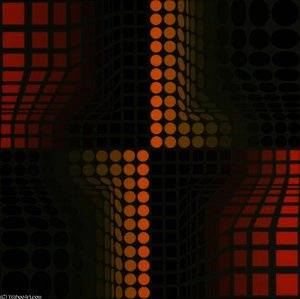
Kaglo II
Giclee štampa / Umetnički otisak
Veličina reprodukcije
-


Ukupna cena
дин 8227
A Symphony of Circles: The Pulsating Vision of Kaglo II
To stand before Victor Vasarely’s Kaglo II is to enter a realm where the boundaries between the static and the kinetic dissolve into a rhythmic dance of light and color. Created in 1986, this masterful print serves as a profound testament to the enduring power of geometric abstraction. At first glance, the eye is drawn to a central, commanding red sphere, which acts as the sun within a private cosmos. Surrounding this core is an intricate constellation of smaller circles, rendered in a vibrant palette of blue, green, orange, and yellow. This arrangement does not merely sit upon the surface; it breathes. Through the meticulous application of Op Art principles, Vasarely orchestrates a visual symphony that challenges our very understanding of depth and stability, inviting the viewer into an active dialogue with the canvas.
The magic of Kaglo II lies in its ability to transform passive observation into an immersive sensory experience. Vasarely, often revered as the "grandfather" of the Op Art movement, was a pioneer who sought to engineer experiences rather than simply paint images. In this work, he utilizes a technique characteristic of kinetic art, where the interplay of contrasting colors and precise geometric placement creates a subtle illusion of motion. As one moves before the piece, the retinal distortion causes the patterns to shift and vibrate, as if the circles are undulating like waves on an ocean surface. This deliberate manipulation of visual stimuli forces the viewer to confront the mechanics of their own perception, making the artwork a living, breathing entity that refuses to remain still.
Nature’s Geometry and the Legacy of Perception
While the forms in Kaglo II are strictly mathematical, their soul is deeply rooted in the organic rhythms of the natural world. Vasarely found profound inspiration in the textures of Gordes, France—the rugged limestone formations and the undulating patterns of waves that define the landscape. By translating these complex, organic movements into simplified geometric shapes, he bridged the gap between the wild unpredictability of nature and the structured precision of human intellect. This translation creates a sense of harmony that is both intellectually stimulating and emotionally soothing, making it an ideal centerpiece for those seeking to bring a sense of dynamic balance to a modern interior.
For the discerning collector or interior designer, Kaglo II offers more than mere decoration; it offers a portal into a mid-century revolution. The piece carries the weight of history, echoing the functionalist energy of the Bauhaus movement and the radical shifts in 20th-century aesthetics. It is a work that demands attention, acting as a focal point that can energize a minimalist room or add a layer of sophisticated complexity to a contemporary gallery space. To possess a reproduction of such a piece is to hold a fragment of art history—a piece that continues to pulse with the same vibrant energy that Vasarely first captured decades ago, reminding us all that even in the most rigid shapes, there is infinite movement and life.
Pitanja i odgovori
Koliko je izražen kontrast u delu „Kaglo II”, Viktor Vasereli?
Svetlo-tamni kontrast dela "Kaglo II" zabeležen je kao Gentle. Kontrast opisuje koliko se snažno razlikuju svetle i tamne površine.
Koji umetnički pravac predstavlja „Kaglo II”, Viktor Vasereli?
„Kaglo II”, Viktor Vasereli pripada pravcu Op Art. Ovaj pravac pruža stilski kontekst dela.
Kada je "Kaglo II" nastalo i kojem umetničkom pravcu pripada?
„Kaglo II”, Viktor Vasereli je datirano 1986 i pripada pravcu Op Art.
Biografija umetnika
Виктор Васарели: Мајстор оптичких илузија и отац оп-арта
Рођен као Карољ Вашархељи у Печу, тада у Аустроугарској (а сада у Хрватској), 1906. године, Виктор Васарели је био сликар који је револуционисао свет уметности својим иновативним приступима геометрији и перцепцији. Иако је првобитно студирао медицину на Универзитету Еђвш Лоранд у Будимпешти, Васарели је брзо увидео да га привлачи моћ визуелне изражавања. Одустајући од медицинске каријере, посветио се сликарству и уписао Подолини-Волкман академију, чиме је означио почетак животног пута посвећеног истраживању фундаменталних принципа који управљају перцепцијом и обликом. Кључни тренутак у његовом развоју био је упис у радионицу Сандора Бортњика – Мyљех, школе дубоко под утицајем Баухаус покрета. Овде је Васарели усвојио принципе функционалног дизајна и геометријске апстракције, који су касније цветали у његовом препознатљивом стилу.
Од ране апстракције до зоре оп-арта
Крај осамдесетих и почетак деведесетих година двадесетог века били су сведоци Васарелијеве постепене дистанце од репрезентативне уметности, како би се дубље посветио свету геометријске апстракције. Радови као што су "Плава студија" и "Зелена студија", настали 1929. године, оличавају овај прелазак – свесни одрицање од наративног садржаја у корист чистих облика и односа боја. Иако је био под утицајем мајстора као што су Пит Мондријан и Казимир Маљевић, Васарели није желео само да их имитира. Тражио је начин да надмаши статичне композиције својих претходника, тежећи динамици која би активно ангажовала перцепцију посматрача. Овај траг га је одвео у Париз 1930. године, где се етаблирао као графички дизајнер и рекламни асистент, усвршавајући своје вештине док је наставио да развија своју јединствену уметничку визију.
Систематска илузија: Дефинисање покрета
Шездесетих година двадесетог века, Виктор Васарели се потпуно етаблирао као водећа фигура у развојном оп-арт покрету. За разлику од многих уметника који су се ослањали на интуицију и спонтану изражаваност, Васарели је свом раду приступио са посебно систематском методологијом. Користио је мреже и математичке принципе да генерише обрасце који стварају моћне оптичке илузије – визуелне вибрације, вртложуће ефекте и осећај дубине где физички није било ништа такво. Није реч о превари; него о откривању уграђене динамике саме перцепције. Верујући у репродуковање и масовну привлачност, тежио је да демократизује уметност чинећи је доступном изван галерија и музеја. Његов рад је изазивао посматраче да посумњају у сопствено визуелно искуство, принуђујући их да активно учествују у стварању значења. Овај намерни ангажман са перцепцијом одвојио је оп-арт и учврстио Васарелијево место на његовом врху.
Изван платно: Кинетичка експорација и трајно наслеђе
Васарелијева уметничка истраживања нису се зауставила на статичним илузијама. Све више је кренуо у кинетичку уметност, стварајући радове који укључују стварно кретање или делују као да се крећу кроз пажљиво осмишљене визуелне ефекте. "Жорж Помпиду" (1976), велико кинетичко дело инсталирано у Центру Помпиду у Паризу, сведочи о овој амбицији – интеграцији уметности са архитектуром и градским дизајном на велику скалу. Такође је показао изузетну иновацију применом својих дизајна на комерцијалне производе, најпознатије кроз сарадњу са Rosenthal порцеланом, што је резултирало познатом серијом посуђа "Suomi". Ова спремност да укине границе између фине уметности и функционалних објеката додатно је нагласила његову веру у потенцијал уметности да прошири свакодневни живот. Етаблирање Фондације Васарели у Аксу-ан-Провансу осигурало је чување и промоцију његовог опсежног дела, док је изузетан догађај – укључивање серigraphs на француско-совјетској летелици Salyut 7, 1982. године – симболизовао глобално признање његове уметности и њену везу са ширим човековим подухватима истраживања.
Историјски значај
Васарелијев допринос историји уметности је вишеструки. Прешао је изван традиционалних техника сликања да би створио радове који активно ангажују перцепцију посматрача. Његов систематски приступ изазвао је конвенционална схватања уметничке креативности и отворио пут за рачунарски генерисану уметност и дигитални дизајн. Прихватајући репродуковање и комерцијалне примене, Васарели је избрисао границе између фине уметности и популарне културе, остављајући трајан утисак на обе. Није стварао само естетски пријатне објекте; спроводио је визуелне експерименте који су откривали фундаменталне истине о томе како видимо свет.

Viktor Vasereli
1906 - 1997 , Хрватска
Brzi pregled
- Datum Rođenja: 9. april 1906.
- Datum Smrti: 15. mart 1997.
- Mesto Rođenja: Peč, Hrvatska
- Nacionalnost: Mađarsko-francuska
- Pokreti/Umetnici Pod Uticajem:
- Grafički dizajn
- Enterijer
- Puno Ime: Viktor Vasareli
- Umetnički Pokret: Op Art, Kinetička umetnost
- Uticajni Umetnici:
- Piet Mondrian
- Kazimir Malevič
- Značajna Dela:
- Plava studija
- Zebra
- Suomi
Srodni članci
Mastering Illusion: The Vibrant World of Victor Vasarely's Op Art and the Geometry of Perception
Explore the mesmerizing world of Victor Vasarely. Discover how his Bauhaus-inspired Op Art masters the science of perception through geometric abstraction and vibrant color. A sophisticated guide for discerning art collectors seeking to understand the legacy of optical illusion.

Top 10 dela geometrijske apstrakcije koje morate videti | OriginalUniqueArt.com
Istražite 10 remek-dela geometrijske apstrakcije – Mondrian, Malevič i Kandinski. Otkrijte priče iza ovih ikoničnih slika i pronađite inspiraciju za dekoraciju enterijera sa OriginalUniqueArt.com! Reprodukcije vrhunskog kvaliteta.

Op Art Unveiled: The Science of Optical Illusion and Kinetic Movement in Geometric Abstraction
Explore the science of Op Art through the lens of masters like Victor Vasarely. Discover how geometric abstraction uses optical illusions to create movement and delve into the neuroaesthetics of perception with our expert art history guide.

Victor Vasarely: Pioneering Op Art & Democratizing Visual Experience
Explore the revolutionary world of Victor Vasarely, father of Op Art. Discover his geometric masterpieces, artistic system, & lasting impact on modern design. A guide for discerning art collectors.

Neo-Abstract Art: The High-Impact Evolution of Modern Visual Energy and Geometric Sophistication
Discover the power of Neo-Abstract art. Explore how bold geometric forms and high-impact visual energy are redefining modern design. Learn to curate sophisticated, high-energy spaces with the latest trends in contemporary abstraction and structural color.