Pređi na štampu
 Pročitaj više







































 Za umetnička dela ili reprodukcije čija je bilo koja strana veća od 105 cm (približno 41 inč), okvir će biti isporučen u obliku rastavljenog seta za sklapanje. Ovaj metod osigurava bezbednu dostavu i sprečava oštećenja tokom transporta.


Restaurant – A Moment Frozen in Edo Japan’s Vibrant Soul
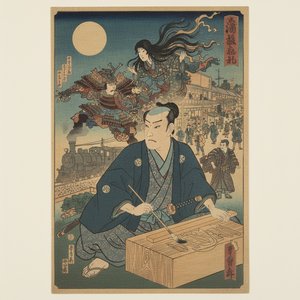
Tsukioka Yoshitoshi's “Restaurant” transcends mere depiction; it’s a portal into the bustling heart of 19th-century Tokyo, capturing an essence of daily life that continues to resonate with collectors and art enthusiasts alike. This remarkable woodblock print isn’t concerned with grand narratives or heroic figures—rather, it presents us with a deceptively simple tableau: two elegantly dressed women pausing before a restaurant doorway, bathed in the warm glow emanating from within. Yoshitoshi's genius lies in his ability to distill this commonplace scene into an unforgettable image, skillfully blending meticulous architectural rendering with fluid representations of human form.The Artistry Behind the Print – Technique and Style
Yoshitoshi’s mastery of *ukiyo-e* technique is palpable throughout “Restaurant.” The print exemplifies the culmination of centuries of artistic tradition, inheriting the legacy of Utagawa Kuniyoshi, one of the final titans of this influential art form. Each detail—from the subtle gradations of color achieved through painstaking woodblock carving and printing to the precise lines delineating clothing and building facades—demonstrates an unparalleled level of precision. The artist’s masterful use of perspective draws the viewer's eye inwards, guiding it towards the inviting interior space and fostering a feeling of intimacy despite the expansive composition. Yoshitoshi deliberately departed from some bolder stylistic trends of his predecessors, favoring instead a refined aesthetic characterized by sophisticated color palettes and an understated elegance.A Window into Edo Society – Context and Symbolism
Restaurants in Edo Japan held profound social significance; they were more than just places to consume food—they served as hubs for conversation, entertainment, and the exchange of ideas. Yoshitoshi’s depiction captures this dynamic atmosphere perfectly, portraying women engaged in animated discussion as they contemplate their surroundings. The red inscription adorning the print – a convention common in *ukiyo-e* prints – typically signifies either the title or publisher's mark, adding to the artwork’s authenticity and historical context. Symbolically, the restaurant itself represents prosperity, social connection, and perhaps even contemplation amidst the frenetic pace of urban life—themes that align beautifully with Yoshitoshi’s broader artistic vision.Emotional Resonance – Why “Restaurant” Remains Captivating Today
“Restaurant” possesses an enduring emotional power that transcends time. Its quiet dignity contrasts sharply with the energetic backdrop, prompting viewers to consider moments of stillness and observation within a dynamic world. The print's serene beauty speaks to our innate desire for connection and contemplation—qualities that continue to inspire artists and designers today. A high-quality reproduction allows us to appreciate Yoshitoshi’s artistic brilliance and immerse ourselves in the spirit of Edo Japan, preserving a treasured fragment of cultural heritage.- Explore exquisite detail & timeless beauty
- Authentic 19th-century art, meticulously reproduced
Pitanja i odgovori
Postoji li informativni list o delu „Ресторан”, autor Josihito Cukioka namenjen studentima?
Vodič za "Ресторан" je stranica Vodič za učenike za ovo umetničko delo – štampani informativni list koji prikazuje delo sa njegovim opisom, podacima o autorstvu i identifikacionom tabelom (umetnik, datumi, tehnika, originalna veličina, kolekcija).
Sa kojim osećanjem je povezano "Ресторан"?
„Ресторан“ je povezano sa Mirno i spokojno osećajem. Emocionalni ton opisuje utisak koji delo ostavlja.
Da li je dostupno preuzimanje za "Ресторан"?
„Ресторан”, autor Josihito Cukioka možete preuzeti na stranici za Preuzimanje digitalnog prikaza ovog dela, kao preuzimanje digitalne slike visoke rezolucije.
 Pregledaj u prostoru
 Pošalji
 Podeli
 Detalji o delu
 Vodič
Vodič

 Preuzmi
 Slični predmeti
 Rendgenski snimak
 Automatska prezentacija
 Q&A
Q&A Statistika