
 Pregledaj u prostoru

 Pošalji
 Podeli
 Detalji o delu
 Vodič


 Preuzmi
 Slični predmeti
 Rendgenski snimak
 Automatska prezentacija
 Pitanja i odgovori
 Statistika
La Bella

- 89.0 x 76.0 cm


 Pročitaj više
Giclee štampa / Umetnički otisak
Giclée štampa ili print na platnu muzejskog kvaliteta uz brzu izradu i raznovrsne opcije završne obrade. ( Kupite ručno oslikano delo Pređi na digitalnu sliku)




P118B дин10

P118H дин10

P118W дин10

P438Z дин10

P508JH дин12

P508YH дин12

P805H дин10

P805Z дин10

P919BZ дин10

P919G дин10

P919XJ дин10

P959ZH дин10

P968JZ дин12

W106C дин8

W218G дин10

W218JH дин8

W218Y дин10

W307PJ дин10

W316G дин10

W316PJ дин8

W316Y дин10

W398PJ дин8

W4111J дин10

W500HY дин15

W500JH дин15

W692G дин12

W849H дин8

W940BG дин15

W953PJ дин8




Izaberite jednu od naših unapred definisanih veličina koje odgovaraju originalnim proporcijama umetničkog dela.

Unesite željenu širinu i visinu kako bi se štampa uklopila u vaš ram ili zid. Štampu je moguće samo iseći, ali nikada povećati iznad dimenzija originalne slike, stoga format sa drugačijim proporcijama uzrokuje gubitak dela slike. Pre početka štampe, poslaćemo vam digitalni prikaz radi potvrde. Slika prikazana na ovoj stranici ne predstavlja stvarni isrez — to pokazuje samo digitalni prikaz.
Dostava širom sveta () za 2 nedelje umesto uobičajenih 4/5 nedelja. (17 новембар)

Besplatna ekspresna dostava širom sveta

Visokokvalitetno laneno platno

Potpuno osiguranje transporta

Garancija povraćaja carine i uvoznih dažbina

Garancija vernosti boja

Politika povraćaja u roku od 100 dana (samo u slučaju nedostataka)

Garancija povrata 100% novca

Popust na više proizvoda
 Opcija sa staklom dostupna je samo za dimenzije manje od 110 cm

La Bella
Giclee štampa / Umetnički otisak
Dimenzije reprodukcije
-


Ukupna cena
дин 8451
A Renaissance Reverie: Tiziano Vecellio's "La Bella"
- Titian’s “La Bella,” painted in 1536, is more than just a portrait; it’s an immersion into the heart of the Venetian Renaissance. Created by the titan himself, Titian Vecellio, this artwork embodies the era's fascination with beauty, luxury, and the human form – qualities that continue to resonate powerfully today. The painting’s immediate impact lies in its masterful use of color, a hallmark of Titian’s genius. The vibrant blue of her dress, juxtaposed against the rich red of her sleeves, creates a visual dynamism that draws the eye and establishes a sense of opulent grace. This wasn't merely about depicting a woman; it was about capturing an ideal – a fleeting moment of exquisite beauty frozen in time.
- The subject’s identity remains delightfully enigmatic. While believed to be an idealized representation rather than a specific portrait, the woman’s gaze—direct and engaging—invites the viewer into her world. Her carefully arranged hair, pulled back in a classic bun, adds to the sense of composure and refinement. The subtle suggestion of a smile or frown further enhances the painting's allure, prompting contemplation about the emotions beneath the surface.
Technique and Materiality: A Masterclass in Oil Painting
- Titian’s skill as an oil painter is immediately apparent. He employed a ‘cursive brushstroke,’ a technique favored during this period, which lends the painting a fluidity and movement that belies its static subject matter. Notice how he layered the colors – building up glazes to achieve luminous effects, particularly in the fabrics and jewels. The use of gold leaf, subtly incorporated into the background and ornamentation, adds an extra layer of richness and reflects Titian’s understanding of light and shadow.
- The composition itself is carefully considered. The placement of the woman within the scene, flanked by indistinct figures, creates a sense of depth and draws attention to her as the central focus. The background, though less detailed, serves not as an afterthought but as an integral part of the overall narrative – suggesting a courtly setting, perhaps a celebration or a private gathering.
Historical Context: Venice at the Height of its Power
- "La Bella" was created during a pivotal moment in Venetian history. The city was experiencing a golden age—a flourishing center for trade, art, and culture. Titian, as one of the leading artists of the time, benefited immensely from this environment, receiving commissions from wealthy patrons – including the Doge of Venice himself – and contributing significantly to the city’s artistic legacy. The painting reflects the Renaissance emphasis on humanism and classical ideals, while simultaneously embracing Venetian traditions of color and sensuality.
- Titian's experimentation with looser brushwork and a greater focus on capturing the essence of his subjects marked a departure from earlier, more rigidly realistic styles. This shift was part of a broader artistic movement that sought to express emotion and personality through art – a characteristic that defines much of Titian’s oeuvre.
Symbolism and Legacy: An Enduring Icon
- Beyond its technical brilliance, “La Bella” is rich in symbolism. The pearls and jewels adorning the woman's attire represent wealth, status, and beauty – qualities highly valued during the Renaissance. Her pose, with a direct gaze, suggests confidence and self-possession. The painting’s enduring appeal lies not only in its aesthetic beauty but also in its ability to evoke a sense of timeless elegance and mystery.
- Titian's influence on subsequent generations of artists is undeniable. His mastery of color and composition served as an inspiration for painters throughout Europe, and “La Bella” remains a prime example of his skill. A hand-painted reproduction offers the opportunity to experience this masterpiece firsthand, bringing a touch of Renaissance grandeur into any setting.
Pitanja i odgovori
Kako je izgrađena koloristička kompozicija dela „La Bella”, autor Тицијан Вечели?
Koloristička kompozicija dela „La Bella”, autor Тицијан Вечели spaja Balanced kontrast sa Balanced Harmony harmonijom.
O kojoj vrsti umetničkog dela je reč kod „La Bella”, autor Тицијан Вечели?
U katalogu je delo „La Bella”, autor Тицијан Вечели klasifikovano kao WallArt. Ova kategorija pomaže u pronalaženju sličnih radova.
Koja dimenzija i orijentacija štampe se preporučuju za „La Bella”, autor Тицијан Вечели?
Preporučuje se štampa dela „La Bella”, autor Тицијан Вечели u veličini Large i Portrait orijentaciji.
Biografija umetnika
Pintar svetlosti i senke
U krševitim, planinskim predelima Pieve di Cadore, dečak po imenu Tiziano Vecellio započeo je život koji će na kraju izmeniti sam jezik ulja na platnu. Rođen oko 1490. godine, bio je sin Gregoria Vecellia, čoveka iz vojnih redova, i žene po imenu Lucija. Porodica je živela u regionu gde su dramatični vrhovi venecijanskih Alpi bacali duge, promenljive senke preko zemlje, pejzaž koji je možda šaputao tajne svetlosti mladom umu. Prepoznavši iskru talenta u svojim sinovima, porodica se okrenula ka velikom gradu Veneciji, organizujući mladog Tiziana i njegovog brata Francesca da uđu u radionice majstora. Ovaj prelazak iz tišine planina u užurbane, mirisom soli ispunjene kanale Venecije promenio je sve.
Njegove rane godine provedene su upijajući atmosferu grada koji je pulsirao trgovinom i bojom. Prvo je savladao svoj zanat pod Sebastiano Zuccatom, mozaikistom, pre nego što je prešao u krugove Gentile Bellinija i svog brata Giovannija. Ipak, upravo vreme provedeno uz Giorgionea je ono što je zaista definisalo njegov put. Zajedno su radili na spoljašnjim freskama za Fondaco dei Tedeschi, prometnu trgovačku postu za nemačke trgovce. U tim ranim danima, njegov četkica je težila određenom lirizmu, načinu da uhvati sam vazduh kroz suptilne tonove i nežan, poetski dodir.
Evolucija venecijanskog stila
Kako su godine prolazile, meke, eterične kvalitete njegovog mladalačkog doba ustupili su mesto nečem mnogo snažnijem i dramatičnijem. Odmakao se od tišine svog ranog obuke kako bi prihvatio odvažniji pristup boji. Njegov potez četkicom postao je alat neizmerne moći, prelazeći sa glatkih, izmešanih površina na labave, ekspresivne tragove koji su kao da pulsiraju životom. Naučio je da slaže tanke slojeve pigmenta preko osnovnih slika, tehniku koja mu je omogućila da postigne luminoznost koju je malo ko mogao da replicira. To nije bilo samo prikazivanje subjekta, već hvatanje težine baršuna, sjaja kože i same atmosfere koja okružuje figuru.
Njegovi subjekti bili su raznoliki kao ljudi koji su šetali ulicama Venecije. Postao je majstor portreta, hvatajući psihološku dubinu svojih modela, od fizičke sličnosti čoveka do skrivene karaktere unutar njega. Njegove mitološke scene i religiozne kompozicije bili su prožeti senzualnošću i tenzijom koja je privlačila gledaoce. U delima kao što je Venus of Urbino, on je redefinisao način na koji je ljudska figura bila predstavljena, koristeći boju da stvori osećaj prisustva koji je delovao gotovo taktilno. Bio je čovek koji je razumeo da svetlost ne pada samo na predmet; ona sa njim interaktuje, stvarajući dramu senke i sjaja.
Život veličine i uticaja
Slava koju je stekao Ticin na kraju je stigla do najviših dvorova Evrope. Postao je omiljen među moćnicima, služeći kao slikar caru Karolu V, kralju Filipu II od Španije i papi Pavlu III. Ovakvatno visok nivo pokroviteljstva omogućio mu je da radi na monumentalnom nivou, stvarajući masivna platna koja su ispunjavala sale palata i oltare velikih crkava. Posedovao je retku diplomatsku finu odlavnost, prilagođavajući svoj stil ukusima različitih kraljevskih dvorova, a da pritom nikada ne izgubi prepoznatljiv glas koji ga je učinio titanom svog doba.
Kada je preminuo u Veneciji 1576. godine, ostavio je za sobom nasleđe koje će odjekivati kroz vekove. Njegov uticaj osetili su oni koji su došli posle njega, od težih poteza četkice Rubensa do dramatične svetlosti Rembrandta i odvažnih poteza Delacroix-a. Delovao je kao most između visoke renesanse i nadolazeće barokne ere, dokazujući da boja može biti jednako ekspresivna kao i linija. Njegine slike ostaju u najvećim svetskim kolekcijama, od Pradoga u Madridu do Nacionalne galerije u Londonu, služeći kao trajni zapis čoveka koji je ovladao umetnošću gledanja.

Тицијан Вечели
1490 - 1576 , Италија
Osnovne informacije
- Artistic Movement Or Style: Venecijanski renesans
- Artists Or Movements Influenced By This Artist:
- Peter Paul Rubens
- Rembrandt
- Eugène Delacroix
- Édouard Manet
- Artists Who Influenced This Artist:
- Sebastiano Zuccato
- Gentile Bellini
- Giovanni Bellini
- Giorgione
- Date Of Birth: 1490
- Date Of Death: 1576
- Full Name: Tiziano Vecellio
- Nationality: Italijan
- Notable Artworks:
- Čovek sa štefactom
- Obistav Elizavete i Marije
- Venera iz Urbina
- Dijana i Aktajon
- Seoski koncert
- Place Of Birth: Pieve di Cadore, Italija
Povezani članci
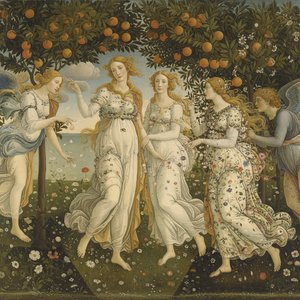
The Ethereal Beauty of Botticelli: A Journey Through the Grace and Symbolism of Italian Renaissance Masterpieces
Explore the ethereal beauty of Sandro Botticelli's masterpieces. Delve into the profound symbolism, mythological grace, and technical mastery that define the Italian Renaissance through an expert art-historical lens.

The Golden Light of Innovation: Exploring the Venetian Renaissance Art Movement (1430–1580)
Explore the Golden Age of Venetian art (1430–1580). Discover Giorgione, Titian & Tintoretto's techniques, the 'colorito' revolution, and lasting influence. Expert insights for collectors & enthusiasts.

Masterpieces of Color: The Top 25 Greatest Artworks by Titian
Explore 25 iconic Titian masterpieces of the Venetian Renaissance. Discover museum-quality art at OriginalUniqueArt.com.

Masterpieces of Color: The Top 25 Greatest Artworks by Titian
Explore 25 legendary Titian masterpieces of the Venetian Renaissance. Discover museum-quality art on OriginalUniqueArt.com.

Mastering Color and Light: The Timeless Brilliance of Titian's Venetian Masterpieces
Explore the luminous mastery of Titian. Discover how the Venetian master revolutionized color and light through breathtaking Renaissance techniques, from Venus Anadyomene to profound allegories, and learn to bring this timeless brilliance into your private collection.


