

 Pregledaj u prostoru
 Podeli
 Podeli
 Detalji
 Vodič
Vodič

 Preuzmi sliku
 Slični predmeti
 Rendgenski snimak
 Automatska prezentacija
 Statistika
Pigs at a Trough


 Pročitaj više
Giclee štampa / Umetnički otisak
Giclée štampa ili print na platnu muzejskog kvaliteta uz brzu izradu i raznovrsne opcije završne obrade. ( Naručite ručno oslikano reprodukciju Pređi na prodaju digitalnih slika)




P118B дин10

P118H дин10

P118W дин10

P438Z дин10

P508JH дин12

P508YH дин12

P805H дин10

P805Z дин10

P919BZ дин10

P919G дин10

P919XJ дин10

P959ZH дин10

P968JZ дин12

W106C дин8

W218G дин10

W218JH дин8

W218Y дин10

W307PJ дин10

W316G дин10

W316PJ дин8

W316Y дин10

W398PJ дин8

W4111J дин10

W500HY дин15

W500JH дин15

W692G дин12

W849H дин8

W940BG дин15

W953PJ дин8




Izaberite jednu od naših unapred definisanih veličina koje odgovaraju originalnim proporcijama umetničkog dela.

Unesite širinu i visinu koja vam je potrebna, kako bi se uklopili u vaš ram ili na vaš zid. Štampa se može samo iseći, nikada ne može biti veća od originalne slike, stoga format sa drugačijim proporcijama gubi deo slike. Poslaćemo vam digitalni prikaz radi potvrde pre nego što započnemo štampu. Slika prikazana na ovoj stranici ne pokazuje stvarni rez — to pokazuje samo digitalni prikaz.
Dostava širom sveta () za 2 nedelje umesto uobičajenih 4/5 nedelja. (25 октобар)

Besplatna ekspresna dostava širom sveta

Visokokvalitetno laneno platno

Sveobuhvatno osiguranje transporta

Garancija povraćaja carine i uvoznih dažbina

Garancija vernosti boja i autentičnosti pri reprodukciji

Politika povraćaja u roku od 100 dana (samo u slučaju nedostataka)

Garancija povrata 100% novca

Popust pri većoj količini
 Opcija sa staklom dostupna je samo za dimenzije manje od 110 cm

Pigs at a Trough
Giclee štampa / Umetnički otisak
Veličina reprodukcije
-


Ukupna cena
дин 8248
A Rustic Revelry: Thomas Rowlandson’s “Pigs at a Trough”
Thomas Rowlandson's "Pigs at a Trough," painted circa 1790, isn’t merely a depiction of farmyard animals; it’s a vibrant snapshot of Georgian England brimming with social commentary and delightfully mischievous humor. This small yet powerfully evocative work, now housed within the Yale Center for British Art, offers a glimpse into a world where satire and observation intertwined seamlessly, revealing both the pleasures and absurdities of everyday life.
Rowlandson, a master caricaturist renowned for his biting political illustrations and intimate portrayals of human folly, employed a remarkably direct technique here. The scene unfolds with an almost palpable immediacy – we’re not observing from a distance but rather immersed within the muddy chaos of the trough. His pen and ink lines are bold and confident, capturing the physicality of the pigs with remarkable accuracy; their plump bodies, bristly coats, and greedy postures practically leap off the cream-laid paper. The brown wash adds depth and texture, emphasizing the damp earth and the glistening sheen of the water. Notice how Rowlandson skillfully uses light and shadow to define each animal, creating a sense of three-dimensionality that belies the painting’s diminutive size.
A Scene Steeped in Social Observation
“Pigs at a Trough” is more than just a charming pastoral scene; it's a subtle critique of societal values. Rowlandson was known for his sharp wit and willingness to expose hypocrisy, and this painting is no exception. The image subtly alludes to the extravagance and excess prevalent in Georgian society – a stark contrast to the simple, almost primal act of foraging for food. The abundance of pigs suggests a commentary on resourcefulness and perhaps even a gentle mockery of those who indulged in unnecessary displays of wealth. It’s a reminder that beneath the veneer of refinement, there often lay a deeper current of practicality and, occasionally, a touch of desperation.
Echoes of Folklore and Myth
The image resonates with elements of folklore and myth, particularly the enduring legend of “pig-faced women.” While not explicitly depicted here, the scene evokes the story of a noblewoman cursed to appear as a pig after rejecting a beggar. This tale, popular in England and Ireland during the 18th century, speaks to anxieties about social status, beauty standards, and the consequences of arrogance. Rowlandson’s painting subtly taps into this cultural memory, suggesting a connection between earthly abundance and potential misfortune – a reminder that even the most seemingly prosperous life can be fraught with unexpected challenges.
A Timeless Appeal
“Pigs at a Trough” endures as a testament to Rowlandson’s artistic genius and his keen understanding of human nature. Its playful composition, vibrant colors, and subtle social commentary combine to create an image that is both entertaining and thought-provoking. It's a painting that invites us to pause, observe, and perhaps even question the values we hold dear. Reproductions of this delightful work continue to captivate audiences today, offering a window into a bygone era and reminding us of the enduring power of humor and satire.
Pitanja i odgovori
Da li je „Pigs at a Trough”, Томас Роландсон među traženim delima Satirical Caricature pokreta?
„Pigs at a Trough“ je zabeležen/a kao Recognized među delima Satirical Caricature pokreta u katalogu.
Kolika je zasićenost boja u delu „Pigs at a Trough”, Томас Роландсон?
Boje dela „Pigs at a Trough”, Томас Роландсон imaju Subtle Color zasićenost. Zasićenost opisuje koliko su boje jarke ili prigušene.
Postoje li dela slična delu "Pigs at a Trough"?
Radovi slični delu „Pigs at a Trough“ navedeni su na stranici Slična dela ovog umetničkog dela.
Biografija umetnika
A Life Etched in Satire: The World of Thomas Rowlandson
Born amidst the bustling streets of Old Jewry, London, on July 13th, 1756 (baptized July 23rd, 1757), Thomas Rowlandson emerged as a defining voice – and pen – of Georgian England. His life, initially shadowed by his father’s financial struggles that necessitated a move to Richmond, North Yorkshire in 1759, would ultimately blossom into an artistic career marked by unparalleled wit and incisive social commentary. Rowlandson wasn't merely documenting his era; he was holding a mirror to its follies, exaggerating its vanities, and immortalizing its characters with a uniquely satirical eye. From humble beginnings, nurtured by an uncle’s support that allowed him access to education at Dr. Barwis’ school in Soho Square, Rowlandson embarked on a path that would see him become one of the most celebrated – and controversial – caricaturists of his time. Even as a schoolboy, his innate talent manifested itself in playful sketches adorning the margins of his books, foreshadowing a career dedicated to visual storytelling with a mischievous edge.
Early Artistic Training and Influences
Rowlandson’s formal artistic training began at the Royal Academy in 1772, where he honed his skills for six years, including a period of study in Paris under Jean-Baptiste Pigalle. This exposure to continental techniques proved invaluable, laying the foundation for his distinctive style – a blend of delicate draughtsmanship and bold exaggeration. He absorbed influences from artists like Rubens and Gainsborough, whose masterful compositions instilled in him a profound understanding of visual harmony and expressive gesture. However, it was upon returning to England that Rowlandson truly found his voice. Initially attempting portraiture, he soon discovered his true calling lay not in flattering representation but in pointed satire.
The Rise of Caricature and Collaboration
The burgeoning popularity of caricature during the Georgian period provided Rowlandson with fertile ground for experimentation and innovation. Recognizing the potential for social critique through visual humor, he swiftly abandoned portraiture in favor of satirical prints—a decision that would propel him to artistic prominence. His collaboration with Rudolph Ackermann proved pivotal, yielding iconic works like *The Schoolmaster’s Tour* (1809) and *Tour of Dr. Syntax in Search of the Picturesque* (1812). These series captivated audiences with their imaginative narratives and Rowlandson’s masterful illustrations—a testament to his technical brilliance and artistic flair.
A Legacy of Satirical Observation
Rowlandson's impact extends far beyond the immediate popularity of his works during his lifetime. He left behind an extensive body of art – over 381 artworks are cataloged at OriginalUniqueArt.com alone – that provides a vivid and often unflattering portrait of Georgian society. His caricatures weren’t merely about ridicule; they were astute observations on the political climate, social customs, and human foibles of his time. He fearlessly lampooned figures like the Duchess of Devonshire, William Pitt the Younger, and Napoleon Bonaparte, exposing their vulnerabilities and challenging established power structures. Beyond the overtly satirical, Rowlandson also produced a wealth of illustrations for novels and topographical works, demonstrating his versatility as an artist. His enduring legacy resides in his ability to capture both the grandeur of landscapes and the absurdity of human behavior—a skill that continues to inspire artists today.
Preserving Rowlandson’s Vision
Today, Rowlandson's work is preserved in numerous museum collections worldwide, including those accessible through platforms like OriginalUniqueArt.com, which offers an extensive catalog of his creations alongside works by contemporaries such as Samuel Henry Gordon Alken and William Hogarth. Pieces like *Hengar House the Seat of Matthew Mitchell Esq., Cornwall* (1812) and *Glorious Defeat of the Dutch Navy* (1797) stand as testaments to his artistic skill and historical significance. Exploring these collections allows us to appreciate not only Rowlandson’s technical mastery but also the depth of his social insight—a reminder that laughter can be a powerful tool for critique, and that even in the most frivolous of subjects, there is often a profound truth waiting to be revealed.

Томас Роландсон
1756 - 1827 , Уједињено Краљевство
Brzi pregled
- Artistic Movement Or Style: Satira i karikatura
- Artists Who Influenced This Artist:
- Žan Baptista Pigalle
- Džejms Gilrej
- Date Of Birth: 1756-07-13
- Date Of Death: 1827-04-21
- Full Name: Thomas Rowlandson
- Nationality: Britanski
- Notable Artworks:
- Tur profesor Džordža Sintksa
- Gloriozni poraz Holandskog flota
- Place Of Birth: London, UK
Srodni članci
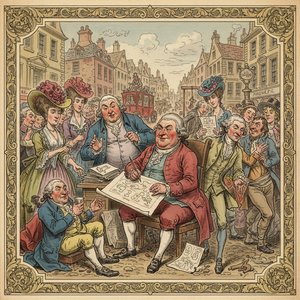
Thomas Rowlandson: Satire, Society & the Art of Caricature in Georgian England
Explore the witty world of Thomas Rowlandson, master Georgian caricaturist! Discover his satirical prints & insightful social commentary on 18th-century England. Learn about his life, techniques, and enduring influence.

The Enduring Legacy of Fine Art Prints: Technique, History & Aesthetic Impact
Explore the rich history & techniques of fine art prints. Discover investment potential, assess authenticity, and learn how to preserve your collection with expert guidance. Trusted insights for discerning collectors.

Giclée Prints: Archival Quality & Aesthetic Nuances for the Discerning Collector
Explore the world of giclée prints with OriginalUniqueArt. Learn about archival quality, aesthetic nuances & investment potential. Expert guidance for discerning art collectors seeking museum-quality reproductions and lasting value.
The Enduring Legacy of Printmaking: Techniques, Themes & Artistic Innovation Across Centuries
Explore the rich history of printmaking with OriginalUniqueArt. Discover techniques from intaglio to lithography, learn about collecting valuable prints & find museum-quality reproductions. Expert insights for art enthusiasts and collectors.

Echoes of Time: Exploring the Enduring Appeal & Historical Context of Vintage Art Prints
Explore the captivating world of vintage art prints! Discover their history, collecting tips & enduring appeal. Expert insights on chromolithography and building a legacy collection with OriginalUniqueArt.