

 Pregledaj u prostoru
 Podeli
 Podeli
 Detalji
 Vodič
Vodič

 Preuzmi sliku
 Slični predmeti
 Rendgenski snimak
 Automatska prezentacija
 Statistika
The Diaries


 Pročitaj više
Umetničko delo prikazano na ovoj stranici zaštićeno je autorskim pravima, što znači da zakonski nismo u mogućnosti da kreiramo niti prodajemo identičnu reprodukciju. Ova zaštita se sprovodi u skladu sa međunarodnim sporazumima kao što su Bernska konvencija i nacionalnim zakonima, uključujući i one koji su definisani u Američki zakon o autorskom pravu – Naslov 17.
Kao poštovana i legalna alternativa, nudimo prilagođene, ručno oslikane umetničke radove inspirisane originalom. Naši stručni i profesionalni umetnici pažljivo proučavaju stil, ambijent i umetničku suštinu originala kako bi kreirali novo, unikatno delo koje budi istu emociju – ostajući pritom potpuno autentično stvaranje.
Ovaj metod je u potpunosti usklađen sa regulativama o autorskim pravima jer ne podrazumeva kopiranje ili dupliranje zaštićenih umetničkih dela. Umesto toga, reč je o kreativnoj reinterpretaciji – novom slikarskom delu koje je inspirisano originalom, ali nije identično njemu.
Ručno rađena uljana reprodukcija
Ručno oslikano uljanim bojama na platnu u dimenzijama i okviru po vašem izboru, izrađeno po porudžbini od strane naših umetnika. ( Pređi na prodaju štampanih primeraka Pređi na prodaju digitalnih slika)




P118B дин10

P118H дин10

P118W дин10

P438Z дин10

P508JH дин12

P508YH дин12

P805H дин10

P805Z дин10

P919BZ дин10

P919G дин10

P919XJ дин10

P959ZH дин10

P968JZ дин12

W106C дин8

W218G дин10

W218JH дин8

W218Y дин10

W307PJ дин10

W316G дин10

W316PJ дин8

W316Y дин10

W398PJ дин8

W4111J дин10

W500HY дин15

W500JH дин15

W692G дин12

W849H дин8

W940BG дин15

W953PJ дин8




Izaberite jednu od naših unapred definisanih veličina koje odgovaraju originalnim proporcijama umetničkog dela.

Unesite širinu i visinu koja vam je potrebna, kako bi se uklopili u vaš ram ili zid. Pošto je ovo ručno oslikano delo, umetnik može naslikati malo više prostora oko slike ili malo skratiti ivice za dimenzije drugačijeg oblika — izbor je na vama. Pre početka rada, poslaćemo vam digitalni prikaz radi potvrde. Slika prikazana na ovoj stranici ne predstavlja konačan rezultat — samo digitalni prikaz pokazuje stvarnu sliku.
Nakon narudžbine, tim OriginalUniqueArt.com će klijentu putem e-pošte poslati uputstva i dostaviti prikaz predloženog rešenja
Svetska isporuka () za 3/4 nedelje umesto uobičajenih 5 nedelja. (22 октобар). Bez kompromisa po pitanju kvaliteta.

Besplatna ekspresna dostava širom sveta

Visokokvalitetno laneno platno

Sveobuhvatno osiguranje transporta

Garancija povraćaja carine i uvoznih dažbina

Garancija vernosti boja i autentičnosti pri reprodukciji

Politika povraćaja u roku od 100 dana (samo u slučaju nedostataka)

Garancija povrata 100% novca

Popust pri većoj količini
 Opcija sa staklom dostupna je samo za dimenzije manje od 110 cm

The Diaries
Tehnika izrade reprodukcije
Veličina reprodukcije
-


Ukupna cena
дин 30749
The Diaries: An Exploration of Form and Ideology
Peter Friedl’s *The Diaries* (2015) presents a deceptively simple image—a bookshelf crammed with books—yet it embodies a profound conceptual engagement with art history and the broader anxieties surrounding representation. Born in Munich, Austria, in 1967, Friedl is recognized for his ability to dissect formal conventions while simultaneously interrogating their ideological underpinnings. This artwork exemplifies his signature approach: layering hollowed-out forms against one another to disrupt established hierarchies of power and offering a counterpoint to the modernist project’s promises.Conceptual Framework & Historical Context
Friedl draws inspiration from Mieke Bal's assertion that “nothing goes without saying,” prioritizing visual literacy as a crucial element in interpreting art. His work actively resists passive reception, prompting viewers to confront contradictions inherent within artistic endeavors and historical narratives. Specifically referencing the US Department of Housing and Urban Development’s American Homelessness Prevention and Rapid Re-Housing Program—a project designed to combat homelessness through financial assistance—Friedl utilizes the architectural scale model as a symbolic device. This model isn't merely a depiction of space; it represents a political stance, advocating for a future shaped by confronting societal inequities. The series underscores Friedl’s belief that art can serve as a catalyst for critical reflection and social change.Stylistic Characteristics & Technique
The painting itself is characterized by its deliberate austerity. Presented without contextual framing—a conscious decision to isolate the bookshelf—the sculpture invites contemplation on the history of modernism. Friedl employs a technique rooted in meticulous observation, capturing the textures and variations of light across the books’ surfaces. The arrangement isn't random; it reflects Friedl’s interest in presenting disparate concepts within a unified visual form. This juxtaposition highlights the tension between seemingly incompatible ideas—a core element of Friedl’s artistic philosophy. The use of muted colors contributes to an atmosphere of quiet contemplation, mirroring the contemplative mood conveyed by the subject matter itself.Symbolism & Emotional Resonance
The bookshelf serves as more than just a visual motif; it symbolizes knowledge, memory, and the accumulation of experience—themes central to Friedl’s oeuvre. The books themselves represent diverse voices and perspectives, reflecting the complexities of human history and intellectual discourse. By confronting viewers with this densely populated image, Friedl encourages them to engage in a dialogue about representation and its role in shaping our understanding of the world. Ultimately, *The Diaries* resonates with an emotional depth that transcends mere visual aesthetics—it speaks to the enduring human desire for connection and meaning amidst the uncertainties of contemporary life.Concluding Remarks
Thomas Peter Friedl’s *The Diaries* stands as a testament to his unwavering commitment to artistic innovation and intellectual rigor. It exemplifies his ability to transform seemingly commonplace subjects into vehicles for profound philosophical inquiry, cementing his place among the most influential artists of our time. Its understated elegance and conceptual complexity continue to inspire admiration and provoke discussion within the art world.Pitanja i odgovori
Šta prikazuje „The Diaries”, Thomas Peter Friedl i kakvo je raspoloženje dela?
„The Diaries”, Thomas Peter Friedl spaja architecture, housingprogram, ideology, scalemodel, textimagerelation, historicalpowerstructures, modernism sa Calm atmosferom.
Koja upotreba i prostor se preporučuju za „The Diaries”, Thomas Peter Friedl?
„The Diaries“ je predloženo za Accent, a preporučeni prostor je Living Room.
Za šta se preporučuje korišćenje printa dela "The Diaries"?
Preporučena upotreba printa dela "The Diaries" je Accent.
Biografija umetnika
The Architect of Memory
In the quiet corners of Munich, where his story began in 1967, a mind was forming that would eventually seek to dismantle the very structures we use to understand history. Before he became an interlocutor of representational forms, he moved through the world with a different kind of lens, working as a theater critic. This early immersion in drama and linguistics shaped his later ability to treat the visual field as a stage where power and identity are constantly being reenacted. He did not merely observe; he learned how the placement of a prop or the cadence of a line could alter the perception of truth.
As he moved toward Berlin, his practice began to expand into a multidisciplinary exploration that refused to be pinned down by a single medium. He turned to photography, painting, video, and even architectural scale models to investigate how we construct our political and aesthetic consciousness. His work often functions through a strategy of radical neutrality, where the artist avoids arguing for a specific reading but instead exposes the conditions underging the creation of meaning itself. By using hollowed-out forms and layering disparate elements, he sought to resolve the contradictions found within modernism.
The Weight of the Model
Much of his most profound inquiry resides in the physical presence of the model. In his series known as Rehousing, which spanned from 2012 to 2019, he utilized architectural scale models to reflect on history and ideology. These were not mere miniatures but case studies for a mental geography. He reconstructed the childhood home of his parents in Austria alongside much more politically charged spaces, such as the cabin of Martin Heidegger in the Black Forest, the residence of Ho Chi Minh in Hanoi, and even a slave hut from a plantation in Louisiana. Each structure carried the weight of its own history, acting as a vessel for the ideologies that built them.
This fascination with the intersection of text and image led to monumental installations like The Diaries in 2015. In this work, a bookshelf crammed with over 400 handwritten notebooks presented a deceptively simple image that actually interrogated the anxieties of representation. He used these objects to explore themes of knowledge, memory, and experience, forcing a confrontation with the textures of light and the accumulation of human thought. Through such meticulous observation, he demonstrated that nothing goes without saying.
A Stage for Social Critique
His later explorations often turned toward the theatricality of social struggle. In works like Teatro Popular and his video installations, he utilized techniques from puppet theater and tableaux vivant to highlight the mechanisms of historiography. He was particularly drawn to the permeability of language and the boundaries of identity. His video work Report, created for documenta 14, examined how language can both connect and divide, using the empty stage of a national theater to let actors recite texts in their own mother tongues.
Even when dealing with heavy themes of racial bias and colonial legacies, his approach remained rooted in a piercing dramaturgy. In Liberty City, he staged a reversal of a violent historical event in Miami, using the blurry, uncut quality of footage to mimic an amateur recording. This method allowed him to walk the line between documentation and fiction, challenging the viewer's compassion and their preconceived notions of justice. His career remains a continuous effort to use the tools of art to question the very aesthetics of cultural memory.

Thomas Peter Friedl
1967 - , Germany
Brzi pregled
- Full Name: Thomas Peter Friedl
- Notable Artworks:
- The Diaries
- German Village
- Installation View
- Place Of Birth: Munich, Germany
- Date Of Birth: 1967
Srodni članci
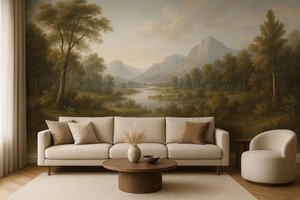
OriginalUniqueArt.com F.A.Q.: Zidne freske i monumentalni murali – Prilagodba, veličina i instalacija za elitu kolekcionara
OriginalUniqueArt.com nudi ekskluzivne zidne freske i monumentalne murale po meri za elite kolekcionare. Prilagodjeni dizajn, vrhunski materijali & stručna instalacija. Zahtevajte ponudu danas!

Digital Illustration Guide: Scaling Art Procurement Efficiency for Large-Scale Hospitality Projects
Master large-scale art procurement with our guide for hotel designers. Learn to leverage digital illustration, custom mockups, and efficient bulk ordering to scale high-quality, hand-painted reproductions across global hospitality projects with precision and cost-efficiency.
Skaliranje Umetničke Vizije: Održavanje Kvaliteta u Masovnoj Proizvodnji Prilagođenih Slika
Otkrijte kako skalirati umetničku viziju uz očuvanje vrhunskog kvaliteta reprodukcija slika. Saveti stručnjaka za dizajn enterijera, hotele i poslovne prostore. Personalizovane slike po vašoj meri!
Harmonizacija Identiteta i Skale: Studija Slučaja Upravljanja Umetničkim Programima za Hotelske Grupe
Istražite kako uspešno harmonizovati vizuelni identitet i skalu umetničkih programa u hotelskim grupama sa više objekata. Studija slučaja, praktični saveti i ROI analize za luksuzni hotelski dizajn.
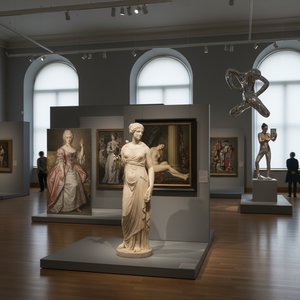
The Allure of the Pose: Representations of 'Model' Through Art History
Explore the fascinating history of the 'art model' through centuries of painting! Discover academic techniques, social contexts & the evolving role of models in art. OriginalUniqueArt offers custom reproductions and expert consultation.