Američki realizam · 1885
Plivanje (Томас Икинс, 1885)
Томас Икинс (1844–1916) je napravio Plivanje. Datirano je iz 1885. Pripada pokretu Američki realizam. Izrađeno je u Akril na platnu. Čuva se u muzeju Amon Carter Museum of American Art u mestu Fort Worth, Sjedinjene Američke Države. Dimenzije su 69 × 92 cm.
- 1885
- Akril na platnu
- 69 × 92 cm
- Amon Carter Museum of American Art, Fort Worth

 Pregledaj u prostoru

 Ručno oslikano uljanim bojama
 Pošalji
 Podeli
 Vodič


 Preuzmi
 Slični predmeti
 Rendgenski snimak
 Automatska prezentacija
 Pitanja i odgovori

 Statistika
Plivanje: osnove
- Naslov
- Plivanje
- Umetnik
- Томас Икинс (1844–1916)
- Rođen/a u
- Филаделфија, Сједињене Америчке Државе
- Datum
- 1885
- Tehnika
- Akril na platnu
- Dimenzije
- 69 × 92 cm
- Gde se može videti
- Amon Carter Museum of American Art, Fort Worth, Sjedinjene Američke Države
- Pokret
- Američki realizam
- Period
- 19. vek
- Tema
- plivanje, nagaost, мушке фигуре, река, покрет, икинс
Šta prikazuje Plivanje?
The Weight of Movement: Thomas Eakins’s “Swimming”
Thomas Eakins' "Swimming," painted in 1884, isn’t merely a depiction of men enjoying a summer afternoon by the water; it’s a meticulously constructed study of human form, motion, and the subtle tensions simmering beneath the surface of American society. This oil on canvas, currently residing within the Amon Carter Museum of American Art in Fort Worth, Texas, is a pivotal work that encapsulates Eakins' revolutionary approach to art – one rooted in scientific observation, anatomical precision, and a deliberate challenge to conventional artistic norms.
The scene unfolds with remarkable immediacy. Six figures, rendered with startling realism, are immersed in the cool depths of a pond or river. They aren’t idealized heroes or romanticized figures; instead, they're ordinary men – identifiable as Eakins himself and his students from the Pennsylvania Academy of the Fine Arts – engaged in a casual, almost playful swim. The arrangement isn’t haphazard; it’s carefully orchestrated to convey a sense of sequential movement, suggesting a single figure progressing through the pictorial space. Eakins masterfully utilizes overlapping forms and subtle shifts in perspective to create an illusion of depth and dynamism, drawing the viewer into the heart of the action.
A Study in Anatomy and Scientific Observation
Eakins’s fascination with anatomy was legendary. He dissected cadavers relentlessly, driven by a desire to understand the mechanics of the human body – not just its appearance but also how it moved through space. “Swimming” is a testament to this dedication. The figures' musculature is rendered with astonishing accuracy, capturing the subtle ripple of muscles contracting and relaxing as they propel themselves through the water. The way Eakins depicts the flow of water around the bodies is equally impressive, demonstrating his keen eye for detail and his understanding of fluid dynamics.
Beyond mere anatomical study, however, lies a deeper intellectual engagement. Eakins wasn’t simply copying what he saw; he was analyzing it – breaking down the complex interplay of forces that govern movement. The painting can be interpreted as a scientific investigation into the principles of hydrodynamics and human locomotion. He deliberately chose this subject matter to explore how the body interacts with its environment, pushing the boundaries of artistic representation.
Controversy and the Subtext of Homoeroticism
“Swimming” wasn’t universally lauded upon its creation. Eakins' unflinching realism, particularly his depictions of nude male figures, sparked considerable controversy during a period when public displays of nudity were heavily censored. The painting was accused of indecency and led to Eakins’s resignation from the Pennsylvania Academy of the Fine Arts in 1893. While the charges were largely unfounded, they reflect the prevailing social anxieties surrounding sexuality and artistic expression.
However, beneath the surface of this controversy lies a more complex layer of interpretation. Many scholars now believe that “Swimming” contains subtle homoerotic undertones. The close proximity of the figures, their relaxed postures, and the implied intimacy of the scene suggest a shared camaraderie and perhaps even unspoken attraction. Eakins’s deliberate blurring of gender lines – the ambiguity of the figures' physiques – further complicates the narrative, inviting viewers to question traditional notions of masculinity and sexuality.
A Legacy of Realism and Artistic Innovation
Despite the initial resistance, “Swimming” ultimately secured its place as a cornerstone of American art. Eakins’s groundbreaking approach—his commitment to anatomical accuracy, his scientific rigor, and his willingness to challenge artistic conventions—laid the foundation for future generations of realist painters. “Swimming” remains a powerful example of Eakins' unique vision, demonstrating his ability to capture not only the physical appearance of his subjects but also their inner lives and the complexities of the world around them.
Reproductions of “Swimming” offer an exceptional opportunity to appreciate the nuances of this remarkable painting. The detailed brushwork, the masterful use of light and shadow, and the evocative sense of movement are all faithfully reproduced in high-quality prints, allowing art lovers to bring a piece of Eakins’s genius into their homes.
U kom muzeju se nalazi Plivanje?
Amon Carter Museum of American Art
Fort Worth, Sjedinjene Američke Države
Nasleđe vizije i pejzaža Smešten unutar živopisnog Kulturnog distrikta Fort Wortha, Muzej američke umetnosti Amon Carter stoji kao duboko svedočanstvo o neprevaziđenom duhu američkog Zapada i transformativnoj moći kreativnog pogleda. Ova institucija je proizašla iz duboko lične strasti prema sirovoj lepoti i istorijskim narativima granice, počevši kao posvećeno čuvalište dela koja slave nasleđe Teksasa. Kroz decenije promišljenog kuratorskog rada, ona je izrasla u nacionalno priznati svetionik američke kreativnosti, nudeći utočište u kojem se prašina ravnica susreće sa sofisticiranom elegancijom modernog umetničkog izražavanja.


Plivanje u visokoj rezoluciji

Javno dobro: umetnik je preminuo 1916.
Više dimenzija, kadriranih prikaza i citata →Томас Икинс, Plivanje (1885), Amon Carter Museum of American Art. Javno dobro.
Digitalni stručnjak proverava boje u odnosu na originalno delo i retušira datoteku, vernu umetnikovim potezima četkice.
Kupite sliku visoke rezolucijePitanja o Plivanje
Gde mogu videti originalno delo „Plivanje”, autor Томас Икинс?
Originalno delo „Plivanje”, autor Томас Икинс čuva se u muzeju Amon Carter Museum of American Art, Fort Worth, Sjedinjene Američke Države. Reprodukcija omogućava da se ovo umetničko delo izloži u vašem domu.
U kojoj godini je nastalo delo „Plivanje”, autor Томас Икинс?
„Plivanje“ potiče iz 1885. Ovaj datum smešta delo u okviru karijere umetnika Томас Икинс i same ere.
Kojom tehnikom je urađeno „Plivanje”, autor Томас Икинс?
Томас Икинс je koristio/la tehniku Akril na platnu za delo "Plivanje". Ova tehnika definiše materijalnu prirodu originalnog dela.
Kolikih je dimenzija originalnog dela "Plivanje"?
Dimenzije dela „Plivanje”, autor Томас Икинс su 92 x 69 cm. Reprodukcije se mogu naručiti u drugim dimenzijama uz zadržavanje istih proporcija.
Šta prikazuje „Plivanje”, autor Томас Икинс?
Motivi dela "Plivanje" su plivanje, nagaost, мушке фигуре, река, покрет, икинс, анатомија.
Da li se prikaz „Plivanje”, autor Томас Икинс može slobodno reprodukovati?
Što se tiče autorskih prava, delo "Plivanje" je u javnom vlasništvu – autorska prava su istekla.
Kome se pripisuje delo "Plivanje"?
Delo "Plivanje" je kreirao/la Томас Икинс. Informacije na ovoj stranici opisuju originalno delo umetnika Томас Икинс.
Koji umetnički pravac obuhvata „Plivanje”, autor Томас Икинс?
Umetnički pravac koji se povezuje sa delom „Plivanje”, autor Томас Икинс je Američki realizam. Ova klasifikacija smešta rad među srodne umetnike i umetnička dela.
U kom periodu karijere Томас Икинс pripada delo "Plivanje"?
U okviru karijere umetnika Томас Икинс, delo "Plivanje" pripada periodu Зрели период, što omogućava poređenje sa drugim radovima ovog autora.
O umetniku, Томас Икинс

1844–1916, Сједињене Америчке Државе
Томас Икинс
Живот посвећен стварности Томас Каупертвејт Икинс, рођен у Филаделфији 25. јула 1844. године, представља монументалну фигуру америчке уметности – сликара неумитног реализма који је посветио свој живот заробљавању суштине човековог искуства. Он се није интересовао само за *представљање* света; тражио је да га растави, разуме његову анатомију, и физичку и психолошку, а затим да га реконструише на платну са искреношћу која је често граничила са провокацијом.
Takođe i Томас Икинс
 Те Клиника Агнова1875
 Макс Шмитт у једној четкици1871
 Portrait of Samuel Murray1889
 The Dancing Lesson1878

Eseji o delu Plivanje
 American artworks of the 1870sIconic 1870s American works by Whistler, Eakins, and Homer. Explore museum-quality reproductions on OriginalUniqueArt.com.
 The Architecture of Flesh: Precision and Scientific Inquiry in Anatomical Art HistoryExplore the evolution of anatomical art from Renaissance dissection to Impressionist light. Discover the science behind the human form.
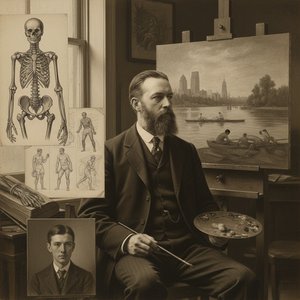 Thomas Eakins: Realism, Anatomy & the American Spirit – A Comprehensive Exploration of Life and LegacyExplore the life & legacy of Thomas Eakins, a pivotal American Realist painter. Discover his groundbreaking techniques, anatomical precisio…