

 Pregledaj u prostoru
 Pošalji
 Podeli
 Detalji o delu

 Преузми
 Slični predmeti
 Rendgenski snimak
 Slajdovi
Near Spišská Nová Ves
 Impressionism & Expressionism
 Modern
 80.0 x 70.0 cm
 Tatra Gallery
 Pročitaj više
Giclee štampa / Umetnički otisak
Giclée štampa ili print na platnu muzejskog kvaliteta uz brzu proizvodnju i fleksibilne opcije završne obrade. ( Kupi ručno naslikanu sliku Kupi digitalnu sliku)




P118B $10

P118H $10

P118W $10

P438Z $10

P508JH $12

P508YH $12

P805H $10

P805Z $10

P919BZ $10

P919G $10

P919XJ $10

P959ZH $10

P968JZ $12

W106C $8

W218G $10

W218JH $8

W218Y $10

W307PJ $10

W316G $10

W316PJ $8

W316Y $10

W398PJ $8

W4111J $10

W500HY $15

W500JH $15

W692G $12

W849H $8

W940BG $15

W953PJ $8




Izaberite jednu od naših unapred definisanih veličina koje odgovaraju originalnim proporcijama umetničkog dela.

Možete uneti sopstvene dimenzije kako biste umetničko delo prilagodili specifičnom okviru ili prostoru. Ako odabrani format ne odgovara proporcijama originalne slike, mi ćemo ili iscrtati deo dela ili proširiti sliku pomoću ogledane ivice ili jednobojnog popunjavanja. Digitalni prikaz će vam biti poslat na odobrenje pre početka proizvodnje.
Imajte na umu da pregled na ekranu ne odražava stvarno iscrtavanje ili proširivanje. Samo će prikaz (mockup) precizno pokazati finalnu kompoziciju.
Iako su prilagođene dimenzije dostupne, preporučujemo da odaberete dimenziju sa unapred definisane liste kako biste očuvali originalne proporcije.
Dostava širom sveta () za 2 nedelje umesto uobičajenih 4/5 nedelja. (14 август)

Besplatna ekspresna dostava širom sveta

Visokokvalitetno laneno platno

Kompletno osiguranje transporta

Garancija povraćaja carine i uvoznih dažbina

Garancija vernosti boja

Politika povrata u roku od 60 dana (samo u slučaju nedostataka)

Garancija povrata novca od 100%

Popust pri grupnoj kupovini
 Opcija sa staklom dostupna je samo za dimenzije manje od 110 cm

Near Spišská Nová Ves
Giclee štampa / Umetnički otisak
Dimenzije reprodukcije
-


Konačna cena
$ 80
Opis predmeta
A Symphony of Light and Earth
In the evocative landscape of Near Spišská Nová Ves, the viewer is immediately transported to a realm where the rugged majesty of the Slovakian mountains meets a profound sense of tranquility. The painting presents a breathtaking vista of a mountainous expanse, characterized by a striking red hue that bathes the peaks in a warm, ethereal glow. This chromatic choice does more than merely depict terrain; it imbues the entire scene with an atmosphere of eternal sunset, suggesting a moment frozen in time where the earth itself seems to radiate heat and life. As the eye wanders through the valley below, one discovers a lush tapestry of scattered trees that provide essential depth and texture, anchoring the soaring heights of the mountains to the fertile ground beneath.
The composition is masterfully balanced, utilizing a sweeping perspective that covers the frame from edge to edge. The mountains dominate the upper reaches of the canvas, their silhouettes softened by a gentle haze, while rolling hills emerge toward the center and right, creating a rhythmic movement across the landscape. Within this grand natural theater, the subtle inclusion of small figures adds a poignant layer of human connection. These tiny inhabitants, likely engaged in quiet leisure or outdoor exploration, serve as a scale for the immense grandeur of the surroundings, reminding us of our own humble place within the vastness of nature. Their presence transforms the painting from a mere topographical study into a narrative of coexistence and peaceful contemplation.
The Expressive Hand of Stefan Buban
The technique employed in this work reflects the bold and expressive spirit characteristic of Stefan Buban. Drawing inspiration from the legacies of Impressionism and Expressionism, the artist moves beyond simple representation to capture the emotional essence of the landscape. The brushwork is purposeful and vibrant, utilizing color not just for accuracy but for psychological impact. The interplay of light across the mountain faces suggests a mastery of atmospheric perspective, where the warmth of the red tones contrasts beautifully with the deeper, cooler shadows found within the forested valleys.
For collectors and interior designers alike, this piece offers a sophisticated focal point that brings both warmth and grandeur to any space. The painting’s ability to evoke a sense of serenity makes it an ideal selection for environments designed for relaxation or deep thought. Whether placed in a sunlit gallery or a contemporary living room, Near Spišská Nová Ves acts as a window into a serene world, inviting the observer to pause and breathe in the quiet beauty of the Slovakian highlands. It is more than a reproduction; it is an invitation to experience the timeless harmony between the earth and the human spirit.
Biografija umetnika
Richard Estes: The Architect of Reflection
Richard Estes, born in Chicago on May 14, 1932, is a name synonymous with the meticulous and profoundly captivating world of photorealism. More than simply replicating images, Estes has meticulously constructed an artistic language centered around the subtle interplay of light, reflection, and urban geometry – transforming commonplace cityscapes into breathtakingly detailed and emotionally resonant paintings. His career, spanning decades, represents not just a mastery of technique but also a deep engagement with the nature of perception and the inherent beauty found within the seemingly mundane. Estes’ early life was steeped in the influence of realist painting. Growing up in Chicago, he studied at the Art Institute of Chicago, absorbing the lessons of masters like Edgar Degas, Edward Hopper, and Thomas Eakins – artists who meticulously observed and rendered the world around them with remarkable precision. This foundation proved crucial as Estes embarked on his own journey to capture reality with unparalleled accuracy. Crucially, his time in Spain during the 1960s exposed him to a different approach to artmaking, fostering a desire for greater freedom of expression – a desire that would later inform his distinctive style. He moved to New York City in 1966, establishing himself as a graphic artist before dedicating himself fully to painting, fueled by a growing interest in the burgeoning photorealist movement. His early work was heavily influenced by the photographs he encountered, particularly those of city life – telephone booths, storefronts, and the endless grid of urban streets became his primary subjects.The Birth of Photorealism
Estes’ contribution to art history is inextricably linked to the rise of photorealism in the late 1960s. Artists like John Baeder, Chuck Close, Robert Cottingham, and Audrey Flack were all exploring ways to integrate photography into their painting practice. Estes, however, took this concept a step further, developing a highly systematic approach. He didn’t simply copy photographs; he meticulously analyzed them, breaking down the image into its component parts – light, shadow, texture, and perspective – before translating these elements onto canvas with painstaking detail. His process involved projecting photographic images onto large canvases, then carefully painting over them, building up layers of color to recreate the original scene with an almost photographic quality. This method allowed him to achieve a level of realism that was previously unattainable, creating paintings that seemed to defy their own materiality. As Graham Thompson noted, Estes’ work demonstrated “the way photography became assimilated into the art world,” marking a significant shift in artistic practice. He is often considered alongside Denis Peterson and Chuck Close as one of the key figures who propelled photorealism into the mainstream.Technique and Process: A Calculated Precision
The technical aspects of Estes’ work are central to its impact. He employed a unique layering technique, often using multiple projectors to create complex compositions from photographs. His paintings are characterized by an almost obsessive attention to detail – the reflections in glass windows, the subtle variations in color and texture, the precise arrangement of objects within the scene. This meticulousness isn’t simply about replicating reality; it's about revealing a deeper truth about how we perceive the world around us. Estes himself described his process as “a kind of architectural rendering,” emphasizing the underlying structure and geometry that shapes our visual experience. He frequently used a squeegee technique, applying paint in thin layers to build up the image gradually, creating a sense of depth and luminosity. The resulting paintings are not merely representations of objects; they are carefully constructed illusions, inviting the viewer to contemplate the complexities of perception.Beyond Representation: Exploring Perception and Urban Space
While Estes’ work is undeniably rooted in realism, it transcends mere imitation. His paintings aren't simply copies of photographs; they are explorations of urban space, light, and reflection. He captures not just what we *see*, but also how we *perceive* – the way light bounces off surfaces, creating a sense of depth and atmosphere. His subjects—telephone booths, storefronts, and city streets—are familiar yet imbued with an almost surreal quality due to Estes’ meticulous rendering. The paintings evoke a feeling of stillness and contemplation, inviting viewers to slow down and appreciate the beauty hidden within the everyday. Furthermore, his work subtly addresses themes of isolation and anonymity often associated with urban life, reflecting on the human experience within a vast and impersonal landscape.Legacy and Influence
Richard Estes’ impact on contemporary art is undeniable. He remains one of the most influential figures in photorealism, inspiring generations of artists to explore the possibilities of this technique. His work continues to be exhibited internationally and reproduced in countless galleries and collections. Beyond his technical mastery, Estes' legacy lies in his ability to transform ordinary subjects into extraordinary works of art – demonstrating that beauty can be found even in the most unexpected places. He is a testament to the power of observation, precision, and a profound understanding of how we see the world.
stefan buban
1932 - , Slovakia
Osnovne informacije
- Artistic Movement Or Style: Photorealism
- Artists Or Movements Influenced By This Artist:
- John Baeder
- Chuck Close
- Artists Who Influenced This Artist:
- Edgar Degas
- Edward Hopper
- Date Of Birth: May 14, 1932
- Full Name: Richard Estes
- Nationality: American
- Notable Artworks: ['Telephone Booths']
- Place Of Birth: Chicago, USA
Povezani članci
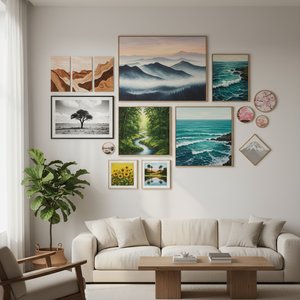
Beyond the Horizon: 10 Landscape Masterpieces for Your Home Decor
Journey through 10 breathtaking landscape paintings by Monet, Van Gogh & more! Explore iconic artworks, artistic techniques & find inspiration for your home decor. Museum-quality reproductions at OriginalUniqueArt.com. Discover all masterpieces on OriginalUniqueArt.com

Glavna dela koja su definisala Romantični pejzaž: 10 remek-dela za vaš dom
Otkrijte 10 remek-dela romantičnog pejzažnog slikarstva! Uronite u svet Claude Lorraina, Caspara David Friedricha i Turnera. Ispričane priče umetnosti, inspiracija za dekoraciju doma. Kvalitetne reprodukcije na OriginalUniqueArt.com – istražite celu kolekciju online!

Evocations of Place: A Historical Journey Through Landscape Art
Explore the rich history of landscape art with OriginalUniqueArt. Discover renowned artists, movements like Impressionism & Romanticism, and expert guidance for collecting timeless pieces. Find your perfect serene escape today!

Katsushika Hokusai: 25 Remek-dela Japanskog Umetnika za Vaš Dom | OriginalUniqueArt
Uronite u svet Katsushike Hokusaija! Otkrijte 25 remek-dela japanskog umetnika, uključujući čuveni 'Veliki talas'. Ukiyo-e štampe, pejzaži i istorija iza svakog dela. Pronađite inspiraciju za dekor enterijera i kupite reprodukcije slika vrhunskog kvaliteta na OriginalUniqueArt.com.

25 Remek-dela Džona Konstebla: Lepota Engleske na Platnu | OriginalUniqueArt
Uronite u svet Džona Konstebla! Otkrijte 25 remek-dela engleskog pejzaža, romantizma i seoske idile. Kupite reprodukcije slika vrhunskog kvaliteta za dekoraciju enterijera na OriginalUniqueArt.com.

