Pređi na štampu
 Pročitaj više







































 Za umetnička dela ili reprodukcije čija je bilo koja strana veća od 105 cm (približno 41 inč), okvir će biti isporučen u obliku rastavljenog seta za sklapanje. Ovaj metod osigurava bezbednu dostavu i sprečava oštećenja tokom transporta.


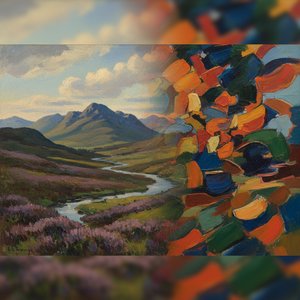
Hay Time – A Celebration of Scottish Pastoral
“Hay Time,” painted in 1952 by Sir William George Gillies, stands as a quintessential example of Scottish landscape painting from the mid-twentieth century. More than just a depiction of rural scenery, it’s an embodiment of nostalgia for a simpler time and a profound appreciation for the beauty inherent in the natural world – themes that resonate deeply with viewers even today.
Subject Matter and Composition
The painting captures a tranquil valley nestled amongst rolling hills. Dominating the scene are mature trees laden with hay bales, their golden hues reflecting the afternoon sun. Scattered throughout the landscape are modest cottages—evidence of human presence harmoniously integrated into the pastoral environment. A winding road traverses the valley floor, subtly guiding the eye across the canvas and emphasizing the expansive vista.
Style and Technique – Gillies’ Distinctive Vision
Gillies' artistic style is characterized by a masterful blend of Cézanne’s geometric simplification and Picasso’s understated color palette. Like Cézanne before him, he employs flattened planes to convey depth and solidity, prioritizing form over meticulous detail. However, unlike Picasso’s often fractured perspectives, Gillies maintains a sense of spatial coherence—a deliberate choice that contributes to the painting's serene atmosphere.
Historical Context – Echoes of Modernism
Painted in 1952, “Hay Time” emerged during a period marked by significant artistic experimentation and intellectual debate. The influence of Cubism lingered, albeit tempered by explorations into Surrealist ideas. Gillies’ embrace of Klee's expressive color palettes reflects the broader movement towards abstraction and psychological exploration that defined European art in the years following World War II. It represents a reaction against the prevailing formalism of earlier decades.
Symbolism – The Quiet Beauty of Rural Life
Beyond its visual appeal, “Hay Time” carries symbolic weight. The hay bales symbolize abundance and fertility—a cornerstone of Scottish agricultural tradition. The cottages represent stability and community—values cherished in rural Scotland during Gillies’ lifetime. More subtly, the painting evokes a feeling of contentment and connection to nature—themes that transcend time and continue to inspire contemplation.
Emotional Impact – A Balm for the Soul
“Hay Time” succeeds in conveying a palpable sense of peace and tranquility. The muted color palette—dominated by yellows, greens, and browns—creates an immersive experience for the viewer. Gillies’ meticulous brushwork captures the textures of bark, grass, and hay with remarkable accuracy, inviting contemplation of the natural world. Ultimately, it's a painting that speaks to our innate desire for beauty and simplicity—a timeless masterpiece celebrating the enduring spirit of Scottish landscape art.
Pitanja i odgovori
Koju temu i atmosferu spaja „Žetva”, autor Sir William George Gillies?
„Žetva“ prikazuje scottish landscape, mountain valley, rural scene, autumn foliage, landscape painting, gillies style, british art, post-war art, a njegovo dočarano raspoloženje je Spokojno.
Da li je zakonski dozvoljeno reprodukovati delo „Žetva”, autor Sir William George Gillies koje se nalazi u muzeju Abbot Hall Art Gallery?
Status autorskih prava za delo „Žetva”, autor Sir William George Gillies je jasan: rad pripada i dalje je zaštićeno autorskim pravima. Njegovo prisustvo u muzeju Abbot Hall Art Gallery ne menja taj status.
Koja osnovna nijansa prožima „Žetva”, autor Sir William George Gillies?
Dominantna nijansa dela „Žetva”, autor Sir William George Gillies je Spektar od zelene do ljubičaste. Ova nijansa predstavlja osnovni ton palete.
 Pregledaj u prostoru
 Pošalji
 Podeli
 Detalji o delu
 Vodič
Vodič

 Preuzmi
 Slični predmeti
 Rendgenski snimak
 Automatska prezentacija
 Q&A
Q&A Statistika