
 Pregledaj u prostoru
 Pošalji
 Podeli
 Detalji o delu
 Vodič
Vodič

 Preuzmi
 Slični predmeti
 Rendgenski snimak
 Automatska prezentacija
 Q&A
Q&A Statistika
Последовательность дихедрала


 Pročitaj više
Umetničko delo prikazano na ovoj stranici zaštićeno je autorskim pravima, što znači da zakonski nismo u mogućnosti da kreiramo niti prodajemo identičnu reprodukciju. Ova zaštita se sprovodi u skladu sa međunarodnim sporazumima kao što su Bernska konvencija i nacionalnim zakonima, uključujući i one koji su definisani u Američki zakon o autorskom pravu – Naslov 17.
Ovaj metod je u potpunosti usklađen sa regulativama o autorskim pravima jer ne podrazumeva kopiranje ili dupliranje zaštićenih umetničkih dela. Umesto toga, reč je o kreativnoj reinterpretaciji – novom slikarskom delu koje je inspirisano originalom, ali nije identično njemu.
Giclee štampa / Umetnički otisak
Giclée štampa ili print na platnu muzejskog kvaliteta uz brzu izradu i raznovrsne opcije završne obrade. ( Kupite ručno oslikano delo Pređi na digitalnu sliku)




P118B дин10

P118H дин10

P118W дин10

P438Z дин10

P508JH дин12

P508YH дин12

P805H дин10

P805Z дин10

P919BZ дин10

P919G дин10

P919XJ дин10

P959ZH дин10

P968JZ дин12

W106C дин8

W218G дин10

W218JH дин8

W218Y дин10

W307PJ дин10

W316G дин10

W316PJ дин8

W316Y дин10

W398PJ дин8

W4111J дин10

W500HY дин15

W500JH дин15

W692G дин12

W849H дин8

W940BG дин15

W953PJ дин8




Izaberite jednu od naših unapred definisanih veličina koje odgovaraju originalnim proporcijama umetničkog dela.

Unesite željenu širinu i visinu kako bi se štampa uklopila u vaš ram ili zid. Štampu je moguće samo iseći, ali nikada povećati iznad dimenzija originalne slike, stoga format sa drugačijim proporcijama uzrokuje gubitak dela slike. Pre početka štampe, poslaćemo vam digitalni prikaz radi potvrde. Slika prikazana na ovoj stranici ne predstavlja stvarni isrez — to pokazuje samo digitalni prikaz.
Dostava širom sveta () za 2 nedelje umesto uobičajenih 4/5 nedelja. (28 октобар)

Besplatna ekspresna dostava širom sveta

Visokokvalitetno laneno platno

Potpuno osiguranje transporta

Garancija povraćaja carine i uvoznih dažbina

Garancija vernosti boja

Politika povraćaja u roku od 100 dana (samo u slučaju nedostataka)

Garancija povrata 100% novca

Popust na više proizvoda
 Opcija sa staklom dostupna je samo za dimenzije manje od 110 cm

Последовательность дихедрала
Giclee štampa / Umetnički otisak
Dimenzije reprodukcije
-


Ukupna cena
дин 8287
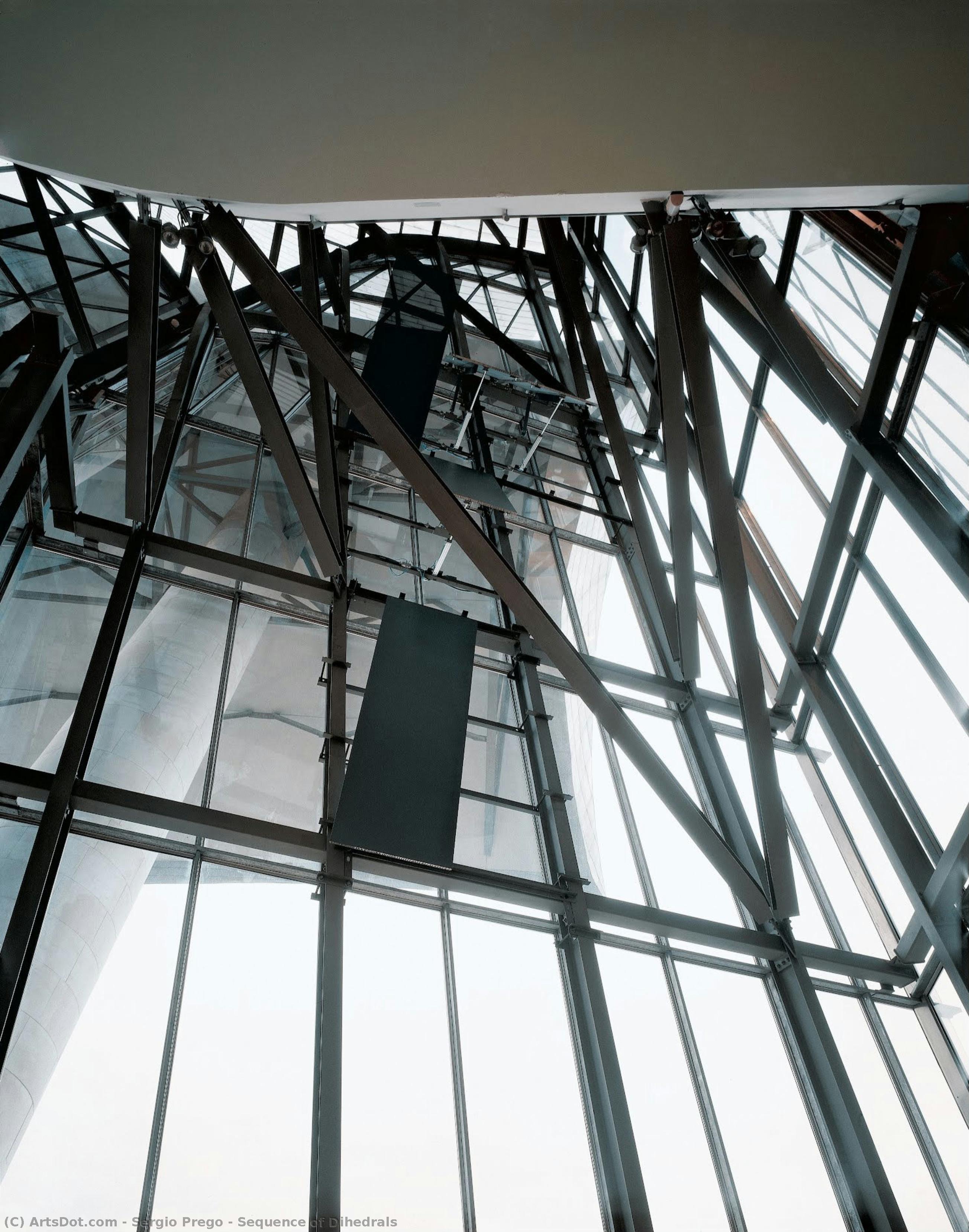
Sequence of Dihedrals – Sergio Prego: A Dialogue Between Geometry and Ephemeral Motion
Sergio Prego’s “Sequence of Dihedrals,” created in 2007 for the Guggenheim Museum Bilbao, isn't merely an architectural installation; it’s a carefully orchestrated choreography of form and movement designed to disrupt conventional perception. This sculptural intervention speaks volumes about Prego’s artistic philosophy – one rooted in exploring spatial relationships while embracing the inherent impermanence of materials like polyethylene tubes and aluminum. The piece transcends simple visual representation, inviting contemplation on how art can actively engage with its environment and challenge our understanding of space itself.Conceptual Foundations: Tarkovsky's Cinematic Echoes
Prego’s artistic vision finds resonance in the cinematic explorations of Andrei Tarkovsky, whose films prioritize atmosphere and emotional depth over narrative linearity. Like Tarkovsky’s masterpieces, “Sequence of Dihedrals” seeks to evoke a feeling of wonder and disorientation – mirroring the experience of encountering monumental architecture that simultaneously overwhelms and inspires. The artist deliberately avoids explicit storytelling, allowing viewers to interpret the installation's impact on their own senses and emotions.Architectural Precision Meets Kinetic Illusion
The core of Prego’s concept lies in manipulating geometric forms—specifically glass panels and metal framing—to generate dihedrals – angles formed by intersecting planes. The museum’s glass wall is overlaid with an orthonormal lattice, creating a dynamic interplay between stability and movement. Each panel pivots at a calculated angle (10º or 15º), resulting in shifting perspectives and unsettling noises as the panels move synchronously. This meticulous attention to detail underscores Prego's commitment to mastering technique while simultaneously questioning traditional sculptural conventions. The use of aluminum tubes contributes to this visual dynamism, emphasizing the interplay between rigidity and fluidity.A Reflection on Scale and Perception
“Sequence of Dihedrals” powerfully communicates the grandeur of modern architecture and its ability to provoke contemplation about our place within the universe. The stark black-and-white palette amplifies the installation’s formality and precision—a deliberate choice that underscores Prego's desire to convey a sense of intellectual rigor alongside emotional resonance. Standing before this monumental piece, one is confronted with the immensity of space and the subtle yet profound impact of carefully considered design elements. It’s an artwork that lingers in the mind long after leaving the museum walls.Provenance & Significance
The installation resides within the Museo Guggenheim Bilbao's permanent collection, cementing its status as a landmark achievement in contemporary sculpture. Its placement on one of the building’s glass facades maximizes its visual impact and reinforces Prego’s exploration of how art interacts with its surroundings. The piece serves as a testament to the transformative potential of combining architectural design with kinetic artistry—a dialogue between geometric precision and ephemeral motion that continues to captivate audiences today.Pitanja i odgovori
Gde mogu pronaći statistiku o delu „Последовательность дихедрала”, autor Sergio Prego?
Stranica Statistika za delo „Последовательность дихедрала”, autor Sergio Prego prikazuje statistiku javnih poseta: mesečni broj poseta ovom umetničkom delu, poređenje sa najgledanijim radovima ovog umetnika i poreklom posetilaca.
Ko je kreirao "Последовательность дихедрала" i u kojoj godini?
Sergio Prego je napravio/la "Последовательность дихедрала" u 2007. godini.
Gde i za šta se preporučuje "Последовательность дихедрала"?
„Последовательность дихедрала“ je predloženo za Akcentni element, a preporučeni prostor je Dnevna soba.
Biografija umetnika
Sergio Prego: Sculpting Space and Embracing Impermanence
Sergio Prego is a Spanish artist born in Donostia/San Sebastián in 1969, deeply rooted in the Basque artistic landscape of the late 1990s. His formative years at the University of the Basque Country and subsequent studies at the School of Visual Arts in New York instilled in him a multidisciplinary approach that would become central to his distinctive artistic vision. Prego’s work transcends traditional sculptural conventions, prioritizing exploration of spatial relationships and embracing the transformative potential of ephemeral materials—primarily polyethylene tubes and aluminum—to create installations that challenge perceptions of form and movement.- Early Influences: Prego's artistic trajectory was significantly shaped by figures like Bruce Nauman and Andrei Tarkovsky, whose explorations of corporeality and cinematic storytelling resonated deeply with his conceptual framework. He drew inspiration from the radical architecture collectives of the 1960s—Ant Farm and Archigram—who envisioned new ideas of space and corporeality as a reaction to prevailing societal norms.
- Material Exploration: Prego’s fascination with pneumatic structures – inflatable membranes stabilized by compressed air – represents a pivotal element in his artistic practice. These constructions, often referred to as “poems in space,” are characterized by their delicate balance between rigidity and flexibility, mirroring the artist's preoccupation with capturing fleeting moments of transformation.
- Notable Exhibitions: Prego’s career has been marked by numerous prestigious exhibitions internationally, including the Guggenheim Museum Bilbao (2006), Museo Nacional Centro de Arte Reina Sofía (Madrid), Museo Contemporáneo Barcelona – MACBA (Barcelona), and Venice Biennale (2019). His collaborative project with Itziar Okariz at the Biennale garnered critical acclaim for its conceptual boldness and innovative use of materials.
Sculptural Methodology: Pneumatic Architecture and Kinetic Forms
Prego’s sculptural process is defined by a meticulous attention to detail and an unwavering commitment to experimentation. He employs tetrahedrons—triangular pyramids—arranged around a central axis as fundamental building blocks for his installations, creating modular structures that defy static categorization. These sculptures utilize polyethylene tubes and aluminum elements to generate movement and tension within the confines of space, mirroring Prego’s belief that sculpture should actively engage with its environment. As he articulates, “I have always been interested in inventing new modalities of apprehending the space or, even more, in inventing new spatial relations.”- Technique: The artist meticulously folds polyethylene sheets into tubes and secures them with aluminum supports, resulting in structures that appear to breathe—expanding and contracting subtly under pressure.
- Conceptual Framework: Prego’s approach aligns with the broader artistic movement of the 1960s, which championed performance art and experiential engagement as means of questioning established conventions and exploring alternative perspectives on reality.
Recognition and Legacy: Venice Biennale Collaboration
Sergio Prego achieved international recognition through his participation in the Spanish Pavilion at the Venice Biennale (2019), alongside Itziar Okariz, where they presented *Get Out of the Way*, an inflatable sculpture referencing the pioneering work of architects like Buckminster Fuller and Frei Otto. This project underscored Prego’s enduring fascination with pneumatic structures—a technique rooted in the utopian visions of the late 1960s—and solidified his position as a visionary artist who pushes the boundaries of sculptural practice. His contribution to the Biennale was lauded for its conceptual depth and innovative exploration of spatial dynamics, cementing his legacy as a pivotal figure in contemporary art.
Sergio Prego
1969 - , Spain
Osnovne informacije
- Artistic Movement Or Style: Sculpture & Installations
- Artists Or Movements Influenced By This Artist:
- Juan Luis Moraza
- Ángel Bados
- Txomin Badiola
- Artists Who Influenced This Artist:
- Bruce Nauman
- J.G. Ballard
- Ant Farm
- Trisha Brown
- Date Of Birth: 1969
- Full Name: Sergio Prego
- Nationality: Spanish
- Notable Artworks:
- Sequence of Dihedrals
- Rose-colored Drift/To the Students
- Place Of Birth: San Sebastián, Spain
Povezani članci

The Enduring Form: Exploring Themes & Techniques in Sculpture Across Historical Periods
Explore the rich history of sculpture from ancient masterpieces to contemporary innovations. Discover key techniques, influential artists & investment potential for discerning art collectors.
Nasleđe bronze: Istorija, tehnike i savremene interpretacije skulpture – vodič za kolekcionare
Istražite bogatu istoriju bronze i tehnike livenja skulptura. Saveti za kolekcionare, investiciono vrednovanje i savremene interpretacije aluminijumske bronze. OriginalUniqueArt – stručnjaci za umetnost.

Bronze Age to Modern Masters: 10 Sculptures That Redefined Art | OriginalUniqueArt
Journey through art history with 10 legendary bronze sculptures – from Michelangelo's David to Rodin’s Thinker. Explore the stories, techniques & timeless beauty of these masterpieces. Find museum-quality reproductions & elevate your home decor on OriginalUniqueArt.com.

Bronze Sculptures That Defined Art History | OriginalUniqueArt
Journey through art history with our Top 10 bronze sculptures! Explore masterpieces by Rodin, Michelangelo & more. Discover stories behind iconic statues and find museum-quality reproductions for your home decor at OriginalUniqueArt.com.

The Enduring Form: Sculpture Across History, Technique & Emotional Resonance
Explore the rich history of sculpture with OriginalUniqueArt. Discover key techniques, influential artists & investment potential for discerning collectors. Expert insights into valuing and collecting timeless masterpieces.
