
 Pregledaj u prostoru
 Pošalji
 Podeli
 Detalji o delu
 Vodič
Vodič

 Preuzmi
 Slični predmeti
 Rendgenski snimak
 Automatska prezentacija
 Pitanja i odgovori
 Statistika
Black Cross

- 46.0 x 46.0 cm


 Pročitaj više
Nabavite datoteku spremnu za štampu koja nudi znatno veći kvalitet od onlajn pregleda. Svaka digitalna slika koju nudimo potiče iz visokorezolucičnog master fajla iz naše baze — obično širine od 5.000 do 15.000 piksela — što vam omogućava štampu u velikom formatu, precizno kadriranje ili bezbrižnu reprodukciju najfinijih detalja.
Nijedan fajl ne napušta naš studio netaknut. Digitalni stručnjak vrši proveru boja u odnosu na originalno delo i koriguje ih po potrebi, a zatim unapređuje jasnoću i detalje pomoću profesionalnih alata za retuširanje — uvek ostajući veran umetnikovim potezima četkice i stilu. Rezultat je slika koja izgleda kao pravo delo, a ne kao sken sa filterom.
Proverite i odobrite pre završetka: naš stručnjak vam šalje sliku putem e-pošte u roku od 72 sata na pregled. Niste zadovoljni? Zatražite poboljšanja ili ispravke, ili tražite povraćaj novca ukoliko kvalitet ne ispunjava vaša očekivanja.
Ovo je kvalitet kojem poverenje ukazuju izdavači, dizajnerski studiji, galerije i štamparije.
Digitalna slika
Preuzmite datoteku visoke rezolucije za ličnu upotrebu, štampanje i kreativne projekte. ( Pređi na štampu Kupite ručno oslikano delo)
Uključeno uz svaku porudžbinu digitalne slike
Profesionalna digitalna isporuka, zagarantovana
Kada odaberete OriginalUniqueArt.com, ne dobijate samo sliku – vi primate profesionalno unapređeno digitalno umetničko delo, izrađeno sa najvećom preciznošću i uz garanciju zadovoljstva. Evo svega što automatski dolazi uz vašu porudžbinu:

Brza dostava putem e-pošte
Vaša digitalna slika visoke rezolucije biće vam poslata putem e-pošte u roku od 72 sata od poručivanja – spremna za trenutnu upotrebu.

Digitalna datoteka unapređena veštačkom inteligencijom
Vaše umetničko delo je profesionalno optimizovano primenom naprednih AI alata i ručne obrade, čime se osiguravaju maksimalni detalji, oštrina i preciznost boja.

Besplatna doživotna ponovna isporuka
Slučajno ste obrisali ili izgubili svoju datoteku? Ne brinite – poslaćemo vam je ponovo u bilo kom trenutku, potpuno besplatno.

Bez troškova uvoza – zauvek
Uživajte u svojim umetničkim delima trenutno, bez carine, akciza ili troškova dostave – digitalni download je uvek bez poreza.

Garancija preciznosti boja
Uz pomoć profesionalnih alata i upravljanja bojama, osiguravamo da vaša digitalna slika što vernije odražava originalne boje.

Garancija zadovoljstva u roku od 100 dana
Ako niste zadovoljni svojom digitalnom slikom, izvršićemo reviziju ili ćemo vam vratiti 100% novca u roku od 100 dana – bez ikakvih pitanja.

100% garancija povrata novca
Niste zadovoljni? Dobijte puni povraćaj novca u roku od 100 dana od prijema digitalne datoteke – bez suvišnih pitanja.

Popusti na velike porudžbine
Kupite 3 slike, uštedite 10% - Kupite 5 slika, uštedite 15% - Kupite 10+ slika, uštedite 20%. Odlično za kreativne projekte, galerije i agencije.
A Geometric Symphony of Faith and Form
In the vibrant landscape of late twentieth-century abstraction, few works capture the intersection of spiritual iconography and geometric precision as strikingly as Samia Halaby’s Black Cross. Created in 1969, this captivating piece serves as a profound meditation on the power of shape to convey deep-seated cultural and religious meaning. At first glance, the viewer is met with a radiant central cruciform, where a brilliant yellow core radiates outward, bounded by deep, contemplative blues. This interplay of light and shadow does not merely depict a symbol; it breathes life into it, transforming a static icon into a pulsating, energetic entity that seems to vibrate against the canvas.
The composition is a masterclass in balanced tension. Surrounding the central cross, a constellation of orange squares drifts through the space, creating a rhythmic movement that guides the eye across the 46 x 46 cm surface. These geometric elements act as celestial satellites, grounding the ethereal light of the cross within a structured, mathematical reality. The technique reflects a sophisticated understanding of color theory, where the warmth of the orange and yellow provides a striking counterpoint to the cool, stabilizing presence of the blue edges, resulting in a visual harmony that is both intellectually stimulating and aesthetically soothing.
The Intersection of Abstraction and Symbolism
To behold Black Cross is to witness the dialogue between the abstract and the sacred. While the painting avoids the literalist traps of traditional religious art, it utilizes the language of abstraction to evoke the essence of the cross. The use of bold, non-representational shapes allows the viewer to experience the spiritual weight of the symbol without the distraction of figurative detail. This approach aligns with the broader movements of the era, where artists sought to strip away the superficial to reach a more primal, universal truth through color and form.
For the discerning collector or interior designer, this piece offers an unparalleled opportunity to introduce a focal point of profound depth into a contemporary space. The painting’s ability to command attention through its high-contrast palette makes it an ideal centerpiece for modern galleries, minimalist living rooms, or sophisticated executive suites. It is more than a mere decoration; it is a conversation starter that invites contemplation on the nature of belief, the structure of the universe, and the enduring power of geometric beauty. Owning a high-quality reproduction of this work allows one to bring a fragment of 1960s avant-garde history into the modern home, providing an atmosphere of intellectual rigor and soulful elegance.
Pitanja i odgovori
Da li su boje dela "Black Cross" intenzivne ili nežne?
Boje u delu „Black Cross”, autor Samia Halaby imaju Balanced intenzitet.
Koji je tehnički postupak korišćen za delo "Black Cross" i kolikih je dimenzija?
Delo "Black Cross" je izrađeno u tehnici Painting i u svom izvornom obliku ima dimenzije 46 x 46 cm.
Kakvu atmosferu odiše "Black Cross"?
„Black Cross”, autor Samia Halaby se opisuje kao delo Bold raspoloženja. Ovakva klasifikacija može pomoći u uklapanju dela u određeni ambijent.
Biografija umetnika
A Visionary of Abstraction and Activism
Samia Halaby stands as a monumental figure in the landscape of contemporary art, a Palestinian-American pioneer whose multifaceted practice spans the realms of abstract painting, computer art, and profound scholarship. Born in Jerusalem, her early life was shaped by the vibrant textures of Palestine—memories of lush gardens and the rhythmic dance of leaves that would later inform her sensory approach to color and form. The displacement of her family during the Nakba in 1948, which led them from Yafa to Lebanon and eventually to the United States, instilled in her a lifelong commitment to activism and a deep connection to the plight of her homeland. Her work is not merely an aesthetic pursuit but a complex dialogue between personal memory, historical struggle, and the universal language of geometry.
Her artistic evolution is marked by a remarkable ability to bridge disparate worlds. As a scholar and educator, she has navigated the intersections of Islamic architectural geometry and the raw, emotive energy of Western abstract expressionism. This synthesis is evident in her mastery of movement; works such as Pink Flying Over Pink demonstrate a breathtaking fluidity where floral forms seem to defy gravity, caught in a sudden gust of wind. In these compositions, the boundaries between flora and atmosphere dissolve into a rhythmic display of color, utilizing a palette that breathes with life and controlled spontaneity.
Technique, Tradition, and Digital Frontiers
Halaby’s technical repertoire is as diverse as her intellectual interests. She has been recognized for her contributions to both traditional media and the burgeoning field of digital art. Her paintings often employ layered acrylics and intense color contrasts to create dynamic, Op Art-inspired experiences, while her earlier oil works, such as White Cross, showcase a profound minimalist presence through striking geometric designs. There is a recurring theme of structural rhythm in her work, where the complex geometries found in early Islamic art meet the experimental spirit of the Soviet avant-garde.
Beyond the canvas, Halaby’s influence extends into the digital age, where she has been a pioneer of computer art. This exploration of new frontiers reflects her lifelong curiosity and her refusal to be confined by traditional boundaries. Her practice is characterized by:
- The use of pointillism and pastel tones to evoke serenity and joy in works like Morning Rain.
- A deep integration of Islamic geometric influences within contemporary abstract frameworks.
- An exploration of synesthetic experiences, where colors and shapes correlate with sensory perceptions.
- A commitment to using art as a medium for protesting injustices related to class, gender, and race.
Legacy and Global Recognition
The significance of Samia Halaby’s oeuvre is reflected in the prestigious institutions that house her work and the international honors she has received. Her paintings are part of esteemed collections worldwide, including the Solomon R. Guggenheim Museum in New York, the Institut du Monde Arabe in Paris, and the Palestinian Museum in Birzeit. Her inclusion in the 2024 Venice Biennale and her recognition as the recipient of the MUNCH Award 2025 underscore her standing as a visionary whose impact transcends borders.
As an educator, her legacy is further cemented by her historic role as the first female associate professor at the Yale School of Art during the 1970s. Through her scholarship and her art, Halaby continues to challenge the margins of the art world, ensuring that the narratives of Palestinian identity and the complexities of abstraction remain at the forefront of global cultural discourse. Her life’s work remains a testament to the power of art to act as both a mirror to history and a window into the infinite possibilities of form and color.
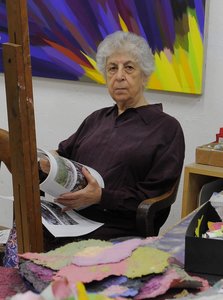
Samia Halaby
1936 - , Palestine
Kratke informacije
- Artistic Movement Or Style: Abstract painting and Computer art
- Artists Or Movements Influenced By This Artist: ['Contemporary abstraction in the Arab world']
- Full Name: Samia A. Halaby
- Nationality: Palestinian-American
- Notable Artworks:
- Pink Flying Over Pink
- Pyramid
- White Cross
- Morning Rain
- Place Of Birth: Jerusalem, Palestine
- Date Of Birth: 1936