Pređi na štampu
 Pročitaj više







































 Za umetnička dela ili reprodukcije čija je bilo koja strana veća od 105 cm (približno 41 inč), okvir će biti isporučen u obliku rastavljenog seta za sklapanje. Ovaj metod osigurava bezbednu dostavu i sprečava oštećenja tokom transporta.


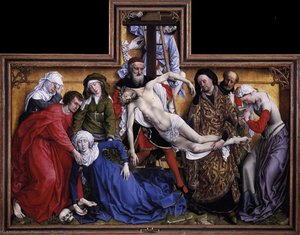
A Masterpiece of Emotion: Exploring Rogier van der Weyden’s ‘The Last Judgment Polyptych’
Rogier van der Weyden (c. 1399 – 1464), a Flemish painter whose legacy continues to inspire awe and admiration, stands as one of the foremost figures in Early Netherlandish art. Born in Tournai, Belgium—a city steeped in medieval tradition—van der Weyden’s artistic journey began not with brushes but with the meticulous craft of goldsmithing, an apprenticeship that instilled within him a profound understanding of detail and precision – qualities which would become inseparable from his distinctive visual language.
- Subject Matter: The monumental ‘Last Judgment Polyptych,’ completed around 1443-1451, depicts the apocalyptic scene described in the Book of Revelation. It portrays Christ presiding over Heaven, flanked by Mary Magdalene and Saint John the Evangelist, overseeing the judgment of humanity – a dramatic representation of divine justice and salvation.
- Style: Van der Weyden’s style is characterized by its unparalleled realism and psychological depth. Departing from the stylized conventions of his predecessors, he embraced a humanist approach, prioritizing expressive emotion and capturing nuanced facial expressions to convey profound spiritual contemplation.
The Polyptych itself—a complex arrangement of panels depicting scenes from the Gospels and culminating in the Judgment Day—represents a pinnacle of artistic innovation. Van der Weyden’s technique involved layering thin glazes of oil paint over meticulously prepared gesso, achieving astonishing luminosity and textural richness. This painstaking process allowed him to render fabrics with breathtaking accuracy, capturing folds and creases that seemed to breathe with life.
Symbolism: Beyond its narrative depiction, the artwork is laden with symbolic significance. The rainbow—a symbol of God’s covenant—represents divine mercy amidst judgment. The figures themselves embody archetypal roles representing faith, repentance, and redemption. Notably, the central figure of Christ embodies compassion and solemn authority simultaneously – a masterful portrayal reflecting the theological concerns of the period.
Historical Context: Created during the Burgundian Renaissance, ‘The Last Judgment’ reflects the burgeoning humanist spirit that questioned medieval dogma while retaining its reverence for Christian faith. It stands as testament to Van der Weyden's ability to synthesize artistic innovation with spiritual contemplation—a feat that cemented his place among the greatest painters of his time.
- Smarthistory Link: Explore Smarthistory’s Analysis
- Beaune Altarpiece Reference: Consider the influence of similar monumental altarpieces on Van der Weyden's approach to composition and storytelling.
Pitanja i odgovori
Postoji li informativni list o delu „The Last Judgment Polyptych (detail)”, autor Roge Van Der Vejden namenjen studentima?
Stranica Vodič za učenike za delo „The Last Judgment Polyptych (detail)”, autor Roge Van Der Vejden nudi štampani informativni list u dve stranice: sam rad sa tabelom identifikacije, vremensku traku koja ga smešta u period života umetnika, druga dela istog umetnika, izmerenu paletu boja i citate spremne za kopiranje u četiri stila.
Koja boja dominira kompozicijom dela „The Last Judgment Polyptych (detail)”, autor Roge Van Der Vejden?
Dominantna boja dela „The Last Judgment Polyptych (detail)”, autor Roge Van Der Vejden je Putty (#dbb69d).
Koju emociju prenosi „The Last Judgment Polyptych (detail)”, autor Roge Van Der Vejden?
Emocionalni ton zabeležen za „The Last Judgment Polyptych (detail)”, autor Roge Van Der Vejden je Dramatic, što sažima osećaj koji ovo delo izražava.
 Pregledaj u prostoru
 Pošalji
 Podeli
 Detalji o delu
 Vodič
Vodič

 Preuzmi
 Slični predmeti
 Rendgenski snimak
 Automatska prezentacija
 Q&A
Q&A Statistika