Pređi na štampu
 Pročitaj više







































 Za umetnička dela ili reprodukcije čija je bilo koja strana veća od 105 cm (približno 41 inč), okvir će biti isporučen u obliku rastavljenog seta za sklapanje. Ovaj metod osigurava bezbednu dostavu i sprečava oštećenja tokom transporta.


A Window into Rural Tranquility: Exploring Robert Bevan’s “The Chestnut Tree”
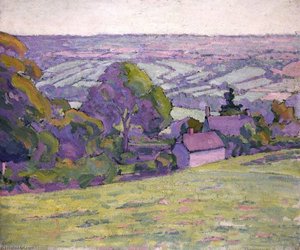
Robert Bevan's "The Chestnut Tree," painted in 1916–1919, stands as a cornerstone of British Modernism—a testament to the burgeoning artistic spirit of its time and a beautifully rendered depiction of rural England. Currently residing within the Ashmolean Museum’s collection in Oxford, this oil on canvas masterpiece transcends mere representation; it embodies a profound engagement with color, composition, and the subtle nuances of landscape painting. Bevan's stylistic approach firmly rooted itself in Impressionism but swiftly moved beyond its limitations, embracing bolder brushstrokes and prioritizing emotional resonance over photographic accuracy—a characteristic that distinguishes him from contemporaries like Alexander Young, whose pastoral scenes similarly captured the beauty of the countryside.- Style & Influences: Bevan’s artistic vision drew heavily from Impressionistic principles yet pushed boundaries toward a more expressive style. Comparisons to Alexander Young highlight shared stylistic inclinations in portraying idyllic rural landscapes.
- Color Palette: The painting's dominant hues—primarily blues and whites—establish an atmosphere of serenity, mirroring the tranquil mood conveyed by similar works like Landøen in Asker by Aksel Waldemar Johannessen. These colors aren’t merely decorative; they actively contribute to the overall feeling of peace and contemplation.
- Composition & Technique: Bevan skillfully employs compositional techniques to guide the viewer's gaze, creating a sense of depth and movement—a hallmark of Modernist painting. The artist’s meticulous brushwork captures the texture of bark and foliage with remarkable precision.
Elements of Scene and Symbolism
“The Chestnut Tree” presents a carefully constructed tableau featuring a modest farmhouse nestled amidst rolling hills populated by cows and pigs—a quintessential image of rural Britain during the First World War era. A solitary figure occupies the foreground, subtly hinting at human connection within this natural setting. However, the centerpiece is undoubtedly the chestnut tree itself, dominating the composition with its upward-reaching branches symbolizing resilience and aspiration against a backdrop of muted blues and whites. The tree’s presence speaks to themes of permanence amidst change—a poignant reflection of Britain's experience during wartime.- Farmhouse & Animals: Representing traditional rural life, the farmhouse and livestock embody stability and heritage.
- The Chestnut Tree: Symbolizing strength and hope, its branches reach towards the sky, conveying a message of perseverance.
Comparative Works & Artistic Legacy
Similar themes and stylistic considerations can be observed in paintings such as Landøen in Asker by Aksel Waldemar Johannessen and “The Chestnut Tree” by Robert Polhill Bevan (available on OriginalUniqueArt.com), demonstrating the widespread fascination with capturing rural landscapes during this period. Bevan’s contribution to British art is significant, marking a pivotal moment in transitioning from Impressionism toward more emotionally driven artistic expressions. His work continues to inspire collectors and interior designers seeking pieces that evoke tranquility and celebrate the beauty of the natural world.Own a Piece of Art History
High-quality reproductions of Robert Bevan’s “The Chestnut Tree” are available on OriginalUniqueArt.com, allowing you to bring this iconic artwork into your home or office—a tangible connection to British Modernism and a celebration of rural serenity. Explore the beauty of Bevan's vision today!Pitanja i odgovori
Zašto je status autorskih prava za "The Chestnut Tree" takav kakav jeste?
„The Chestnut Tree”, autor Robert Polhil Bevan je u u javnom vlasništvu – autorska prava su istekla. Autorska prava traju od smrti umetnika, koja se dogodila 1925.
Kakvo je opšte raspoloženje dela „The Chestnut Tree”, autor Robert Polhil Bevan?
„The Chestnut Tree“ odiše Serene atmosferom.
Da li postoji prezentacija u obliku slajdova za „The Chestnut Tree”, autor Robert Polhil Bevan?
Dostupna je i prezentacija slika: stranica Galerija slika za delo „The Chestnut Tree”, autor Robert Polhil Bevan.
 Pregledaj u prostoru
 Pošalji
 Podeli
 Detalji o delu
 Vodič
Vodič

 Preuzmi
 Slični predmeti
 Rendgenski snimak
 Automatska prezentacija
 Q&A
Q&A Statistika