

 Pregledaj u prostoru
 Podeli
 Podeli
 Detalji
 Vodič
Vodič

 Preuzmi sliku
 Slični predmeti
 Rendgenski snimak
 Automatska prezentacija
 Statistika
Demonstracija crteža


 Pročitaj više
Umetničko delo prikazano na ovoj stranici zaštićeno je autorskim pravima, što znači da zakonski nismo u mogućnosti da kreiramo niti prodajemo identičnu reprodukciju. Ova zaštita se sprovodi u skladu sa međunarodnim sporazumima kao što su Bernska konvencija i nacionalnim zakonima, uključujući i one koji su definisani u Američki zakon o autorskom pravu – Naslov 17.
Ovaj metod je u potpunosti usklađen sa regulativama o autorskim pravima jer ne podrazumeva kopiranje ili dupliranje zaštićenih umetničkih dela. Umesto toga, reč je o kreativnoj reinterpretaciji – novom slikarskom delu koje je inspirisano originalom, ali nije identično njemu.
Giclee štampa / Umetnički otisak
Giclée štampa ili print na platnu muzejskog kvaliteta uz brzu izradu i raznovrsne opcije završne obrade. ( Naručite ručno oslikano reprodukciju Pređi na prodaju digitalnih slika)




P118B дин10

P118H дин10

P118W дин10

P438Z дин10

P508JH дин12

P508YH дин12

P805H дин10

P805Z дин10

P919BZ дин10

P919G дин10

P919XJ дин10

P959ZH дин10

P968JZ дин12

W106C дин8

W218G дин10

W218JH дин8

W218Y дин10

W307PJ дин10

W316G дин10

W316PJ дин8

W316Y дин10

W398PJ дин8

W4111J дин10

W500HY дин15

W500JH дин15

W692G дин12

W849H дин8

W940BG дин15

W953PJ дин8




Izaberite jednu od naših unapred definisanih veličina koje odgovaraju originalnim proporcijama umetničkog dela.

Unesite širinu i visinu koja vam je potrebna, kako bi se uklopili u vaš ram ili na vaš zid. Štampa se može samo iseći, nikada ne može biti veća od originalne slike, stoga format sa drugačijim proporcijama gubi deo slike. Poslaćemo vam digitalni prikaz radi potvrde pre nego što započnemo štampu. Slika prikazana na ovoj stranici ne pokazuje stvarni rez — to pokazuje samo digitalni prikaz.
Dostava širom sveta () za 2 nedelje umesto uobičajenih 4/5 nedelja. (27 октобар)

Besplatna ekspresna dostava širom sveta

Visokokvalitetno laneno platno

Sveobuhvatno osiguranje transporta

Garancija povraćaja carine i uvoznih dažbina

Garancija vernosti boja i autentičnosti pri reprodukciji

Politika povraćaja u roku od 100 dana (samo u slučaju nedostataka)

Garancija povrata 100% novca

Popust pri većoj količini
 Opcija sa staklom dostupna je samo za dimenzije manje od 110 cm

Demonstracija crteža
Giclee štampa / Umetnički otisak
Veličina reprodukcije
-


Ukupna cena
дин 8266
Demonstration Drawings - Rirkrit Tiravanija: A Reflection on Shared Experience
Rirkrit Tiravanija stands apart from many contemporary artists, prioritizing not merely visual aesthetics but the profound connection between art and human interaction. His artistic philosophy—described succinctly as “bringing people together”—guides his practice across mediums, establishing a core principle that distinguishes him from conventional creative endeavors. This ethos originates in formative years spent traversing Thailand, Ethiopia, and Canada, experiences that profoundly shaped his worldview and became integral to the conceptual bedrock of his art. Initially drawn to history at Carleton University, Tiravanija’s academic pursuits evolved into an immersive engagement with visual arts, culminating in studies at Ontario College of Art and Banff Centre School of Fine Arts before embarking on a postgraduate journey through the School of the Art Institute of Chicago and Whitney Independent Studies Program. Moving to Manhattan in 2001 solidified his commitment to artistic exploration and collaboration—a dedication that continues to define his creative output today.The Conceptual Core: Relational Aesthetics
Tiravanija’s work is firmly rooted in the influential “Relational Aesthetics” movement spearheaded by Nicolas Bourriaud, which posits that art should transcend passive reception and actively stimulate social engagement. Unlike traditional artistic expressions focused on individual brilliance or formal innovation, Tiravanija seeks to generate dialogues between artists and audiences—creating spaces where shared experiences foster connections and provoke contemplation about societal dynamics. This approach isn't merely stylistic; it represents a fundamental belief in the transformative potential of human interaction as a catalyst for personal growth and social change.Untitled (Demonstration No. 145): A Visual Echo of Protest
“Untitled (Demonstration No. 145)” exemplifies Tiravanija’s distinctive style—characterized by meticulous detail and understated elegance—while simultaneously embodying the spirit of Relational Aesthetics. The artwork itself is a photographic print, capturing a seemingly simple tableau: a table laden with ingredients for preparing Pad Thai – a popular Thai noodle dish. However, beneath this surface lies a complex symbolic gesture. Tiravanija commissioned Thai artists to create drawings mirroring images from the International Herald Tribune documenting mass uprisings against authoritarian regimes and global capitalism. The resulting prints serve as visual reminders of collective resistance and underscore the importance of confronting injustice—themes central to Tiravanija’s artistic vision.Technique and Materiality: Embracing Simplicity
The execution of “Untitled (Demonstration No. 145)” reflects Tiravanija's commitment to understated materiality. The photograph itself is printed on archival paper, ensuring its longevity and preserving the nuances of color and texture. This deliberate choice aligns with Tiravanija’s broader aesthetic sensibility—one that favors clarity and directness over elaborate ornamentation. By focusing on fundamental elements – food preparation and visual representation – he invites viewers to consider not just what they see but also how art can contribute to fostering empathy and promoting social awareness.Emotional Resonance: Invitation to Dialogue
Ultimately, Tiravanija’s “Untitled (Demonstration No. 145)” transcends mere visual depiction; it functions as an invitation—a subtle encouragement—to engage in conversation about pressing societal issues. Like many of his installations and artworks, it operates on a level beyond the purely aesthetic, prompting reflection on themes of collective action, social responsibility, and the enduring power of human connection. It’s a testament to Tiravanija's conviction that art possesses the capacity to inspire meaningful dialogue and contribute to shaping a more compassionate and equitable world—a legacy that continues to resonate within the contemporary artistic landscape.Pitanja i odgovori
Koji prostor se uklapa sa bojama dela „Demonstracija crteža”, Rirkrit Tiravanija?
Sa svojom paletom u nijansama Neutralne boje, delo „Demonstracija crteža”, Rirkrit Tiravanija se preporučuje za Dnevna soba. Boje su jedan od razloga za ovakvu sugestiju.
Gde mogu kupiti ručno oslikano reprodukciju dela „Demonstracija crteža”, Rirkrit Tiravanija?
Ručno oslikane kopije dela „Demonstracija crteža”, Rirkrit Tiravanija mogu se kupiti na stranici ovaj veb-sajt: ručno oslikana uljana reprodukcija na lanenom platnu, putem njihove stranice za naručivanje reprodukcija Ručno oslikana reprodukcija.
Da li je „Demonstracija crteža”, Rirkrit Tiravanija svetlo ili tamno umetničko delo?
„Demonstracija crteža“ ima ukupnu osvetljenost od blistav, dok je luminansa Blaga luminancija.
Biografija umetnika
The Art of Shared Experience: The Life and Vision of Rirkrit Tiravanija
To encounter the work of Rirkrit Tiravanija is to step away from the silent, sterile halls of traditional galleries and into a living, breathing space of human connection. Born in Buenos Aires, Argentina, in 1961, Tiravanija’s identity was forged through a nomadic childhood that spanned the diverse landscapes of Thailand, Ethiopia, and Canada. This global upbringing instilled in him a profound understanding of cultural fluidity and the universal language of shared existence. His artistic journey, while academically rooted in history and fine arts—spanning institutions from Carleton University to the School of the Art Institute of Chicago—eventually transcended the boundaries of the canvas and the sculpture to embrace the very essence of social interaction.
Tiravanija’s practice is famously defined by the concept of Relational Aesthetics, a term coined by curator Nicolas Bourriaud to describe art that takes as its theoretical horizon the realm of human interactions and its social context. Rather than producing static objects for passive observation, Tiravan andija creates environments that function as stages for living. His work rejects the idea of the artwork as an isolated commodity, instead prioritizing the ephemeral magic that occurs when strangers become participants in a shared moment. Through his lens, art is not something to be looked at, but something to be lived, tasted, and felt.
Breaking Bread: The Radicalism of the Everyday
The early 1990s marked a seismic shift in contemporary art with the arrival of Tiravanija’s groundbreaking installations. In his seminal work, “Pad Thai,” presented at the Paula Allen Gallery, he famously abandoned the traditional gallery object entirely. Instead of hanging paintings or placing pedestals, he transformed the exhibition space into a communal kitchen, preparing and serving Pad Thai to visitors. This audacious act of hospitality turned the gallery into a site of nourishment and dialogue, blurring the line between the artist’s labor and the audience's experience. This practice was not merely a performance but an invitation to engage with the conviviality of the everyday.
This theme of culinary connection continued through subsequent projects, such as his 1995 Carnegie International exhibition, where he provided instructions for cooking South-East Asian green curry. By utilizing familiar, domestic tasks like cooking and eating, Tiravanija strips away the pretension often associated with high art, replacing it with a sense of ritual and intimacy. His work serves as a powerful reminder that the most profound artistic experiences can be found in the simplest acts of togetherness, echoing his childhood memories of his grandmother’s garden restaurant where food was always a catalyst for community.
A Legacy of Connection and Social Dialogue
Beyond the sensory delights of shared meals, Tiravanija’s work carries a deep sociopolitical resonance. His more recent endeavors, such as his “Demonstration Drawings,” showcase a different facet of his practice—one that uses visual imagery to reflect on mass uprisings, power, and global capital. By commissioning Thai artists to translate photojournalistic images into drawings, he bridges the gap between historical documentation and contemporary social critique, proving that his commitment to "bringing people together" also extends to fostering critical awareness of the world around us.
The historical significance of Rirkrit Tiravanija lies in his ability to redefine the role of the artist from a creator of objects to a facilitator of experiences. His influence can be seen across generations of artists who seek to dismantle the walls between art and life. As he continues to work between New York, Berlin, and Chiang Mai, his practice remains an enduring testament to the power of relationality—a belief that in an increasingly fragmented world, the most radical act an artist can perform is to create a space where we might truly encounter one another.

Rirkrit Tiravanija
1961 -
Brzi pregled
- Artistic Movement Or Style: Relational Aesthetics
- Artists Or Movements Influenced By This Artist: ['Social Sculpture']
- Artists Who Influenced This Artist:
- Minimalism
- Conceptual Art
- Date Of Birth: 1961
- Full Name: Rirkrit Tiravanija
- Nationality: Thai
- Notable Artworks:
- Pad thai
- Untitled (free/still)
- Tom kha soup
- Place Of Birth: Buenos Aires, Argentina
Srodni članci

The Enduring Form: Sculpture Across History, Technique & Emotional Resonance
Explore the rich history of sculpture with OriginalUniqueArt. Discover key techniques, influential artists & investment potential for discerning collectors. Expert insights into valuing and collecting timeless masterpieces.

Bronze Age to Modern Masters: 10 Sculptures That Redefined Art | OriginalUniqueArt
Journey through art history with 10 legendary bronze sculptures – from Michelangelo's David to Rodin’s Thinker. Explore the stories, techniques & timeless beauty of these masterpieces. Find museum-quality reproductions & elevate your home decor on OriginalUniqueArt.com.

The Enduring Form: Exploring Themes & Techniques in Sculpture Across Historical Periods
Explore the rich history of sculpture from ancient masterpieces to contemporary innovations. Discover key techniques, influential artists & investment potential for discerning art collectors.

Bronze Sculptures That Defined Art History | OriginalUniqueArt
Journey through art history with our Top 10 bronze sculptures! Explore masterpieces by Rodin, Michelangelo & more. Discover stories behind iconic statues and find museum-quality reproductions for your home decor at OriginalUniqueArt.com.
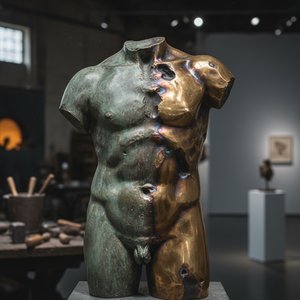
Nasleđe bronze: Istorija, tehnike i savremene interpretacije skulpture – vodič za kolekcionare
Istražite bogatu istoriju bronze i tehnike livenja skulptura. Saveti za kolekcionare, investiciono vrednovanje i savremene interpretacije aluminijumske bronze. OriginalUniqueArt – stručnjaci za umetnost.
