High Renaissance
St. Michael and Satan (Рафаел)
Рафаел (1483–1520) je napravio St. Michael and Satan. Pripada pokretu High Renaissance. Izrađeno je u Oil On Panel.
- Oil On Panel

 Pregledaj u prostoru

 Ručno oslikano uljanim bojama
 Pošalji
 Podeli
 Vodič


 Preuzmi
 Slični predmeti
 Rendgenski snimak
 Automatska prezentacija
 Pitanja i odgovori

 Statistika
St. Michael and Satan: osnove
- Naslov
- St. Michael and Satan
- Umetnik
- Рафаел (1483–1520)
- Rođen/a u
- Урбино, Италија
- Tehnika
- Oil On Panel
- Pokret
- High Renaissance
- Period
- Renaissance
- Tema
- christianity, mythology, angel, demon, victory, renaissance
Šta prikazuje St. Michael and Satan?
St. Michael and Satan: A Triumph of Renaissance Faith
The painting St. Michael and Satan by Raphael, a cornerstone of High Renaissance art, transcends mere visual representation; it embodies the spiritual fervor and intellectual ambition that defined its era. Completed in 1518 during Pope Leo X’s reign, this monumental oil on wood panel resides within the Louvre Museum in Paris, continuing to captivate audiences centuries later with its masterful execution and profound symbolism. Raphael's initial inspiration stemmed from a smaller devotional piece – St. Michael – executed around 1504 or 1505—a testament to his unwavering commitment to exploring religious themes through artistic innovation. Commissioned by Francesco Maria I della Rovere, Urbino’s heir, this miniature served as an expression of gratitude for the papal honor bestowed upon him, foreshadowing Raphael's later ambition to tackle grand narratives with unparalleled artistry.- Composition and Narrative: Raphael skillfully employs a pyramidal structure, positioning St. Michael at its apex—a deliberate choice reflecting Christian theology’s emphasis on divine majesty. Beneath him lies Satan, depicted in contorted agony, symbolizing the defeat of evil by righteous force. The dynamic diagonal lines created by the figures propel the viewer's gaze across the canvas, intensifying the dramatic tension inherent in the biblical tale.
- Color Palette and Technique: Raphael’s palette is characterized by earthy browns and blues—muted hues that convey solemnity and grandeur—contrasting sharply with Satan’s darker tones of grey and brown. His meticulous brushwork achieves remarkable textural detail, capturing the musculature of St. Michael's body and the drapery of their garments with breathtaking realism. The use of oil paint on wood allows for subtle gradations of color and ensures exceptional durability, guaranteeing that Raphael’s vision persists through time.
- Symbolism and Spiritual Significance: Beyond its aesthetic beauty, St. Michael and Satan is laden with religious symbolism. St. Michael embodies divine protection and righteousness—a warrior angel battling the forces of darkness—while Satan represents temptation and despair. The bird soaring above symbolizes hope and ascension, reinforcing the overarching message of triumph over adversity.
- Influence and Legacy: Raphael’s artistic prowess profoundly impacted subsequent generations of painters, notably Charles Le Brun at Académie royale de peinture et de sculpture, establishing a foundational aesthetic for French classicism. His meticulous attention to detail and harmonious balance continue to inspire artists today, cementing St. Michael and Satan's place as an enduring masterpiece of Renaissance art.
Further Exploration & Inspiration
Consider commissioning a high-quality reproduction of Raphael’s St. Michael and Satan for your home or studio—a tangible connection to one of the most celebrated artworks in Western history. Explore similar pieces from other masters of the Renaissance, delving into themes of faith, heroism, and artistic excellence. Visit Michaelskirche in Munich or explore the Michael C. Carlos Museum in Atlanta for immersive experiences showcasing comparable artistic traditions.St. Michael and Satan u visokoj rezoluciji

Javno dobro: umetnik je preminuo 1520.
Više dimenzija, kadriranih prikaza i citata →Рафаел, St. Michael and Satan. Javno dobro.
Digitalni stručnjak proverava boje u odnosu na originalno delo i retušira datoteku, vernu umetnikovim potezima četkice.
Kupite sliku visoke rezolucijePitanja o St. Michael and Satan
Kojom tehnikom je urađeno „St. Michael and Satan”, autor Рафаел?
Рафаел je koristio/la tehniku Oil On Panel za delo "St. Michael and Satan". Ova tehnika definiše materijalnu prirodu originalnog dela.
Šta prikazuje „St. Michael and Satan”, autor Рафаел?
Motivi dela "St. Michael and Satan" su christianity, mythology, angel, demon, victory, renaissance, allegory.
Da li je "St. Michael and Satan" slobodan od autorskih prava?
„St. Michael and Satan”, autor Рафаел pripada u javnom vlasništvu – autorska prava su istekla. Ovaj status određuje način na koji se slika dela može reprodukovati.
Kome se pripisuje delo "St. Michael and Satan"?
Delo "St. Michael and Satan" pripisuje se umetniku Рафаел.
Koji umetnički pravac obuhvata „St. Michael and Satan”, autor Рафаел?
„St. Michael and Satan”, autor Рафаел pripada pravcu High Renaissance. Ovaj pravac pruža stilski kontekst dela.
U kom periodu karijere Рафаел pripada delo "St. Michael and Satan"?
U okviru karijere umetnika Рафаел, delo "St. Michael and Satan" pripada periodu Mature, što omogućava poređenje sa drugim radovima ovog autora.
Zašto je status autorskih prava za "St. Michael and Satan" takav kakav jeste?
„St. Michael and Satan”, autor Рафаел je u u javnom vlasništvu – autorska prava su istekla. Autorska prava traju od smrti umetnika, koja se dogodila 1520.
Gde se "St. Michael and Satan" nalazi u okviru opusa umetnika Рафаел?
U okviru celokupnog stvaralaštva umetnika Рафаел, delo "St. Michael and Satan" pripada stilu High Renaissance, uz prisustvo tema kao što su divine triumph, renaissance ideals, christian symbolism, patronage, artistic legacy.
Da li je "St. Michael and Satan" tipično za ono što je Рафаел obično stvarao?
Među upečatljivim temama umetnika Рафаел – divine triumph, renaissance ideals, christian symbolism, patronage, artistic legacy – delo "St. Michael and Satan" donosi sopstveni fokus na christianity, mythology, angel, demon, victory, renaissance, allegory.
O umetniku, Рафаел

1483–1520, Италија
Рафаел
Рафаело: Легенда Изазване Светлом Рафаело Санцио да Урбино, познат свету као Рафаело, израстао је из изузетно плодне културне атмосфере. Рођен 1483. године у Урбину, малом али интелектуално живом граду-држави у централној Италији, његове прве године биле су испуњене окружењем које је ценило и умнешко вештине и хуманистичко образовање. Његов отац, Ђовани Санти, није био само сликар запослен код војводе Федерика да Монтефелтра – он је био човек дубоко ангажован у струјама ренесансног мишљења, песник који је хроничарио живот војводе и активно тражио иновативне уметничке идеје из целе Италије и шире.
Takođe i Рафаел
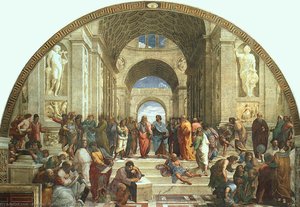 Атенска школа1511
 Систинска мадона1513
 Transfiguracija1520
 Venčanje Device Marije1504
Eseji o delu St. Michael and Satan
 Masterpieces of Perfection: The Top 25 Greatest Artworks by RaphaelJourney through the sublime beauty of the High Renaissance with our curated list of Raphael's top 25 masterpieces. From iconic Madonnas to …
 Renaissance Visions: Exploring Themes & Techniques in 16th-Century PaintingExplore the captivating world of Renaissance painting! Discover key themes, masterful techniques & iconic artworks from Leonardo da Vinci t…
 25 Masterpieces of the Sistine Chapel: A Journey Through Michelangelo's Divine ArtStep into the divine beauty of the Sistine Chapel. Explore 25 iconic Renaissance masterpieces by Michelangelo and beyond. From breathtaking…