

 Pošalji
 Podeli
 Detalji o delu

 Преузми
 Slični predmeti
 Slajdovi
Ruth Gleaning
 Marble
- Sculpture
- Neoclassical Style
 1856
1856- 19th Century
 116.0 x 60.0 cm
 Metropolitan Museum of Art
 Pročitaj više
Kupite digitalnu sliku visoke rezolucije i poboljšanog kvaliteta, koja je znatno superiornija od onoga što vidite u online prikazu.
Svaka datoteka je pedantno pripremljena od strane naših stručnjaka koristeći napredne alate i profesionalnu ručnu retušu. Osiguravamo da svaka slika ima izuzetnu oštrinu, preciznu reprodukciju boja i fine detalje.
Konačna datoteka se dostavlja putem e-pošte u roku od 72 sata, optimizovana za neposrednu upotrebu u profesionalnim, izdavačkim i štamparskim okruženjima. To je isti kvalitet kojem veruju vrhunski studiji dizajna, izdavači i galerije.
Digitalna slika
Preuzmite datoteku visoke rezolucije za ličnu upotrebu, štampanje i kreativne projekte. ( Kupi print Kupi ručno naslikanu sliku)
Uključeno uz svaku porudžbinu digitalne slike
Profesionalna digitalna isporuka, zagarantovana
Kada odaberete OriginalUniqueArt.com, ne dobijate samo sliku – vi primate profesionalno unapređeno digitalno umetničko delo, izrađeno sa najvećom preciznošću i uz garanciju zadovoljstva. Evo svega što automatski dolazi uz vašu porudžbinu:

Brza dostava putem e-pošte
Vaša digitalna slika visoke rezolucije biće vam poslata putem e-pošte u roku od 72 sata od poručivanja – spremna za trenutnu upotrebu.

Digitalna datoteka unapređena veštačkom inteligencijom
Vaše umetničko delo je profesionalno optimizovano korišćenjem naprednih AI alata i ručne obrade, čime se osiguravaju maksimalni detalji, oštrina i preciznost boja.

Besplatna ponovna isporuka doživotno
Slučajno ste obrisali ili izgubili svoju datoteku? Ne brinite – poslaćemo vam je ponovo u bilo kom trenutku, potpuno besplatno.

Bez troškova uvoza – zauvek
Uživajte u svojim umetničkim delima trenutno, bez carine, dažbina ili troškova dostave – digitalni download je uvek bez poreza.

Garancija vernosti boja
Uz pomoć profesionalnih alata i upravljanja bojama, osiguravamo da vaša digitalna slika što vernije odražava originalne boje.

Garancija zadovoljstva u roku od 60 dana
Ako niste zadovoljni svojom digitalnom slikom, revidirat ćemo je ili vratiti 100% novca u roku od 60 dana – bez ikakvih pitanja.

100% garancija povrata novca
Niste zadovoljni? Obezbedite pun povrat novca u roku od 60 dana od trenutka kada ste primili svoju digitalnu datoteku – bez suvišnih pitanja.

Popusti na velike porudžbine
Kupite 3 slike, uštedite 10% - Kupite 5 slika, uštedite 15% - Kupite 10+ slika, uštedite 20%. Odlično za kreativne projekte, galerije i agencije.
Opis kolekcionarskog dela
Randolph Rogers: A Neoclassical Visionary Bridging Italy and America
Randolph Rogers (1825-1892) stands as a pivotal figure in 19th-century American sculpture, an expatriate artist who forged a remarkable career bridging the artistic traditions of Europe with his distinctly American sensibility. Born in Waterloo, New York, and raised in Ann Arbor, Michigan—a childhood seemingly devoid of artistic inclination—Rogers’s journey was one of unexpected discovery and ultimately, international acclaim. His story is not merely that of a sculptor; it's a testament to the transformative power of travel, mentorship, and the pursuit of creative passion. Initially drawn to woodcuts and engraving, Rogers’s path shifted dramatically when, at the age of twenty, he relocated to New York City seeking employment in the burgeoning field of graphic arts. Despite his earnest efforts, finding work proved elusive, leading him to a temporary position as a clerk within a dry-goods store. It was during this serendipitous encounter that he found guidance from Hiram Powers, the celebrated sculptor who championed Grecian idealism and established the American Sculpture Garden—a formative experience that instilled in Rogers a profound appreciation for classical art forms. Rogers’s subsequent travels to Italy solidified his artistic vision, immersing him in the vibrant atmosphere of Rome and fostering collaborations with fellow artists like Giuseppe Verdi and Francesco Hayez. He embraced Neoclassical style wholeheartedly, mirroring the aesthetic principles championed by Jacques-Germain Durande and Antonio Canova—artists who sought to recapture the grandeur and harmony of ancient Greece and Rome through idealized representations of human form and emotion. This stylistic allegiance is powerfully evident in “Ruth Gleaning,” Rogers’s monumental sculpture commemorating the biblical tale recounted in Ruth 2:1–13, a poignant depiction of compassion and generosity amidst hardship.The Sculpture's Subject Matter and Symbolism
“Ruth Gleaning” portrays Ruth, a Moabite widow who embodies unwavering devotion to her Jewish kinsman Boaz after losing her husband Naomi. The sculpture captures the moment when Ruth kneels before Boaz, humbly accepting his offer of assistance—a gesture symbolizing gratitude for divine providence and the enduring strength of familial bonds. Rogers meticulously rendered Ruth’s posture and expression, conveying a sense of quiet contemplation and heartfelt supplication. Her clasped hands represent humility and prayerfulness, while her gaze directs upward towards heaven, signifying faith and trust in God's benevolence. The sculpture serves as a visual meditation on themes of piety, charity, and the triumph of spiritual virtue over material concerns—values deeply rooted in Christian morality.Technique and Material Considerations
Rogers skillfully employed marble—a favored medium for Neoclassical sculptors—to achieve remarkable textural detail and luminosity. The sculptor painstakingly carved the figure from a block of Carrara marble, utilizing chisels and hammers with unwavering precision to sculpt the delicate contours of Ruth’s body and drapery. Rogers's meticulous attention to surface finish resulted in a polished surface that reflects light beautifully, enhancing the sculpture’s visual impact and conveying an impression of ethereal grace. The octagonal pedestal upon which “Ruth Gleaning” rests provides structural stability while simultaneously emphasizing the sculpture’s central form—a deliberate compositional choice designed to draw the viewer's eye directly to the figure itself. Furthermore, Rogers incorporated subtle gradations in tone within the marble, creating depth and dimension that contribute to the sculpture’s overall realism and expressive power.Historical Context and Artistic Legacy
“Ruth Gleaning” was created during a period of significant artistic ferment in America—the mid-1850s—as the nation grappled with questions of identity and moral purpose following the Civil War. Rogers's sculpture reflects the broader cultural preoccupation with themes of piety, compassion, and social responsibility—values championed by reformers and intellectuals alike. It stands as a testament to the enduring influence of classical art on American artistic sensibilities and exemplifies the Neoclassical movement’s commitment to portraying idealized human figures imbued with moral virtue. Today, “Ruth Gleaning” resides in The Metropolitan Museum of Art, where it continues to inspire admiration for its exquisite craftsmanship and profound symbolic resonance—a timeless masterpiece that embodies the spirit of humanist idealism.Biografija umetnika
Randolph Rogers: A Neoclassical Visionary Bridging Italy and America
Randolph Rogers (1825-1892) stands as a pivotal figure in 19th-century American sculpture, an expatriate artist who forged a remarkable career bridging the artistic traditions of Europe with his distinctly American sensibility. Born in Waterloo, New York, and raised in Ann Arbor, Michigan—a childhood seemingly devoid of artistic inclination—Rogers’s journey was one of unexpected discovery and ultimately, international acclaim. His story is not merely that of a sculptor; it's a testament to the transformative power of travel, mentorship, and the pursuit of creative passion. Initially drawn to woodcuts and engraving, Rogers’s path shifted dramatically when, at the age of twenty, he relocated to New York City seeking employment in the burgeoning field of graphic arts. Despite his earnest efforts, finding work proved elusive, leading him to a temporary position as a clerk within a dry-goods store. It was during this seemingly unremarkable period that his latent talent for sculpture was unexpectedly recognized by his employers, who generously provided funds for him to embark on an extraordinary adventure: a sojourn to Italy.Early Years and Italian Apprenticeship
Rogers’s arrival in Florence in 1848 marked the beginning of a profoundly influential chapter in his artistic development. He enrolled at the Accademia di San Marco, studying under Lorenzo Bartolini, a celebrated Neoclassical sculptor whose influence would shape Rogers's style for years to come. Bartolini’s emphasis on anatomical accuracy, idealized forms, and classical principles provided a rigorous foundation for Rogers’s burgeoning skills. However, Rogers’s artistic journey wasn’t solely defined by formal instruction; he immersed himself in the vibrant cultural landscape of Florence, absorbing the legacy of Renaissance art and engaging with the established artistic community. Crucially, his time in Italy exposed him to the techniques of Italian artisans, particularly in marble carving – a medium that would ultimately become central to his most enduring works. It’s important to note that Rogers's approach to marble was unique; he often created original designs in other materials—bronze, wax—and then commissioned skilled Italian sculptors to meticulously replicate them in marble, allowing him to capitalize on the popularity of his creations while retaining creative control.Major Commissions and Artistic Breakthroughs
Rogers’s career gained significant momentum following his return to New York City in 1854. His early successes included a striking statue of President John Adams for Mount Auburn Cemetery in Cambridge, Massachusetts—a piece that established his reputation and demonstrated his ability to capture the gravitas and dignity of historical figures. However, it was his monumental commission for the East Front doors of the United States Capitol (1855-1861) that truly catapulted him to national prominence. The “Columbus Doors,” depicting scenes from Christopher Columbus’s voyages, were a resounding success, showcasing Rogers's mastery of narrative sculpture and his ability to translate complex historical events into compelling visual narratives. The doors’ popularity was further solidified by the fact that they were cast in Munich and installed in Washington D.C., demonstrating an international reach for his work. Beyond the Columbus Doors, Rogers continued to produce a remarkable array of sculptures, including “Nydia,” the Blind Flower Girl of Pompeii (1853-1854), inspired by Edward Bulwer-Lytton’s novel *The Last Days of Pompeii*. This poignant depiction of a young girl offering flowers to a blind beggar resonated deeply with audiences and cemented Rogers's reputation for capturing both beauty and pathos. His work also extended to monumental bronze statues, such as the Soldiers’ National Monument in Gettysburg, Pennsylvania, and the Rhode Island Soldiers’ and Sailors’ Monument in Providence, Rhode Island—testaments to his skill and dedication during a period of national mourning and remembrance.Style, Technique, and Legacy
Rogers's artistic style is firmly rooted in Neoclassicism, characterized by its emphasis on idealized forms, balanced compositions, and classical references. His sculptures often exhibit a serene grace and dignified composure, reflecting the influence of Bartolini and the broader tradition of Italian sculpture. While he embraced neoclassical principles, Rogers’s work also reveals a distinctly American sensibility—a focus on narrative storytelling and an ability to imbue his figures with emotional depth. He was particularly adept at capturing subtle expressions and conveying a sense of human vulnerability. It's worth noting that Rogers's studio in Rome became a hub for American expatriate sculptors, fostering a vibrant exchange of ideas and techniques. His legacy extends beyond his individual works; he played a significant role in shaping the development of sculpture in America during the 19th century. His influence can be seen in the work of subsequent generations of American sculptors who drew inspiration from his mastery of form, technique, and narrative storytelling.Later Years and Final Contributions
In 1873, Rogers achieved a remarkable honor by being elected to the Accademia di San Luca in Rome—a prestigious distinction reserved for leading artists. He was also knighted by King Umberto I of Italy in 1884, recognizing his contributions to the arts and culture. Despite these accolades, Rogers’s later years were marked by declining health, culminating in a debilitating stroke in 1882. He spent his final years residing in Rome, surrounded by his family and continuing to oversee the production of his sculptures. Randolph Rogers died on January 15, 1892, leaving behind a substantial body of work that continues to captivate audiences today. His contributions to American sculpture are undeniable, solidifying his place as a significant figure in the nation’s artistic history—a sculptor who successfully blended European tradition with uniquely American vision.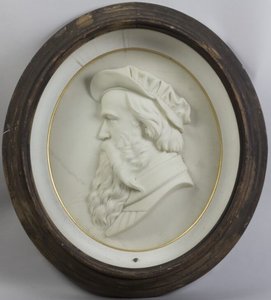
Randolph Rogers
1825 - 1892

