
 Pregledaj u prostoru
 Pošalji
 Podeli
 Detalji o delu
 Vodič
Vodič

 Preuzmi
 Slični predmeti
 Rendgenski snimak
 Automatska prezentacija
 Pitanja i odgovori
 Statistika
Spring, 1565


 Pročitaj više
Giclee štampa / Umetnički otisak
Giclée štampa ili print na platnu muzejskog kvaliteta uz brzu izradu i raznovrsne opcije završne obrade. ( Kupite ručno oslikano delo Pređi na digitalnu sliku)




P118B дин10

P118H дин10

P118W дин10

P438Z дин10

P508JH дин12

P508YH дин12

P805H дин10

P805Z дин10

P919BZ дин10

P919G дин10

P919XJ дин10

P959ZH дин10

P968JZ дин12

W106C дин8

W218G дин10

W218JH дин8

W218Y дин10

W307PJ дин10

W316G дин10

W316PJ дин8

W316Y дин10

W398PJ дин8

W4111J дин10

W500HY дин15

W500JH дин15

W692G дин12

W849H дин8

W940BG дин15

W953PJ дин8




Izaberite jednu od naših unapred definisanih veličina koje odgovaraju originalnim proporcijama umetničkog dela.

Unesite željenu širinu i visinu kako bi se štampa uklopila u vaš ram ili zid. Štampu je moguće samo iseći, ali nikada povećati iznad dimenzija originalne slike, stoga format sa drugačijim proporcijama uzrokuje gubitak dela slike. Pre početka štampe, poslaćemo vam digitalni prikaz radi potvrde. Slika prikazana na ovoj stranici ne predstavlja stvarni isrez — to pokazuje samo digitalni prikaz.
Dostava širom sveta () za 2 nedelje umesto uobičajenih 4/5 nedelja. (7 новембар)

Besplatna ekspresna dostava širom sveta

Visokokvalitetno laneno platno

Potpuno osiguranje transporta

Garancija povraćaja carine i uvoznih dažbina

Garancija vernosti boja

Politika povraćaja u roku od 100 dana (samo u slučaju nedostataka)

Garancija povrata 100% novca

Popust na više proizvoda
 Opcija sa staklom dostupna je samo za dimenzije manje od 110 cm

Spring, 1565
Giclee štampa / Umetnički otisak
Dimenzije reprodukcije
-


Ukupna cena
дин 8485
A Snapshot of Rural Life: Pieter Bruegel’s “Spring, 1565”
Pieter Bruegel the Elder's "Spring, 1565" isn’t merely a depiction of farm work; it’s a vibrant tapestry woven with threads of observation, social commentary, and the burgeoning spirit of Northern Renaissance art. Painted in 1565, during a period of immense upheaval in Europe – religious conflict, economic shifts, and the rise of urban centers – this remarkable canvas offers a rare glimpse into the rhythms of rural life, capturing not just the physical labor but also the complex relationships between people and their environment.
The scene unfolds with an almost overwhelming sense of activity. Thirteen individuals, rendered with Bruegel’s characteristic earthy realism, are engaged in a multitude of tasks: plowing fields, planting seeds, tending to livestock, and even seemingly idle moments of rest. Cows, strategically placed throughout the landscape – some close to the foreground, others receding into the distance – serve as both practical elements of the farm and symbolic reminders of prosperity and sustenance. A solitary horse adds to the dynamic composition, its presence suggesting movement and the constant cycle of agricultural labor.
The Painter’s Palette: Technique and Style
Bruegel's mastery lies not just in his ability to depict a scene but in his nuanced approach to color and perspective. He employs a muted palette dominated by earthy greens, browns, and ochres, reflecting the natural tones of the countryside. This restrained use of color allows the details – the individual expressions on the workers’ faces, the textures of their clothing, the varied shapes of the animals – to take center stage. The artist's perspective is deliberately flattened, creating a sense of immediacy and drawing the viewer directly into the heart of the action. This technique, characteristic of Northern European painting at the time, prioritized clarity and detail over the illusionistic depth favored by Italian Renaissance masters.
Bruegel’s brushwork is remarkably loose and expressive, particularly in the depiction of the figures. He doesn't strive for photographic realism; instead, he captures the essence of his subjects – their toil, their camaraderie, and their connection to the land. The use of impasto—thickly applied paint—adds a tactile quality to the canvas, inviting us to almost feel the roughness of the soil beneath our feet.
A Window into 16th-Century Society
"Spring, 1565" is more than just a pastoral scene; it’s a subtle commentary on the social and economic realities of its time. The painting reflects the importance of agriculture in Northern Europe, where the vast majority of the population lived and worked on farms. It also hints at the tensions between rural and urban life – the farmers toiling away while the wealthy merchants and artisans prospered in burgeoning cities. The presence of the bowls filled with seeds speaks to the careful planning and foresight required for successful farming, a vital element in a society increasingly reliant on trade and exchange.
Considering Bruegel’s apprenticeship under Pieter Coecke van Aelst, it's clear that he absorbed elements of humanist thought alongside his technical training. However, Bruegel quickly developed a distinctly individual style, one characterized by its earthy realism, social observation, and often satirical undertones. “Spring, 1565” exemplifies this shift – moving beyond idealized representations to offer a grounded and honest portrayal of everyday life.
Capturing the Essence: Reproduction and Beyond
OriginalUniqueArt is proud to offer meticulously crafted hand-painted reproductions of Pieter Bruegel’s “Spring, 1565.” These reproductions strive to capture not only the visual details of the original but also its emotional resonance. Utilizing traditional oil painting techniques and employing a team of skilled artists, we ensure that each reproduction faithfully reflects Bruegel's artistic vision. Whether you are an art collector, interior designer seeking to infuse your space with historical charm, or simply an admirer of this iconic work, our reproductions provide a beautiful and authentic way to experience the enduring power of Pieter Bruegel’s masterpiece.
Pitanja i odgovori
Koja paleta i dominantna boja definišu "Spring, 1565"?
„Spring, 1565“ karakteriše Neutrals paleta u kojoj dominira Rosy Brown (#d1b48d).
Kako mogu da preuzmem sliku dela „Spring, 1565”, autor Пијетр Бругел Старији?
Digitalnu sliku dela „Spring, 1565”, autor Пијетр Бругел Старији možete preuzeti na stranici za preuzimanje ovog umetničkog dela: Preuzimanje digitalnog prikaza: preuzimanje digitalne slike visoke rezolucije.
Kako se umetnički pravac i epoha susreću u delu „Spring, 1565”, autor Пијетр Бругел Старији?
„Spring, 1565“ pripada pravcu Northern Renaissance, a njen autor je stvarao u periodu Renesansa.
Biografija umetnika
Pieter Bruegel the Elder (c. 1525-1569): Renaissance Master of Landscapes & Peasant Life
Pieter Bruegel the Elder emerged during a period of profound change, a time when the artistic landscape of Europe was shifting from the High Renaissance ideals of Italy towards the burgeoning complexities of Northern European expression. Born sometime between 1525 and 1530, likely in Breda – though details surrounding his early life remain somewhat elusive – Bruegel’s formative years unfolded amidst religious upheaval and a flourishing merchant culture. He began his artistic journey around 1545 as an apprentice to Pieter Coecke van Aelst, a respected Antwerp painter known for both his artistry and his designs for tapestries. This apprenticeship provided Bruegel with a solid grounding in the technical skills of oil painting and drawing, but perhaps more importantly, it exposed him to the humanist currents that were beginning to permeate intellectual circles. Van Aelst’s workshop was not merely a place of artistic instruction; it was a crucible where traditional techniques met new ideas, shaping Bruegel's future vision.Early Influences & Artistic Training
Bruegel’s initial artistic training took place under the tutelage of Pieter Coecke van Aelst, a figure who embodied the spirit of Antwerp’s artistic dynamism during this transitional era. Van Aelst’s workshop wasn’t simply focused on mastering painting; it fostered an environment where artists wrestled with emerging humanist philosophies and experimented with innovative compositional strategies. This exposure to humanist thought – particularly the emphasis on observation and rational analysis – would profoundly influence Bruegel's subsequent artistic endeavors. Furthermore, he honed his skills in drawing and etching, disciplines that complemented his painting practice and broadened his artistic repertoire. The Antwerp Guild of Saint Luke recognized Bruegel’s talent early on, granting him admittance as a free master in 1553 – a pivotal moment signifying his professional independence and establishing him as a respected artist within the city's thriving artistic community.Travels & Transformation: Exploring Diverse Cultures
Following his apprenticeship, Bruegel embarked on extensive travels that would irrevocably shape his artistic worldview. Between 1551 and 1553, he ventured into France, Switzerland, and Italy – journeys undertaken not merely for pleasure but as expeditions of intellectual and sensory exploration. These explorations yielded invaluable insights into the artistic traditions of other European nations, particularly Italy, where he encountered the monumental works of Leonardo da Vinci and Michelangelo. However, Bruegel’s artistic temperament remained distinctly Northern European; he didn't simply emulate Italian styles but rather absorbed their influence while retaining his own unique sensibility. The Alps captivated him with their dramatic grandeur, informing the compositional structure and atmospheric perspective found in many of his later landscapes. He meticulously documented these vistas, capturing both their beauty and their inherent complexity—a characteristic that would define his artistic legacy.A Revolutionary Vision: Landscapes Beyond Imitation
What distinguished Bruegel from his contemporaries was his audacious departure from prevailing artistic conventions. While Renaissance painters often idealized nature – striving to represent it in an aesthetically pleasing manner – Bruegel confronted it head-on, portraying it with unflinching realism and a keen awareness of its inherent contradictions. He rejected the notion that art should merely reflect beauty; instead, he sought to illuminate truth—often uncomfortable truths—about human existence and the natural world. His landscapes weren’t simply decorative backgrounds; they were active participants in the narrative, imbued with symbolic meaning and reflecting a deep understanding of nature's power and vulnerability. Consider Landscape with the Flight into Egypt: Bruegel doesn’t depict the biblical scene as a serene pilgrimage but rather presents it as a perilous journey through wintry terrain—a subtle commentary on the challenges faced by pilgrims throughout history.Iconic Masterpieces & Enduring Influence
Bruegel's artistic output produced some of the most recognizable and influential images of the sixteenth century. Paintings like The Triumph of Death – a terrifying depiction of mortality populated by grotesque figures—and Peasant Wedding – a vibrant celebration of rural life brimming with detail and humor—remain enduring symbols of Northern Renaissance art. These works stand apart from many of their contemporaries due to Bruegel’s masterful use of chiaroscuro—the dramatic interplay of light and shadow—which lends depth, realism, and emotional resonance to his compositions. His scenes weren't necessarily didactic; they were honest observations, capturing both the joys and sorrows inherent in human experience. Furthermore, Bruegel’s influence extended far beyond painting, inspiring artists across disciplines – including printmakers and filmmakers – who sought to capture the spirit of his time. He cemented his place as one of the foremost figures in art history—a testament to his unwavering commitment to artistic innovation and his profound understanding of the human condition.
Пијетр Бругел Старији
1525 - 1569 , Није спецификовано
Osnovne informacije
- Artistic Movement Or Style: Renaissance painting
- Artists Who Influenced This Artist: ['Hieronymus Bosch']
- Date Of Birth: c. 1525
- Date Of Death: 1569
- Full Name: Pieter Bruegel the Elder
- Nationality: Flemish
- Notable Artworks:
- Landscape with the Flight into Egypt
- The Triumph of Death
- Peasant Wedding
- Hunters in the Snow
- The Tower of Babel
- Place Of Birth: Breda, Netherlands
Povezani članci

Pieter Bruegel the Elder: A Master of Genre, Landscape & Social Commentary
Explore the life & art of Pieter Bruegel the Elder, a pivotal figure of the Renaissance. Discover his groundbreaking genre scenes, symbolic landscapes, and lasting influence on art history. Learn more at OriginalUniqueArt.

Mastering Detail: A Guide to the Timeless Beauty and Technical Brilliance of Flemish Painting
Explore the exquisite precision of Flemish painting. From Jan van Eyck to Robert Campin, discover the revolutionary oil techniques and rich symbolism that defined the Northern Renaissance and continue to inspire fine art collectors today.

25 Remek-dela Kunsthistorisches Museuma: Umetnička Baština Beča za Vas Dom
Uronite u svet 25 remek-dela Kunsthistorisches Museuma u Beču! Otkrijte priče iza Rafaelovih Madona, Rembrandtovih samoportreta i Vermeerove umetnosti. Inspiracija za dekoraciju enterijera & vrhunske reprodukcije slika na OriginalUniqueArt.com.

Mastering Drama and Light: A Definitive Guide to the Flemish Baroque Art Movement
Explore the dramatic brilliance of the Flemish Baroque movement. Discover how masters like Peter Paul Rubens utilized chiaroscuro and dynamic composition to redefine art history through light, shadow, and unparalleled emotion.
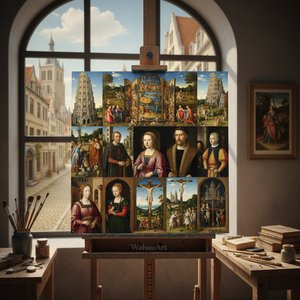
Glavna dela Severne Renesanse: 10 remek-dela koja su obeležila epohu (i vaš dom)
Otkrijte 10 remek dela Severne Renesanse koja su obeležila epohu! Jan van Eyck, Dürer i Bruegel – istražite priče iza ovih umetničkih majstorstava. Inspiracija za vaš dom i vrhunske reprodukcije na OriginalUniqueArt.com!


![Processija do Kalvarije [detalj]](/media/artworks/images-thumb/32/c5/32c52a8c054c3755b769d95ed8a42796.jpg)

